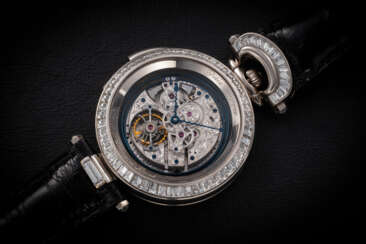
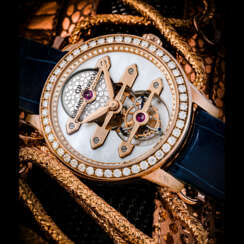
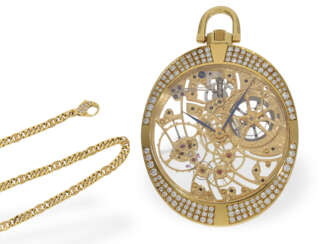
diamond bridge









































Norman Rockwell was an American illustrator and painter, renowned for his vivid and humane portrayal of American life. Born in New York City in 1894, Rockwell showed artistic promise from an early age, which led him to leave high school and pursue art full-time at prestigious institutions like the National Academy of Design and the Art Students League.
Rockwell's career blossomed early; by the age of 22, he had painted his first cover for The Saturday Evening Post, a relationship that would last nearly five decades and produce 323 covers. His depictions of everyday life and pivotal American moments captured the spirit of the nation.
Perhaps his most significant works were the "Four Freedoms" series, inspired by President Franklin D. Roosevelt's vision of a world founded on four essential human freedoms. These paintings not only graced the covers of The Saturday Evening Post but also played a crucial role in the U.S. war effort during World War II, raising over $130 million through the sale of war bonds.
In his later years, Rockwell did not shy away from addressing social issues. His move to Look magazine allowed him to focus on subjects such as civil rights and poverty, marking a significant shift from his earlier work. "The Problem We All Live With," depicting Ruby Bridges integrating a New Orleans school, remains a powerful symbol of the Civil Rights Movement and showcases Rockwell's ability to engage with contemporary social issues through his art.
For those interested in exploring Rockwell's extensive body of work, the Norman Rockwell Museum in Stockbridge, Massachusetts, holds the largest collection of his original art, providing insights into his artistic journey and the historical context of his works.
If you're keen on further updates and insights into the world of Norman Rockwell, consider signing up for our newsletter. This subscription will keep you informed about new exhibitions, sales, and auction events related to Rockwell's art.

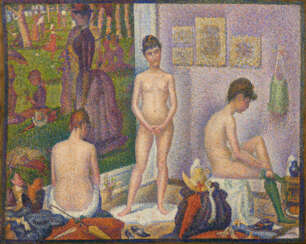

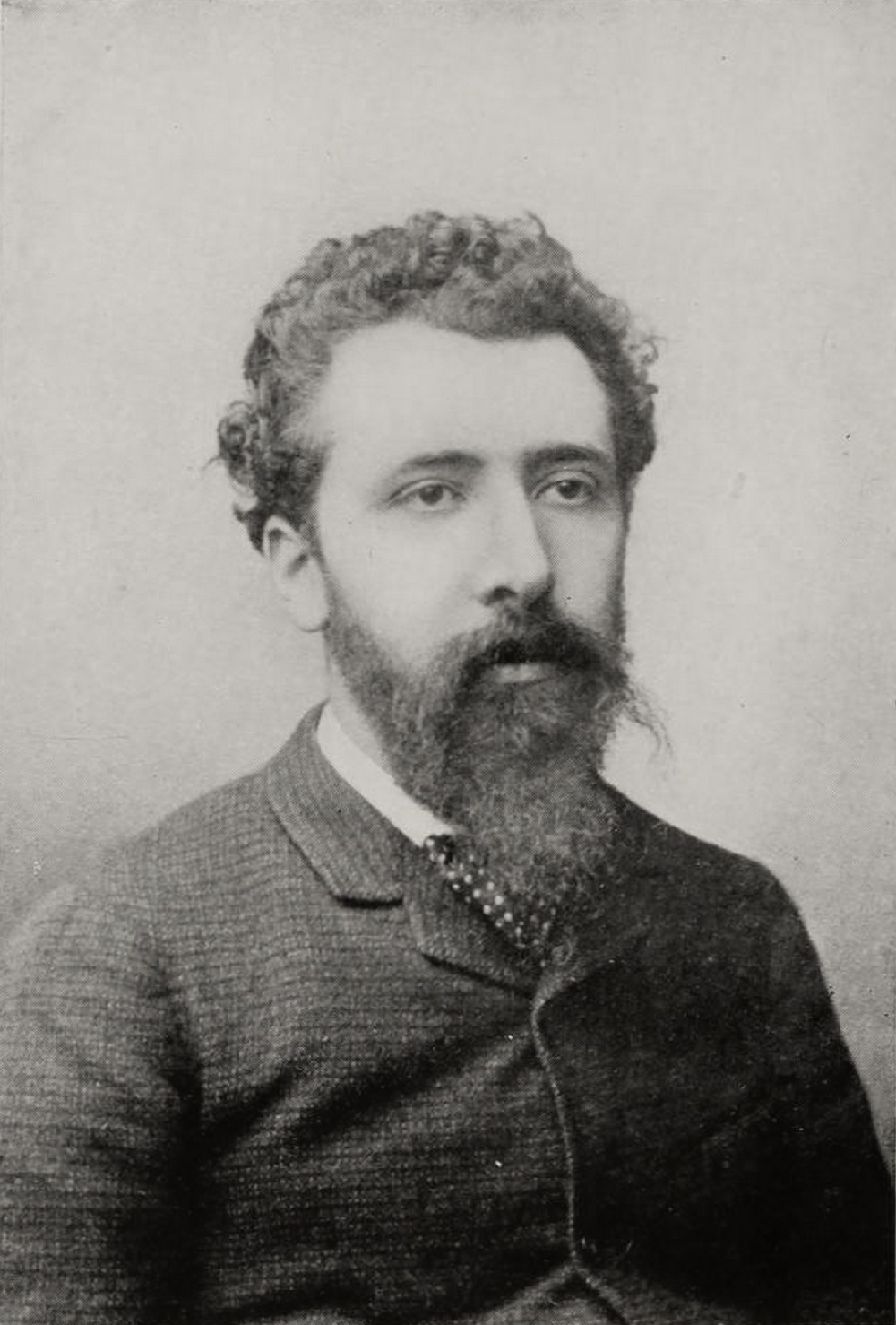
Georges Seurat was a French painter, renowned as the founder of the 19th-century French school of Neo-Impressionism. His groundbreaking technique, Pointillism, involved the use of tiny, contrasting color brushstrokes that, when viewed together, created a luminous quality in his compositions. Seurat's life was a blend of rigorous academic training and innovative artistic exploration.
Born on December 2, 1859, in Paris, Seurat demonstrated an early interest in art. He received formal training at the École des Beaux-Arts under Henri Lehmann, a disciple of the Neo-Classical painter Ingres, where he honed his skills in drawing and composition. Seurat was deeply influenced by color theories and the science of optics, which became central to his artistic approach. He was particularly inspired by the work of Michel-Eugène Chevreul and Ogden N. Rood, whose writings on color contrast and harmony greatly influenced his painting technique.
One of Seurat's most famous works, "A Sunday Afternoon on the Island of La Grande Jatte" (1884–1886), showcased his Pointillism technique. This painting, now housed in the Art Institute of Chicago, portrays members of different social classes engaged in various activities in a park setting. The work is notable for its use of small, juxtaposed dots of multi-colored paint, which allow the viewer's eye to blend colors optically. This technique was a significant departure from the traditional methods of color mixing on the canvas.
Another notable work by Seurat is "Bathers at Asnières" (1884), displayed at the National Gallery in London. This large canvas depicts young men relaxing by the Seine in a working-class suburb of Paris. The painting reflects Seurat's neoclassical training, with its smooth, simplified textures and carefully outlined figures.
Seurat's final painting, "The Circus" (1890-91), represents a shift to a more dynamic representation of movement and is typical of his late style. Unfortunately, Seurat's life was cut short when he died suddenly in March 1891, leaving "The Circus" unfinished. This painting is now part of the collection at the Musée d'Orsay in Paris.
Seurat's innovative techniques and his exploration of color theory and optics had a lasting impact on the art world, influencing subsequent generations of artists. His work remains a testament to the fusion of scientific principles with artistic expression, making him a pivotal figure in the transition from Impressionism to Post-Impressionism and modern art.
For those captivated by the genius of Georges Seurat and his revolutionary art, there's an exclusive opportunity waiting for you. By signing up for our updates, you'll be the first to know about new product sales and auction events related to Seurat's works and legacy. This subscription is tailored for enthusiasts, collectors, and experts in the field of art and antiques, ensuring you receive only the most relevant and curated information. Don't miss out on the chance to enhance your collection and deepen your understanding of Seurat's impact on the art world. Sign up now and stay ahead in the world of fine art and antiques.


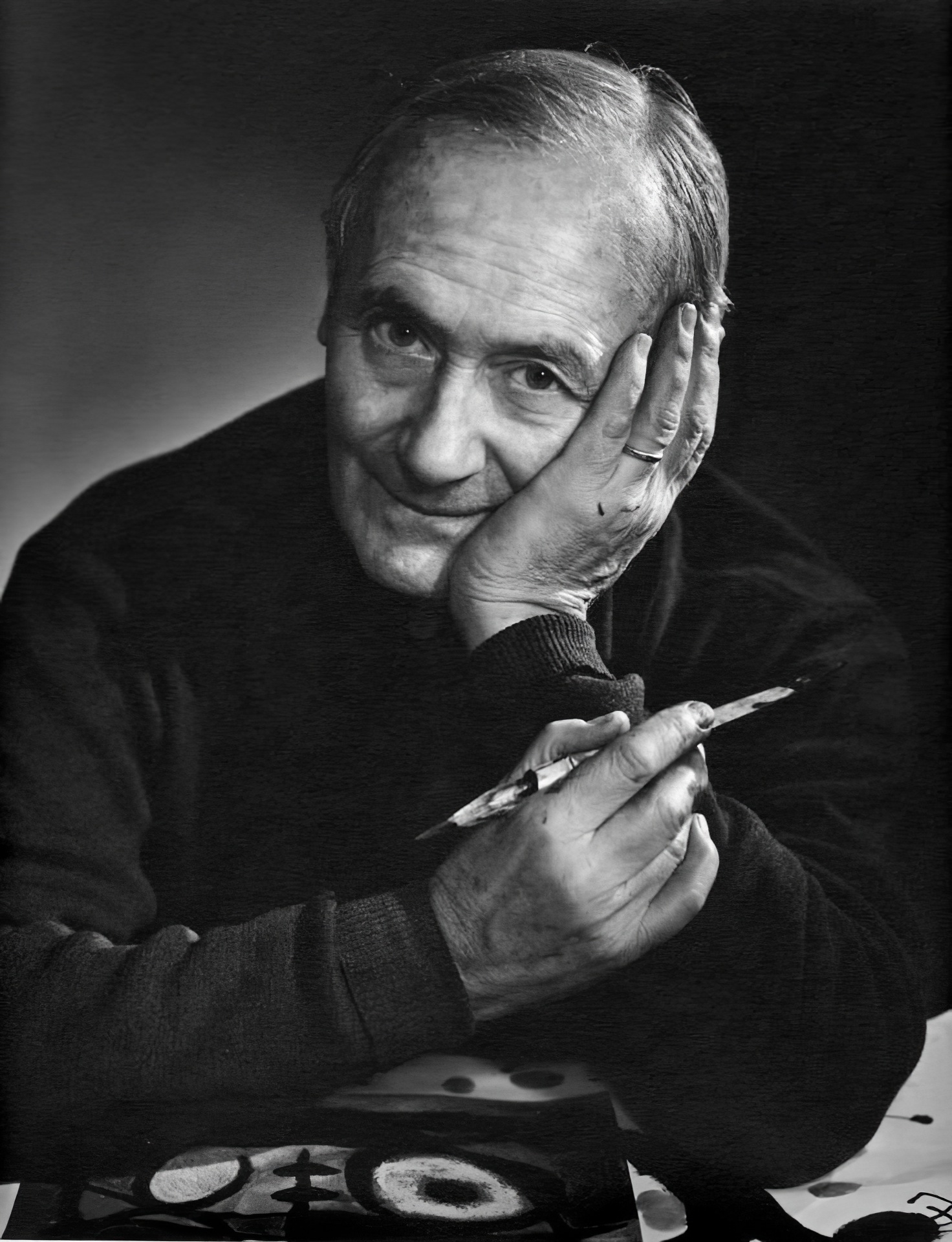
Joan Miró, a celebrated Spanish artist, was a master in painting, sculpture, and ceramics, renowned for his unique style that blurred the lines between Surrealism, Fauvism, and Expressionism. Born in Barcelona to a family of a goldsmith and a watchmaker, Miró grew up immersed in the rich cultural heritage of the Barri Gòtic neighborhood. His artistic journey began with drawing classes at the age of seven and continued at the prestigious La Llotja art academy. Despite an initial venture into the business world, Miró's passion for art prevailed, leading him to abandon his clerical career after a nervous breakdown.
Miró's work is noted for its exploration of the subconscious, often depicting a childlike perspective. This approach was both a critique of traditional painting methods and a means of expressing Catalan pride. His art, challenging to categorize, often featured symbolic elements and nationalistic qualities. One of his notable early works, "The Farm," reflects a transition to a more individual style, blending elements of his Catalan roots with broader artistic influences. This piece, later purchased by Ernest Hemingway, encapsulated the essence of Spain in its imagery.
In Paris, Miró joined the Surrealist movement in 1924, where his work began to reflect the influence of automatism, emphasizing spontaneous, automatic, or subconscious creation. He experimented with various mediums, including painting-poetry and collage, and even ventured into set and costume design for Sergei Diaghilev's Ballets Russes.
During World War II, Miró remained in Spain, and his work from this period, including the 22 Constellations series, reflected an interest in the night, music, and stars. His forms became increasingly abstracted, and he experimented with various techniques, often incorporating primary colors and evocative titles.
Miró's career spanned several decades, during which he continually evolved his style and explored new mediums. His contributions to art were recognized with numerous awards and retrospectives, including a major career retrospective at MoMA in 1941 and the Spanish Gold Medal for Fine Arts in 1980. Among his last major works was a tapestry for the World Trade Center in New York City, created in 1974.
For art collectors and enthusiasts, Joan Miró remains a figure of immense interest, not only for his distinct style and contributions to Surrealism but also for his ability to blend poetic imagery with political commentary. To stay updated on new product sales and auction events related to Joan Miró, sign up for our updates and immerse yourself in the world of this extraordinary artist.

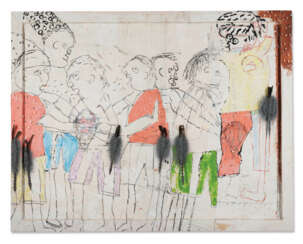



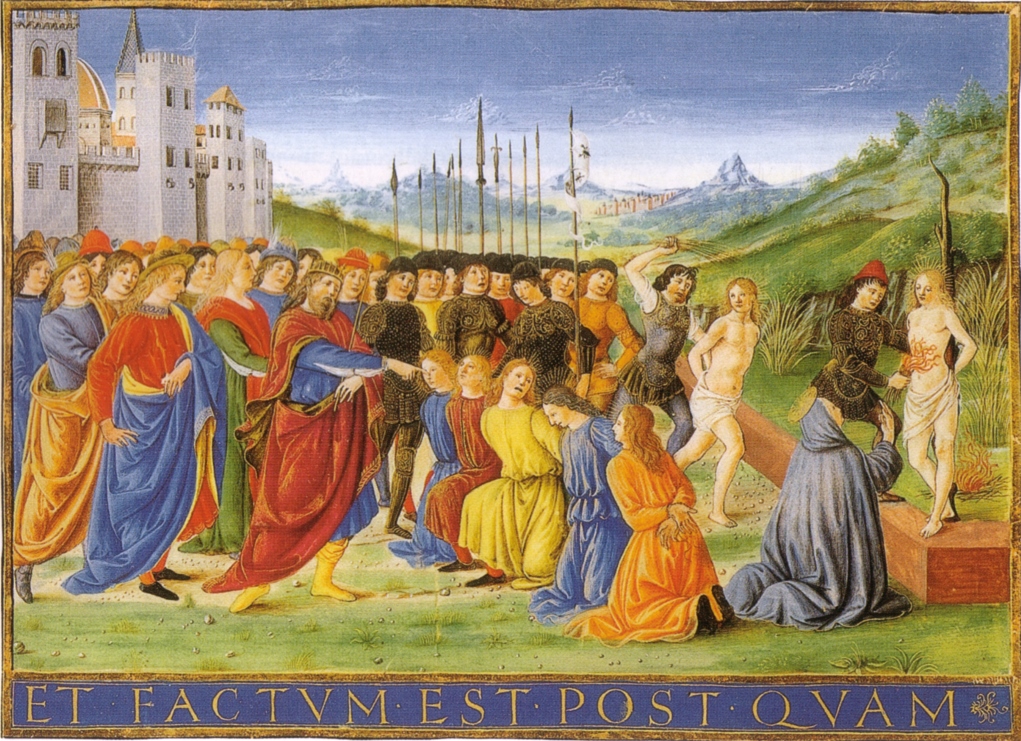
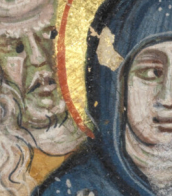
Attavante degli Attavanti, also Gabriello di Vante, is the best known and most representative artist of Italian miniature painting.
Attavante's elegant, expressive style was influenced by the work of Domenico Ghirlandaio and Antonio Pollaiuolo. His first recorded work, dated 1483, is a missal created for Thomas James, bishop of the Dol-de-Bretagne. He subsequently created several manuscripts for Matthias Corvinus, King of Hungary, and the Medici family, among whom was Pope Leo X. The workshop of Attavante also produced the Jerome Bible, one of the finest bibles created during the Italian Renaissance, now in the Portuguese National Archives.