

Germany Black & white photo


Ellen Auerbach, born Ellen Rosenberg, is an American photographer of German-Jewish descent and a master of avant-garde photography.
Ellen studied at the Baden State School of Art and continued her studies at the Academy of Fine Arts in Stuttgart before meeting photographer Greta Stern (1904-1999) in Berlin. Together they opened Ringl+pit, a photography and design studio specializing in advertising, fashion and portrait photography. The photographer is most remembered for her groundbreaking work at this particular studio. Ellen, who also experimented with film, made two short black-and-white films.
In 1933, Ellen emigrated to Palestine and opened a children's portrait studio there. A few years later she moved with her husband Walter Auerbach to the United States, where she worked in a private art collection, taught photography, made films and photographs to study children's behavior, and worked as an educational therapist.
The Ringl+pit works and photographic oeuvre of Ellen Auerbach and Greta Stern were rediscovered in the 1980s, and a series of solo and group exhibitions in the United States and Germany followed.


Bernhard (Bernd) Becher and Hilla Becher were German conceptual artists and photographers working as a collaborative duo. They are best known for their extensive series of photographic images, or typologies, of industrial buildings and structures, often organised in grids. As the founders of what has come to be known as the 'Becher school' or the 'Düsseldorf School' they influenced generations of documentary photographers and artists. They have been awarded the Erasmus Prize and the Hasselblad Award.

Erwin Blumenfeld was a German-born photographer and artist who is best known for his fashion photography and experimental work in the mid-20th century. He was began his career as an artist, working in painting, drawing, and collage.
In the 1930s, Blumenfeld fled Germany and settled in Paris, where he became a successful fashion photographer. He worked for Vogue and other high-profile magazines, creating iconic images of models and celebrities such as Marilyn Monroe, Elizabeth Taylor, and Grace Kelly.
Blumenfeld was also known for his experimental and avant-garde work, which often involved techniques such as photomontage, solarization, and multiple exposures. He saw photography as a means of artistic expression and used it to explore ideas about identity, beauty, and the nature of reality.
Blumenfeld's legacy as an artist and photographer continues to influence contemporary fashion and art. His innovative techniques and distinctive style continue to inspire new generations of artists, and his work is recognized as a significant contribution to the history of photography.

Oliver Boberg is a German artist, working with photography and video, whose work has been exhibited internationally. Mainly reflecting on the process of creating and recalling memories, Boberg's works are in the collections of institutions such as the Victoria & Albert Museum ( London, England) and the Museum of Modern Art (New York, NY).


Alfred Ehrhardt was a universally talented German artist. He was an organist and choirmaster, then a music and art teacher in a remedial school, and finally an art teacher and painter, before becoming a photographer and director.
After spending the winter semester 1928-29 at the Bauhaus Dessau, where he was decisively influenced by Josef Albers, Wassily Kandinsky, Paul Klee and Oskar Schlemmer, he transferred the Bauhaus pre-course concept to his art lessons with children and young people, beginning in first grade and continuing through Abitur. Based on this experimental experience, in 1930 he was appointed to the Landeskunstschule Hamburg, where he created the first preliminary course in materials science outside the Bauhaus. After being dismissed by the National Socialists from the university in 1933 because of his modernist views of art, he turned to photography and film.
Alfred Ehrhardt is considered an outstanding representative of the new objective photography. After publishing more than 20 photobooks, he became one of the most successful photographers among the former Bauhaus artists. His "absolutely artistic films", which defy modernity and are inspired by the avant-garde of the 1920s, place him among the old masters of cultural and documentary cinema. Alfred Erhardt is considered "Germany's most important post-war creator of cultural films" and has received numerous national and international awards for his more than 50 films, including four Federal Film Prizes.

Alfred Eisenstaedt was a German-born American photographer and photojournalist. He is best known for his work as a staff photographer for Life magazine, where he captured iconic images of celebrities, politicians, and everyday people.
Eisenstaedt began his career as a photographer in Germany, working for the Pacific and Atlantic Photos agency in Berlin in the 1920s. He emigrated to the United States in 1935 and joined the staff of Life magazine in 1936, where he remained until the magazine ceased publication in 1972.
Eisenstaedt's images are notable for their candid, spontaneous feel and their ability to capture the essence of his subjects. He is perhaps best known for his photograph "V-J Day in Times Square," which depicts a sailor kissing a nurse in celebration of the end of World War II. The image has become one of the most iconic photographs of the 20th century.
Throughout his career, Eisenstaedt photographed many of the most famous and influential people of his time, including Marilyn Monroe, Albert Einstein, Winston Churchill, and John F. Kennedy. His work has been exhibited in major museums around the world, and he received numerous awards and honors for his contributions to the field of photography.

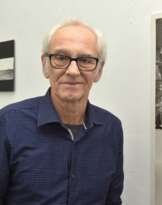
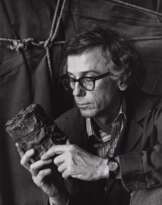


Horst P. Horst, a German-American fashion photographer, is renowned for his significant contributions to the art and fashion industry. Born in 1906, Horst's career spanned several decades, during which he became famous for his distinct style that skillfully blends elements of surrealism, classicism, and avant-garde artistry. His work, characterized by meticulous preparation and an innovative use of lighting, frequently avoided the use of filters and shadows, focusing instead on the subject with an almost architectural precision.
Horst P. Horst's legacy in fashion photography is underscored by his famous portraits, including the iconic 1942 image of Marlene Dietrich, and his exploration of the high society lifestyle through his collaborations with Vogue editor Diana Vreeland. These projects featured portraits of illustrious figures from the realms of royalty, art, fashion, and high society, such as Andy Warhol, Jacqueline Kennedy Onassis, and Yves Saint Laurent, showcasing Horst's ability to navigate the glamorous and intimate worlds of his subjects.
His work extended beyond portraiture to include interior design photography, as seen in his documentation of notable interiors for magazines like House & Garden and Vogue. Horst's photographs often served as a bridge, introducing the public to the works of contemporary artists and designers through his editorial and commercial assignments.
Throughout his career, Horst received critical acclaim, with major retrospectives of his work being held at prestigious venues such as the International Center of Photography in New York, the Louvre in Paris, and the National Gallery in London. These exhibitions highlighted his contributions to fashion, portraiture, and art photography, cementing his status as one of the most influential photographers of the 20th century.
For those interested in the evolution of fashion photography and the intersection of art and culture, Horst P. Horst's work remains a significant point of study and admiration. Collectors and experts in art and antiques are encouraged to explore his extensive portfolio, which continues to inspire and influence the fields of photography and fashion design.
If you wish to stay informed about upcoming sales and auction events related to Horst P. Horst, consider signing up for updates. This subscription will ensure you're at the forefront of the market for his enduring and captivating works.

Walde Huth, née Waldberta Huth, is a German photographer known for her street photos and portraits of famous people and fashion models.
She graduated from the State School of Applied Arts in Weimar, and after World War II she became a freelance photographer doing portrait and art photography. Walde Huth is primarily known for her fashion shots of the '50s, she also took unique stills and advertising photos, and created portraits of famous contemporaries. Her iconic fashion shots were taken in Paris. She shot the most famous models of her time not in the studio, but on location in the city, in front of the Eiffel Tower, along the Seine River, in contrast to the architecture and street life.
Walde Huth was an exceptional woman, a creative artist and a versatile photographer.


Klaus Kinold is a German architectural photographer.
Klaus Kinold studied architecture at the Technical University of Karlsruhe with Egon Eiermann, and then decided not to build but to show architecture. He opened an architectural photography studio in Munich and studied panoramic photography. For more than 25 years, Kinold was editor and illustrator of the Swiss professional publication KS Neues, which featured silicate brick buildings, and lectured on photography at the State Academy of Fine Arts in Stuttgart.
In 1983, Klaus Kinold had his first solo exhibition at the Rudolf Kieken Gallery in Cologne, followed by many other prestigious shows. From 2019 to August 2020, the DKM Museum in Duisburg designed the exhibition "Architecture through the eyes of a photographer", featuring the work of architects Carlo Scarpa, Rudolf Schwarz and Hans Döllgast.
Kinold documented almost all of the famous architects' projects. It was important to the photographer that his preferably black and white photographs were clear, objective, rational and factual in their presentation.


Helga Kneidl, née Claus, is a German photographer.
Helga worked as a dancer in her youth and married stage designer Karl Kneidl in 1961. She then learned theater photography in Zurich and worked in theaters as a staff photographer. Helga Kneidl gradually gained a reputation for taking portraits of many famous people, and her work was published in newspapers and magazines.
In May 1973, Helga Kneidl spent three full days with actress Romy Schneider in Paris, taking a series of photographic portraits of her.
Since 1997, Helga Kneidl lives in Berlin and works mainly in portrait photography.


Carl Christian Heinrich Kühn was an Austrian–German photographer and photography pioneer.
Heinrich Kühn is regarded one of the forefathers of fine art photography, the movement that helped photography to establish itself as an art on its own. His photographs closely resemble impressionist paintings, with their frequent use of soft lighting and focus. Kühn was part of the pictorialist photographic movement.
Kühn mainly used the gum bichromate technique, applied in several layers, and thus allowing for previously unseen color tonalities.


Vera Lutter is a German artist based in New York City. She works with several forms of digital media, including photography, projections, and video-sound installations. Through a multitude of processes, Lutter's oeuvre focuses on light and its ability to articulate the passing time and movement within a tangible image.


Stefan Moses was a German photographer living in Munich.
His documentary portraits of people and professions in West Germany (Germans) and later in East Germany (Farewell and Beginnings) made him accessible to a large audience. Moses took people out of their working environment and photographed them in front of a grey linen cloth — thus creating contemporary documents.

Helmut Newton (born Helmut Neustädter) was a German-Australian photographer. The New York Times described him as a "prolific, widely imitated fashion photographer whose provocative, erotically charged black-and-white photos were a mainstay of Vogue and other publications."

Carmen Oberst is a German artist, graphic designer and photographer.
She has lived in Hamburg since 1980 and works as an independent photographic artist, curator and teacher of design using photographic media.
Carmen Oberst originally worked as a graphic designer. Since 1997 she has been active in photography and experimental film, holding numerous exhibitions at home and abroad. Back in the 1980s, she developed her own visual language based on analog black and white photography and photoalchemical experiments. And in 1996 she founded PHOTO.KUNST.RAUM, a center for fine art photography and fine art known outside Hamburg.
Carmen Oberst turns the world into a stage: she routinely uses found events and randomly present people to create a fantastical production from the group of works "Rods of Imagination - On the Road" through the medium of photography.


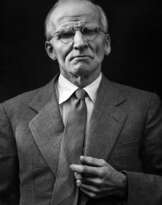

Werner Rohde, a German artist, was notably multifaceted, delving into photography, stained-glass painting, and drawing. He embarked on his photographic journey in 1927 while studying at the Kunstgewerbeschule at Burg Giebichenstein in Halle, under notable mentors like Erwin Hahs and Hans Finsler. Werner Rohde's artistic vision expanded after his encounter with László Moholy-Nagy, leading him to experiment with double exposures, unique camera angles, and inventive lighting effects, which distinguished his work in the realm of photography.
Werner Rohde's contributions were recognized during his lifetime, particularly in 1929 when his works were featured in the influential Film und Foto exhibition in Stuttgart. His personal life, especially his relationship with his future wife and frequent model, fashion designer Renata Bracksieck, deeply influenced his work, providing a recurring subject that added a personal dimension to his artistic expressions.
Post-World War II, Werner Rohde's career took a different turn as he assumed the mantle of his father's glass painting studio in Worpswede, a shift that reflects the diverse range of his artistic talents. Despite the changes in his artistic mediums over the years, Rohde's early work in photography continued to hold a significant place in art history, evident from the enduring interest in his works in exhibitions and digital collections like those at the Städel Museum.
For collectors and art enthusiasts, Werner Rohde's work offers a captivating glimpse into the innovative photographic techniques of the early 20th century, reflecting a blend of artistic vision and technical skill that continues to inspire. To stay updated on exhibitions and opportunities to engage with Rohde's work, consider subscribing to updates from galleries and museums that feature his art.


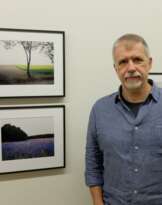

Rainer W. Schlegelmilch is a German motorsport photographer and photojournalist.
He studied at the Bavarian State College of Photography in Munich and already presented his work from motor racing at his graduation in 1962. Since then, this sport has been the main subject of Schlegelmilch's work. In 1964 he opened his own studio in Frankfurt for photo design and advertising photography.
The series of photographs of Formula One and FIA championships, which Schlegelmilch began in 1962, represent one of the most extensive collections of photographic material in the history of motor racing. His archive contains more than 600,000 images, which were black and white until 1970 and then color.
Schlegelmilch has published some 40 illustrated books on motorsport and calendars from various racing series, and has participated in exhibitions around the world. For his unique skill he is called "the eye of Formula 1", and Bernie Ecclestone many years ago gave him a press pass valid until the end of his life. Brands such as Ferrari, Porsche, BMW, Mercedes and Aston Martin have used his work for luxury publications.

Karl Hugo Schmölz was a German photographer.
In collaboration with the great Rhineland architects of his time, including Adolf Abel, Bruno Pohl, Dominik Böhm, Gottfried Böhm, Hermann von Berg, Wilhelm Riefan, Rudolf Schwarz, Hans Schilling, Joachim Schürmann, he created an impressive series of images of the post-war architecture of Cologne. The compilations included shots of architecture, interiors and the city at night. In addition, Schmölz worked with various companies on advertising, especially in the furniture industry.

Linn Schröder is a German photographer living and working in Hamburg and Berlin.
Schröder studied at the HAW University Hamburg, then went on to study at the Hochschule für Arbeitsgemeinschaft in Hamburg, specializing in communication design/photography, and the Gestalt School in Zurich.
Her works often deal with the relationship between dream and reality, they are like a record of memories. Some of Linn Schröder's series are based on family photographs. The images in her photo series "I Think and Family Photographs" deal with one of the most original tasks of photography - to capture and preserve memories.
Many of the photographer's works have won numerous awards and have been shown repeatedly throughout Europe. Linn Schröder collaborates with international magazines and regularly teaches at the Berlin-Weißensee School of Art, the HTW Berlin Institute and the Ostkreuzschule for Photography, among others. Several books have been published on Schröder's work.


Baron Wilhelm Ivan Friederich August von Gloeden, commonly known as Baron von Gloeden, was a German photographer who lived and worked in Italy. One of the greatest masters of male nudity, a precursor of homosexual photography and a forerunner of performance art.
Wilhelm von Gloeden is mainly known for his pastoral photographs of nude Sicilian boys, which usually feature props such as wreaths or amphorae, suggestive of ancient Greece or Italy. From a contemporary perspective, his work is commendable for its controlled use of lighting, as well as the often elegant poses of his models. His innovations include the use of photofilters and special cosmetics (a mixture of milk, olive oil and glycerine) to mask skin imperfections.
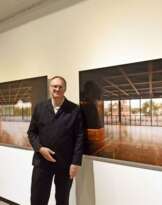


Lothar Wolleh is a German photographer.
Lothar Wolleh had a difficult fate: after the war he spent many years first in Allied captivity and then in the USSR, and only after returning to Berlin in 1956 was he able to resume his education at Lette-Verein, the school of photography, design and fashion.
As one of the most expensive and well-known photographers in the FRG of the 1960s, Wolleh worked successfully in fashion and advertising, collaborating with Deutsche Bundesbahn, Tchibo and Volkswagen. In 1969, Wolleh traveled around the Soviet Union for several months. Photographs taken on this trip were included in the illustrated book "The USSR - The Soviet State and its People", published in 1970.
But Wolleh's greatest fame and popularity came from his 109 portraits of contemporary artists. He began this series in the late 1960s and devoted all the following years of his life to it. His works are so recognizable and distinctive that they often became the reference portraits of the photographed artists.