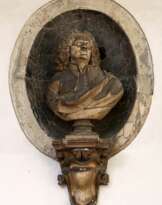
Jacopo Palma II (1549 - 1628)

Jacopo Palma II (1549 - 1628) - photo 1
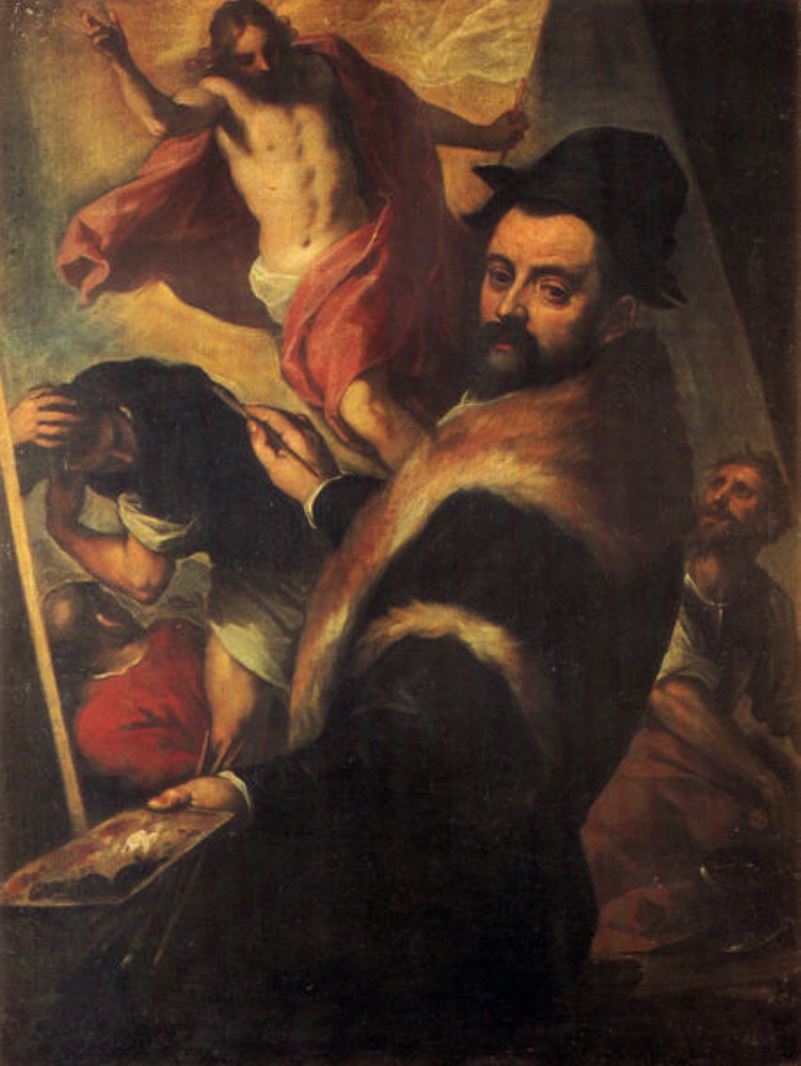
Jacopo Palma II

Iacopo Negretti, best known as Jacopo or Giacomo Palma il Giovane or simply Palma Giovane ("Young Palma"), was an Italian painter from Venice and a notable exponent of the Venetian school. After Tintoretto's death (1594), Palma became Venice's dominant artist perpetuating his style. Outside Venice, he received numerous commissions in the area of Bergamo, then part of the Venetian Domini di Terraferma, and in Central Europe, most prominently from the connoisseur emperor Rudolph II in Prague. Rejecting Mannerism in the 1580s, he embraced a reformist naturalism.[6] He varied the ingeniously synthesised amalgam according to subject matter and patrons' own eclectic and conservative tastes, with "virtuoso skill and a facile intelligence". Palma il Giovane went on to organize his own, large studio which he used to produce a repetitive series of religious and allegorical pictures that can be found throughout the territory of the Venetian Republic.

Wikipedia

Date and place of birt:September 1549, Venice, Italy
Date and place of death:17 october 1628, Venice, Italy
Nationality:Italy
Period of activity: XVI, XVII century
Specialization:Artist, Draftsman, Engraver, Graphic artist, Painter, Portraitist
Art school / group:Venetian school
Genre:Nude art, Mythological painting, Portrait, Religious genre, Self-portrait
Art style:Mannerism
Technique:Chalk, Engraving, Etching, Feather, Hand graphic

Creators Italy

Andrea Locatelli (1695 - 1741)
Andrea Locatelli
1695 - 1741
Pietro Antonio Rotari (1707 - 1762)
Pietro Antonio Rotari
1707 - 1762
Agnolo Bronzino (1503 - 1572)
Agnolo Bronzino
1503 - 1572
Davide Antonio Fossati (1708 - 1795)
Davide Antonio Fossati
1708 - 1795
Agostino Veneziano (1490 - 1540)
Agostino Veneziano
1490 - 1540
Giuseppe Spagnulo (1936 - 2016)
Giuseppe Spagnulo
1936 - 2016
Alberto Rosselli (1921 - 1976)
Alberto Rosselli
1921 - 1976
Ferdinando Tacca (1619 - 1686)
Ferdinando Tacca
1619 - 1686
Guido Di Graziano (XIII century - ?)
Guido Di Graziano
XIII century - ?
Amedeo Modigliani (1884 - 1920)
Amedeo Modigliani
1884 - 1920
Konstantin Dmitriyevich Flavitsky (1830 - 1866)
Konstantin Dmitriyevich Flavitsky
1830 - 1866
John De Cesare (1890 - 1972)
John De Cesare
1890 - 1972
Lorenzo Guerrini (1914 - 2002)
Lorenzo Guerrini
1914 - 2002
Cesare Viazzi (1857 - 1943)
Cesare Viazzi
1857 - 1943
Ardengo Soffici (1879 - 1964)
Ardengo Soffici
1879 - 1964
Giuseppe Maria Crespi (1665 - 1747)
Giuseppe Maria Crespi
1665 - 1747

Creators Mannerism

Federico Zuccaro (1539 - 1609)
Federico Zuccaro
1539 - 1609
Maso da Finiguerra (1426 - 1464)
Maso da Finiguerra
1426 - 1464
Giovanni Francesco Susini (1585 - 1653)
Giovanni Francesco Susini
1585 - 1653
Andrea del Sarto (1486 - 1530)
Andrea del Sarto
1486 - 1530
Jan de Bray (1627 - 1697)
Jan de Bray
1627 - 1697
Antonio Circignani (Pomarancio) (1560 - 1620)
Antonio Circignani (Pomarancio)
1560 - 1620
Jacopo da Empoli (1551 - 1640)
Jacopo da Empoli
1551 - 1640
Blas de Prado (1540 - 1599)
Blas de Prado
1540 - 1599
Lambert Sustris (1515 - 1584)
Lambert Sustris
1515 - 1584
Michelangelo Anselmi (1492 - 1556)
Michelangelo Anselmi
1492 - 1556
Lorenzo Costa II (1537 - 1583)
Lorenzo Costa II
1537 - 1583
Pieter Bruegel II (1564 - 1638)
Pieter Bruegel II
1564 - 1638
Gerolamo Bassano (1566 - 1621)
Gerolamo Bassano
1566 - 1621
Ippolito Scarsella (1560 - 1620)
Ippolito Scarsella
1560 - 1620
Santi di Tito (1536 - 1603)
Santi di Tito
1536 - 1603
Antonio Susini (1558 - 1624)
Antonio Susini
1558 - 1624