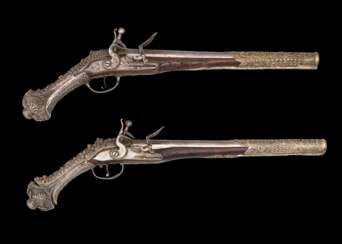
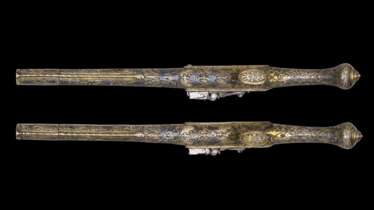
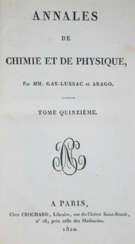
1820's

Josef Wolf was a German artist and natural history illustrator.
Josef Wolf was already a respected natural history artist in Germany when he moved to London in 1848 and was engaged by the famous English ornithologist John Gould (1804-1881) to illustrate his monographs. Wolf fairly quickly became the most famous animalist painter of the 19th century. In addition to illustrating for Gould, Wolf was responsible for the publication of Zoological Sketches, commissioned by the Zoological Society of London. Wolf was widely recognized during his lifetime; he created the genre of wildlife art.
Wolf's animalistic art consisted of his ability to capture a moment of movement combined with a deep physiological knowledge of animals.


Jacques-Laurent Agasse is a Swiss animal painter.
As a young man he studied at the veterinary school in Paris and was well versed in equine anatomy. In 1880 he moved to London and began painting dogs and racehorses, as well as exotic animals such as giraffes and zebras, which he observed in London zoos. Later, Agasse began to paint landscapes, portraits, and genre scenes as well.


Rembrandt Harmenszoon van Rijn, a Dutch Baroque painter and printmaker, was born on July 15, 1606, in Leiden, Netherlands, and died on October 4, 1669, in Amsterdam. He is celebrated as one of the greatest storytellers in art history, acclaimed for his adept portrayal of human emotions and dramatic narratives. Rembrandt's extensive oeuvre includes portraits, self-portraits, landscapes, genre scenes, allegorical, historical, and biblical themes, as well as animal studies. His artistry shined during the Dutch Golden Age, a period marked by cultural and scientific achievements in the Netherlands.
Rembrandt's education in art began around the age of 10 when he left the Latin School in Leiden to train as an artist. He apprenticed with artists like Jacob van Swanenburg and Pieter Lastman, mastering various aspects of painting. He opened his own studio in Leiden around 1624 or 1625, sharing it with his colleague Jan Lievens. By 1631, he had moved to Amsterdam, where he achieved significant success and trained many important Dutch painters.
Among Rembrandt's notable works are "The Anatomy Lesson of Dr. Nicolaes Tulp" (1632), "The Night Watch" (1642), and "The Syndics of the Amsterdam Drapers’ Guild" (1662). He was also renowned for his self-portraits, creating around 80 over his lifetime, more than any other artist until the 20th century. These self-portraits were not just artistic endeavors but also experiments with facial expressions and lighting effects. Additionally, Rembrandt was a master etcher, transforming etching from a reproductive technique into an art form.
Rembrandt's painting style is characterized by its dramatic use of light and shadow, known as chiaroscuro. His ability to depict materials realistically was unparalleled; his portrayal of metals and fabrics was so lifelike that they appeared to glow and be tangible. He was also known for his impasto technique, applying paint thickly to the canvas, adding a three-dimensional quality to his works.
Despite his artistic prowess, Rembrandt faced financial difficulties and personal tragedies throughout his life. He declared bankruptcy in 1656, a downfall attributed partly to his extensive collection of art objects and curiosities. His masterpieces, however, continued to garner appreciation and influence generations of artists that followed.
For collectors and experts in art and antiques, Rembrandt's works represent a pinnacle of artistic achievement in the Dutch Golden Age. His mastery in portraying the human condition and his innovative techniques in painting and etching make his works highly prized and influential in the art world.
To stay updated on new product sales and auction events related to Rembrandt van Rijn, sign up for our updates. This subscription service is dedicated exclusively to news and events concerning works related to this unparalleled master of the Dutch Golden Age.


Joseph Mallord William Turner, a seminal figure in British painting, was born in 1775 and left an indelible mark on the Romantic movement. Known for his expressive coloration, imaginative landscapes, and turbulent marine paintings, Turner's work transcends the traditional boundaries of art to capture the sublime force of nature. His career was distinguished by early talent, evidenced by his acceptance into the Royal Academy at the young age of 14, and a prolific output that included over 2,000 paintings and 19,000 drawings and sketches.
William Turner's unique approach to landscape painting, characterized by dramatic skies and atmospheric effects, set a new standard for capturing mood and emotion on canvas. His innovative use of light and color influenced countless artists, elevating landscape painting to rival the status of history painting. Turner's legacy is also marked by his eccentricity and reclusiveness, traits that only added to the mystique surrounding his artistic genius.
Among his most famous works are "The Fighting Temeraire," symbolizing the passing of the old world, and "Rain, Steam and Speed," capturing the Industrial Revolution's impact. These paintings not only showcase William Turner's technical skill but also his philosophical engagement with the changing world around him.
For collectors and experts in art and antiques, William Turner's works represent the pinnacle of Romantic art, offering insight into the 19th-century aesthetic and philosophical landscape. His influence on subsequent generations of artists underscores his position as a pivotal figure in the history of Western art.
To stay informed about Joseph Mallord William Turner's works and related events, signing up for updates from reputable art institutions can provide valuable insights into new discoveries and auction events related to this master of the British landscape.


Joseph Mallord William Turner, a seminal figure in British painting, was born in 1775 and left an indelible mark on the Romantic movement. Known for his expressive coloration, imaginative landscapes, and turbulent marine paintings, Turner's work transcends the traditional boundaries of art to capture the sublime force of nature. His career was distinguished by early talent, evidenced by his acceptance into the Royal Academy at the young age of 14, and a prolific output that included over 2,000 paintings and 19,000 drawings and sketches.
William Turner's unique approach to landscape painting, characterized by dramatic skies and atmospheric effects, set a new standard for capturing mood and emotion on canvas. His innovative use of light and color influenced countless artists, elevating landscape painting to rival the status of history painting. Turner's legacy is also marked by his eccentricity and reclusiveness, traits that only added to the mystique surrounding his artistic genius.
Among his most famous works are "The Fighting Temeraire," symbolizing the passing of the old world, and "Rain, Steam and Speed," capturing the Industrial Revolution's impact. These paintings not only showcase William Turner's technical skill but also his philosophical engagement with the changing world around him.
For collectors and experts in art and antiques, William Turner's works represent the pinnacle of Romantic art, offering insight into the 19th-century aesthetic and philosophical landscape. His influence on subsequent generations of artists underscores his position as a pivotal figure in the history of Western art.
To stay informed about Joseph Mallord William Turner's works and related events, signing up for updates from reputable art institutions can provide valuable insights into new discoveries and auction events related to this master of the British landscape.


James Northcote was a British painter.