

5 x 91 x 5cm)


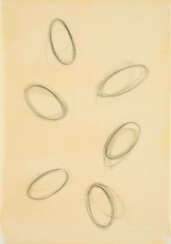

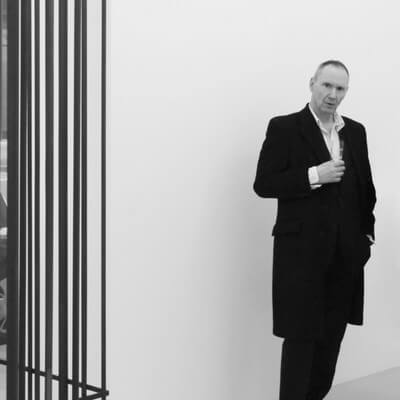
Hubert Kiecol is a German artist. He was a professor at the State Art Academy in Düsseldorf. Kiecol graduated from the Hamburg Art School in 1971 and from 1975 at the Hamburg University of Fine Arts. In 1984 he received a Mies van der Rohe grant and in 1985 an Annemarie and Will Grohmann grant. In 1991 he was awarded the Will Grohmann Prize by the Berlin Academy of Arts. In 1993 he was appointed professor at the Düsseldorf Art Academy. In 2000 he received the Wolfgang Hahn Prize for contemporary art from the Society for Modern Art at the Museum Ludwig in Cologne.


.jfif)
Richard William Hamilton was a pivotal figure in the evolution of modern art, seamlessly blending traditional mediums with emerging cultural commentary. Born in London in 1922, Hamilton emerged as a leading voice in the pop art movement, a genre that sought to bridge the gap between high art and popular culture. His work, characterized by its innovative use of materials and its critical eye on consumer society, positioned him as a critical link between art's past and its rapidly evolving future.
Hamilton's influence is perhaps best encapsulated in his iconic collage, "Just what is it that makes today's homes so different, so appealing?" Created for the This Is Tomorrow exhibition in 1956, this piece is widely regarded as one of the first works of pop art, predating the more widely recognized contributions of American artists like Andy Warhol and Roy Lichtenstein. By integrating images from magazines, advertisements, and other mass media, Hamilton crafted a visually striking critique of contemporary consumerism and its pervasive impact on the domestic sphere.
Beyond his contributions to pop art, Hamilton's legacy is also preserved in his role as an educator and theorist. His writings and teachings have influenced generations of artists, encouraging them to explore the intersections of art, technology, and society. His works are held in high esteem and are featured in prestigious collections worldwide, including the Tate Gallery in London and the Museum of Modern Art in New York.
For collectors and experts in art and antiques, Hamilton's oeuvre offers a fascinating window into the mid-20th century's cultural shifts. His ability to capture the zeitgeist of his time, while also pushing the boundaries of what art could be, makes his work both historically significant and continually relevant.
To stay informed about new product sales and auction events related to Richard William Hamilton, we invite you to sign up for updates. This subscription ensures you remain at the forefront of the art and antiques world, with a focus on one of its most influential figures.
