289 Items by auctions and galleries:
bridge


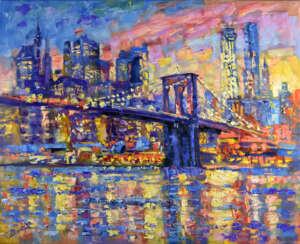

New York Original Art Brooklyn Bridge
Natalya Savenkova (b. 1967)  Shop Savenkova Natalya
Natalya Savenkova
05.10.1967
Russia
I offer my original fine paintings.
My name is Natalya Savenkova.
I work in painting (oil and tempera), graphics, watercolors, batik.
I work in oil in various genres of landscape, figurative and portrait as well as still life.
Since 2005, I am a member of Union of the Artists (Russia).
1981 to 1985 – I studied in the Bryansk Art College.
1994 – I graduated Saint Petersburg State Repin Academic Institute of Painting, Sculpture and Architecture.
I live in St. Petersburg.
I am a participant of numerous personal and group exhibitions in Russia and Ukraine.
I invite you to get acquainted with my work and I hope you like it.
If you have any questions, do not hesitate to email me. I’d love to hear from you!
The materials I use, including canvases, paints and mediums are permanent and of professional quality.
Follow me on Instagram:
www.instagram.com/artsavenkova_divya/
my site: artdivya.ru/
Artist shop
Savenkova Natalya
Russia
Number of products: 19
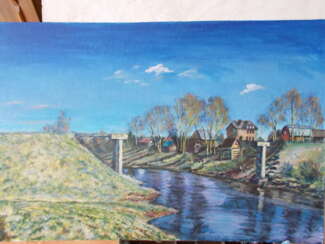

Suspended bridge
Artyom Ukhov (b. 1982)  Shop Ukhov Artyom
Artyom Ukhov
20.01.1982
Russia
Artist and designer, has 15 exhibitions and 3 rewards
Ухов Артем Евгеньевич,
1982 г.р., г. Череповец, Вологодской области,
КОНТАКТЫ:
vk.com: uae82
Exhibitions:
Personal exhibition in Ustuzhna district library of K.N.Batushkov, June – August 2018, Ustuzhna town;
Art-Start, young modern art, Krasny most gallery, May, 30th – July 1st, Vologda city;
Russian Art Week, XXIV International Exhibition & Competition of Modern and Contemporary Art, Moscow, April, 23rd – 29th,
Vologda Regional Exhibition “Orthodoxian Vologda” April, 25th – June 2nd2018, Vologda city.
Vologda Regional Exhibition dedicated to the 870th anniversary of Vologda city, September, 22nd – October, 30th 2017, Vologda city.
“Shire krug 8” Annual art exhibition of young artist of Vologda city Nov, 1st, 2016 – Feb, 5th, 2017;
“Shire krug 7” Annual art exhibition of young artist of Vologda city Dec, 23rd, 2015 -Feb,20th, 2016;
Personal exhibition in Ustuzhna district library of K.N.Batushkov, Dec, 2015 — Jan, 2016;
«ArtExpoSPb 2016», October, 21st-23rd 2016, Saint Petersburg, Russian Federation.
Personal art exhibition in Vologda State Technical University Library, October-november 2012;
Prizes:
2nd place in “Painting” nomination of Russian Art Week, XXIV International Exhibition & Competition of Modern and Contemporary Art, Moscow, April, 23rd – 29th, 2018.
1st place in “subject picture” nomination of Saint-Petersburg Art Week, X International Exhibition & Competition of Contemporary Arts, Saint-Petersburg, April, 28th – May, 3rd, 2018.
3nd place in “genre picture” nomination of Russian Art Week, XXVI International Exhibition & Competition of Modern and Contemporary Art, Moscow, April, 8rd – 14th, 2019.
Artist shop
Ukhov Artyom
Russia
Number of products: 62


Izmailovsky bridge
Leonid Stroganov (b. 1979)  Shop Stroganov Leonid
Leonid Stroganov
24.11.1979
Russia
Я родился в 1979 году в Ленинграде.В 1999 году закончил СПбХУ им Рериха,факультет живописи,а в 2002 году Институт Декоративно-Прикладного Искусства,факультет графики.Член Союза Художников России с 2002 года.В 2006 году прошел стажировку в Институте Тамаринд(США)Провел около 15 персональных выставок в музеях,выставочных залах и галереях России,Дании,Финляндии и Швейцарии.В жанре "Книга художника"создал книги " Царь Эдип" Софокла и "Эротические сонеты" Абрама Эфроса.Для идательства "Вита -Нова" выполнил иллюстрации к "Сонетам" Франческо Петрарки и Книге Пророка Исаии.
являюсь автором приблизительно 100 книжных знаков.Принимал участие в конгрессах международной федерации экслибриса(FISAE).Неоднократно становился лауреатом всероссийских имеждународных конкурсов в этой области.
Мои работы находятся в собраниях:Библиотеки Государственного Эрмитажа и его филиала-Выставочного центра "Эрмитаж-Выборг",Государственной публичной библиотеки им.М.Е.Салтыкова-щедрина,Всероссийского музея А.С.Пушкина,Литературно-мемориального музея-квартиры Ф.М.Достоевского,Сахалинского областного художественного музея,Государственного музея изобразительных искусств республики Татарстан,Ямало-Ненецкого окружного музейно-выставочного комплекса им И.С. Шемановского(Салехард),картинной галереи Вологодской области,музеев изобразительных искусств Старого Оскола,Орла,Екатеринбурга,Музея замка Мальборк (Польша),музея графики малых форм(Сент-Никлаас,Бельгия)Института Тамаринд (США),Музея печати в Шеньчжене(Китай),Музея искусств Фредериксхавна(Дания) и частных собраниях.
Artist shop
Stroganov Leonid
Russia
Number of products: 61


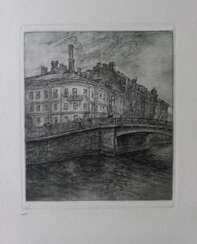

Viznesensky Bridge
Leonid Stroganov (b. 1979)
Shop Stroganov Leonid
Leonid Stroganov
24.11.1979
Russia
Я родился в 1979 году в Ленинграде.В 1999 году закончил СПбХУ им Рериха,факультет живописи,а в 2002 году Институт Декоративно-Прикладного Искусства,факультет графики.Член Союза Художников России с 2002 года.В 2006 году прошел стажировку в Институте Тамаринд(США)Провел около 15 персональных выставок в музеях,выставочных залах и галереях России,Дании,Финляндии и Швейцарии.В жанре "Книга художника"создал книги " Царь Эдип" Софокла и "Эротические сонеты" Абрама Эфроса.Для идательства "Вита -Нова" выполнил иллюстрации к "Сонетам" Франческо Петрарки и Книге Пророка Исаии.
являюсь автором приблизительно 100 книжных знаков.Принимал участие в конгрессах международной федерации экслибриса(FISAE).Неоднократно становился лауреатом всероссийских имеждународных конкурсов в этой области.
Мои работы находятся в собраниях:Библиотеки Государственного Эрмитажа и его филиала-Выставочного центра "Эрмитаж-Выборг",Государственной публичной библиотеки им.М.Е.Салтыкова-щедрина,Всероссийского музея А.С.Пушкина,Литературно-мемориального музея-квартиры Ф.М.Достоевского,Сахалинского областного художественного музея,Государственного музея изобразительных искусств республики Татарстан,Ямало-Ненецкого окружного музейно-выставочного комплекса им И.С. Шемановского(Салехард),картинной галереи Вологодской области,музеев изобразительных искусств Старого Оскола,Орла,Екатеринбурга,Музея замка Мальборк (Польша),музея графики малых форм(Сент-Никлаас,Бельгия)Института Тамаринд (США),Музея печати в Шеньчжене(Китай),Музея искусств Фредериксхавна(Дания) и частных собраниях.
Artist shop
Stroganov Leonid
Russia
Number of products: 61
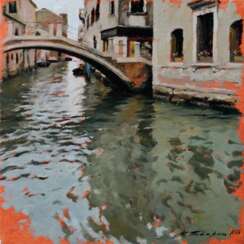

Bridge shop
Max Paderin (b. 1987)  Shop Paderin Max
Max Paderin
08.09.1987
Russia
31 год. Художник. Живу и работаю в городе Пермь.
Основные стили: реализм, импрессионизм, декоративное искусство.
Жанры: портрет, пейзаж.
Основная идея художественной деятельности: поиск космоса во всем окружающем.
maxpaderin.com
Artist shop
Paderin Max
Russia
Number of products: 14
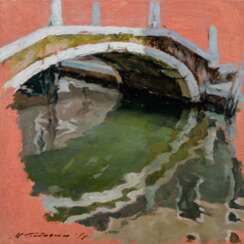

The bridge
Max Paderin (b. 1987)
Shop Paderin Max
Max Paderin
08.09.1987
Russia
31 год. Художник. Живу и работаю в городе Пермь.
Основные стили: реализм, импрессионизм, декоративное искусство.
Жанры: портрет, пейзаж.
Основная идея художественной деятельности: поиск космоса во всем окружающем.
maxpaderin.com
Artist shop
Paderin Max
Russia
Number of products: 14
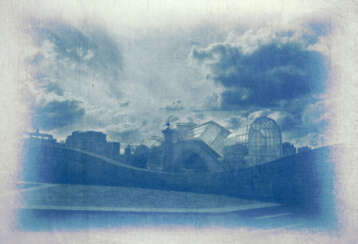

Bridge
Andrey Petrosyan (b. 1959)  Shop Petrosyan Andrey
Andrey Petrosyan
26.12.1959
Russia
Член союза фотохудожников России, лауреат всероссийской фотовыставки “Земля и люди”, международных фестивалей фотографии “Фиксаж”, “35 Awards”, победителя в фотоконкурсах “Заповедная Москва” и “Пейзажи Краснодарского края”. Его работы вошли в альбом ЮНЕСКО “Всемирное наследие России”.
Artist shop
Petrosyan Andrey
Russia
Number of products: 158
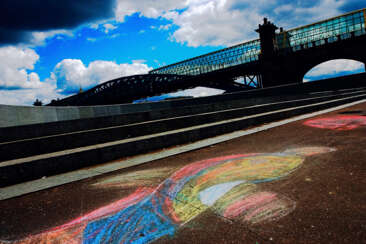

bridge
Andrey Petrosyan (b. 1959)
Shop Petrosyan Andrey
Andrey Petrosyan
26.12.1959
Russia
Член союза фотохудожников России, лауреат всероссийской фотовыставки “Земля и люди”, международных фестивалей фотографии “Фиксаж”, “35 Awards”, победителя в фотоконкурсах “Заповедная Москва” и “Пейзажи Краснодарского края”. Его работы вошли в альбом ЮНЕСКО “Всемирное наследие России”.
Artist shop
Petrosyan Andrey
Russia
Number of products: 158
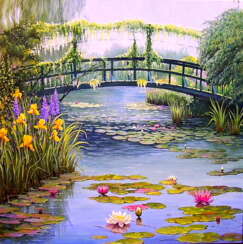

Monet bridge (my version)
Sergiy Kolba (b. 1957)  Shop Kolba Sergiy
Sergiy Kolba
19.04.1957
Ukraine
Родился 19 апреля 1957года в пгт.Новые Санжары Полтавской области. После окончания школы учился в Харьковском коледже архитектуры и дизайна. В 1980году закончил Харьковское Государственное художественное училище. Долгое время преподавал в Кременчугской детской художественной школе. В настоящее время свободный художник. Любимый жанр-пейзаж. Придерживается реалистического направления в живописи. Участник многих международных и республиканских художественных выставок. Работы находятся в частных коллекциях Украины, России, Западной Европы, США та Израиля. В настоящее время проживает и работает в г.Кременчуге.
Artist shop
Kolba Sergiy
Ukraine
Number of products: 7
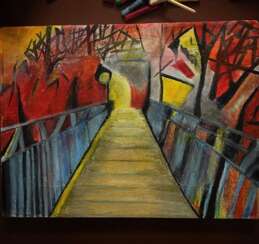




Towards the morning Aurora ...
Nataliia Bahatska (b. 1967)  Shop Bahatska Nataliia
Nataliia Bahatska
20.10.1967
Ukraine
I was born in 1967.
Graduated childrens art school.
Graduated from Kyiv National University of Design, designer in 1993.
Academy of Psychosocial Technologies in 2008
The artworks are in Ukraine, Lithuania, Kazakhstan, Russia, Germany, Sweden, Switzerland, Italy, France, UK, USA, Vietnam, Canada, Netherlands.
Recently, all paintings have been created in hyperrealism and pop art.
Exhibition "Pro Cheese", ArtHall "D12", Kiev, 2021.
IV Ukrainian Festival of Contemporary Women's Art at the Institute of Contemporary Art of the National Academy of Arts of Ukraine, Kyiv, Ukraine, 2021
International exhibition "# 365daysafter" in the gallery "Artist", Kyiv, 2021. Exhibition "HRYVNA ART" in the Palace of Arts, Lviv, 2021.
Exhibition "HRYVNA ART" in the Museum of History of Kyiv, Kyiv, 2021.
Exhibition "HRYVNA ART" in the Ministry of Finance of Ukraine, Kyiv, 2021.
Exhibition at the Sky Mall, Kiev. 2021
Competition Pro Cheese Awards, Kiev, Parkovy Exhibition and Convention Center. Grand Prix. 2021
Exhibition "Барви світу" in Parlament of Ukraine. Kyiv. Ukraine, 2019
Sheldon Rose Gallery, "Big Ideas in Small Art", Toronto, Canada, 2019
Group exhibition from Ukraine at 58 Venice Biennale, "Falling shadow Dreams over gardens Giardini ". Italy, 2019
Exhibition "Vizionario" in la galleria Merlino Bottega d'arte di Firenze. Italy, 2019
Exhibition in ABC-art gallery. Kyiv, 2019
1st All-Ukrainian Triennale "NU-ART", Kremenchuk, 2018
"Ukraine from Trypillya to the present in the images of contemporary artists" - Biennial. National Union of Artists of Ukraine (NUAU), Kyiv, 2018
"Picturesque Ukraine", NUAU,the city of Severodonetsk, 2017.
Biennale of abstract Painting,NUAU, Kyiv, 2017
Until the Day of the Artist, NUAU, Kyiv, 2016, 2017, 2018.
"Portrait Painting" , gallery "Mytets", Kyiv, 2017
"To the 160th anniversary of Ivan Franko",NUAU, Ivano-Frankivsk city, 2016
On Independence Day of Ukraine, NUAU, Kyiv, 2017, 2018,
When buying, please specify the payment and delivery methods.
Artist shop
Bahatska Nataliia
Ukraine
Number of products: 231
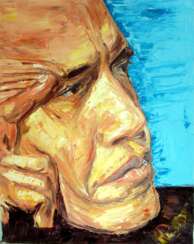



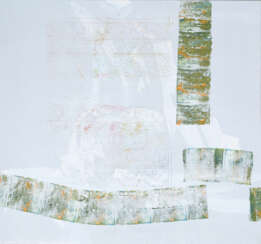

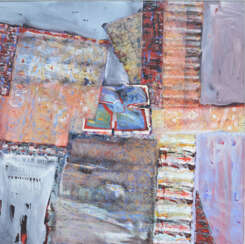
Pontis
Florina Breazu (b. 1973)  Shop Breazu Florina
Florina Breazu
05.01.1973
Moldova
I was born in 1973.01.05 in a family where art education was a priority, my father being an artist. Art becoming the most natural way of expression for me.
I am a dedicated artist and involved in the current cultural activity, with a dynamic experience, polished in the artistic centers of Chisinau, Cluj, Iasi and Bucharest. Through personal and group exhibitions organized in recent years, I have proposed to the public more and more fresh works connected to the development and the level of contemporary society. Through a pictorial approach built on solid exercises, developed from the formal tradition to formal creation, I have outlined a sensitive message that tenaciously affirms its own artistic creed.
I generally practice abstract painting, sometimes introduce figurative elements. The preferred material is oil or acrylic on canvas or paper.
Painting is an expression of freedom, it is the way to be, it is the moment when time stops, the escape and the connection to the fluid course of some energies becomes the act of appearance and conception of the image.
Artist shop
Breazu Florina
Moldova
Number of products: 148

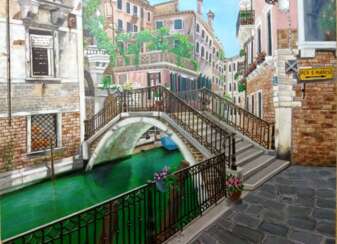

Улочки Венеции. Мост для поцелуев.
Viktoriya Baranovich (b. 1975)  Shop Baranovich Viktoriya
Viktoriya Baranovich
06.12.1975
Ukraine
Я живу и работаю в Украине, но по моему мнению творчество не имеет территориальных границ, поэтому я также планирую осваивать российский и зарубежный рынок. У меня нет специального художественного образования, но живопись - это не просто мое хобби, это то, чем я живу. Поэтому создаю каждую свою картину с трепетом и любовью. Мои работы смогут украсить любой интерьер, как в современном, так и в классическом стиле. Любимые жанры - портрет, реализм, а также импрессионистская пейзажная живопись. Пишу картины акрилом, владею техниками пастозной живописи, лессировки и работы мастихином.
I live and work in Ukraine, but in my opinion, creativity has no territorial boundaries. I have no special art education, but painting is not just my hobby, it is what I live by. Therefore, I create each of my paintings with trepidation and love. My works will decorate any interior, both in modern and classic style. Favorite genres - portrait, realism, as well as impressionist landscape painting. I paint with acrylics, I know the techniques of pasty painting, glazing and working with a palette knife.
Artist shop
Baranovich Viktoriya
Ukraine
Number of products: 3

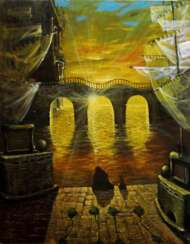

MEETING AT SUNRISE
Sergiy Roy (b. 1958)  Shop Roy Sergiy
Sergiy Roy
04.04.1958
Ukraine
EXHIBITIONS:
INTERNATIONAL ART EXHIBITION,
MOSKOW, RUSSIA, WARSAW, POLAND, 1984
BASHKIRTSEV’S ART EXHIBITION, MUSEUM OF FINE ART, POLTAVA, UKRAINE, 1988
AVAN/ART IN ROVANIEMI, FINLAND, 1990
ANNUAL NATIONAL ART EXHIBITION, KYIV, UKRAINE, 1990
AVAN/ART, MUSEUM OF FINE ART, MURMANSK, RUSSIA, 1990
AVAN/ART IN JACKSONVILLE, KENT GALLERY, JACKSONVILLE, FLORIDA, USA, 1991
AVAN/ART IN JACKSONVILLE, DAWNTOWN GALLERY, JACKSONVILLE, FLORIDA, USA, 1991
ME+ME+ME+ME+…/AVAN CENTER OF CULTURE MURMANSK, RUSSIA, 1992
NATIONAL EXHIBITION ART GALLERY, KIYV, UKRAINE, 1993
PAN-UKRAINE, DNIPROPETROVSK, UKRAINE, 1995
EXHIBITION MODERN ART GALLERY, POLTAVA, UKRAINE, 2003
REGIONAL EXHIBITION MODERN ART GALLERY, POLTAVA, UKRAINE, 2005
REGIONAL EXHIBITION MODERN ART GALLERY, POLTAVA, UKRAINE, 2007
KYIV-ART. 2008 HOUSE OF TEACHER ,KYIV , UKRAINE 2008
M-ART GALLERY KHARKIV, UKRAINE 2010
IN GARDENS OF VICTORY GALLERY , ODESSA, UKRAINE 2011
Florence Design Week "Crossing People" Exhibition,FLORENCE,ITALY,2013
Gallery Fine ART, POLTAVA,UKRAINE,2013
Gallery " TRYPTYH", KYIV,UKRAINE,2014
Fine ART Gallery ,POLTAVA,UKRAINE,2014
Ukrainian Free Universety, MUNKHEN,GERMANY,2014-2015
ARTGESCHOSS, internationale kunstausstellung, Salzgitter Bad,GERMANY,2017
Art Revolution Taipei,Taiwan , 台北新藝術博覽會,2018
Private collections:
Mr. Roman Kupchinsky (USA, New York)
Dr. Ulf Bethmann (Germany, Hamburg)
Ms. Monika Platek (Poland, Krakov)
Museums and collection:
Jacksonville College (Florida, USA);
Khmelnitsckiy National Art Museum (Ukraine);
Poltava Art Museum (Ukraine);
Modern Art Gallery Poltava (Ukraine);
Austria, Australia, Dubai, USA, Germany, England, Russia, Israel, Irland, New Seland, Taiwan, Ukraine,Poland.
Artist shop
Roy Sergiy
Ukraine
Number of products: 211
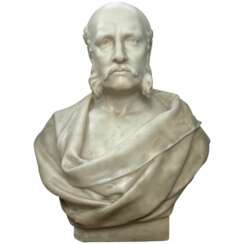







Lot 233 Charles-Jean-Baptiste Claudot, zugeschrieben .Washerwomen by a river under a bridge - Fountain in a landscape with ruins and figures
A420: Alte Kunst, Moderne und Contempopary Art, Schmuck 
Kunstauktionshaus Neumeister
A420: Alte Kunst, Moderne und Contempopary Art, Schmuck
Date: 25.03.2026 14:00 UTC +02:00
Number of lots in the catalog: 461