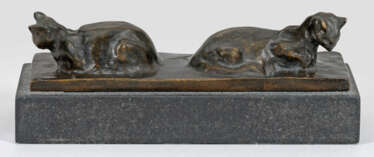
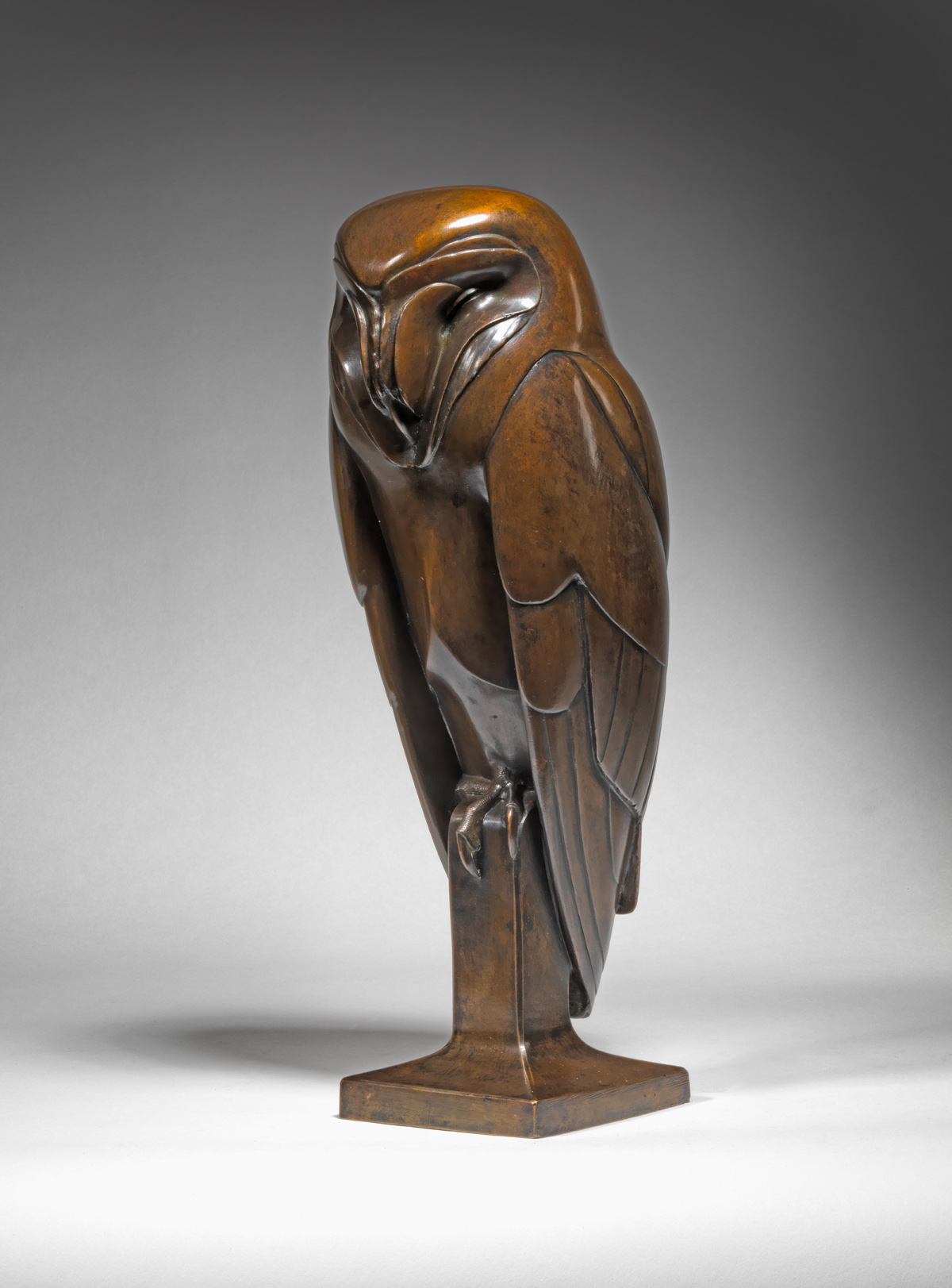
bronze, braun patiniert


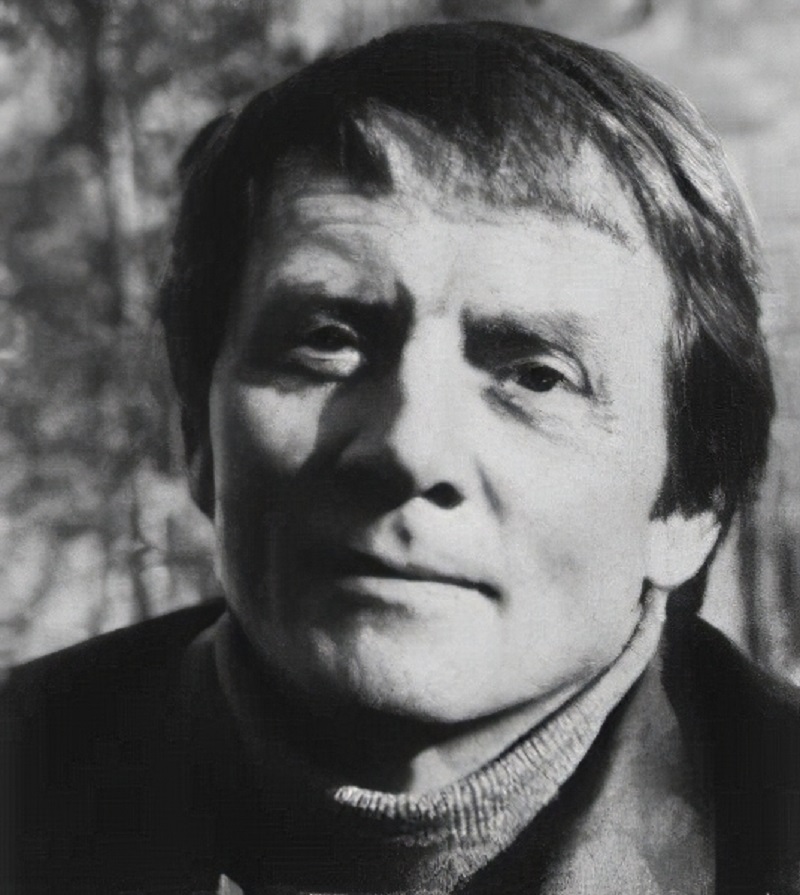
Fritz Fleer is a German painter and sculptor. He studied at the Hamburg University of Fine Arts in the class of Edwin Paul Scharf.
As independent artist, Fritz Fleer has been creating works for urban planning since the 1950s; in Hamburg he was commissioned for 17 sculptures by the municipal housing company SAGA.


Wilhelm Siegmund Anton Louis Krieger was a German sculptor.


Wilhelm Siegmund Anton Louis Krieger was a German sculptor.


.jpg)
Gerhard Marcks was a German artist, known primarily as a sculptor, but who is also known for his drawings, woodcuts, lithographs and ceramics.


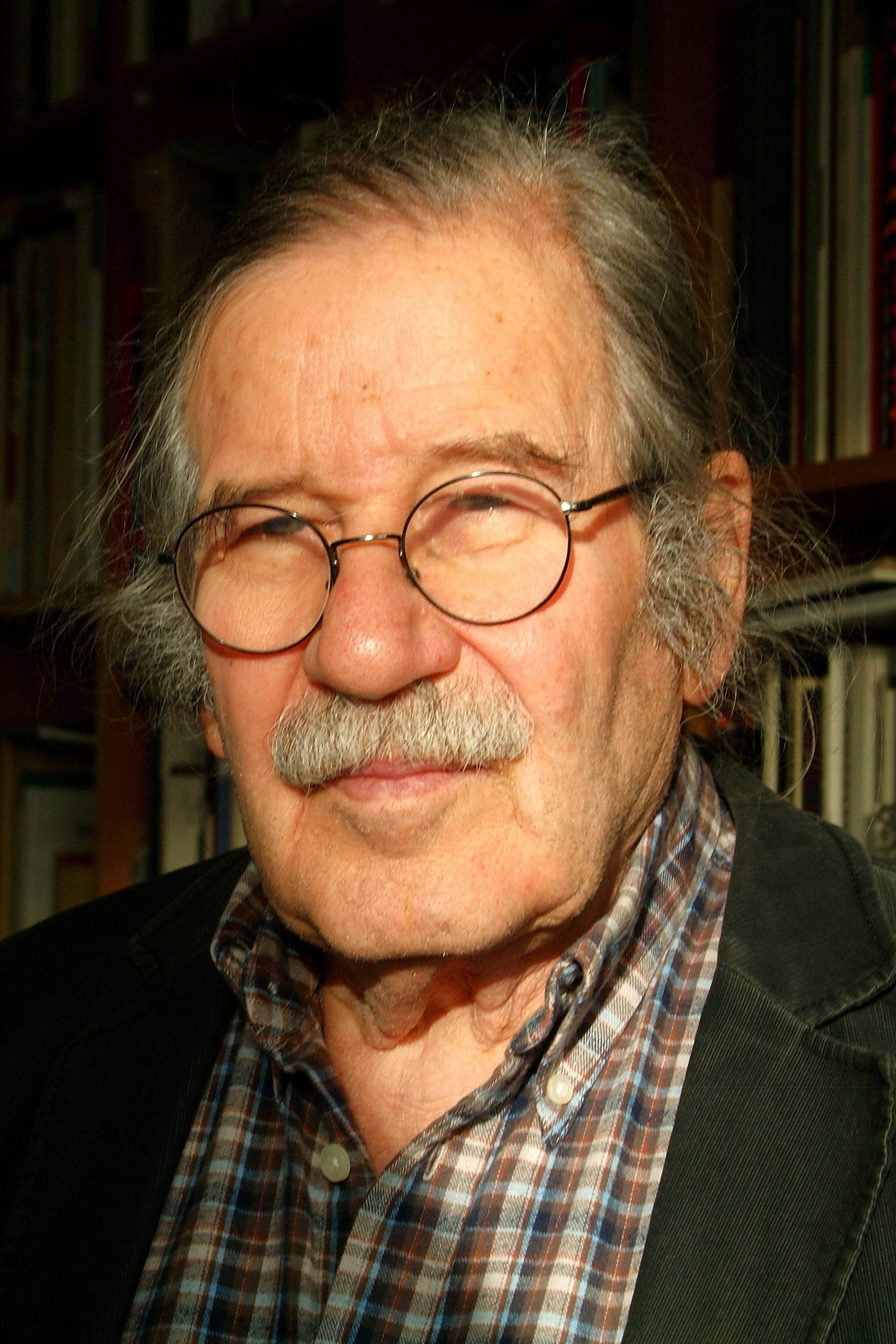
Siegfried Neuenhausen is a German sculptor, painter and graphic artist, author and publisher as well as a realist sculptor.


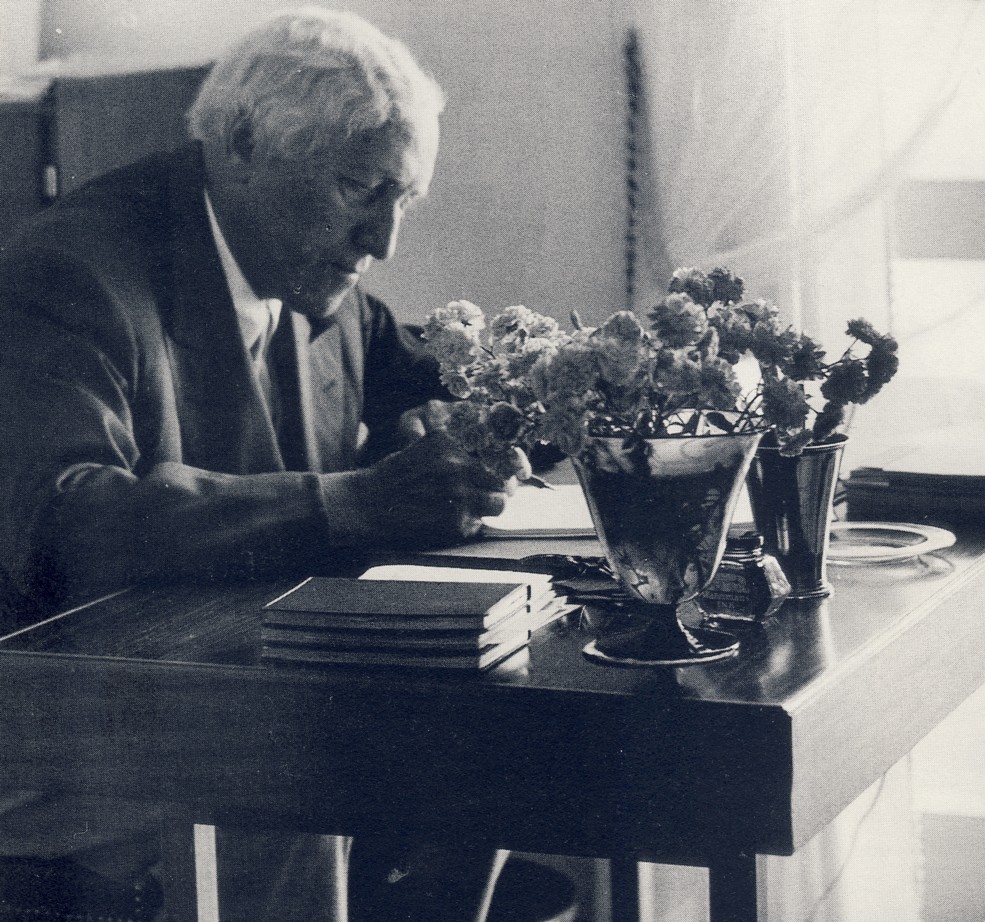


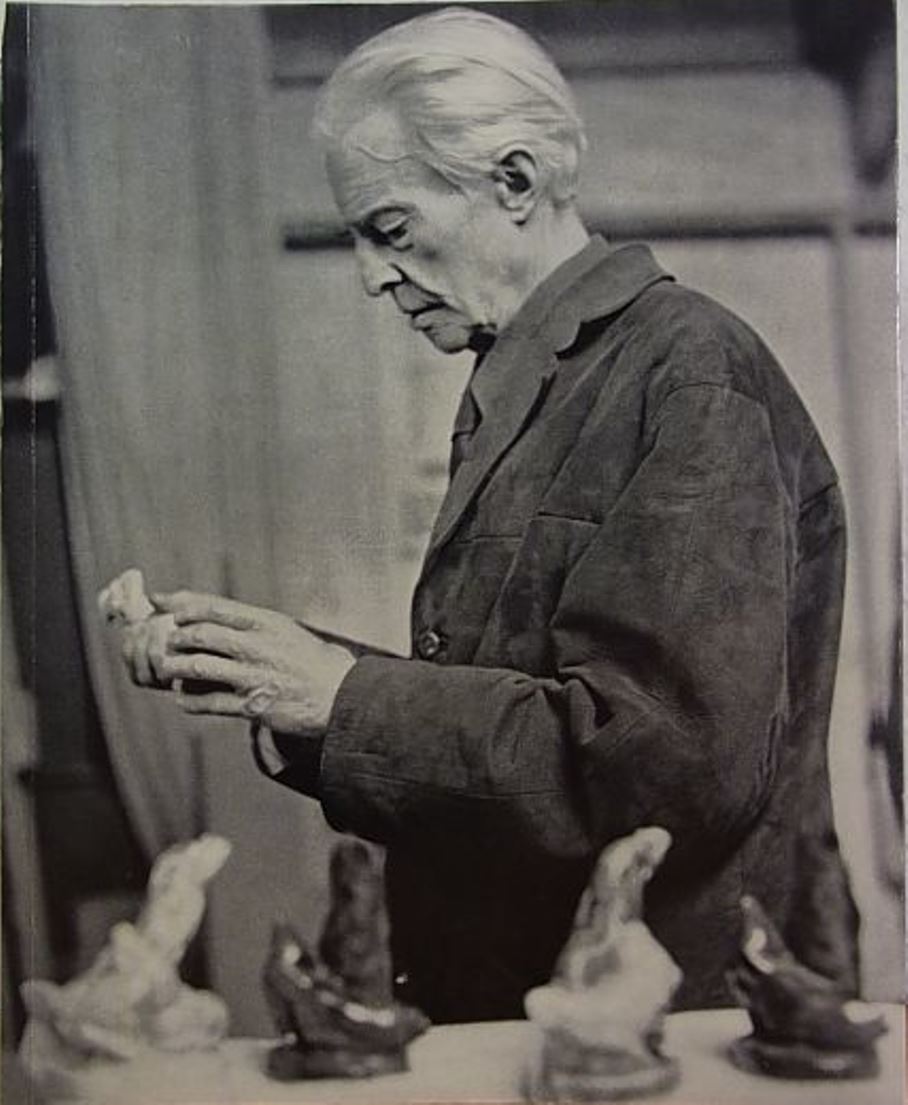


Gerhard Marcks was a German artist, known primarily as a sculptor, but who is also known for his drawings, woodcuts, lithographs and ceramics.


Gerhard Marcks was a German artist, known primarily as a sculptor, but who is also known for his drawings, woodcuts, lithographs and ceramics.


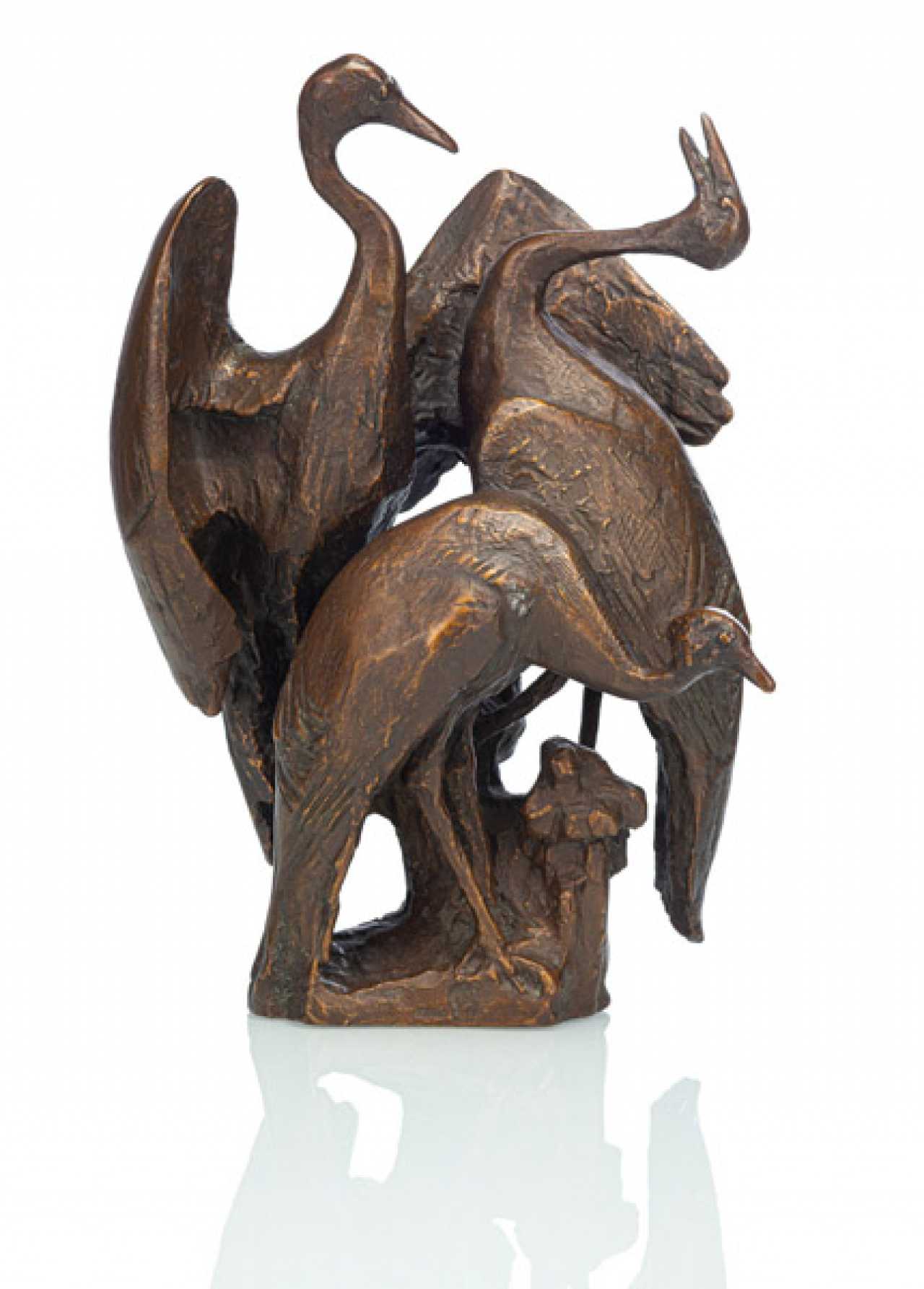
Hans Otto Sonnleitner is a German sculptor.
Otto was first trained by his sculptor father, Ludwig Sonnleitner, before continuing his studies at the Academy of Fine Arts in Munich. He completed several commissions for buildings in Würzburg before the outbreak of World War II, and returned to work as a sculptor after the end of the war.
Sonnleitner created many sculptures and fountains that are considered landmarks in Würzburg.


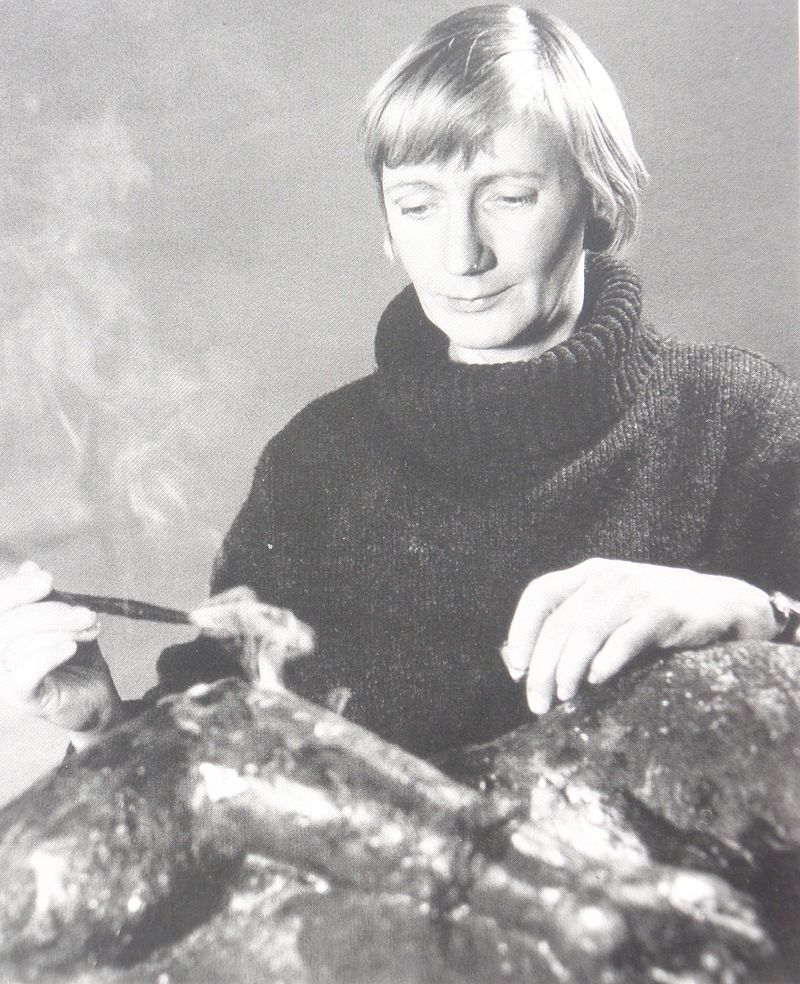


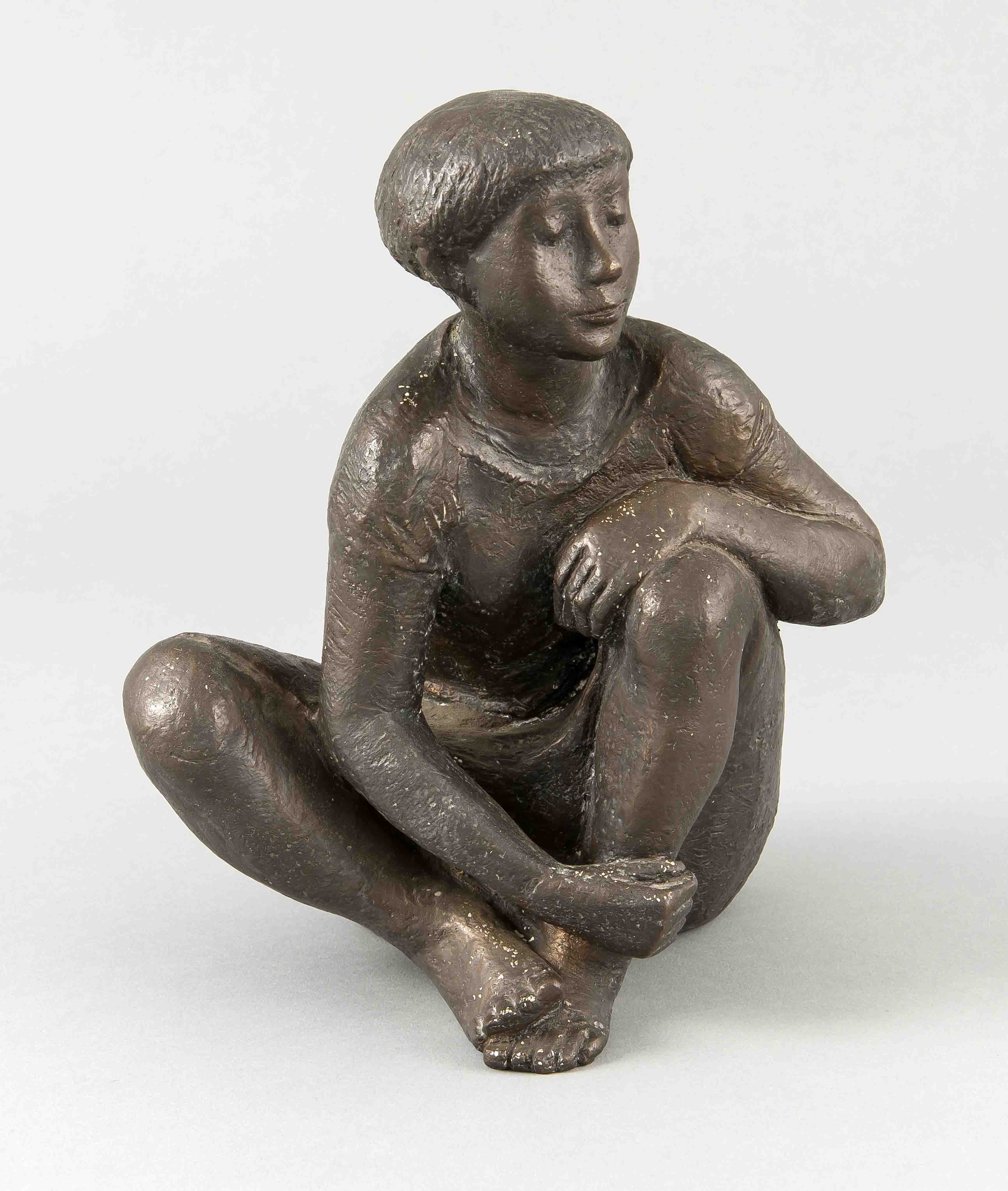
Maren Lipp was a German painter, sculptor, ceramist and drawer.


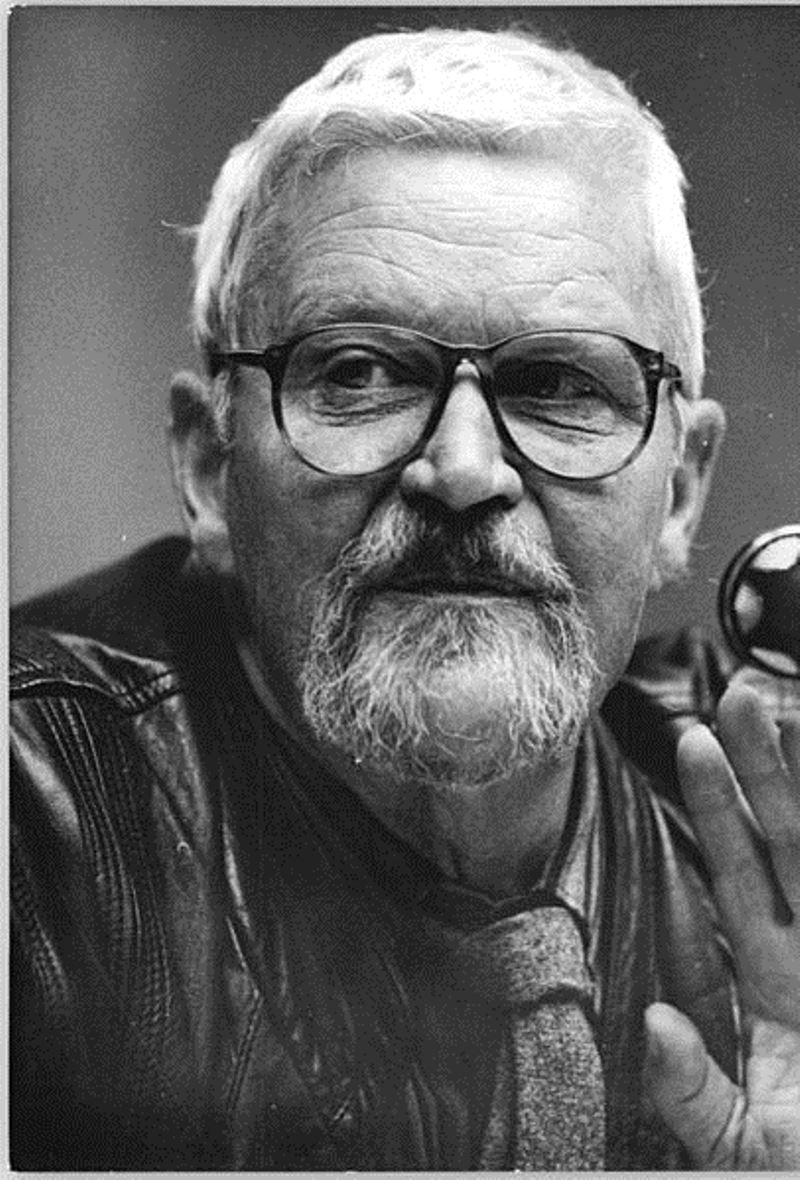
Jo Jastram, born Joachim Jastram, is a German sculptor.
Jastram studied at the Dresden University of Fine Arts and then at the University of Fine and Applied Arts in Berlin-Weißensee, earning a degree in sculpture. Later he taught himself at several universities and was a member of various state and public cultural associations. The sculptor was repeatedly awarded the Art Prize of the GDR.
Jo Jastram created an extensive collection of portraits during his long life, as well as many diverse compositions and sculptures in public spaces. Some of his most famous works are the "Fountain of the Joy of Life" on University Square in Rostock, created in 1978 in collaboration with Reinhard Dietrich, as well as "The Great African Journey" (1983), installed in Rostock's city harbor in 2008.
Jo Jastram's three sons Matthias, Michael, Jan Jastram and daughter Susanne Rast became painters and sculptors, and the sculptor Thomas Jastram is his nephew.


.jpg)
Michael Schwarze is a German sculptor.


Michael Schwarze is a German sculptor.


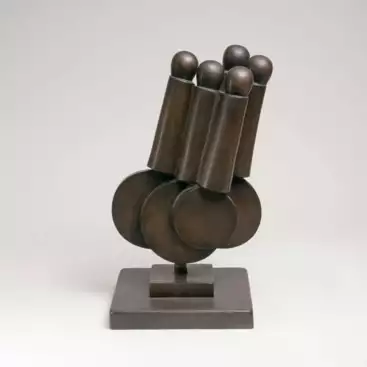
Georg Engst was a German sculptor.
Engst preferred to work in wood, stone and bronze, but also in aluminium, concrete and glass. Much of his artistic work from the mid-1950s onwards is abstract-geometric in character, initially in the form of inlaid panels and inlaid walls made of wood, for example for a commission for the conference room of the Regional Church Office in Hanover in 1957.


Georg Engst was a German sculptor.
Engst preferred to work in wood, stone and bronze, but also in aluminium, concrete and glass. Much of his artistic work from the mid-1950s onwards is abstract-geometric in character, initially in the form of inlaid panels and inlaid walls made of wood, for example for a commission for the conference room of the Regional Church Office in Hanover in 1957.


Georg Engst was a German sculptor.
Engst preferred to work in wood, stone and bronze, but also in aluminium, concrete and glass. Much of his artistic work from the mid-1950s onwards is abstract-geometric in character, initially in the form of inlaid panels and inlaid walls made of wood, for example for a commission for the conference room of the Regional Church Office in Hanover in 1957.


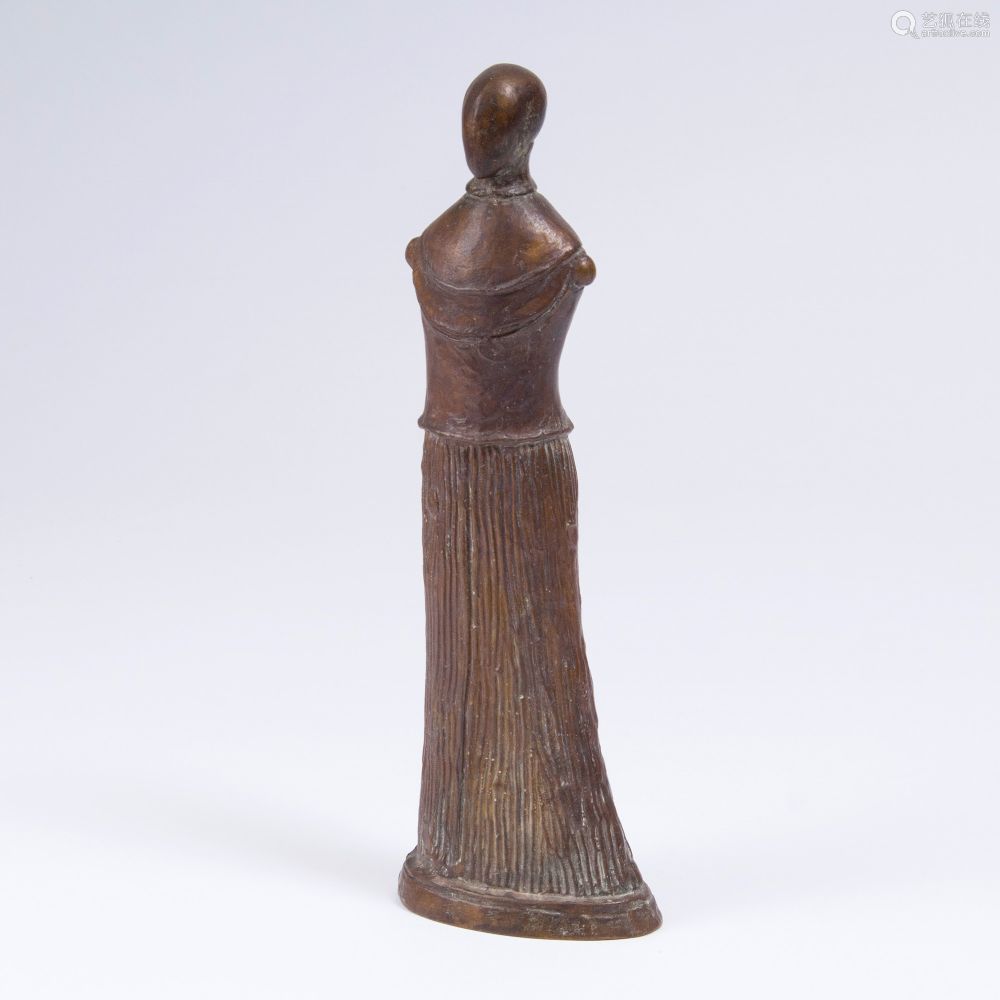
Edgar Augustin was a German painter and sculptor.
Augustin studied sculpture in Münster with Karl Ehlers, then was a pupil of the master Gustav Zeitz in Hamburg. His oeuvre includes partly abstract figurative representations in bronze, wood and plaster as well as paintings, drawings and graphics. Some of Edgar Augustine's sculptures are located in public spaces in Hamburg and other cities.
Edgar Augustin was a member of the Free Academy of Arts in Hamburg and the Special Association of Artists in Germany. In the second half of the 20th century, Augustin was one of the pioneers of figurative wood sculpture and is considered its most important representative.


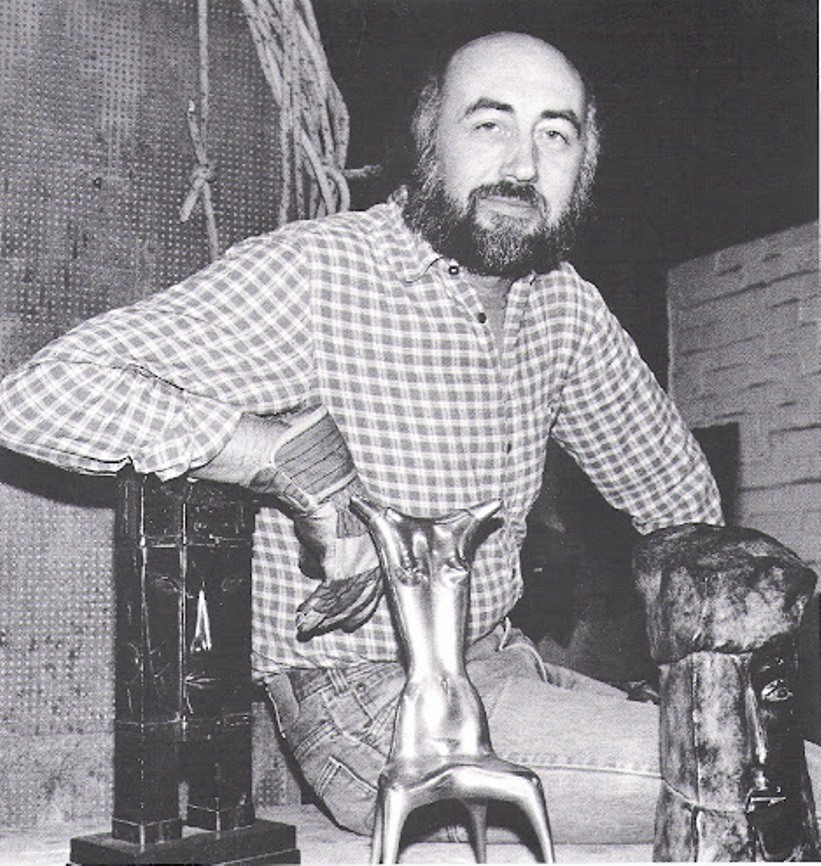


Georg Engst was a German sculptor.
Engst preferred to work in wood, stone and bronze, but also in aluminium, concrete and glass. Much of his artistic work from the mid-1950s onwards is abstract-geometric in character, initially in the form of inlaid panels and inlaid walls made of wood, for example for a commission for the conference room of the Regional Church Office in Hanover in 1957.