158 Items by auctions and galleries:
dual time










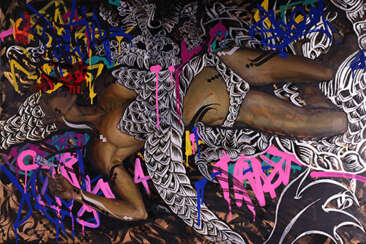

Imagine Dragon - Silver Dragon
Vera DG (b. 1983)  Shop DG Vera
Vera DG
04.11.1983
Ukraine
• Vera DG • Official member of the Ukrainian Pavilion of the 58th Venice Biennale • Speaker of I’M Design Conference • Participant the Year of Tolerance in Dubai • Independent visual artist • Modern calligrapher • Portraitist • Figurative painter •
«Art is a way of expressing my experiences in the world. It is interesting to understand the world in different ways, and from different points of view. That is why I am a multi-disciplinary artist, and I am working on various techniques and styles. Wall painting, calligraphy, graffiti, monumental graphics, aerography, body painting, illustration, comics are areas I focus on» Vera DG
Since 2016 Vera lives and works in Istanbul. She came to study calligraphy to the ancient city which unites East and West. Therefore, in Vera’s works of the last two years, there are so many influences of Arab and Iranian calligraphy, and at the same time, Vera connects in her artworks Oriental calligraphy with western European styles. It is a mix of characters, symbols, which acquires a special meaning and content.
Vera works in the worldwide-known style of Calligraffiti, which unites calligraphy and graffiti.
To discover more information about the artist, please, visit the site: veradg.com
Artist shop
DG Vera
Ukraine
Number of products: 21


Princess-Swan
Nataliia Bahatska (b. 1967)  Shop Bahatska Nataliia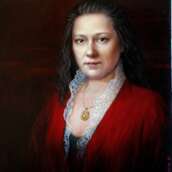
Nataliia Bahatska
20.10.1967
Ukraine
I was born in 1967.
Graduated childrens art school.
Graduated from Kyiv National University of Design, designer in 1993.
Academy of Psychosocial Technologies in 2008
The artworks are in Ukraine, Lithuania, Kazakhstan, Russia, Germany, Sweden, Switzerland, Italy, France, UK, USA, Vietnam, Canada, Netherlands.
Recently, all paintings have been created in hyperrealism and pop art.
Exhibition "Pro Cheese", ArtHall "D12", Kiev, 2021.
IV Ukrainian Festival of Contemporary Women's Art at the Institute of Contemporary Art of the National Academy of Arts of Ukraine, Kyiv, Ukraine, 2021
International exhibition "# 365daysafter" in the gallery "Artist", Kyiv, 2021. Exhibition "HRYVNA ART" in the Palace of Arts, Lviv, 2021.
Exhibition "HRYVNA ART" in the Museum of History of Kyiv, Kyiv, 2021.
Exhibition "HRYVNA ART" in the Ministry of Finance of Ukraine, Kyiv, 2021.
Exhibition at the Sky Mall, Kiev. 2021
Competition Pro Cheese Awards, Kiev, Parkovy Exhibition and Convention Center. Grand Prix. 2021
Exhibition "Барви світу" in Parlament of Ukraine. Kyiv. Ukraine, 2019
Sheldon Rose Gallery, "Big Ideas in Small Art", Toronto, Canada, 2019
Group exhibition from Ukraine at 58 Venice Biennale, "Falling shadow Dreams over gardens Giardini ". Italy, 2019
Exhibition "Vizionario" in la galleria Merlino Bottega d'arte di Firenze. Italy, 2019
Exhibition in ABC-art gallery. Kyiv, 2019
1st All-Ukrainian Triennale "NU-ART", Kremenchuk, 2018
"Ukraine from Trypillya to the present in the images of contemporary artists" - Biennial. National Union of Artists of Ukraine (NUAU), Kyiv, 2018
"Picturesque Ukraine", NUAU,the city of Severodonetsk, 2017.
Biennale of abstract Painting,NUAU, Kyiv, 2017
Until the Day of the Artist, NUAU, Kyiv, 2016, 2017, 2018.
"Portrait Painting" , gallery "Mytets", Kyiv, 2017
"To the 160th anniversary of Ivan Franko",NUAU, Ivano-Frankivsk city, 2016
On Independence Day of Ukraine, NUAU, Kyiv, 2017, 2018,
When buying, please specify the payment and delivery methods.
Artist shop
Bahatska Nataliia
Ukraine
Number of products: 231







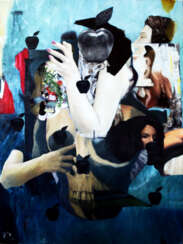

Black Apples
Daniel Wille (b. 1987)  Shop Wille Daniel
Daniel Wille
27.02.1987
Austria
In art I always was seeking for the opportunity to make the viewer feel the picture as something alive, to feel the presence. But not only with the help of classical techniques, or not only with the help of it, but more through associative, subconscious or intuitive.
Using various objects, fabrics, textures, you can create something you can touch to change, something that is exposed to the environment, natural and aging. And that can revive the canvas.
It was always paradoxical for me to feel impressionism more alive comparing to classical realism, I found the key to this answer in Alla prima techniques emotions and admiration are instantly imprinted on the canvas.
Therefore, I try to create work as quick as possible so as not to move out to another environment. To create a good picture you have to live it, survive it.
Even if the picture is not completed, then it will provide an opportunity viewer's imagination.
Everything you can imagine is real.- Picasso.
At recent moment I am working on a new direction "Anrealism".
Born in Samara, Russian Federation.
1987.
Studied interior design and architecture , joined the global art League 2014.
Was exhibiting works in Russia, USA, Israel.
2015 Relocated to Israel, joined the community of artists there.
In 2018 married and relocated to Austria where recently living.
Since childhood, I was surrounded by bunch of books about history of Italian art and architecture, and also most often visited this country with parents who were dealing with fashion boutiques. Grandmother was teacher of piano and singing , given private lessons. So house was fulfilled with atmosphere which motivated me to start creating from age of 3.
Artist shop
Wille Daniel
Austria
Number of products: 21
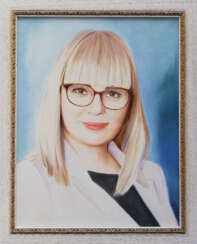


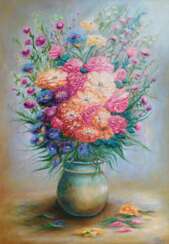

Радужный букет
Elena Filippova (b. 1980) 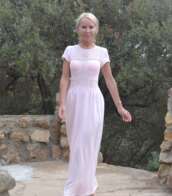 Shop Filippova Elena
Elena Filippova
13.04.1980
Russia
Елена Филиппова (13.04.1980)
Родилась и живу по сей день в прекрасном городе Санкт-Петербурге. Окончила Университет Технологии и Дизайна, работала редактором, литсотрудником отдела прозы и иллюстратором в издательствах журнала "Нева", "Русская коллекция". В 2019 г. вышла публикация моей книги, детской сказки "Легенда о настоящей силе", где я не только автор, но и художник оформитель.
Всю свою жизнь я ищу вдохновение в красоте природы и передаю это в своём творчестве через призму собственного видения, добавляя элементы фантазии и сказки. Свои работу я пишу масляными красками долго и тщательно в особой авторской манере, используя смешанные техники, наложения цветовых слоёв и проработку мелких деталей. Каждая работа неповторима и индивидуальна, потому что сюжеты рождаются в голове или на почве ярких позитивных впечатлений. Я вижу мир прекрасным, безграничным, радужным и немного волшебным, это отражается в моих произведениях. Я верю, что дом, где будет висеть одна из моих картин, наполнится атмосферой радости и счастья!
Elena Filippova (13.04.1980)
I live in St. Petersburg. Graduated from the University of Technology and Design. In November 2019, the publication of my book - "the Legend of true power", the author and Illustrator of which I am.
Since early childhood, I was a creative person.
Each picture is painted for several months in a special author's manner using mixed techniques-applying color to color by lasing, working out small details, which adds volume and light. My works are unique and individual, because the stories are born in the head, and each picture becomes a child, which is invested with a piece of soul, harmony and positive energy. I see the world as iridescent, blooming, a little magical and fabulous. After all, our life is so lacking in bright colors! Give yourself a piece of joy and happiness!
Artist shop
Filippova Elena
Russia
Number of products: 13







Sonny Stitt & Michel Petrucciani
Yurii Yermolenko (b. 1973)  Shop Yermolenko Yurii
Yurii Yermolenko
02.10.1973
Ukraine
Yury Ermolenko – A Master of Fine Arts (MFA)
Born in 1973 Kiev (Ukraine) Lives and works in Kiev.
Education:
1980 – 1992 – T. Shevchenko Republican art school, Kiev, Ukraine
1992 – 1998 – National Academy of Fine Art and Architecture (NAFAA), Kiev, Ukraine
1998 – 2001 – Post-graduate education ( M.A.degree ), NAFAA, Kiev, Ukraine
2003 – Got a scholarship of Ministry of Culture of Poland ”GOUDE POLONIA”, Krakow, Poland
Main exhibitions:
2018 - "Garden of Wandering Geniuses" project, (Х.Л.А.М.), Kyiv, Ukraine.
2017 – 2018 – “MY FAVOURITE DOLLS” project, Tauvers Gallery international, Kiev, Ukraine
2017 – 2018 – “Flea Psychedelic Market” project, (Х.Л.А.М.), Kyiv, Ukraine
2016 – 2017 – In “Search of Dark Energy”, Vysehrad, Prague, Czech Republic; Hofburg Palace, Vienna, Austria.
2014 – 2015 – “Mу Favorite Dolls”, “Brothers in Arms”
2013 – “Facevinyl”
2013 – “Ukrainian Psychedel”, “Suitcases the Classics”
2013 – “Magical Garden”
2013 – “May be always be my mother, may there always be me”
2012 – “Conversion”
2012 – “Immigration to Cuba”
2011 – “Sings of Cuba”
2011 – “Ladies I didn`t get along with”
2010 – “Metaphysical Landscape of Zaporizhia”
2010 – “Metaphysical Landscape of Kaniv”
2010 – “A hedgehog jazz f**k”
2009 – “Eternal Values”
2009 – “Peruvian Toys”
2008 – “Death of Brands”
2007 – “Pink”
2007 – “Lolita’s on the Arena”
2007 – “Silicon”
2006 – “Paradise”
2006 – “Flea Market”
2005 – "Alice new!"
2005 – “Entomology of Souls”
2004 – "13. ICONOSTASIS"
2004 – “Hunting”
2003 – “KANIV – RAPAN”
2003 – “Baltic – Hel”
THE PROJECTS IN THE ART GROUP "TERRACES":
2002 – “Flash
2001 – “Indigo-Purring Cort”
2000 – “New York City”
2000 – “Flash”
1999 – “So good!”
1998 – “Shout on Plateaus”
1997 – “Dances on Colored Rope”
1997 – “Lighting Art and Painting Art”
Artist shop
Yermolenko Yurii
Ukraine
Number of products: 90