granit
















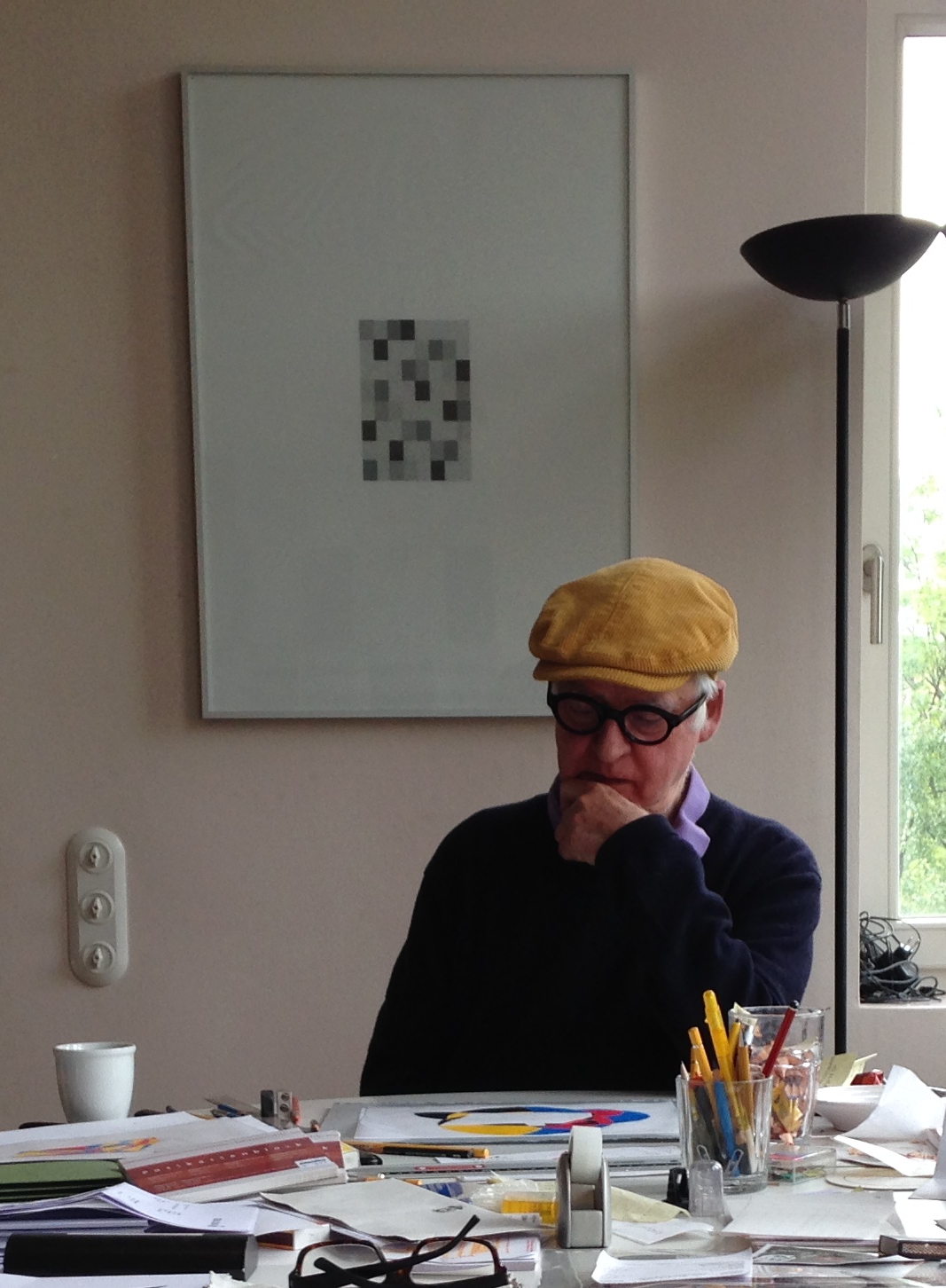
Ulrich Rückriem is a German sculptor known for his large-scale stone sculptures that are often displayed in public spaces. He studied at the Werkkunstschule Krefeld and the Kunstakademie Düsseldorf.
Rückriem's early work was influenced by the Minimalist movement, and he became known for creating abstract, geometric sculptures from raw stone blocks. He often works with granite, basalt, and other types of hard stone, using traditional carving techniques to shape and refine his forms.
In the 1970s, Rückriem began creating large-scale public installations, including his "Stone Alignments" series, which consists of rows of standing stones that evoke ancient megaliths and other prehistoric monuments. His work often engages with the natural environment, creating a dialogue between the man-made and the organic.
Rückriem has exhibited his work in museums and galleries around the world, including the Tate Gallery in London, the Solomon R. Guggenheim Museum in New York, and the Kunstmuseum Bonn in Germany. He has also received numerous awards and honors for his contributions to the field of sculpture, including the International Sculpture Prize in 1987 and the Praemium Imperiale in 2010.











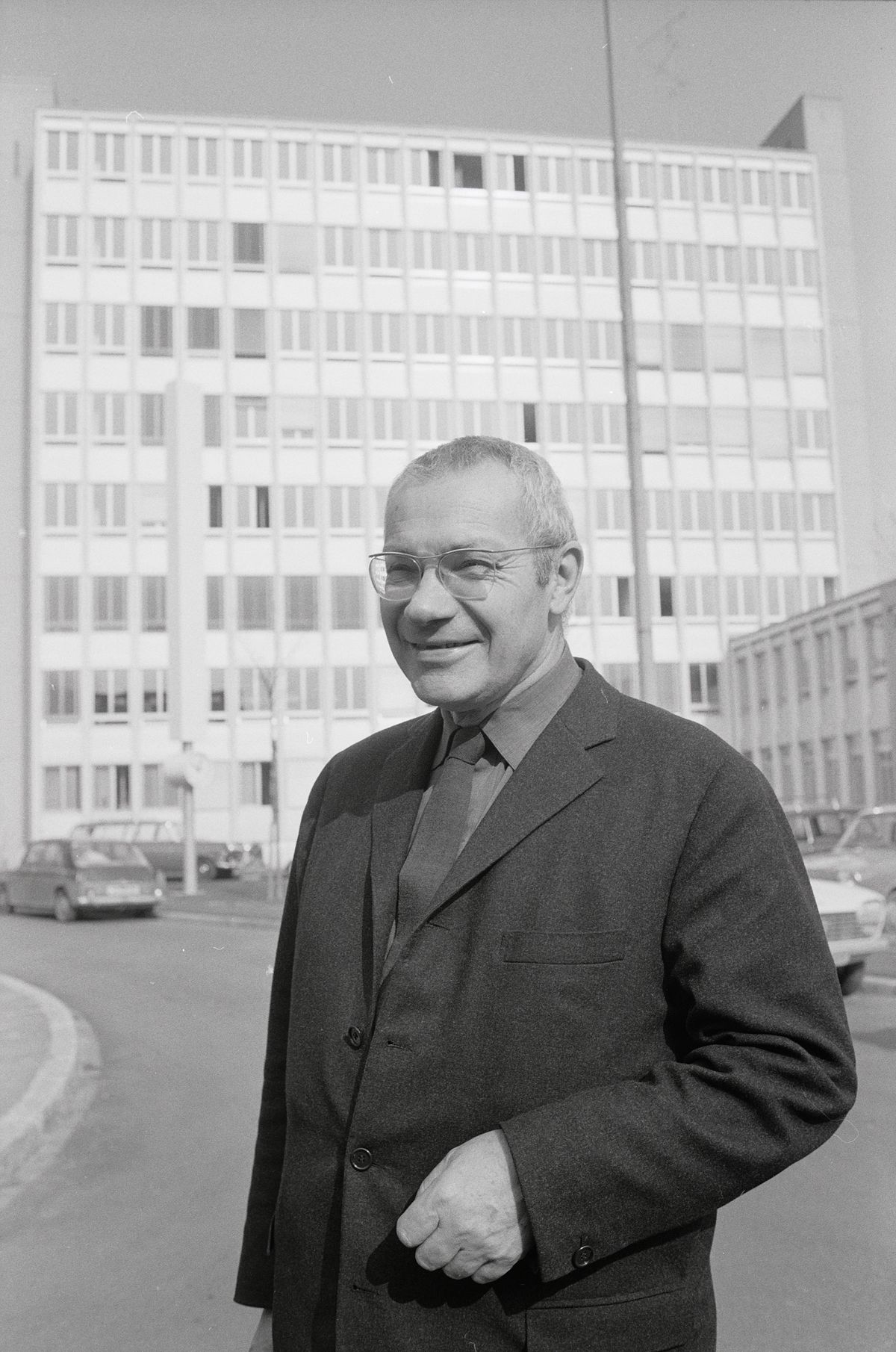
Max Bill, a Swiss artist, architect, painter, typeface designer, industrial designer, and graphic designer, emerged as a key figure in 20th-century art and design. Born in Winterthur, Switzerland, in 1908, Bill's education at the Bauhaus under luminaries like Wassily Kandinsky, Paul Klee, and Oskar Schlemmer profoundly influenced his multidisciplinary approach. His work spans from graphic design, where he was instrumental in shaping Swiss design from the 1950s, to product design with iconic creations like the Ulmer Hocker, a versatile stool designed in 1954.
Bill's contributions to concrete art and his role in founding the Ulm School of Design alongside Inge Aicher-Scholl and Otl Aicher in 1953, mark him as a pioneer who blurred the lines between art, design, and architecture. His theoretical writings and teaching at the Ulm School further underscored his commitment to integrating art with science, shaping a generation of designers and artists.
Noteworthy among his architectural works are his own house and studio built in Zurich-Höngg in the early 1930s and a series of public sculptures that challenge perceptions and engage public spaces in innovative ways. His legacy also includes influential roles in politics, contributions to the field of education, and the establishment of foundations to preserve his work and ideals.
Bill's extensive oeuvre, which also includes timepieces designed for Junghans and a multitude of sculptures, demonstrates his belief in the unity of form and function and the possibility of art to embody the principles of the new physics of the 20th century. His works are not only held in high regard for their aesthetic and functional qualities but also for their ability to convey complex theoretical ideas in tangible forms.
For collectors and experts in art and antiques, Max Bill remains a figure of immense importance, whose works continue to inspire and influence contemporary design and art practices. Sign up for updates related to Max Bill to stay informed about new product sales and auction events showcasing his remarkable contributions to modern art and design.