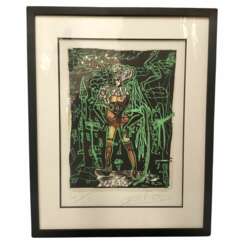
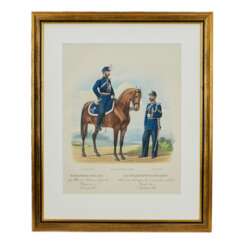
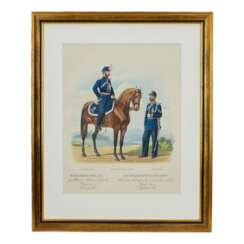
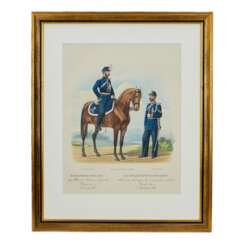
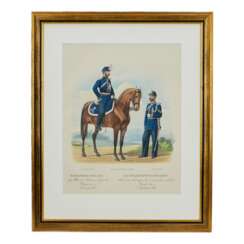
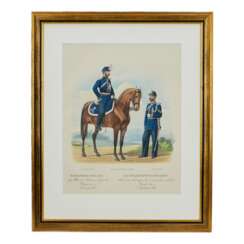
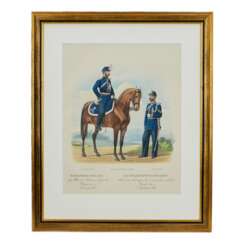
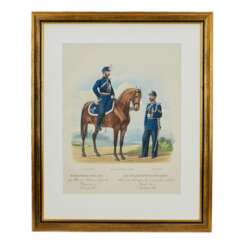
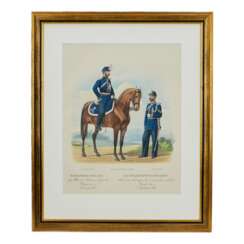
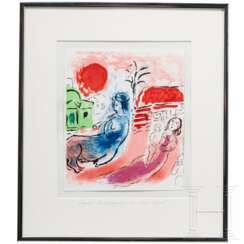
lithograph on paper



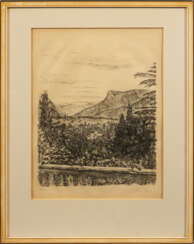





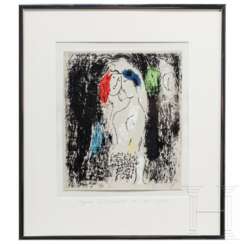
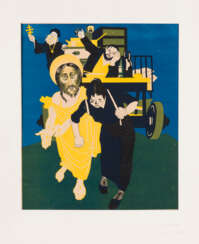
Eduardo Paolozzi was a Scottish artist renowned for his pioneering contributions to the Pop Art movement. His work, characterized by an amalgamation of popular culture references and technological imagery, played a significant role in shaping the visual arts landscape of the 20th century. Eduardo Paolozzi's graphic works, particularly from the 1960s, broke new ground in the silkscreen medium, with notable series such as "As Is When" and "Moonstrips Empire News" showcasing his innovative approach to art that combines elements of science, technology, and pop culture.
After a transformative period in Paris, where he interacted with key figures of the Surrealist movement, Eduardo Paolozzi returned to the UK, where he became a central figure in the formation of the Independent Group. This collective was instrumental in the development of British Pop Art, with Paolozzi's early collages, especially "I Was a Rich Man's Plaything," marking a seminal moment in the genre's emergence.
His artistic ventures were not confined to printmaking and collage; Eduardo Paolozzi's sculptures and mosaic murals, such as those for Tottenham Court Road tube station in London, also garnered acclaim for their intricate detail and thematic complexity. The artist's influence extended into his academic roles, where he nurtured future generations of artists.
Eduardo Paolozzi's legacy is preserved through extensive collections and exhibitions, such as at the National Galleries of Scotland, which holds a significant number of his works. This includes a recreation of his studio, providing insight into his creative process and the diverse influences that shaped his art.
For enthusiasts and collectors keen on delving deeper into Eduardo Paolozzi's world, signing up for updates can offer exclusive access to sales and auction events related to his works. This ensures that aficionados stay informed about opportunities to engage with the art and legacy of this influential figure.



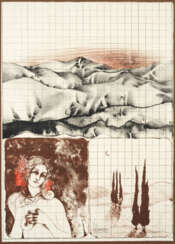
Paul Wunderlich was a German painter, sculptor and graphic artist. He designed Surrealist paintings and erotic sculptures. He often created paintings which referred to mythological legends.








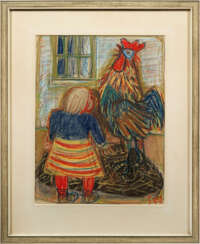

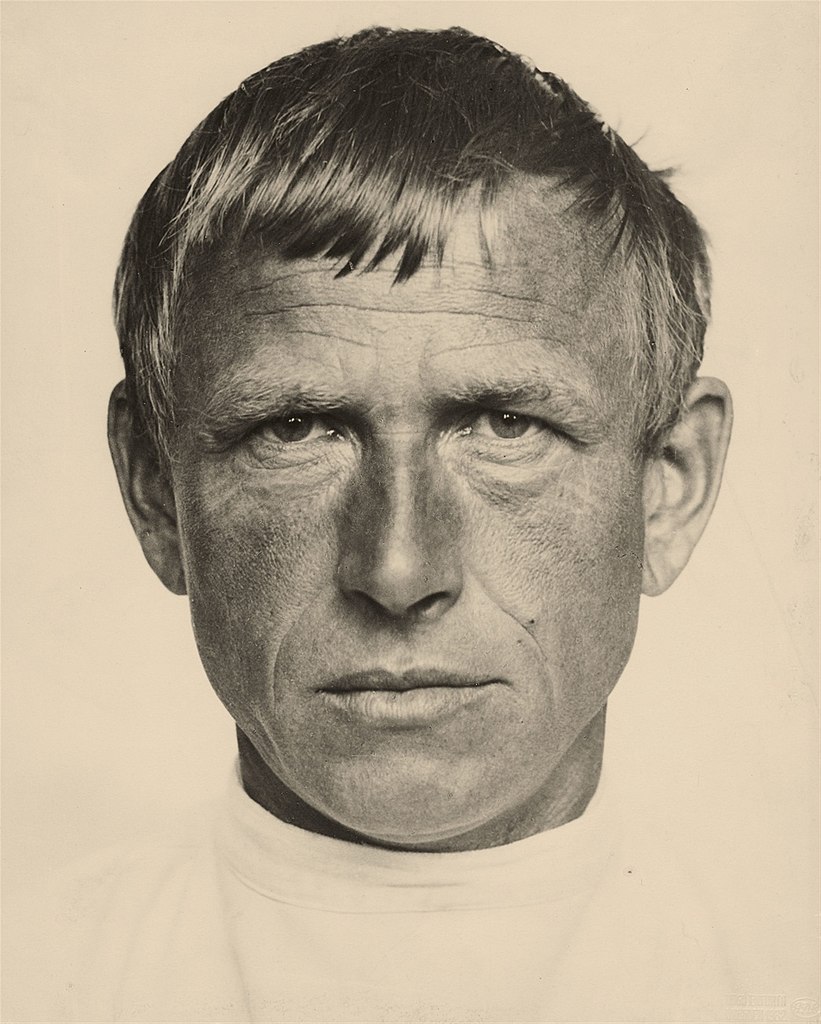
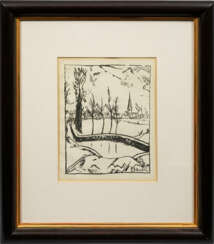
Wilhelm Heinrich Otto Dix was a German artist whose work stands as a stark, unyielding reflection of the societal tumult and trauma of the early 20th century. Born in 1891 in Untermhaus, Germany, Dix's early life was steeped in the arts, his ambition to become an artist nurtured by both familial influence and formal education in Dresden. His experiences as a soldier in World War I deeply influenced his artistic direction, leading him to vividly depict the horrors of war and the decay of the Weimar Republic with a brutal realism that became his signature style.
Dix's association with the Dada movement and the New Objectivity (Neue Sachlichkeit) further honed his critical, often cynical portrayal of post-war society. His works, such as "The Trench" and "War Cripples," expose the visceral aftermath of conflict, while his engagement with the Dadaists imbued his art with a disruptive, confrontational energy against societal norms and the art establishment.
Perhaps most notable is Dix's ability to capture the psychological depth and societal critiques through his portraits and landscapes, which ranged from the grotesque to the surreal. Paintings like "Portrait of the Journalist Sylvia von Harden" and the triptychs "Metropolis" and "War" are emblematic of his keen observation and stark depiction of the era's social and political unrest.
Despite facing significant adversity, including being labeled a degenerate artist by the Nazi regime and facing professional and personal setbacks, Dix's legacy as a painter and printmaker endures. His works are not only historical documents but also profound reflections on humanity, war, and society, resonating with collectors and art experts alike.
For enthusiasts of culture, art, and history, Dix's oeuvre offers an unflinching look into the human condition under the strain of societal and political upheaval. His contributions to painting and printmaking continue to be celebrated in museums and galleries worldwide, underscoring the enduring relevance of his work.
For those interested in exploring the profound depth and historical significance of Otto Dix's work, signing up for updates on new product sales and auction events related to his art can provide invaluable insights. This subscription is a gateway to staying informed about opportunities to engage with the tangible pieces of Dix's enduring legacy.