möwen

Joseph Wenglein was a German painter who is often referred to as one of the last significant landscape painters of the 19th century Munich school.
Parallel to his law studies Joseph Wenglein studied at the Academy of Fine Arts in Munich. He then switched entirely to art and became a pupil of the landscape painter Johann Gottfried Steffan. On his recommendation, Wenglein sometime later became a pupil of the painter Adolf Heinrich Lier, whose colouristic tendencies, calculated to express profound moods, particularly appealed to him.
Josef Wenglein knew how to reproduce the change of daylight, especially in spring and autumn, with a fine sense of the slightest atmospheric fluctuations and to vary the grey pleasant tone of the Bavarian plateau in all its nuances masterfully.


Joseph Wenglein was a German painter who is often referred to as one of the last significant landscape painters of the 19th century Munich school.
Parallel to his law studies Joseph Wenglein studied at the Academy of Fine Arts in Munich. He then switched entirely to art and became a pupil of the landscape painter Johann Gottfried Steffan. On his recommendation, Wenglein sometime later became a pupil of the painter Adolf Heinrich Lier, whose colouristic tendencies, calculated to express profound moods, particularly appealed to him.
Josef Wenglein knew how to reproduce the change of daylight, especially in spring and autumn, with a fine sense of the slightest atmospheric fluctuations and to vary the grey pleasant tone of the Bavarian plateau in all its nuances masterfully.


Joseph Wenglein was a German painter who is often referred to as one of the last significant landscape painters of the 19th century Munich school.
Parallel to his law studies Joseph Wenglein studied at the Academy of Fine Arts in Munich. He then switched entirely to art and became a pupil of the landscape painter Johann Gottfried Steffan. On his recommendation, Wenglein sometime later became a pupil of the painter Adolf Heinrich Lier, whose colouristic tendencies, calculated to express profound moods, particularly appealed to him.
Josef Wenglein knew how to reproduce the change of daylight, especially in spring and autumn, with a fine sense of the slightest atmospheric fluctuations and to vary the grey pleasant tone of the Bavarian plateau in all its nuances masterfully.


Joseph Wenglein was a German painter who is often referred to as one of the last significant landscape painters of the 19th century Munich school.
Parallel to his law studies Joseph Wenglein studied at the Academy of Fine Arts in Munich. He then switched entirely to art and became a pupil of the landscape painter Johann Gottfried Steffan. On his recommendation, Wenglein sometime later became a pupil of the painter Adolf Heinrich Lier, whose colouristic tendencies, calculated to express profound moods, particularly appealed to him.
Josef Wenglein knew how to reproduce the change of daylight, especially in spring and autumn, with a fine sense of the slightest atmospheric fluctuations and to vary the grey pleasant tone of the Bavarian plateau in all its nuances masterfully.


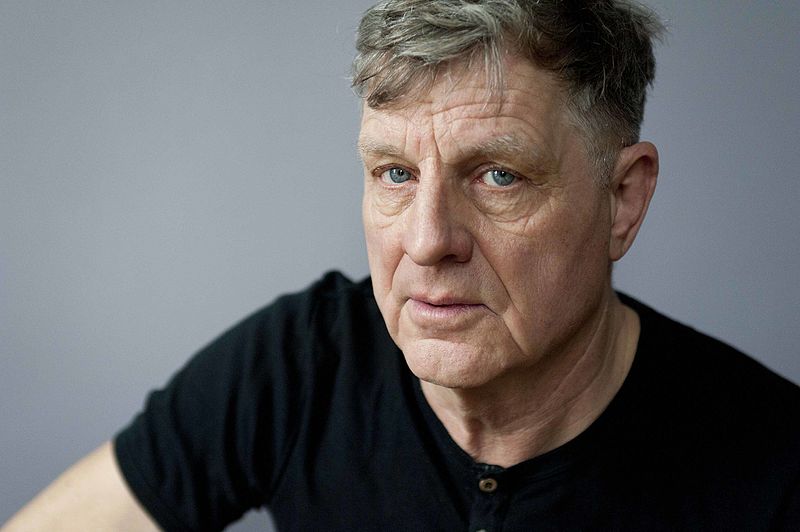
Rainer Fetting is a German painter and sculptor.
Rainer Fetting was one of the co-founders and main protagonists of the Galerie am Moritzplatz in Berlin, founded in the late 1970s by a group of young artists (mainly painters) from the class of Karl Horst Hödicke at the former Berliner Hochschule für Bildende Künste (Berlin Art Academy, today known as Universität der Künste). Fetting is now one of the internationally best known contemporary German artists, having created a large oeuvre of expressive figurative paintings covering many different kinds of subject-matter, as well as many bronze sculptures.