



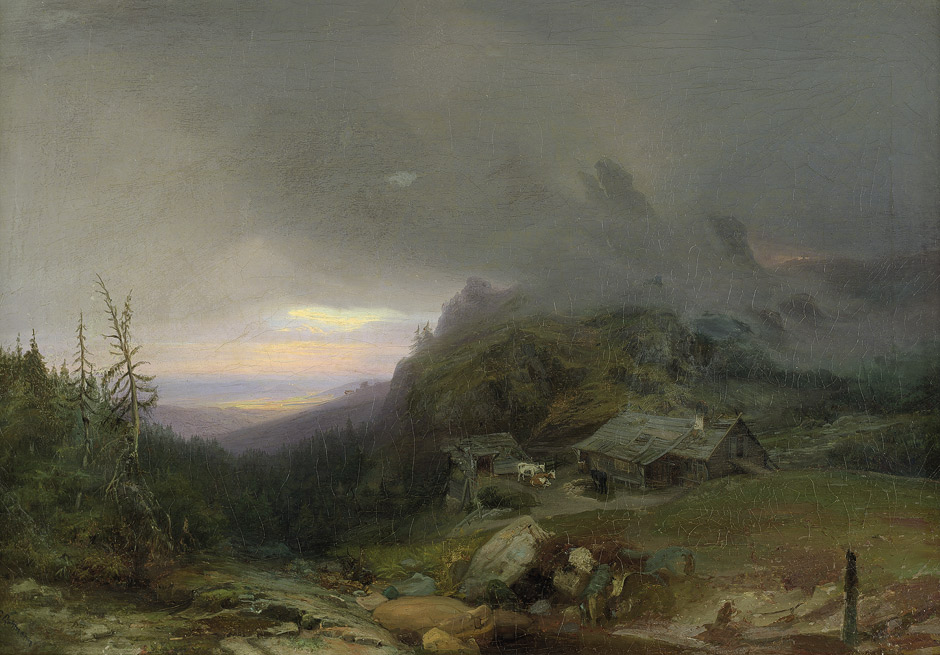
münchner schule

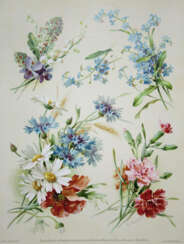
Kaspar Heinrich Merz was a Swiss draftsman and copper and steel engraver. From 1821, with the help of "a few patrons", he was "apprenticed" to the copper engraver Johann Jakob Lips in Zurich for four years. He also worked as an engraver for the magazine Historical Entertainment. Merz had also acquired a reputation for his color engravings, some of which he created over years of individual work.



Heinrich Johann von Zügel was a German painter of the late nineteenth century and the first half of the twentieth century. He is known as a painter who specialized in depicting farm animals in dramatic and humorous situations.
Von Zügel invested more than 40 years in the subject of "Hard Labor," depicting mostly the work of oxen. By creating 24 versions of this subject, the artist demonstrated the evolution of his skill from realistic detailing to cubic and monumental interpretation. Von Zügel also created light impressionist paintings, including a self-portrait at the age of 77. In addition to animals, he also painted portraits and cityscapes.


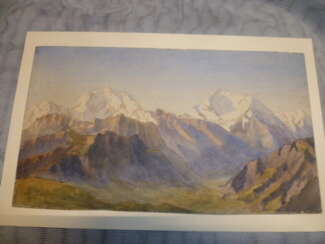
Joseph Wenglein was a German painter who is often referred to as one of the last significant landscape painters of the 19th century Munich school.
Parallel to his law studies Joseph Wenglein studied at the Academy of Fine Arts in Munich. He then switched entirely to art and became a pupil of the landscape painter Johann Gottfried Steffan. On his recommendation, Wenglein sometime later became a pupil of the painter Adolf Heinrich Lier, whose colouristic tendencies, calculated to express profound moods, particularly appealed to him.
Josef Wenglein knew how to reproduce the change of daylight, especially in spring and autumn, with a fine sense of the slightest atmospheric fluctuations and to vary the grey pleasant tone of the Bavarian plateau in all its nuances masterfully.


Joseph Wenglein was a German painter who is often referred to as one of the last significant landscape painters of the 19th century Munich school.
Parallel to his law studies Joseph Wenglein studied at the Academy of Fine Arts in Munich. He then switched entirely to art and became a pupil of the landscape painter Johann Gottfried Steffan. On his recommendation, Wenglein sometime later became a pupil of the painter Adolf Heinrich Lier, whose colouristic tendencies, calculated to express profound moods, particularly appealed to him.
Josef Wenglein knew how to reproduce the change of daylight, especially in spring and autumn, with a fine sense of the slightest atmospheric fluctuations and to vary the grey pleasant tone of the Bavarian plateau in all its nuances masterfully.


Joseph Wenglein was a German painter who is often referred to as one of the last significant landscape painters of the 19th century Munich school.
Parallel to his law studies Joseph Wenglein studied at the Academy of Fine Arts in Munich. He then switched entirely to art and became a pupil of the landscape painter Johann Gottfried Steffan. On his recommendation, Wenglein sometime later became a pupil of the painter Adolf Heinrich Lier, whose colouristic tendencies, calculated to express profound moods, particularly appealed to him.
Josef Wenglein knew how to reproduce the change of daylight, especially in spring and autumn, with a fine sense of the slightest atmospheric fluctuations and to vary the grey pleasant tone of the Bavarian plateau in all its nuances masterfully.