10977 Items by auctions and galleries:
mat





Lot 5456 Konsul Weber - a Uniform ensemble of a diplomat
A106us: A US Lifetime Headgear Collection and other Imperial and WW II Collectibles 
Hermann Historica
A106us: A US Lifetime Headgear Collection and other Imperial and WW II Collectibles
Date: 08.11.2025 14:00 UTC +02:00
Number of lots in the catalog: 511


Lot 5458 Official uniform for a Ministerialdirektor in the diplomatic service
A106us: A US Lifetime Headgear Collection and other Imperial and WW II Collectibles
Hermann Historica
A106us: A US Lifetime Headgear Collection and other Imperial and WW II Collectibles
Date: 08.11.2025 14:00 UTC +02:00
Number of lots in the catalog: 511
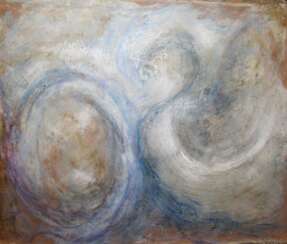

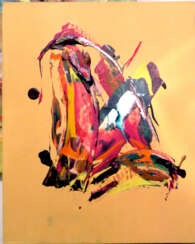
Swan into a Snake Abstract Transformation, original painting forever Превращение Лебедя в Змею, абстрактный оригинал
Matkovsky Dmitri (b. 1961)  Shop Dmitri Matkovsky
Matkovsky Dmitri
01.02.1961
Russia
I’m artist synesthetes*, Abstract Expressionist.
Emotions are very important to me. All my life is at this particular moment. It’s like improvisation in music. You need to explain all life in one moment, in one phrase, in one white square…
I love colors, I love paint, and I love canvas, white canvas. I like even prepare a canvas for painting, I just love to be an artist.
I feel my self so liberated when creating art. First, because I can produce something that is influence on human’s mood or state of mind, and second because I can escape this reality. And I like this feeling.
My paintings have been sold for years to offices, shops and private residences in Canada, Australia, USA, Europe etc. Up until now in 18 countries.
Дмитрий Матковский — художник-синестет. В психологии существует понятие «синестезии», особого способа восприятия действительности, когда информация, полученная определёнными органами чувств, приобретает дополнительное качественное значение. Дмитрий Матковский, в свою очередь, имеет «цветовой слух». Художник воспринимает звуки через цвет, а свои работы называет «музыкой на холсте».
Убедиться в особенности своих ощущений автору выпал шанс довольно рано: его школьная группа, «Мануфактура», стала победителем первого Ленинградского Рок-фестиваля, после чего он 10 лет играл в составе «АукцЫона»
Оказавшись в Канаде в 2001 г. ДМ полностью отдался миру живописи. 10 лет жизни в Сев. Америке оформили его как профессионала в области изобразительного искусства, заставили говорить о нем в мире галерейного бизнеса. За это время Более 240 работ ДМ были куплены частными коллекционерами и музеями Америки, Европы и Японии.
В настоящий момент Дмитрий Матковский живет в СПб и продолжает заниматься живописью, 3D анимацией, дизайном, музыкой, йогой, а также публицистическим творчеством.
Artist shop
Dmitri Matkovsky
Russia
Number of products: 16



























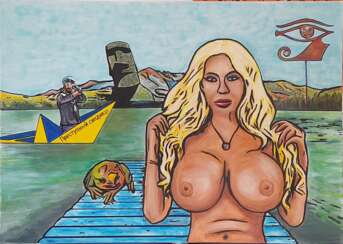
Intimate art
Elbe Brave (b. 1975)  Shop Brave Elbe
Elbe Brave
05.05.1975
USA
About Elbe Brave
To experience an ELBE painting is to live a moment of the artist’s exuberant life. Elena is energetic, exciting, complex–an introspective extrovert and passionate. She is genuine, perhaps the most powerful force in her art, as her paintings express exactly what she is feeling at any given moment. Rooms come alive with the expressive colors and explosive strokes of an ELBE original or print. Ukrainian-born and West Coast-nurtured Elena Berman burst forth onto the international art scene with consecutive shows in LA, Miami and Hawaii. The healthy life expert- founder of Your Energy Healing Arts (YEHA) encourages attendees to pursue their dreams and serves as the perfect example of transformation. Berman went on to develop her natural talent, her bright acrylic –on-canvas abstract and impressionist-style paintings pop with life, joy, and vitality. “By painting, I chose first to brighten my own life so I could then brighten the lives of others” -says Berman, who signs her work ELBE. Elena attests to the power of positive vibes, and bright colored artworks to promote confidence on challenging days. All her pieces are genuine expressions of her deepest feelings and energies, but if you are drawn to a particular work, she says, “it becomes all about you. I can tell you who you are and what your potential is.” ELBE artwork is highly sought after in Beverly Hills by job-stressed judges, bankers and executives for their aura of serenity and harmony and most people who own ElBe's art are famous individuals such as Lolita, Christina Orbakaite (a Russian popstars), Bill Gates, etc. ElBe art has been used in shows and movie industry. ElBe's star rising so fast, best grab your favorite pieces while her prices are still down to earth!
Artist shop
Brave Elbe
USA
Number of products: 5
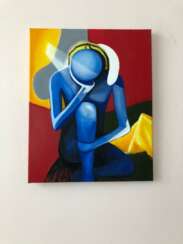

Formation
Anna Afonina (b. 1989)
Shop Afonina Anna
Anna Afonina
01.05.1989
Russia
I painter in art therapy format. Working with color is emotion, working with form is the unconscious.
Are you friends with your unconscious? The Art Therapy technique works on emotional tension and recreates archetypal images, within the framework of the alchemical mystery of oil on canvas. You can take even the most intricate tangle out of your head and look at it from the side. Realize, let go and transform.
Artist shop
Afonina Anna
Russia
Number of products: 6
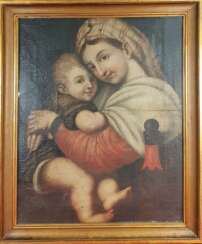




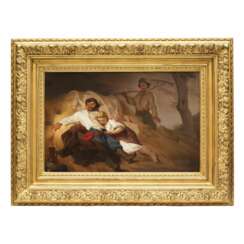
Сватовство. Matchmaking.
Elena Bolender (b. 1970) 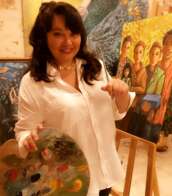 Shop Bolender Elena
Elena Bolender
03.11.1970
Russia
Меня зовут Болендер Елена, я пишу картины с 2014 года, в 2020 включена в Единый Реестр Профессиональных художников России, с присвоенной категорией 5В - сложившийся профессиональный художник (востребованный).
За это период участвовала в 9 выставках, 5 из которых были персональные, мои работы, на постоянной основе, размещены в местном музее, станица Динская , Краснодарского края.
Пишу, в основном, в стиле импрессионизм, имею собственную технику - мозаика. Люблю писать портреты и пейзажи.
Artist shop
Bolender Elena
Russia
Number of products: 51