pankok
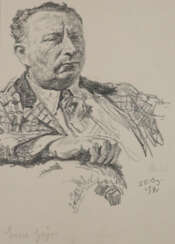


Bernhard Pankok, full name Bernhard Wilhelm Maria Pankok, was a German painter and graphic artist, designer, applied artist and architect of the Art Nouveau period.
After acquiring skills as a painter and restorer, Bernhard Pankok studied painting at the Düsseldorf Academy of Fine Arts, then in Berlin. In 1892, he began working in Munich in his own painting studio, doing illustrations for the magazines Pan and Jugend, among others. Pancock was one of the founders of the Munich Association of Art Craft Workshops.
In 1897, Pankok began designing furniture and exhibited his work at numerous exhibitions, including the landmark 1900 "Universal and International Exposition" in Paris. In the same year the art historian Konrad Lange commissioned Bernhard Pancock to design the Haus Lange for him; he worked extensively as an architect in general and designed other buildings in Stuttgart. Pankok was prolific and versatile: he designed sets for opera stages and salons for ocean liners and even the passenger cabins of zeppelins, worked as an architect, furniture designer, interior decorator, painter and graphic artist.
In 1907, he co-founded the Deutsche Werkbund. In 1901 he was invited to teach at the Royal Training and Experimental Workshop in Stuttgart; in 1913 he became its head and in that capacity merged it with the School of Arts and Crafts.


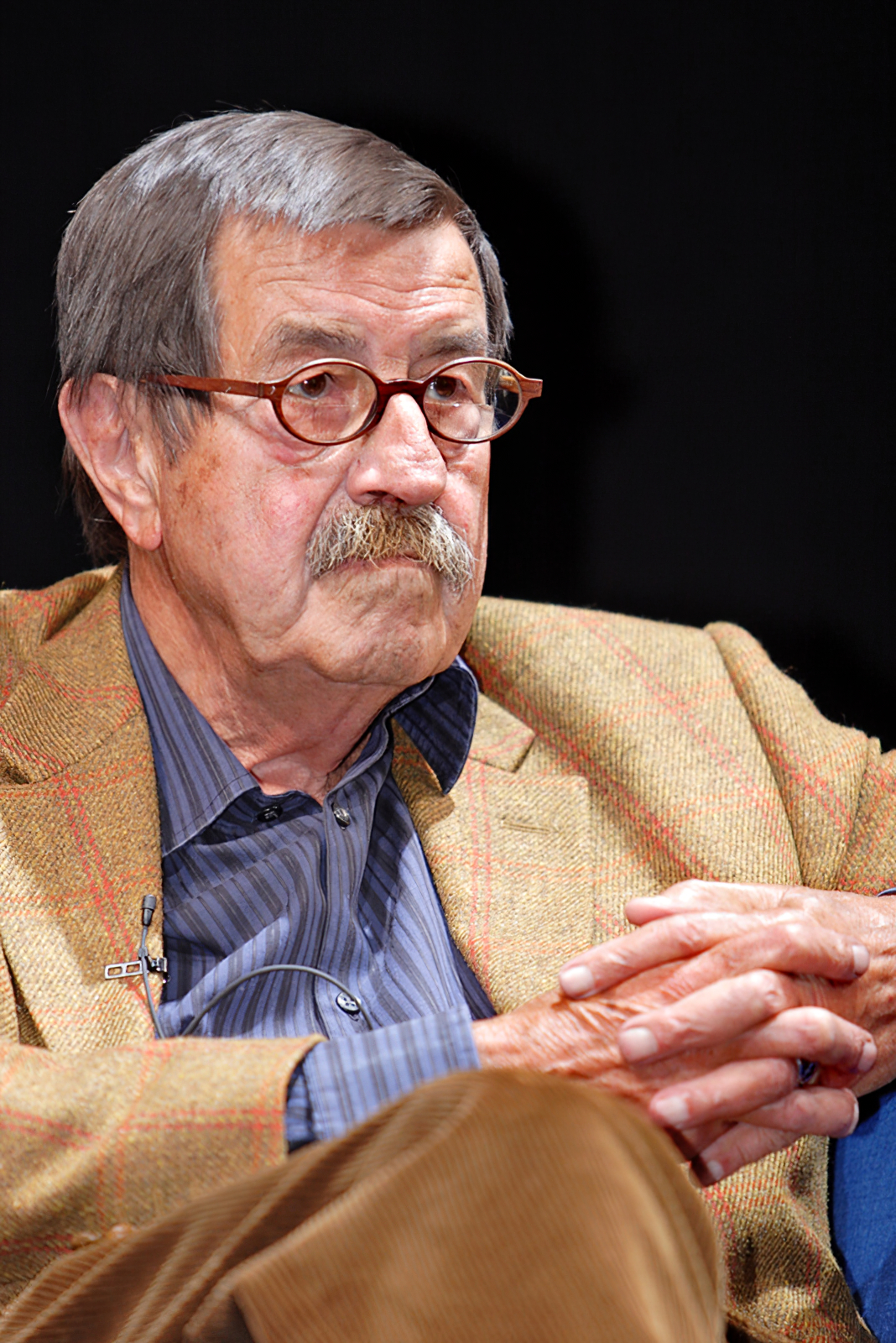
Günter Wilhelm Grass was a German novelist, poet, playwright, illustrator, graphic artist, sculptor, and recipient of the 1999 Nobel Prize in Literature.
Grass is best known for his first novel, The Tin Drum (1959), a key text in European magic realism. It was the first book of his Danzig Trilogy, the other two being Cat and Mouse and Dog Years. His works are frequently considered to have a left-wing political dimension, and Grass was an active supporter of the Social Democratic Party of Germany (SPD). The Tin Drum was adapted as a film of the same name, which won both the 1979 Palme d'Or and the Academy Award for Best Foreign Language Film. In 1999, the Swedish Academy awarded him the Nobel Prize in Literature, praising him as a writer "whose frolicsome black fables portray the forgotten face of history".


Günter Wilhelm Grass was a German novelist, poet, playwright, illustrator, graphic artist, sculptor, and recipient of the 1999 Nobel Prize in Literature.
Grass is best known for his first novel, The Tin Drum (1959), a key text in European magic realism. It was the first book of his Danzig Trilogy, the other two being Cat and Mouse and Dog Years. His works are frequently considered to have a left-wing political dimension, and Grass was an active supporter of the Social Democratic Party of Germany (SPD). The Tin Drum was adapted as a film of the same name, which won both the 1979 Palme d'Or and the Academy Award for Best Foreign Language Film. In 1999, the Swedish Academy awarded him the Nobel Prize in Literature, praising him as a writer "whose frolicsome black fables portray the forgotten face of history".