

1378 Items by auctions and galleries:
peintures modernes











Tie Silk 100% Handmade
Elena Zimovets (b. 1956) 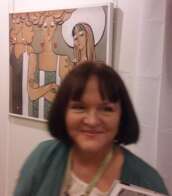 Shop Zimovets Elena
Elena Zimovets
08.05.1956
France
Professional certified fashion designer, painter, illustrator and graphic designer.
Graduated from the Moscow Textile University named after Kosygin, Faculty of Applied Arts (since 1982).
From 1982 to 1993 she worked at the House of Models as the chief designer and designer: she created collections of ready-to-wear and Haute Couture clothes.
From 1999 to 2002 - Lecturer at the International Private Academy of Audiovisual Arts in disciplines: painting, drawing, composition, modeling and costume history and color graphics.
In 2008 in Portugal (Portimao) a personal exhibition "In harmony with the soul" was successfully held,
The exhibition was widely covered by television, radio and the press.
Member of the GemlucArt Monaco community.
Recent exhibitions:
2016 - Suquet des arts, Cannes, France
2016 - GemlucArt, Monte Carlo Contemporary Art Fair, Monaco
2017 - GemlucArt, Monte Carlo Contemporary Art Fair, Monaco
2018 - "Russian Seasons Club" - Exhibition in Gray d'Albion, Cannes.
2019-2020 - Personal exhibition in Grasse. Paintings are in private collections.
About creativity:
“I have developed my own painting technique on transparent fabrics such as organza. This is not batik, but color graphics and painting on fabric. I also work in other techniques and with different materials: pastel, acrylic, oil, watercolor, etc.
Recently, I have been researching movement and pulsation: forms, lines and points in abstract painting and in space, as well as their architectonics. I developed my own technique and style, working with line and point, namely with drops of paint, which I then stretch into lines of different thicknesses. This is my conceptual idea for my abstract painting. Its origin lies in my works in the style of Khokhloma and Zhostovo, on which I worked in the 70s of the 20th century.
Artist shop
Zimovets Elena
France
Number of products: 12


Aphrodite
Nataliia Bahatska (b. 1967)  Shop Bahatska Nataliia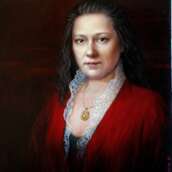
Nataliia Bahatska
20.10.1967
Ukraine
I was born in 1967.
Graduated childrens art school.
Graduated from Kyiv National University of Design, designer in 1993.
Academy of Psychosocial Technologies in 2008
The artworks are in Ukraine, Lithuania, Kazakhstan, Russia, Germany, Sweden, Switzerland, Italy, France, UK, USA, Vietnam, Canada, Netherlands.
Recently, all paintings have been created in hyperrealism and pop art.
Exhibition "Pro Cheese", ArtHall "D12", Kiev, 2021.
IV Ukrainian Festival of Contemporary Women's Art at the Institute of Contemporary Art of the National Academy of Arts of Ukraine, Kyiv, Ukraine, 2021
International exhibition "# 365daysafter" in the gallery "Artist", Kyiv, 2021. Exhibition "HRYVNA ART" in the Palace of Arts, Lviv, 2021.
Exhibition "HRYVNA ART" in the Museum of History of Kyiv, Kyiv, 2021.
Exhibition "HRYVNA ART" in the Ministry of Finance of Ukraine, Kyiv, 2021.
Exhibition at the Sky Mall, Kiev. 2021
Competition Pro Cheese Awards, Kiev, Parkovy Exhibition and Convention Center. Grand Prix. 2021
Exhibition "Барви світу" in Parlament of Ukraine. Kyiv. Ukraine, 2019
Sheldon Rose Gallery, "Big Ideas in Small Art", Toronto, Canada, 2019
Group exhibition from Ukraine at 58 Venice Biennale, "Falling shadow Dreams over gardens Giardini ". Italy, 2019
Exhibition "Vizionario" in la galleria Merlino Bottega d'arte di Firenze. Italy, 2019
Exhibition in ABC-art gallery. Kyiv, 2019
1st All-Ukrainian Triennale "NU-ART", Kremenchuk, 2018
"Ukraine from Trypillya to the present in the images of contemporary artists" - Biennial. National Union of Artists of Ukraine (NUAU), Kyiv, 2018
"Picturesque Ukraine", NUAU,the city of Severodonetsk, 2017.
Biennale of abstract Painting,NUAU, Kyiv, 2017
Until the Day of the Artist, NUAU, Kyiv, 2016, 2017, 2018.
"Portrait Painting" , gallery "Mytets", Kyiv, 2017
"To the 160th anniversary of Ivan Franko",NUAU, Ivano-Frankivsk city, 2016
On Independence Day of Ukraine, NUAU, Kyiv, 2017, 2018,
When buying, please specify the payment and delivery methods.
Artist shop
Bahatska Nataliia
Ukraine
Number of products: 231


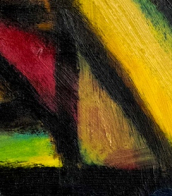


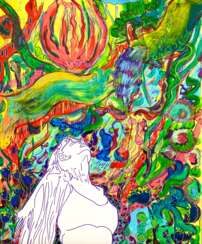

Мой Рай My Heaven
Alla Aleksandrovskaya (b. 1989)  Shop Aleksandrovskaya Alla
Alla Aleksandrovskaya
23.03.1989
Russia
Я родилась в семье художников, наблюдая за мамой с ранних лет я занималась скульптурой и живописью. Исследуя мир вокруг я пыталась понять и осмыслить реальность и определить своё место в ней. Изучая философию и психологию я нашла собственный язык приемы и средства для выражения сложных, для визуального отображения сюжетов. Исследую проблемы мироздания, жизни и смерти, тему конечности. Вопросы которые я задаю, созвучны с сложившимися в древности религиозно-мифологическими представлениями и поисками, но я предаю им тонкую психологическую нагрузку и пытаюсь раскрыть так, как я это вижу чувствую. Придерживаясь мнения, что не существует объективного положения вещей и точного определения общей для всех реальности. В своих исследованиях я не ограничиваю себя рамками одного сюжета -это симбиоз психологических практик,практических экспериментов и философских поисков.
I was born into a family of artists. Watching my mother from an early age I was involved in sculpture and painting. Exploring the world around me, I tried to understand and comprehend reality and define my place in it. Studying philosophy and psychology, I found my own language, techniques and means to express subjects difficult to visualize. I explore the problems of creation, life and death, the theme of finitude. The questions I ask are consonant with ancient religious and mythological ideas and searches, but I give them a subtle psychological load and try to reveal them as I see them. I adhere to the view that there is no objective state of affairs and no precise definition of reality common to all. In my research I do not limit myself to a single subject; it is a symbiosis of psychological practices, practical experiments, and philosophical quests.
Artist shop
Aleksandrovskaya Alla
Russia
Number of products: 7
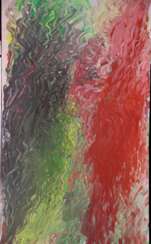

"Energizing kiss"
Alexandre Ab (b. 1976)  Shop Ab Alexandre
Alexandre Ab
23.10.1976
Switzerland
Александр, родился и вырос в России, окончив школу в 1998 году уехал в Европу, жил во Франции и учился в Университете прикладных наук Западной Швейцарии, после окончания работал в банковской системе Швейцарии. В 2011 году имел неосторожность разделить единицу на ноль в попытках создания нового образа банковских транзакций и этим получил философский дар атригуляции сущности вещей и фотонический кварк реализма бытия, что в итоге это вдохновило автора. Иногда автор видит модальности сущего и испытывает веселые галлюцинации они дают ему подсказки и помогают творить современное искусство.
Alexander, born and raised in Russia, after graduating from school in 1998, left for Europe, lived in France and studied at the University of Applied Sciences of Western Switzerland, after graduation he worked in the Swiss banking system. In 2011, he had the imprudence to divide one by zero in an attempt to create a new image of banking transactions and thus received the philosophical gift of atrigulating the essence of things and the photonic quark of the realism of being, which ultimately inspired the author. Sometimes the author sees the modalities of existence and experiences funny hallucinations, they give him hints and help him create contemporary art.
Artist shop
Ab Alexandre
Switzerland
Number of products: 37
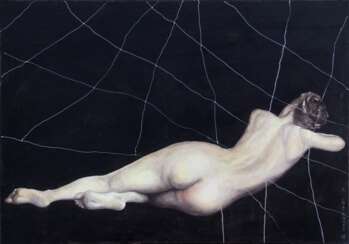

You're still napping, my dear friend ...
Nataliia Bahatska (b. 1967)
Shop Bahatska Nataliia
Nataliia Bahatska
20.10.1967
Ukraine
I was born in 1967.
Graduated childrens art school.
Graduated from Kyiv National University of Design, designer in 1993.
Academy of Psychosocial Technologies in 2008
The artworks are in Ukraine, Lithuania, Kazakhstan, Russia, Germany, Sweden, Switzerland, Italy, France, UK, USA, Vietnam, Canada, Netherlands.
Recently, all paintings have been created in hyperrealism and pop art.
Exhibition "Pro Cheese", ArtHall "D12", Kiev, 2021.
IV Ukrainian Festival of Contemporary Women's Art at the Institute of Contemporary Art of the National Academy of Arts of Ukraine, Kyiv, Ukraine, 2021
International exhibition "# 365daysafter" in the gallery "Artist", Kyiv, 2021. Exhibition "HRYVNA ART" in the Palace of Arts, Lviv, 2021.
Exhibition "HRYVNA ART" in the Museum of History of Kyiv, Kyiv, 2021.
Exhibition "HRYVNA ART" in the Ministry of Finance of Ukraine, Kyiv, 2021.
Exhibition at the Sky Mall, Kiev. 2021
Competition Pro Cheese Awards, Kiev, Parkovy Exhibition and Convention Center. Grand Prix. 2021
Exhibition "Барви світу" in Parlament of Ukraine. Kyiv. Ukraine, 2019
Sheldon Rose Gallery, "Big Ideas in Small Art", Toronto, Canada, 2019
Group exhibition from Ukraine at 58 Venice Biennale, "Falling shadow Dreams over gardens Giardini ". Italy, 2019
Exhibition "Vizionario" in la galleria Merlino Bottega d'arte di Firenze. Italy, 2019
Exhibition in ABC-art gallery. Kyiv, 2019
1st All-Ukrainian Triennale "NU-ART", Kremenchuk, 2018
"Ukraine from Trypillya to the present in the images of contemporary artists" - Biennial. National Union of Artists of Ukraine (NUAU), Kyiv, 2018
"Picturesque Ukraine", NUAU,the city of Severodonetsk, 2017.
Biennale of abstract Painting,NUAU, Kyiv, 2017
Until the Day of the Artist, NUAU, Kyiv, 2016, 2017, 2018.
"Portrait Painting" , gallery "Mytets", Kyiv, 2017
"To the 160th anniversary of Ivan Franko",NUAU, Ivano-Frankivsk city, 2016
On Independence Day of Ukraine, NUAU, Kyiv, 2017, 2018,
When buying, please specify the payment and delivery methods.
Artist shop
Bahatska Nataliia
Ukraine
Number of products: 231
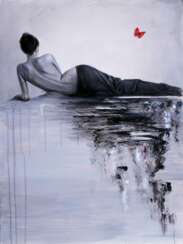

Русалка
Nataliia Bahatska (b. 1967)
Shop Bahatska Nataliia
Nataliia Bahatska
20.10.1967
Ukraine
I was born in 1967.
Graduated childrens art school.
Graduated from Kyiv National University of Design, designer in 1993.
Academy of Psychosocial Technologies in 2008
The artworks are in Ukraine, Lithuania, Kazakhstan, Russia, Germany, Sweden, Switzerland, Italy, France, UK, USA, Vietnam, Canada, Netherlands.
Recently, all paintings have been created in hyperrealism and pop art.
Exhibition "Pro Cheese", ArtHall "D12", Kiev, 2021.
IV Ukrainian Festival of Contemporary Women's Art at the Institute of Contemporary Art of the National Academy of Arts of Ukraine, Kyiv, Ukraine, 2021
International exhibition "# 365daysafter" in the gallery "Artist", Kyiv, 2021. Exhibition "HRYVNA ART" in the Palace of Arts, Lviv, 2021.
Exhibition "HRYVNA ART" in the Museum of History of Kyiv, Kyiv, 2021.
Exhibition "HRYVNA ART" in the Ministry of Finance of Ukraine, Kyiv, 2021.
Exhibition at the Sky Mall, Kiev. 2021
Competition Pro Cheese Awards, Kiev, Parkovy Exhibition and Convention Center. Grand Prix. 2021
Exhibition "Барви світу" in Parlament of Ukraine. Kyiv. Ukraine, 2019
Sheldon Rose Gallery, "Big Ideas in Small Art", Toronto, Canada, 2019
Group exhibition from Ukraine at 58 Venice Biennale, "Falling shadow Dreams over gardens Giardini ". Italy, 2019
Exhibition "Vizionario" in la galleria Merlino Bottega d'arte di Firenze. Italy, 2019
Exhibition in ABC-art gallery. Kyiv, 2019
1st All-Ukrainian Triennale "NU-ART", Kremenchuk, 2018
"Ukraine from Trypillya to the present in the images of contemporary artists" - Biennial. National Union of Artists of Ukraine (NUAU), Kyiv, 2018
"Picturesque Ukraine", NUAU,the city of Severodonetsk, 2017.
Biennale of abstract Painting,NUAU, Kyiv, 2017
Until the Day of the Artist, NUAU, Kyiv, 2016, 2017, 2018.
"Portrait Painting" , gallery "Mytets", Kyiv, 2017
"To the 160th anniversary of Ivan Franko",NUAU, Ivano-Frankivsk city, 2016
On Independence Day of Ukraine, NUAU, Kyiv, 2017, 2018,
When buying, please specify the payment and delivery methods.
Artist shop
Bahatska Nataliia
Ukraine
Number of products: 231
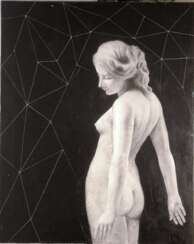

When the Сlothes are Thrown
Nataliia Bahatska (b. 1967)
Shop Bahatska Nataliia
Nataliia Bahatska
20.10.1967
Ukraine
I was born in 1967.
Graduated childrens art school.
Graduated from Kyiv National University of Design, designer in 1993.
Academy of Psychosocial Technologies in 2008
The artworks are in Ukraine, Lithuania, Kazakhstan, Russia, Germany, Sweden, Switzerland, Italy, France, UK, USA, Vietnam, Canada, Netherlands.
Recently, all paintings have been created in hyperrealism and pop art.
Exhibition "Pro Cheese", ArtHall "D12", Kiev, 2021.
IV Ukrainian Festival of Contemporary Women's Art at the Institute of Contemporary Art of the National Academy of Arts of Ukraine, Kyiv, Ukraine, 2021
International exhibition "# 365daysafter" in the gallery "Artist", Kyiv, 2021. Exhibition "HRYVNA ART" in the Palace of Arts, Lviv, 2021.
Exhibition "HRYVNA ART" in the Museum of History of Kyiv, Kyiv, 2021.
Exhibition "HRYVNA ART" in the Ministry of Finance of Ukraine, Kyiv, 2021.
Exhibition at the Sky Mall, Kiev. 2021
Competition Pro Cheese Awards, Kiev, Parkovy Exhibition and Convention Center. Grand Prix. 2021
Exhibition "Барви світу" in Parlament of Ukraine. Kyiv. Ukraine, 2019
Sheldon Rose Gallery, "Big Ideas in Small Art", Toronto, Canada, 2019
Group exhibition from Ukraine at 58 Venice Biennale, "Falling shadow Dreams over gardens Giardini ". Italy, 2019
Exhibition "Vizionario" in la galleria Merlino Bottega d'arte di Firenze. Italy, 2019
Exhibition in ABC-art gallery. Kyiv, 2019
1st All-Ukrainian Triennale "NU-ART", Kremenchuk, 2018
"Ukraine from Trypillya to the present in the images of contemporary artists" - Biennial. National Union of Artists of Ukraine (NUAU), Kyiv, 2018
"Picturesque Ukraine", NUAU,the city of Severodonetsk, 2017.
Biennale of abstract Painting,NUAU, Kyiv, 2017
Until the Day of the Artist, NUAU, Kyiv, 2016, 2017, 2018.
"Portrait Painting" , gallery "Mytets", Kyiv, 2017
"To the 160th anniversary of Ivan Franko",NUAU, Ivano-Frankivsk city, 2016
On Independence Day of Ukraine, NUAU, Kyiv, 2017, 2018,
When buying, please specify the payment and delivery methods.
Artist shop
Bahatska Nataliia
Ukraine
Number of products: 231
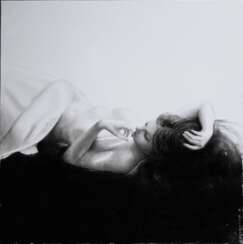

Awakened by the Sun
Nataliia Bahatska (b. 1967)
Shop Bahatska Nataliia
Nataliia Bahatska
20.10.1967
Ukraine
I was born in 1967.
Graduated childrens art school.
Graduated from Kyiv National University of Design, designer in 1993.
Academy of Psychosocial Technologies in 2008
The artworks are in Ukraine, Lithuania, Kazakhstan, Russia, Germany, Sweden, Switzerland, Italy, France, UK, USA, Vietnam, Canada, Netherlands.
Recently, all paintings have been created in hyperrealism and pop art.
Exhibition "Pro Cheese", ArtHall "D12", Kiev, 2021.
IV Ukrainian Festival of Contemporary Women's Art at the Institute of Contemporary Art of the National Academy of Arts of Ukraine, Kyiv, Ukraine, 2021
International exhibition "# 365daysafter" in the gallery "Artist", Kyiv, 2021. Exhibition "HRYVNA ART" in the Palace of Arts, Lviv, 2021.
Exhibition "HRYVNA ART" in the Museum of History of Kyiv, Kyiv, 2021.
Exhibition "HRYVNA ART" in the Ministry of Finance of Ukraine, Kyiv, 2021.
Exhibition at the Sky Mall, Kiev. 2021
Competition Pro Cheese Awards, Kiev, Parkovy Exhibition and Convention Center. Grand Prix. 2021
Exhibition "Барви світу" in Parlament of Ukraine. Kyiv. Ukraine, 2019
Sheldon Rose Gallery, "Big Ideas in Small Art", Toronto, Canada, 2019
Group exhibition from Ukraine at 58 Venice Biennale, "Falling shadow Dreams over gardens Giardini ". Italy, 2019
Exhibition "Vizionario" in la galleria Merlino Bottega d'arte di Firenze. Italy, 2019
Exhibition in ABC-art gallery. Kyiv, 2019
1st All-Ukrainian Triennale "NU-ART", Kremenchuk, 2018
"Ukraine from Trypillya to the present in the images of contemporary artists" - Biennial. National Union of Artists of Ukraine (NUAU), Kyiv, 2018
"Picturesque Ukraine", NUAU,the city of Severodonetsk, 2017.
Biennale of abstract Painting,NUAU, Kyiv, 2017
Until the Day of the Artist, NUAU, Kyiv, 2016, 2017, 2018.
"Portrait Painting" , gallery "Mytets", Kyiv, 2017
"To the 160th anniversary of Ivan Franko",NUAU, Ivano-Frankivsk city, 2016
On Independence Day of Ukraine, NUAU, Kyiv, 2017, 2018,
When buying, please specify the payment and delivery methods.
Artist shop
Bahatska Nataliia
Ukraine
Number of products: 231
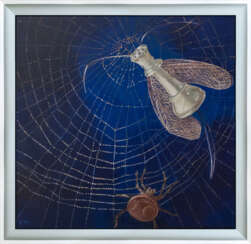

Im Netz
Polina Maykova (b. 1982) 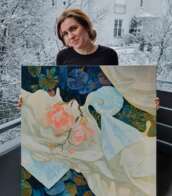 Shop Maykova Polina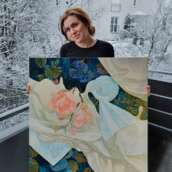
Polina Maykova
26.12.1982
Germany
Die 1982 in Moskau geborene Malerin stammt aus einer Familie bildender Künstler.
In den Werken widmet sich Polina Maykova der Conditio humana – den Bedingtheiten, Absichten und unauflösbaren Widersprüchen, in denen wir Menschen leben und leiden. Ihre Allegorien, die sich aus der klassischen Malerei ebenso speisen wie aus zeitgenössischen figurativen Strömungen, zeigen einen unverstellten und doch liebevollen Blick auf unsere inneren Welten.
Artist shop
Maykova Polina
Germany
Number of products: 23
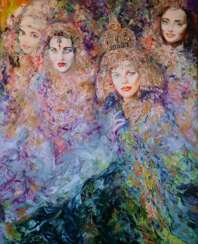

Jewish fairytale
Anna Privaloff (b. 1976) 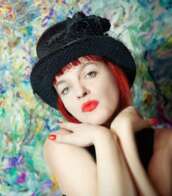 Shop Privaloff Anna
Anna Privaloff
29.03.1976
Cyprus
Anna Privaloff was born in Soviet Union 1976.She started to paint from four years old.Anna studied in art studio,art school,high art school in Ivanovo,completed her studies in university of Herzen in Russia.She is inspired by works of Gustav Klimt,Vinsent Van Gogh,Paul Gauguin ,Tuluz-lotrek and Michael Vrubel.Anna blends styles,colours,and saturates her art with eroticism and ethnic motives.She ties elements of Greek mythology,ancient legends,poetry and literature into her paintings.Through Anna's paintings one enters an enchanting fairytale where reality and illusion meet.Anna participated in exhibitions in the House of Arts in Saint Petersburg,Moscow and in the Art Museum of Ivanovo.Currently Anna lives and work in Cyprus,where she also participated in collective and private exhibitions.Many of her paintings remain in private collections in USA,Russia,Australia,Israel,Austria,England,Germany,Grease and Cyprus.Anna's portraits remain in private collection of Trump family,Robert Rothschild,Robert C. Rockefeller ,Nicos Anastasiades(President of Cyprus)
Artist shop
Privaloff Anna
Cyprus
Number of products: 20