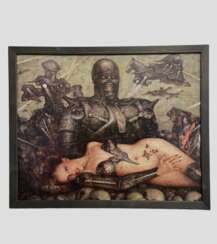
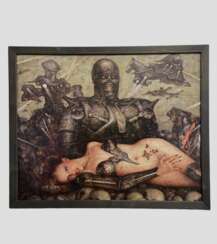
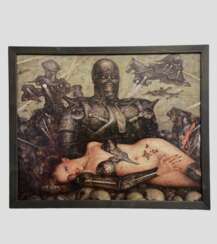
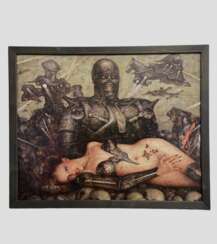
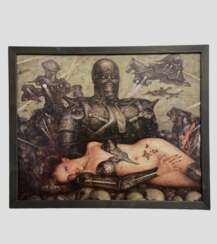
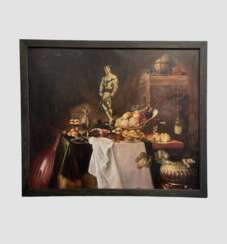
post war impressions

Eduardo Paolozzi was a Scottish artist renowned for his pioneering contributions to the Pop Art movement. His work, characterized by an amalgamation of popular culture references and technological imagery, played a significant role in shaping the visual arts landscape of the 20th century. Eduardo Paolozzi's graphic works, particularly from the 1960s, broke new ground in the silkscreen medium, with notable series such as "As Is When" and "Moonstrips Empire News" showcasing his innovative approach to art that combines elements of science, technology, and pop culture.
After a transformative period in Paris, where he interacted with key figures of the Surrealist movement, Eduardo Paolozzi returned to the UK, where he became a central figure in the formation of the Independent Group. This collective was instrumental in the development of British Pop Art, with Paolozzi's early collages, especially "I Was a Rich Man's Plaything," marking a seminal moment in the genre's emergence.
His artistic ventures were not confined to printmaking and collage; Eduardo Paolozzi's sculptures and mosaic murals, such as those for Tottenham Court Road tube station in London, also garnered acclaim for their intricate detail and thematic complexity. The artist's influence extended into his academic roles, where he nurtured future generations of artists.
Eduardo Paolozzi's legacy is preserved through extensive collections and exhibitions, such as at the National Galleries of Scotland, which holds a significant number of his works. This includes a recreation of his studio, providing insight into his creative process and the diverse influences that shaped his art.
For enthusiasts and collectors keen on delving deeper into Eduardo Paolozzi's world, signing up for updates can offer exclusive access to sales and auction events related to his works. This ensures that aficionados stay informed about opportunities to engage with the art and legacy of this influential figure.


Karl-Dietrich Roth was a Swiss artist best known for his artist's books, editioned prints, sculptures, and works made of found materials, including rotting food stuffs.


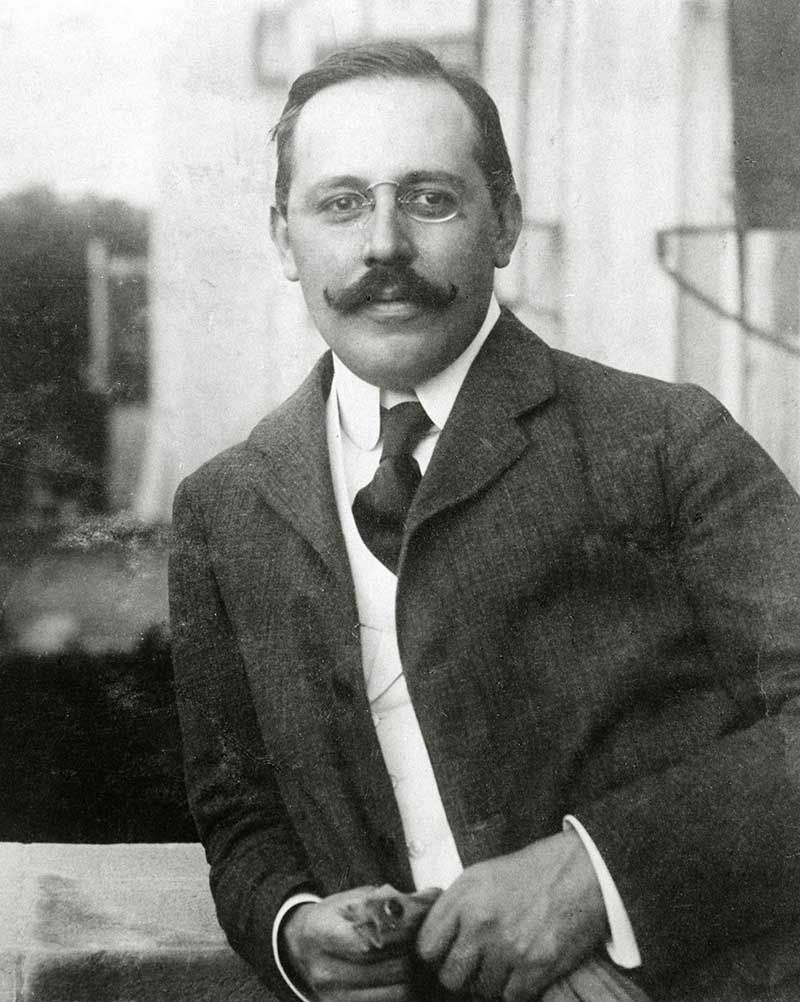
Josef Hoffmann, an Austrian architect and designer, is renowned for his influential contributions to early 20th-century design and architecture. As a founding member of the Vienna Secession and the Wiener Werkstätte, Josef Hoffmann's work is celebrated for its pioneering simplicity and functional elegance.
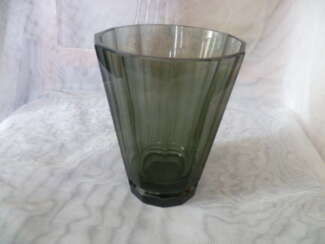
Josef Hoffmann's designs, which span furniture, decorative arts, and architecture, are distinguished by their minimalistic yet expressive style. His ability to blend aesthetics with functionality marked a significant departure from the ornate styles of the time, influencing modern design principles. Notable works include the Stoclet Palace in Brussels, a masterpiece that showcases his innovative approach to art and architecture.
His creations are preserved in prestigious museums worldwide, including the Museum of Modern Art (MoMA) and the Metropolitan Museum of Art, providing insight into his visionary approach to design. These institutions house collections of Hoffmann's furniture and decorative objects, reflecting his enduring impact on design and architecture.
For collectors and experts in art and antiques, Josef Hoffmann's work offers a study in the evolution of modern design. By subscribing to updates, enthusiasts can stay informed about exhibitions, sales, and academic research related to Josef Hoffmann, deepening their understanding of his contributions to the art and design world.