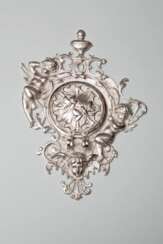
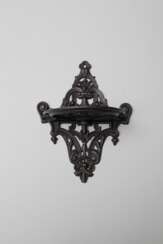
shelfs

Charles Dickens, full name Charles John Huffam Dickens, is the most famous British writer of the Victorian era, a classic of world literature.
From childhood the future writer learned all the hardships of life in poverty: his father in prison for debts, hard work in a factory. Then service stenographer in court and reporter developed in him a strong attachment to journalism and contempt for both the law and parliament.
Dickens had many talents: in addition to literary work, he was an actor, published periodicals, arranged numerous literary readings, where he reveled in the admiration and love of the public. Fecund and versatile, Charles Dickens wrote many brilliant and often comic works. His novels cover a wide range of social, moral, emotional and other aspects. As a subtle psychologist, he is also very interested in the most ordinary people, but also the eccentric, the flawed, and even the insane.
Dickens was immensely popular around the world during his lifetime. His intellect, worldview, and deep reflections on society and its faults enriched his novels and made him one of the great figures of nineteenth-century literature, an influential spokesman for the conscience of his time.
Dickens' best-known and most popular novels are The Pickwick Club Posthumous Notes, Oliver Twist, Nicholas Nickleby, David Copperfield, Cold House, A Tale of Two Cities, Our Mutual Friend, Great Expectations, and The Mystery of Edwin Drood.

Charles Courtney Curran is an American impressionist painter.

He was educated at the National Academy of Design (New York), then studied at the Académie Julian in Paris.
Curran is known for his romantic depictions of young women in nature, where they are walking, playing sports or just admiring flowers. The artist also painted plein air, experimenting with a variety of artistic styles, including Impressionism, Symbolism, Tonalism and Naturalism.


Isaac Newton was an English mathematician, physicist, astronomer, alchemist, theologian, and author (described in his time as a "natural philosopher"), widely recognised as one of the greatest mathematicians and physicists and among the most influential scientists of all time. He was a key figure in the philosophical revolution known as the Enlightenment. His book Philosophiæ Naturalis Principia Mathematica (Mathematical Principles of Natural Philosophy), first published in 1687, established classical mechanics. Newton also made seminal contributions to optics, and shares credit with German mathematician Gottfried Wilhelm Leibniz for developing infinitesimal calculus.
In the Principia, Newton formulated the laws of motion and universal gravitation that formed the dominant scientific viewpoint until it was superseded by the theory of relativity. Newton used his mathematical description of gravity to derive Kepler's laws of planetary motion, account for tides, the trajectories of comets, the precession of the equinoxes and other phenomena, eradicating doubt about the Solar System's heliocentricity. He demonstrated that the motion of objects on Earth and celestial bodies could be accounted for by the same principles. Newton's inference that the Earth is an oblate spheroid was later confirmed by the geodetic measurements of Maupertuis, La Condamine, and others, convincing most European scientists of the superiority of Newtonian mechanics over earlier systems.