2024 act dates






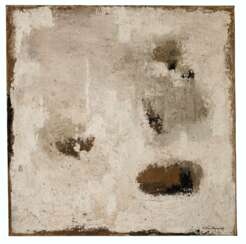


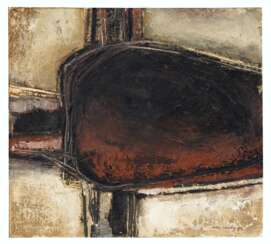

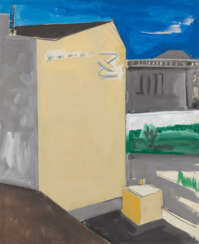

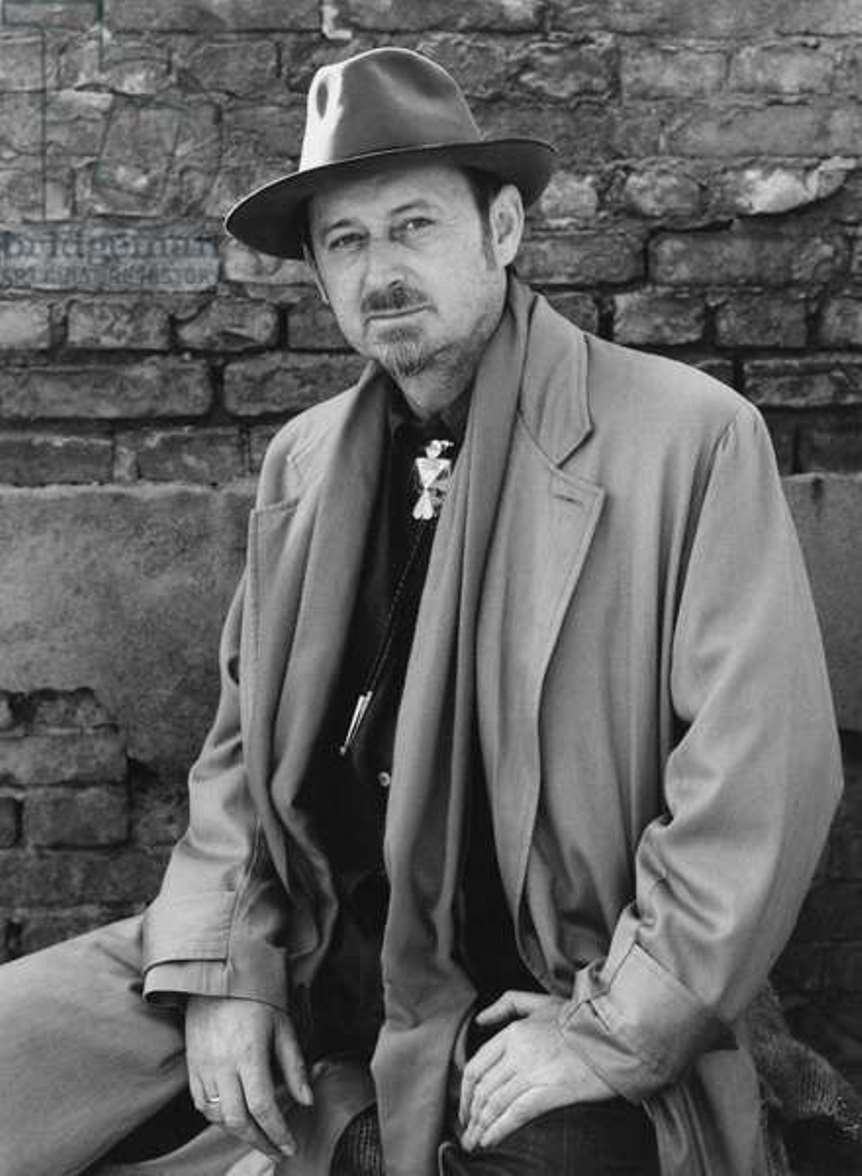
Karl Horst Hödicke is a German artist, a pioneer of German Neo-Expressionism and new figuration, and one of the most important representatives of German post-war painting.
After moving to Berlin in 1957, Hödicke encountered the eventful history of Berlin - the construction of the Berlin Wall, the Cold War, and reunification - and reflected it in his paintings.




Frank Philip Stella, an American icon in the realms of painting, sculpture, and printmaking, has left an indelible mark on the art world with his pioneering work in minimalism and post-painterly abstraction. Born on May 12, 1936, in Malden, Massachusetts, Stella's artistic journey commenced with his studies in painting at Phillips Academy, Andover, and history at Princeton University. His move to New York City in 1958 heralded the start of an illustrious career that would see him challenge and redefine artistic boundaries.
Stella's work is celebrated for its innovative approach to form, color, and composition. His early endeavors in the late 1950s showcased black paintings characterized by bands of bare canvas, which played a pivotal role in emphasizing the flatness of the picture plane. This deliberate artificiality in his work garnered considerable attention and positioned him at the forefront of Post-Painterly Abstraction, a movement that reacted against the emotive excesses of Abstract Expressionism.
Throughout his career, Stella continued to push the limits of abstraction. His vocabulary expanded to include vibrant and dynamic assemblages that projected out from the wall, utilizing a variety of materials from steel to plastic. This evolution of his style is not only a testament to his ingenuity but also his influence on contemporary art. Notable works that exemplify his groundbreaking approach include "Grajau I," "Harran II," and "Eskimo Curlew," among others, which can be found in prestigious collections such as The Glass House and the Solomon R. Guggenheim Museum.
For art collectors and enthusiasts alike, Stella's oeuvre offers a captivating exploration into the possibilities of abstract art. His continued relevance and the profound impact of his work on both his peers and successive generations of artists underscore his status as a seminal figure in modern art.
Stay updated on new discoveries, sales, and auction events related to Frank Philip Stella by signing up for our newsletter. This subscription is your gateway to the latest in the world of Frank Stella, ensuring you never miss an opportunity to engage with the works of this monumental artist.


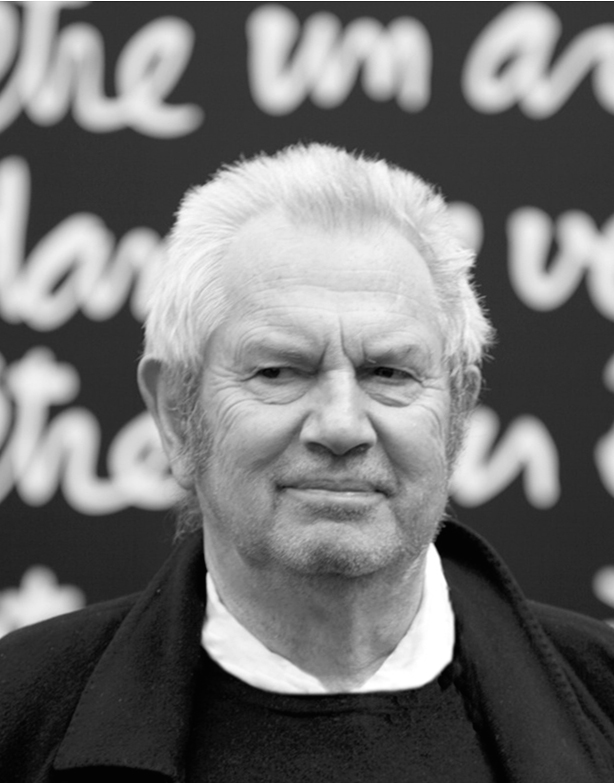
Ben Vautier, also known as BEN, actually Benjamin Vautier, is a Swiss-French artist of the Fluxus movement. Vautier lives and works in Nice.
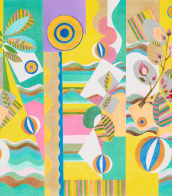
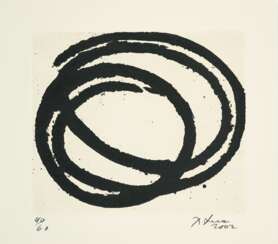


Richard Serra was a prominent American sculptor, renowned for his monumental steel sculptures that transform viewers' perceptions of space and environment. Born on November 2, 1938, in San Francisco, California, Serra pursued his education in Art History and Fine Arts at Yale University, where he graduated with a BA and an MFA in 1964. His early career was marked by experimentation with nontraditional materials such as rubber, neon, and lead, reflecting a departure from traditional sculptural forms towards more abstract expressions.
Serra's work is characterized by its engagement with the physical properties of his materials and the spatial dynamics of his installation sites. He is perhaps best known for "Tilted Arc" (1981), a controversial installation in New York City's Federal Plaza, which was eventually removed following public debate over its presence. Despite the controversy, "Tilted Arc" exemplifies Serra's interest in site-specificity and the relationship between artwork, site, and viewer.
Throughout his career, Serra's sculptures have been exhibited globally, with significant works like "Snake" (1994-97) at the Guggenheim Bilbao and "Torqued Ellipse" series, reflecting his ongoing exploration of curvilinear forms and the interaction between space, viewer, and sculpture. His contributions to art have been acknowledged with awards such as the Praemium Imperiale in 1994.
For collectors and experts in art and antiques, Serra's work represents a pivotal shift in contemporary sculpture, emphasizing the materiality and physical engagement of artworks within their environments. To stay updated on exhibitions and auction events related to Richard Serra's influential sculptures, signing up for updates is highly recommended, ensuring enthusiasts are informed about the latest developments and opportunities to engage with his groundbreaking work.
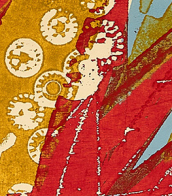
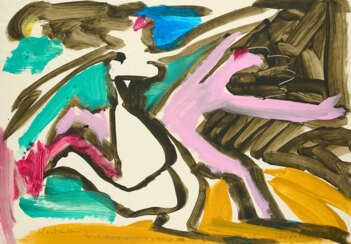

Karl Horst Hödicke is a German artist, a pioneer of German Neo-Expressionism and new figuration, and one of the most important representatives of German post-war painting.
After moving to Berlin in 1957, Hödicke encountered the eventful history of Berlin - the construction of the Berlin Wall, the Cold War, and reunification - and reflected it in his paintings.



Frank Philip Stella, an American icon in the realms of painting, sculpture, and printmaking, has left an indelible mark on the art world with his pioneering work in minimalism and post-painterly abstraction. Born on May 12, 1936, in Malden, Massachusetts, Stella's artistic journey commenced with his studies in painting at Phillips Academy, Andover, and history at Princeton University. His move to New York City in 1958 heralded the start of an illustrious career that would see him challenge and redefine artistic boundaries.
Stella's work is celebrated for its innovative approach to form, color, and composition. His early endeavors in the late 1950s showcased black paintings characterized by bands of bare canvas, which played a pivotal role in emphasizing the flatness of the picture plane. This deliberate artificiality in his work garnered considerable attention and positioned him at the forefront of Post-Painterly Abstraction, a movement that reacted against the emotive excesses of Abstract Expressionism.
Throughout his career, Stella continued to push the limits of abstraction. His vocabulary expanded to include vibrant and dynamic assemblages that projected out from the wall, utilizing a variety of materials from steel to plastic. This evolution of his style is not only a testament to his ingenuity but also his influence on contemporary art. Notable works that exemplify his groundbreaking approach include "Grajau I," "Harran II," and "Eskimo Curlew," among others, which can be found in prestigious collections such as The Glass House and the Solomon R. Guggenheim Museum.
For art collectors and enthusiasts alike, Stella's oeuvre offers a captivating exploration into the possibilities of abstract art. His continued relevance and the profound impact of his work on both his peers and successive generations of artists underscore his status as a seminal figure in modern art.
Stay updated on new discoveries, sales, and auction events related to Frank Philip Stella by signing up for our newsletter. This subscription is your gateway to the latest in the world of Frank Stella, ensuring you never miss an opportunity to engage with the works of this monumental artist.


Frank Philip Stella, an American icon in the realms of painting, sculpture, and printmaking, has left an indelible mark on the art world with his pioneering work in minimalism and post-painterly abstraction. Born on May 12, 1936, in Malden, Massachusetts, Stella's artistic journey commenced with his studies in painting at Phillips Academy, Andover, and history at Princeton University. His move to New York City in 1958 heralded the start of an illustrious career that would see him challenge and redefine artistic boundaries.
Stella's work is celebrated for its innovative approach to form, color, and composition. His early endeavors in the late 1950s showcased black paintings characterized by bands of bare canvas, which played a pivotal role in emphasizing the flatness of the picture plane. This deliberate artificiality in his work garnered considerable attention and positioned him at the forefront of Post-Painterly Abstraction, a movement that reacted against the emotive excesses of Abstract Expressionism.
Throughout his career, Stella continued to push the limits of abstraction. His vocabulary expanded to include vibrant and dynamic assemblages that projected out from the wall, utilizing a variety of materials from steel to plastic. This evolution of his style is not only a testament to his ingenuity but also his influence on contemporary art. Notable works that exemplify his groundbreaking approach include "Grajau I," "Harran II," and "Eskimo Curlew," among others, which can be found in prestigious collections such as The Glass House and the Solomon R. Guggenheim Museum.
For art collectors and enthusiasts alike, Stella's oeuvre offers a captivating exploration into the possibilities of abstract art. His continued relevance and the profound impact of his work on both his peers and successive generations of artists underscore his status as a seminal figure in modern art.
Stay updated on new discoveries, sales, and auction events related to Frank Philip Stella by signing up for our newsletter. This subscription is your gateway to the latest in the world of Frank Stella, ensuring you never miss an opportunity to engage with the works of this monumental artist.


Frank Philip Stella, an American icon in the realms of painting, sculpture, and printmaking, has left an indelible mark on the art world with his pioneering work in minimalism and post-painterly abstraction. Born on May 12, 1936, in Malden, Massachusetts, Stella's artistic journey commenced with his studies in painting at Phillips Academy, Andover, and history at Princeton University. His move to New York City in 1958 heralded the start of an illustrious career that would see him challenge and redefine artistic boundaries.
Stella's work is celebrated for its innovative approach to form, color, and composition. His early endeavors in the late 1950s showcased black paintings characterized by bands of bare canvas, which played a pivotal role in emphasizing the flatness of the picture plane. This deliberate artificiality in his work garnered considerable attention and positioned him at the forefront of Post-Painterly Abstraction, a movement that reacted against the emotive excesses of Abstract Expressionism.
Throughout his career, Stella continued to push the limits of abstraction. His vocabulary expanded to include vibrant and dynamic assemblages that projected out from the wall, utilizing a variety of materials from steel to plastic. This evolution of his style is not only a testament to his ingenuity but also his influence on contemporary art. Notable works that exemplify his groundbreaking approach include "Grajau I," "Harran II," and "Eskimo Curlew," among others, which can be found in prestigious collections such as The Glass House and the Solomon R. Guggenheim Museum.
For art collectors and enthusiasts alike, Stella's oeuvre offers a captivating exploration into the possibilities of abstract art. His continued relevance and the profound impact of his work on both his peers and successive generations of artists underscore his status as a seminal figure in modern art.
Stay updated on new discoveries, sales, and auction events related to Frank Philip Stella by signing up for our newsletter. This subscription is your gateway to the latest in the world of Frank Stella, ensuring you never miss an opportunity to engage with the works of this monumental artist.


Frank Philip Stella, an American icon in the realms of painting, sculpture, and printmaking, has left an indelible mark on the art world with his pioneering work in minimalism and post-painterly abstraction. Born on May 12, 1936, in Malden, Massachusetts, Stella's artistic journey commenced with his studies in painting at Phillips Academy, Andover, and history at Princeton University. His move to New York City in 1958 heralded the start of an illustrious career that would see him challenge and redefine artistic boundaries.
Stella's work is celebrated for its innovative approach to form, color, and composition. His early endeavors in the late 1950s showcased black paintings characterized by bands of bare canvas, which played a pivotal role in emphasizing the flatness of the picture plane. This deliberate artificiality in his work garnered considerable attention and positioned him at the forefront of Post-Painterly Abstraction, a movement that reacted against the emotive excesses of Abstract Expressionism.
Throughout his career, Stella continued to push the limits of abstraction. His vocabulary expanded to include vibrant and dynamic assemblages that projected out from the wall, utilizing a variety of materials from steel to plastic. This evolution of his style is not only a testament to his ingenuity but also his influence on contemporary art. Notable works that exemplify his groundbreaking approach include "Grajau I," "Harran II," and "Eskimo Curlew," among others, which can be found in prestigious collections such as The Glass House and the Solomon R. Guggenheim Museum.
For art collectors and enthusiasts alike, Stella's oeuvre offers a captivating exploration into the possibilities of abstract art. His continued relevance and the profound impact of his work on both his peers and successive generations of artists underscore his status as a seminal figure in modern art.
Stay updated on new discoveries, sales, and auction events related to Frank Philip Stella by signing up for our newsletter. This subscription is your gateway to the latest in the world of Frank Stella, ensuring you never miss an opportunity to engage with the works of this monumental artist.
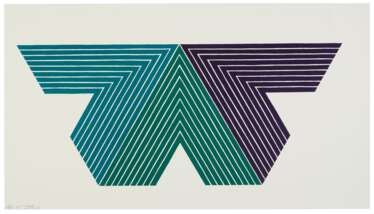

Frank Philip Stella, an American icon in the realms of painting, sculpture, and printmaking, has left an indelible mark on the art world with his pioneering work in minimalism and post-painterly abstraction. Born on May 12, 1936, in Malden, Massachusetts, Stella's artistic journey commenced with his studies in painting at Phillips Academy, Andover, and history at Princeton University. His move to New York City in 1958 heralded the start of an illustrious career that would see him challenge and redefine artistic boundaries.
Stella's work is celebrated for its innovative approach to form, color, and composition. His early endeavors in the late 1950s showcased black paintings characterized by bands of bare canvas, which played a pivotal role in emphasizing the flatness of the picture plane. This deliberate artificiality in his work garnered considerable attention and positioned him at the forefront of Post-Painterly Abstraction, a movement that reacted against the emotive excesses of Abstract Expressionism.
Throughout his career, Stella continued to push the limits of abstraction. His vocabulary expanded to include vibrant and dynamic assemblages that projected out from the wall, utilizing a variety of materials from steel to plastic. This evolution of his style is not only a testament to his ingenuity but also his influence on contemporary art. Notable works that exemplify his groundbreaking approach include "Grajau I," "Harran II," and "Eskimo Curlew," among others, which can be found in prestigious collections such as The Glass House and the Solomon R. Guggenheim Museum.
For art collectors and enthusiasts alike, Stella's oeuvre offers a captivating exploration into the possibilities of abstract art. His continued relevance and the profound impact of his work on both his peers and successive generations of artists underscore his status as a seminal figure in modern art.
Stay updated on new discoveries, sales, and auction events related to Frank Philip Stella by signing up for our newsletter. This subscription is your gateway to the latest in the world of Frank Stella, ensuring you never miss an opportunity to engage with the works of this monumental artist.
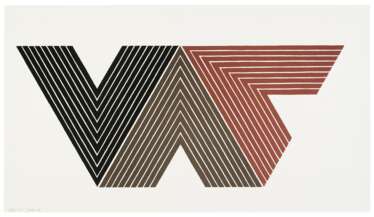

Frank Philip Stella, an American icon in the realms of painting, sculpture, and printmaking, has left an indelible mark on the art world with his pioneering work in minimalism and post-painterly abstraction. Born on May 12, 1936, in Malden, Massachusetts, Stella's artistic journey commenced with his studies in painting at Phillips Academy, Andover, and history at Princeton University. His move to New York City in 1958 heralded the start of an illustrious career that would see him challenge and redefine artistic boundaries.
Stella's work is celebrated for its innovative approach to form, color, and composition. His early endeavors in the late 1950s showcased black paintings characterized by bands of bare canvas, which played a pivotal role in emphasizing the flatness of the picture plane. This deliberate artificiality in his work garnered considerable attention and positioned him at the forefront of Post-Painterly Abstraction, a movement that reacted against the emotive excesses of Abstract Expressionism.
Throughout his career, Stella continued to push the limits of abstraction. His vocabulary expanded to include vibrant and dynamic assemblages that projected out from the wall, utilizing a variety of materials from steel to plastic. This evolution of his style is not only a testament to his ingenuity but also his influence on contemporary art. Notable works that exemplify his groundbreaking approach include "Grajau I," "Harran II," and "Eskimo Curlew," among others, which can be found in prestigious collections such as The Glass House and the Solomon R. Guggenheim Museum.
For art collectors and enthusiasts alike, Stella's oeuvre offers a captivating exploration into the possibilities of abstract art. His continued relevance and the profound impact of his work on both his peers and successive generations of artists underscore his status as a seminal figure in modern art.
Stay updated on new discoveries, sales, and auction events related to Frank Philip Stella by signing up for our newsletter. This subscription is your gateway to the latest in the world of Frank Stella, ensuring you never miss an opportunity to engage with the works of this monumental artist.
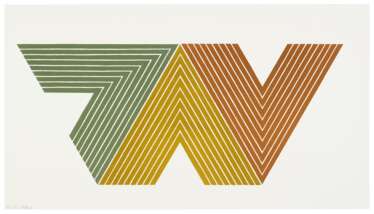

Frank Philip Stella, an American icon in the realms of painting, sculpture, and printmaking, has left an indelible mark on the art world with his pioneering work in minimalism and post-painterly abstraction. Born on May 12, 1936, in Malden, Massachusetts, Stella's artistic journey commenced with his studies in painting at Phillips Academy, Andover, and history at Princeton University. His move to New York City in 1958 heralded the start of an illustrious career that would see him challenge and redefine artistic boundaries.
Stella's work is celebrated for its innovative approach to form, color, and composition. His early endeavors in the late 1950s showcased black paintings characterized by bands of bare canvas, which played a pivotal role in emphasizing the flatness of the picture plane. This deliberate artificiality in his work garnered considerable attention and positioned him at the forefront of Post-Painterly Abstraction, a movement that reacted against the emotive excesses of Abstract Expressionism.
Throughout his career, Stella continued to push the limits of abstraction. His vocabulary expanded to include vibrant and dynamic assemblages that projected out from the wall, utilizing a variety of materials from steel to plastic. This evolution of his style is not only a testament to his ingenuity but also his influence on contemporary art. Notable works that exemplify his groundbreaking approach include "Grajau I," "Harran II," and "Eskimo Curlew," among others, which can be found in prestigious collections such as The Glass House and the Solomon R. Guggenheim Museum.
For art collectors and enthusiasts alike, Stella's oeuvre offers a captivating exploration into the possibilities of abstract art. His continued relevance and the profound impact of his work on both his peers and successive generations of artists underscore his status as a seminal figure in modern art.
Stay updated on new discoveries, sales, and auction events related to Frank Philip Stella by signing up for our newsletter. This subscription is your gateway to the latest in the world of Frank Stella, ensuring you never miss an opportunity to engage with the works of this monumental artist.
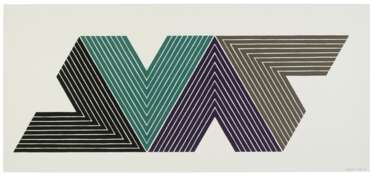

Frank Philip Stella, an American icon in the realms of painting, sculpture, and printmaking, has left an indelible mark on the art world with his pioneering work in minimalism and post-painterly abstraction. Born on May 12, 1936, in Malden, Massachusetts, Stella's artistic journey commenced with his studies in painting at Phillips Academy, Andover, and history at Princeton University. His move to New York City in 1958 heralded the start of an illustrious career that would see him challenge and redefine artistic boundaries.
Stella's work is celebrated for its innovative approach to form, color, and composition. His early endeavors in the late 1950s showcased black paintings characterized by bands of bare canvas, which played a pivotal role in emphasizing the flatness of the picture plane. This deliberate artificiality in his work garnered considerable attention and positioned him at the forefront of Post-Painterly Abstraction, a movement that reacted against the emotive excesses of Abstract Expressionism.
Throughout his career, Stella continued to push the limits of abstraction. His vocabulary expanded to include vibrant and dynamic assemblages that projected out from the wall, utilizing a variety of materials from steel to plastic. This evolution of his style is not only a testament to his ingenuity but also his influence on contemporary art. Notable works that exemplify his groundbreaking approach include "Grajau I," "Harran II," and "Eskimo Curlew," among others, which can be found in prestigious collections such as The Glass House and the Solomon R. Guggenheim Museum.
For art collectors and enthusiasts alike, Stella's oeuvre offers a captivating exploration into the possibilities of abstract art. His continued relevance and the profound impact of his work on both his peers and successive generations of artists underscore his status as a seminal figure in modern art.
Stay updated on new discoveries, sales, and auction events related to Frank Philip Stella by signing up for our newsletter. This subscription is your gateway to the latest in the world of Frank Stella, ensuring you never miss an opportunity to engage with the works of this monumental artist.
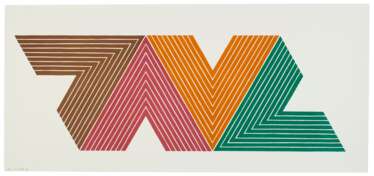

Frank Philip Stella, an American icon in the realms of painting, sculpture, and printmaking, has left an indelible mark on the art world with his pioneering work in minimalism and post-painterly abstraction. Born on May 12, 1936, in Malden, Massachusetts, Stella's artistic journey commenced with his studies in painting at Phillips Academy, Andover, and history at Princeton University. His move to New York City in 1958 heralded the start of an illustrious career that would see him challenge and redefine artistic boundaries.
Stella's work is celebrated for its innovative approach to form, color, and composition. His early endeavors in the late 1950s showcased black paintings characterized by bands of bare canvas, which played a pivotal role in emphasizing the flatness of the picture plane. This deliberate artificiality in his work garnered considerable attention and positioned him at the forefront of Post-Painterly Abstraction, a movement that reacted against the emotive excesses of Abstract Expressionism.
Throughout his career, Stella continued to push the limits of abstraction. His vocabulary expanded to include vibrant and dynamic assemblages that projected out from the wall, utilizing a variety of materials from steel to plastic. This evolution of his style is not only a testament to his ingenuity but also his influence on contemporary art. Notable works that exemplify his groundbreaking approach include "Grajau I," "Harran II," and "Eskimo Curlew," among others, which can be found in prestigious collections such as The Glass House and the Solomon R. Guggenheim Museum.
For art collectors and enthusiasts alike, Stella's oeuvre offers a captivating exploration into the possibilities of abstract art. His continued relevance and the profound impact of his work on both his peers and successive generations of artists underscore his status as a seminal figure in modern art.
Stay updated on new discoveries, sales, and auction events related to Frank Philip Stella by signing up for our newsletter. This subscription is your gateway to the latest in the world of Frank Stella, ensuring you never miss an opportunity to engage with the works of this monumental artist.
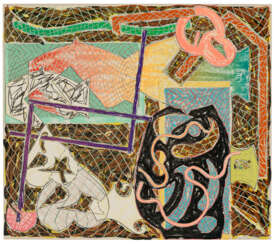

Frank Philip Stella, an American icon in the realms of painting, sculpture, and printmaking, has left an indelible mark on the art world with his pioneering work in minimalism and post-painterly abstraction. Born on May 12, 1936, in Malden, Massachusetts, Stella's artistic journey commenced with his studies in painting at Phillips Academy, Andover, and history at Princeton University. His move to New York City in 1958 heralded the start of an illustrious career that would see him challenge and redefine artistic boundaries.
Stella's work is celebrated for its innovative approach to form, color, and composition. His early endeavors in the late 1950s showcased black paintings characterized by bands of bare canvas, which played a pivotal role in emphasizing the flatness of the picture plane. This deliberate artificiality in his work garnered considerable attention and positioned him at the forefront of Post-Painterly Abstraction, a movement that reacted against the emotive excesses of Abstract Expressionism.
Throughout his career, Stella continued to push the limits of abstraction. His vocabulary expanded to include vibrant and dynamic assemblages that projected out from the wall, utilizing a variety of materials from steel to plastic. This evolution of his style is not only a testament to his ingenuity but also his influence on contemporary art. Notable works that exemplify his groundbreaking approach include "Grajau I," "Harran II," and "Eskimo Curlew," among others, which can be found in prestigious collections such as The Glass House and the Solomon R. Guggenheim Museum.
For art collectors and enthusiasts alike, Stella's oeuvre offers a captivating exploration into the possibilities of abstract art. His continued relevance and the profound impact of his work on both his peers and successive generations of artists underscore his status as a seminal figure in modern art.
Stay updated on new discoveries, sales, and auction events related to Frank Philip Stella by signing up for our newsletter. This subscription is your gateway to the latest in the world of Frank Stella, ensuring you never miss an opportunity to engage with the works of this monumental artist.



Frank Philip Stella, an American icon in the realms of painting, sculpture, and printmaking, has left an indelible mark on the art world with his pioneering work in minimalism and post-painterly abstraction. Born on May 12, 1936, in Malden, Massachusetts, Stella's artistic journey commenced with his studies in painting at Phillips Academy, Andover, and history at Princeton University. His move to New York City in 1958 heralded the start of an illustrious career that would see him challenge and redefine artistic boundaries.
Stella's work is celebrated for its innovative approach to form, color, and composition. His early endeavors in the late 1950s showcased black paintings characterized by bands of bare canvas, which played a pivotal role in emphasizing the flatness of the picture plane. This deliberate artificiality in his work garnered considerable attention and positioned him at the forefront of Post-Painterly Abstraction, a movement that reacted against the emotive excesses of Abstract Expressionism.
Throughout his career, Stella continued to push the limits of abstraction. His vocabulary expanded to include vibrant and dynamic assemblages that projected out from the wall, utilizing a variety of materials from steel to plastic. This evolution of his style is not only a testament to his ingenuity but also his influence on contemporary art. Notable works that exemplify his groundbreaking approach include "Grajau I," "Harran II," and "Eskimo Curlew," among others, which can be found in prestigious collections such as The Glass House and the Solomon R. Guggenheim Museum.
For art collectors and enthusiasts alike, Stella's oeuvre offers a captivating exploration into the possibilities of abstract art. His continued relevance and the profound impact of his work on both his peers and successive generations of artists underscore his status as a seminal figure in modern art.
Stay updated on new discoveries, sales, and auction events related to Frank Philip Stella by signing up for our newsletter. This subscription is your gateway to the latest in the world of Frank Stella, ensuring you never miss an opportunity to engage with the works of this monumental artist.


Frank Philip Stella, an American icon in the realms of painting, sculpture, and printmaking, has left an indelible mark on the art world with his pioneering work in minimalism and post-painterly abstraction. Born on May 12, 1936, in Malden, Massachusetts, Stella's artistic journey commenced with his studies in painting at Phillips Academy, Andover, and history at Princeton University. His move to New York City in 1958 heralded the start of an illustrious career that would see him challenge and redefine artistic boundaries.
Stella's work is celebrated for its innovative approach to form, color, and composition. His early endeavors in the late 1950s showcased black paintings characterized by bands of bare canvas, which played a pivotal role in emphasizing the flatness of the picture plane. This deliberate artificiality in his work garnered considerable attention and positioned him at the forefront of Post-Painterly Abstraction, a movement that reacted against the emotive excesses of Abstract Expressionism.
Throughout his career, Stella continued to push the limits of abstraction. His vocabulary expanded to include vibrant and dynamic assemblages that projected out from the wall, utilizing a variety of materials from steel to plastic. This evolution of his style is not only a testament to his ingenuity but also his influence on contemporary art. Notable works that exemplify his groundbreaking approach include "Grajau I," "Harran II," and "Eskimo Curlew," among others, which can be found in prestigious collections such as The Glass House and the Solomon R. Guggenheim Museum.
For art collectors and enthusiasts alike, Stella's oeuvre offers a captivating exploration into the possibilities of abstract art. His continued relevance and the profound impact of his work on both his peers and successive generations of artists underscore his status as a seminal figure in modern art.
Stay updated on new discoveries, sales, and auction events related to Frank Philip Stella by signing up for our newsletter. This subscription is your gateway to the latest in the world of Frank Stella, ensuring you never miss an opportunity to engage with the works of this monumental artist.

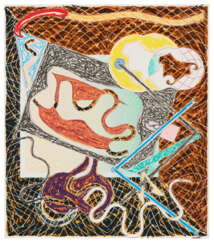

Frank Philip Stella, an American icon in the realms of painting, sculpture, and printmaking, has left an indelible mark on the art world with his pioneering work in minimalism and post-painterly abstraction. Born on May 12, 1936, in Malden, Massachusetts, Stella's artistic journey commenced with his studies in painting at Phillips Academy, Andover, and history at Princeton University. His move to New York City in 1958 heralded the start of an illustrious career that would see him challenge and redefine artistic boundaries.
Stella's work is celebrated for its innovative approach to form, color, and composition. His early endeavors in the late 1950s showcased black paintings characterized by bands of bare canvas, which played a pivotal role in emphasizing the flatness of the picture plane. This deliberate artificiality in his work garnered considerable attention and positioned him at the forefront of Post-Painterly Abstraction, a movement that reacted against the emotive excesses of Abstract Expressionism.
Throughout his career, Stella continued to push the limits of abstraction. His vocabulary expanded to include vibrant and dynamic assemblages that projected out from the wall, utilizing a variety of materials from steel to plastic. This evolution of his style is not only a testament to his ingenuity but also his influence on contemporary art. Notable works that exemplify his groundbreaking approach include "Grajau I," "Harran II," and "Eskimo Curlew," among others, which can be found in prestigious collections such as The Glass House and the Solomon R. Guggenheim Museum.
For art collectors and enthusiasts alike, Stella's oeuvre offers a captivating exploration into the possibilities of abstract art. His continued relevance and the profound impact of his work on both his peers and successive generations of artists underscore his status as a seminal figure in modern art.
Stay updated on new discoveries, sales, and auction events related to Frank Philip Stella by signing up for our newsletter. This subscription is your gateway to the latest in the world of Frank Stella, ensuring you never miss an opportunity to engage with the works of this monumental artist.
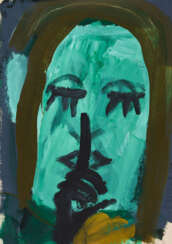

Karl Horst Hödicke is a German artist, a pioneer of German Neo-Expressionism and new figuration, and one of the most important representatives of German post-war painting.
After moving to Berlin in 1957, Hödicke encountered the eventful history of Berlin - the construction of the Berlin Wall, the Cold War, and reunification - and reflected it in his paintings.
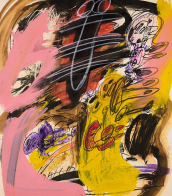


Karl Horst Hödicke is a German artist, a pioneer of German Neo-Expressionism and new figuration, and one of the most important representatives of German post-war painting.
After moving to Berlin in 1957, Hödicke encountered the eventful history of Berlin - the construction of the Berlin Wall, the Cold War, and reunification - and reflected it in his paintings.



Karl Horst Hödicke is a German artist, a pioneer of German Neo-Expressionism and new figuration, and one of the most important representatives of German post-war painting.
After moving to Berlin in 1957, Hödicke encountered the eventful history of Berlin - the construction of the Berlin Wall, the Cold War, and reunification - and reflected it in his paintings.
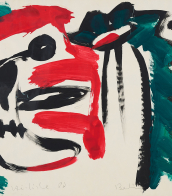


Frank Philip Stella, an American icon in the realms of painting, sculpture, and printmaking, has left an indelible mark on the art world with his pioneering work in minimalism and post-painterly abstraction. Born on May 12, 1936, in Malden, Massachusetts, Stella's artistic journey commenced with his studies in painting at Phillips Academy, Andover, and history at Princeton University. His move to New York City in 1958 heralded the start of an illustrious career that would see him challenge and redefine artistic boundaries.
Stella's work is celebrated for its innovative approach to form, color, and composition. His early endeavors in the late 1950s showcased black paintings characterized by bands of bare canvas, which played a pivotal role in emphasizing the flatness of the picture plane. This deliberate artificiality in his work garnered considerable attention and positioned him at the forefront of Post-Painterly Abstraction, a movement that reacted against the emotive excesses of Abstract Expressionism.
Throughout his career, Stella continued to push the limits of abstraction. His vocabulary expanded to include vibrant and dynamic assemblages that projected out from the wall, utilizing a variety of materials from steel to plastic. This evolution of his style is not only a testament to his ingenuity but also his influence on contemporary art. Notable works that exemplify his groundbreaking approach include "Grajau I," "Harran II," and "Eskimo Curlew," among others, which can be found in prestigious collections such as The Glass House and the Solomon R. Guggenheim Museum.
For art collectors and enthusiasts alike, Stella's oeuvre offers a captivating exploration into the possibilities of abstract art. His continued relevance and the profound impact of his work on both his peers and successive generations of artists underscore his status as a seminal figure in modern art.
Stay updated on new discoveries, sales, and auction events related to Frank Philip Stella by signing up for our newsletter. This subscription is your gateway to the latest in the world of Frank Stella, ensuring you never miss an opportunity to engage with the works of this monumental artist.



Frank Philip Stella, an American icon in the realms of painting, sculpture, and printmaking, has left an indelible mark on the art world with his pioneering work in minimalism and post-painterly abstraction. Born on May 12, 1936, in Malden, Massachusetts, Stella's artistic journey commenced with his studies in painting at Phillips Academy, Andover, and history at Princeton University. His move to New York City in 1958 heralded the start of an illustrious career that would see him challenge and redefine artistic boundaries.
Stella's work is celebrated for its innovative approach to form, color, and composition. His early endeavors in the late 1950s showcased black paintings characterized by bands of bare canvas, which played a pivotal role in emphasizing the flatness of the picture plane. This deliberate artificiality in his work garnered considerable attention and positioned him at the forefront of Post-Painterly Abstraction, a movement that reacted against the emotive excesses of Abstract Expressionism.
Throughout his career, Stella continued to push the limits of abstraction. His vocabulary expanded to include vibrant and dynamic assemblages that projected out from the wall, utilizing a variety of materials from steel to plastic. This evolution of his style is not only a testament to his ingenuity but also his influence on contemporary art. Notable works that exemplify his groundbreaking approach include "Grajau I," "Harran II," and "Eskimo Curlew," among others, which can be found in prestigious collections such as The Glass House and the Solomon R. Guggenheim Museum.
For art collectors and enthusiasts alike, Stella's oeuvre offers a captivating exploration into the possibilities of abstract art. His continued relevance and the profound impact of his work on both his peers and successive generations of artists underscore his status as a seminal figure in modern art.
Stay updated on new discoveries, sales, and auction events related to Frank Philip Stella by signing up for our newsletter. This subscription is your gateway to the latest in the world of Frank Stella, ensuring you never miss an opportunity to engage with the works of this monumental artist.
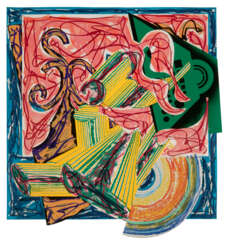

Frank Philip Stella, an American icon in the realms of painting, sculpture, and printmaking, has left an indelible mark on the art world with his pioneering work in minimalism and post-painterly abstraction. Born on May 12, 1936, in Malden, Massachusetts, Stella's artistic journey commenced with his studies in painting at Phillips Academy, Andover, and history at Princeton University. His move to New York City in 1958 heralded the start of an illustrious career that would see him challenge and redefine artistic boundaries.
Stella's work is celebrated for its innovative approach to form, color, and composition. His early endeavors in the late 1950s showcased black paintings characterized by bands of bare canvas, which played a pivotal role in emphasizing the flatness of the picture plane. This deliberate artificiality in his work garnered considerable attention and positioned him at the forefront of Post-Painterly Abstraction, a movement that reacted against the emotive excesses of Abstract Expressionism.
Throughout his career, Stella continued to push the limits of abstraction. His vocabulary expanded to include vibrant and dynamic assemblages that projected out from the wall, utilizing a variety of materials from steel to plastic. This evolution of his style is not only a testament to his ingenuity but also his influence on contemporary art. Notable works that exemplify his groundbreaking approach include "Grajau I," "Harran II," and "Eskimo Curlew," among others, which can be found in prestigious collections such as The Glass House and the Solomon R. Guggenheim Museum.
For art collectors and enthusiasts alike, Stella's oeuvre offers a captivating exploration into the possibilities of abstract art. His continued relevance and the profound impact of his work on both his peers and successive generations of artists underscore his status as a seminal figure in modern art.
Stay updated on new discoveries, sales, and auction events related to Frank Philip Stella by signing up for our newsletter. This subscription is your gateway to the latest in the world of Frank Stella, ensuring you never miss an opportunity to engage with the works of this monumental artist.
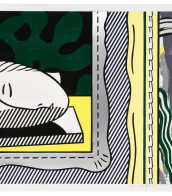


Frank Philip Stella, an American icon in the realms of painting, sculpture, and printmaking, has left an indelible mark on the art world with his pioneering work in minimalism and post-painterly abstraction. Born on May 12, 1936, in Malden, Massachusetts, Stella's artistic journey commenced with his studies in painting at Phillips Academy, Andover, and history at Princeton University. His move to New York City in 1958 heralded the start of an illustrious career that would see him challenge and redefine artistic boundaries.
Stella's work is celebrated for its innovative approach to form, color, and composition. His early endeavors in the late 1950s showcased black paintings characterized by bands of bare canvas, which played a pivotal role in emphasizing the flatness of the picture plane. This deliberate artificiality in his work garnered considerable attention and positioned him at the forefront of Post-Painterly Abstraction, a movement that reacted against the emotive excesses of Abstract Expressionism.
Throughout his career, Stella continued to push the limits of abstraction. His vocabulary expanded to include vibrant and dynamic assemblages that projected out from the wall, utilizing a variety of materials from steel to plastic. This evolution of his style is not only a testament to his ingenuity but also his influence on contemporary art. Notable works that exemplify his groundbreaking approach include "Grajau I," "Harran II," and "Eskimo Curlew," among others, which can be found in prestigious collections such as The Glass House and the Solomon R. Guggenheim Museum.
For art collectors and enthusiasts alike, Stella's oeuvre offers a captivating exploration into the possibilities of abstract art. His continued relevance and the profound impact of his work on both his peers and successive generations of artists underscore his status as a seminal figure in modern art.
Stay updated on new discoveries, sales, and auction events related to Frank Philip Stella by signing up for our newsletter. This subscription is your gateway to the latest in the world of Frank Stella, ensuring you never miss an opportunity to engage with the works of this monumental artist.

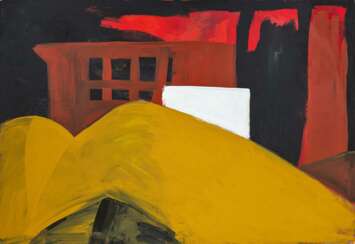

Karl Horst Hödicke is a German artist, a pioneer of German Neo-Expressionism and new figuration, and one of the most important representatives of German post-war painting.
After moving to Berlin in 1957, Hödicke encountered the eventful history of Berlin - the construction of the Berlin Wall, the Cold War, and reunification - and reflected it in his paintings.