










political


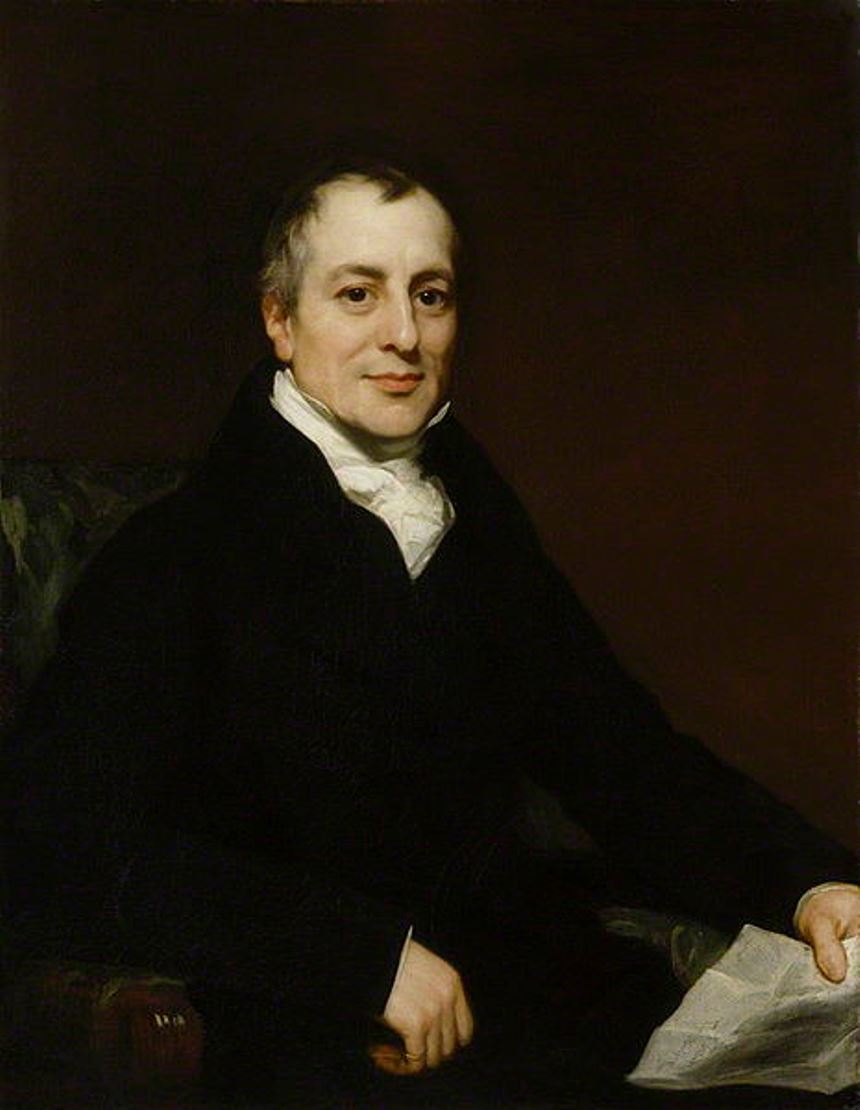
David Ricardo was a British economist and a classic of political economy.
David's father, a stockbroker, came from a Jewish family and emigrated from Holland to England in the early 1770s. After his studies, young David was hired by the London Stock Exchange and worked with his father, but at the age of 21 he broke away from his family. He soon started his own business as a dealer in government securities and became rich very quickly. At the age of 27, Ricardo became seriously interested in economics and from 1809 began to publish articles in the press on topical issues of currency and economics. He met the economist James Mill, who became his political and editorial adviser. He also befriended the utilitarian philosopher Jeremy Bentham and Thomas Malthus.
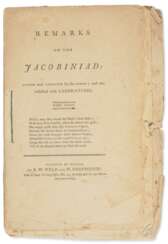
Ricardo's major work was On the Principles of Political Economy, and Taxation, published in London in 1817. It was a fundamental contribution to economic science and the first systematized approach to the subject. In this work, Ricardo addresses the "main problem of political economy," defined as determining the laws governing the "natural course of rents, profits, and wages" over time. He also develops ideas advanced in Adam Smith's The Wealth of Nations (1776), outlining a new labor theory of value, as well as theories of international competitive advantage and the effects of taxation. Ricardo was the first to formulate the "classical" system of political economy, and his ideas dominated economic thought throughout the 19th century.
By the age of 41, David Ricardo had completely retired from business and began to lead the quiet life of a gentleman and landowner on his estate. In 1819, Ricardo was elected to the British Parliament as an independent representative of a district in Ireland.

Damien Hirst is a seminal figure in contemporary art, well-known for his provocative and often controversial works that explore themes of death, rebirth, and the boundaries of art itself. As a leading member of the Young British Artists (YBAs) in the 1990s, Hirst catapulted to fame with his innovative approach to art that combines the techniques of installation, sculpture, and painting.
Damien Hirst's early career was marked by his organization of the pivotal "Freeze" exhibition in 1988, showcasing his and his peers' work, which caught the attention of influential art collectors. This period laid the groundwork for his signature works, including the 'Natural History' series, where animals such as sharks, sheep, and cows are preserved in formaldehyde, challenging viewers to confront the nature of existence and the inevitability of death.
Among Damien Hirst's most iconic pieces is "The Physical Impossibility of Death in the Mind of Someone Living," featuring a tiger shark suspended in formaldehyde, and "For the Love of God," a platinum cast of an 18th-century human skull encrusted with 8,601 flawless diamonds. These works exemplify Hirst's exploration of mortality and the commodification of art.
Damien Hirst's 'Spot Paintings' and 'Spin Paintings' further demonstrate his challenge to traditional notions of authorship and the creative process, often involving teams of assistants in their production. These series play with concepts of randomness, control, and the aesthetic joys of color and form, pushing the boundaries of painting as a medium.
In 2017, Hirst embarked on "Treasures from the Wreck of the Unbelievable," an ambitious project that filled Venetian museums with artifacts from a fictional ancient shipwreck. This project, blending reality and fiction, invited audiences to question the authenticity and value of art, showcasing Hirst's ongoing interest in storytelling and myth-making within the context of contemporary culture.
For collectors and experts in art and antiques, Damien Hirst represents a pivotal figure whose works challenge, provoke, and inspire. His ability to blur the lines between art, science, and commerce has left an indelible mark on the art world, making his pieces highly sought after by collectors around the globe.
Stay updated on Damien Hirst's latest projects, exhibitions, and sales by signing up for dedicated art newsletters. This subscription will ensure you're informed about new opportunities to engage with the work of one of the most influential artists of our time.


Francisco José de Goya y Lucientes was a Spanish romantic painter and printmaker, celebrated as the most pivotal Spanish artist of the late 18th and early 19th centuries. Born in Fuendetodos, Aragon, Spain, on March 30, 1746, Goya's work reflects a tumultuous period of history, intertwining the personal, political, and social upheavals of his time with a bold and innovative artistic vision. His early career was marked by portraits of the Spanish aristocracy and royalty, as well as Rococo style tapestry cartoons for the royal palace. However, following a severe illness in 1793 that left him deaf, his art took on a darker and more pessimistic tone.
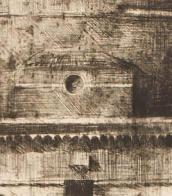
Goya's oeuvre is vast, encompassing around 700 paintings, 280 prints, and several thousand drawings, through which he depicted a wide range of subjects from the whimsical to the macabre. Notable among his works are "The Naked Maja," "The Clothed Maja," "The Family of Charles IV," "The Third of May 1808: The Execution of the Defenders of Madrid," and "Saturn Eating His Children." His etchings, particularly the series "Los Caprichos" and "The Disasters of War," are celebrated for their intricate detail, emotional depth, and critical social commentary.
Goya's contribution to art goes beyond his mastery of painting and printmaking. He is often considered the bridge between the Old Masters and modern art, introducing themes and techniques that would influence countless artists in the centuries to follow. His ability to capture the essence of his era, the human condition, and the complexities of his own psyche, makes his work universally relatable and enduringly relevant.
His most famous paintings are housed in prestigious museums worldwide, including the Museo del Prado in Madrid, which holds an extensive collection of his works. The Prado's collection serves as a testament to Goya's significant impact on art and culture, offering insight into the artist's unique perspective on the world around him.
For collectors and experts in art and antiques, Francisco de Goya's legacy is a beacon of artistic innovation and historical significance. His works not only adorn the walls of museums but also continue to inspire and provoke thought among audiences across the globe.
For updates related to Francisco de Goya, including new product sales and auction events related to his works, sign up for our newsletter. Stay informed on the latest offerings and opportunities to add to your collection of this legendary artist's works.