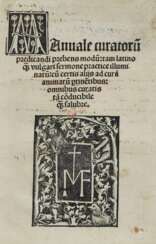
1501
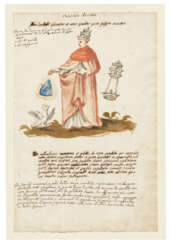

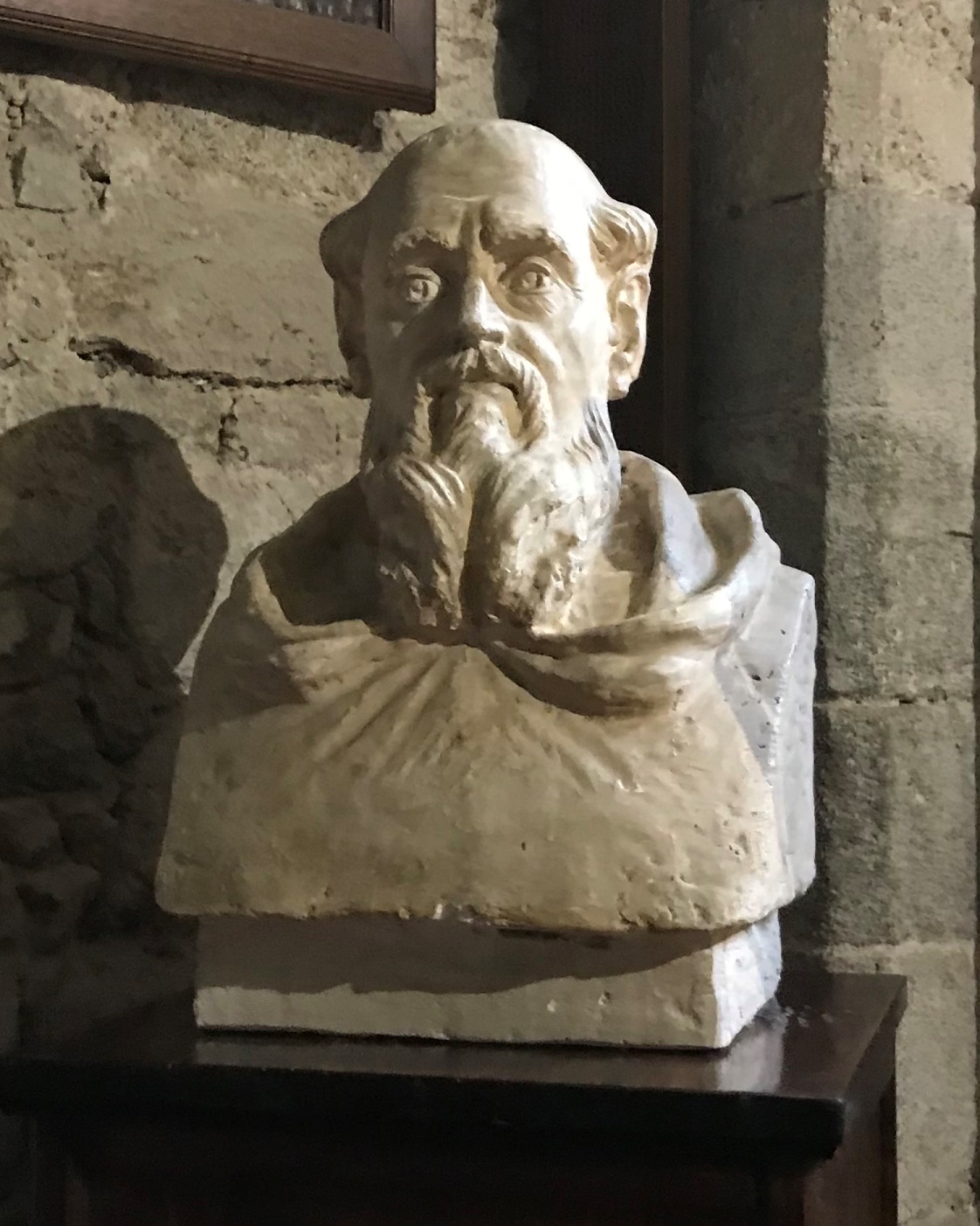
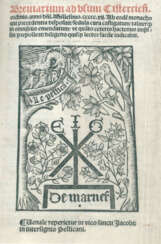
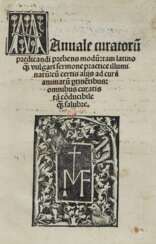
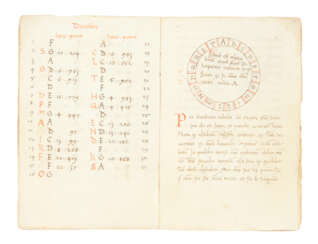
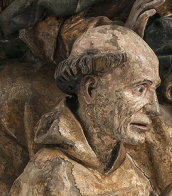
Joachim of Fiore, also known as Joachim de Fiore, and Gioacchino da Fiore, was an Italian mystic, theologian and philosopher of history, a great medieval thinker with a beautiful symbolic imagination.
Fiore was a prolific writer and explored the hidden meaning of the life of the apostles and the scriptures. At the end of the twelfth century Joachim had a high international reputation.
After a pilgrimage to the Holy Land, he became a Cistercian monk and by 1177 had become abbot at Corazzo, Sicily. He retired to the mountains to lead a contemplative life, and in 1196 he founded the Order of San Giovanni in Fiore. In his Book of the Harmony of the New and Old Testaments, Fiore set forth a theory of history and traced correspondences in the Old and New Testaments. In "An Exposition of the Apocalypse" he explored the symbols of the Antichrist, and in "The Ten-String Psalter" he set forth his doctrine of the Holy Trinity. A man of vivid imagination, he was proclaimed a prophet and condemned as a heretic.


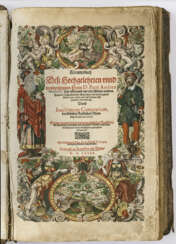

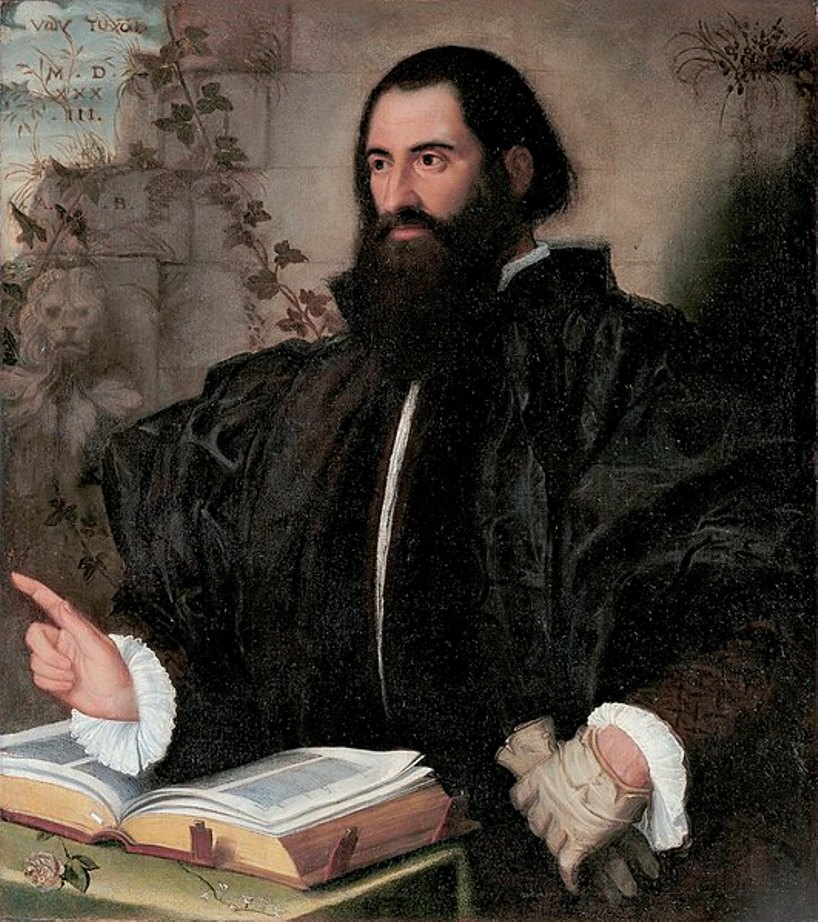
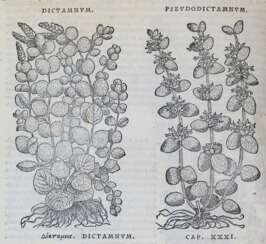
Pietro Andrea Gregorio Mattioli was a 16th-century Italian physician, botanist and pharmacist.
Mattioli studied medicine in Padua and obtained a medical practice first in his hometown. Later, in the 1555-1560s, he served as personal physician to the imperial court of Ferdinand II, Archduke of Austria, and Emperor Maximilian II. This high position allowed him to test the effects of poisonous plants on prisoners for scientific purposes.
Mattioli published several scientific works in which he included many of his own observations on the flora of the Alps, including previously unexplored plants. These works, based on the study of books by predecessor scientists, gave impetus to the development of botany throughout Italy at the time. Mattioli kept up a lively correspondence with other researchers, describing specimens of rare plants received from them. The genus of flowering plants Matthiola is named after Mattioli.
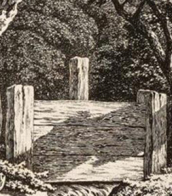
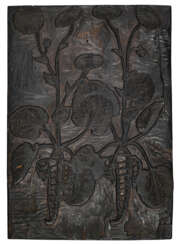
![Original woodblock for Aquilina Aquilegia vulgaris [Columbine], from Mattioli's Herbal](/assets/image/picture_3134701/107c4/lnv8185xrdrbubgr19jqdblnlhre59zep63yalv4j3kvcxzvw4sxwbmfqdwtkbkk1695820581jpg__fix_374_244.jpeg)
![Original woodblock for Aquilina Aquilegia vulgaris [Columbine], from Mattioli's Herbal](https://veryimportantlot.com/assets/image/picture_3134701/107c4/lnv8185xrdrbubgr19jqdblnlhre59zep63yalv4j3kvcxzvw4sxwbmfqdwtkbkk1695820581jpg__fix_374_244.jpeg)
Pietro Andrea Gregorio Mattioli was a 16th-century Italian physician, botanist and pharmacist.
Mattioli studied medicine in Padua and obtained a medical practice first in his hometown. Later, in the 1555-1560s, he served as personal physician to the imperial court of Ferdinand II, Archduke of Austria, and Emperor Maximilian II. This high position allowed him to test the effects of poisonous plants on prisoners for scientific purposes.
Mattioli published several scientific works in which he included many of his own observations on the flora of the Alps, including previously unexplored plants. These works, based on the study of books by predecessor scientists, gave impetus to the development of botany throughout Italy at the time. Mattioli kept up a lively correspondence with other researchers, describing specimens of rare plants received from them. The genus of flowering plants Matthiola is named after Mattioli.

Pietro Andrea Gregorio Mattioli was a 16th-century Italian physician, botanist and pharmacist.
Mattioli studied medicine in Padua and obtained a medical practice first in his hometown. Later, in the 1555-1560s, he served as personal physician to the imperial court of Ferdinand II, Archduke of Austria, and Emperor Maximilian II. This high position allowed him to test the effects of poisonous plants on prisoners for scientific purposes.
Mattioli published several scientific works in which he included many of his own observations on the flora of the Alps, including previously unexplored plants. These works, based on the study of books by predecessor scientists, gave impetus to the development of botany throughout Italy at the time. Mattioli kept up a lively correspondence with other researchers, describing specimens of rare plants received from them. The genus of flowering plants Matthiola is named after Mattioli.




![[DE ROJAS, Fernando (c.1465-1541)]](/assets/image/picture_3601527/ac681/iqaknapn63gd3nryzfvbenaizqvp09qbfuq6y4kerlfaiuooipxdvt2u2wxqzxc1700206782jpg__fix_374_244.jpeg)
![[DE ROJAS, Fernando (c.1465-1541)]](https://veryimportantlot.com/assets/image/picture_3601527/ac681/iqaknapn63gd3nryzfvbenaizqvp09qbfuq6y4kerlfaiuooipxdvt2u2wxqzxc1700206782jpg__fix_374_244.jpeg)







![Original woodblock for Cardus vulgaris [Carline Thistle], from Mattioli's Herbal](/assets/image/picture_3695516/6c741/cqlj4tbszqrc9o4s3dm7r33zwlyrppuqo6jrdu2q-kmvpkdyo4ojenv0-kraijme1704446647jpg__fix_374_244.jpeg)
![Original woodblock for Cardus vulgaris [Carline Thistle], from Mattioli's Herbal](https://veryimportantlot.com/assets/image/picture_3695516/6c741/cqlj4tbszqrc9o4s3dm7r33zwlyrppuqo6jrdu2q-kmvpkdyo4ojenv0-kraijme1704446647jpg__fix_374_244.jpeg)
Pietro Andrea Gregorio Mattioli was a 16th-century Italian physician, botanist and pharmacist.
Mattioli studied medicine in Padua and obtained a medical practice first in his hometown. Later, in the 1555-1560s, he served as personal physician to the imperial court of Ferdinand II, Archduke of Austria, and Emperor Maximilian II. This high position allowed him to test the effects of poisonous plants on prisoners for scientific purposes.
Mattioli published several scientific works in which he included many of his own observations on the flora of the Alps, including previously unexplored plants. These works, based on the study of books by predecessor scientists, gave impetus to the development of botany throughout Italy at the time. Mattioli kept up a lively correspondence with other researchers, describing specimens of rare plants received from them. The genus of flowering plants Matthiola is named after Mattioli.

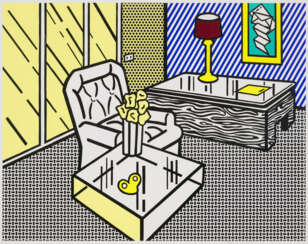


Roy Fox Lichtenstein, an American icon of the Pop Art movement, is celebrated for his comic strip-inspired art. Born in 1923 in New York City, Lichtenstein's journey into the art world was marked by various phases, evolving from Cubism and Abstract Expressionism to the distinctive Pop Art style he is renowned for.
Roy Lichtenstein's artistic career gained momentum in the 1960s, a period during which he embraced the comic strip as his primary source of inspiration. His pioneering use of Ben-Day dots, a technique borrowed from commercial printing, became his signature style, bringing a new visual language to fine art. His approach transformed mundane subjects from popular culture into compelling fine art, challenging traditional notions of artistry.
Among his most notable works, "Drowning Girl" (1963), displayed at the Museum of Modern Art in New York, exemplifies his iconic style with its bold lines, vivid colors, and Ben-Day dots. This piece, along with others like "Look Mickey" and "Whaam!", played a critical role in establishing Pop Art as a major art movement, contrasting starkly with the Abstract Expressionism prevalent at the time.
Roy Lichtenstein's art was not just limited to canvas; he explored multiple media, showcasing his versatility. His shift to Pop Art marked a significant turn in his career, bringing him fame and controversy alike. His works, often based on comic strips and advertisements, were both a parody and homage to the mass-produced, consumerist culture of his time.
For art collectors and experts, Lichtenstein's works offer a fascinating glimpse into a transformative era in art history. His approach to Pop Art remains influential, and his works are celebrated worldwide for their innovative and provocative style.
Interested in staying updated on sales and auction events featuring Roy Lichtenstein's works? Sign up for our updates. We provide straightforward, no-nonsense information on the latest in art sales and auctions related to Lichtenstein.


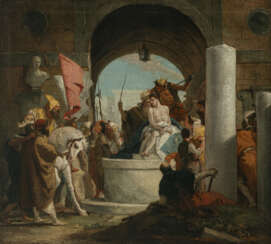

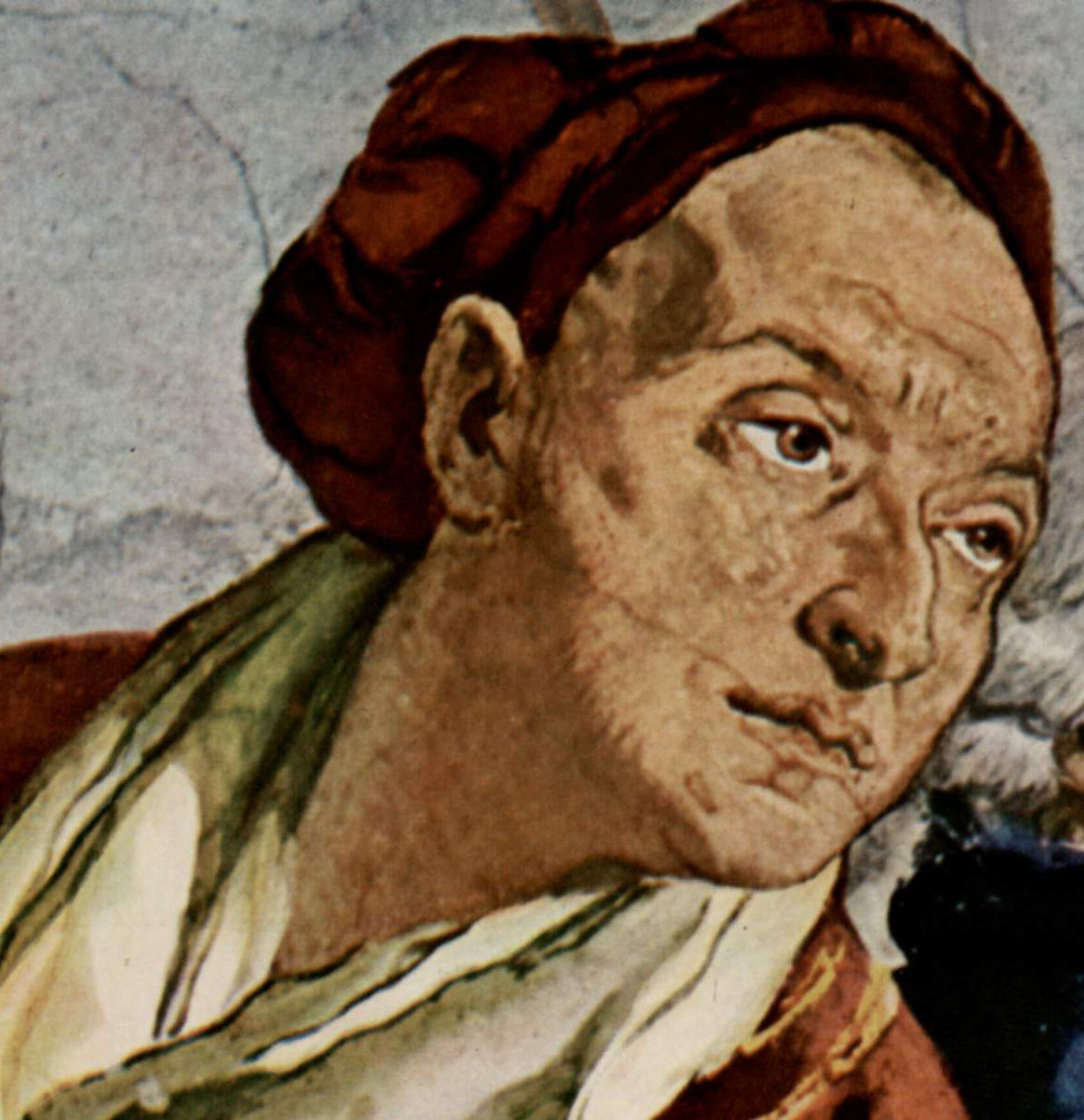
Giovanni Battista Tiepolo, an illustrious Italian painter of the 18th century, is renowned for his radiant and poetic frescoes that beautifully extend the tradition of Baroque ceiling decoration, encapsulating the essence of the Rococo period. Born in Venice, Tiepolo was significantly influenced by his contemporaries and predecessors, such as Piazzetta, Ricci, Tintoretto, and Veronese, which is evident in his dynamic and vibrant works.
Giovanni Battista Tiepolo's expertise in creating grand frescoed ceilings for churches, villas, and palaces across Italy, Germany, and Spain is particularly noteworthy. His work at the Würzburg Residenz, where he painted a vast ceiling depicting Apollo and the continents, is considered a high point of his career. This masterpiece demonstrates his skill in creating spatial illusions and integrating multiple perspectives to enhance the viewer's experience.
In addition to his frescoes, Giovanni Battista Tiepolo's prowess as a draftsman and printmaker was widely acclaimed. His prints, characterized by imaginative and sometimes enigmatic imagery, enjoyed widespread popularity and may have influenced subsequent artists like Francisco de Goya.
Throughout his career, Giovanni Battista Tiepolo received numerous commissions across Europe, reflecting his international fame. His later works in Spain, where he moved with his sons to serve the Spanish monarchy, showcase a quieter yet profound style, focusing on religious and allegorical themes.
For collectors and experts in art and antiques, Giovanni Battista Tiepolo's legacy represents an essential chapter in the history of art, offering insights into the interplay of light, color, and narrative in 18th-century European painting. His works, housed in various museums and collections worldwide, continue to captivate and inspire audiences with their elegance and grandeur.
If you wish to stay updated on new product sales and auction events related to Giovanni Battista Tiepolo, signing up for updates is an excellent way to ensure you don't miss out on any valuable information.


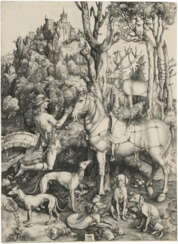

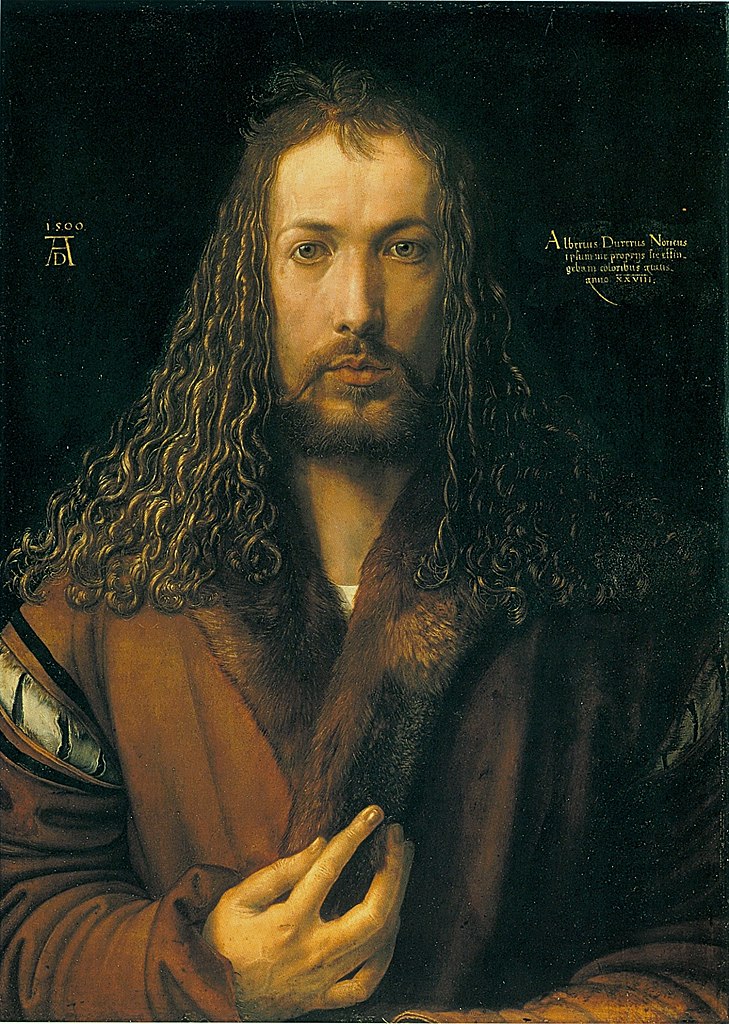
Albrecht Dürer, born on May 21, 1471 in Nuremberg, Germany, is widely regarded as the greatest German Renaissance painter. His contribution to painting and engraving is quite significant and has left a notable mark on the art world. Dürer's early life was spent in Nuremberg, a city that played a crucial role in his development as an artist and was also the site of his death on April 6, 1528. He was the son of the goldsmith Albrecht Dürer the Elder, from whom he initially learned the basics of drawing and metalworking.
Dürer's work is characterized by a combination of Gothic elements with the emerging Renaissance style, which is evident in his woodcuts and engravings. His oeuvre encompasses many themes, including religious works, altarpieces, portraits, and self-portraits. His outstanding prints, such as The Knight, Death and the Devil (1513), St. Jerome in his Study (1514) and Melencolia I (1514), are known for their intricate detail and artistic skill. Dürer was also one of the earliest European landscape painters, as evidenced by his watercolor paintings.
Equally significant are his theoretical writings on mathematics, perspective, and ideal proportions in art. Dürer was not only an artist but also a keen intellectual, his interests encompassing various aspects of culture and science. He served as court painter to Holy Roman Emperors Maximilian I and Charles V, completing several significant art projects for them. Dürer's keen mind and versatile interests brought him into contact with the most prominent figures of his time, including theologians and scientists of the Reformation era.
Dürer's self-portraits are particularly famous, demonstrating not only his artistic skill but also his self-awareness and personal style. These portraits attest to his growing success and confidence as an artist. Dürer's legacy is immense; he influenced not only the art of his time, but also left an indelible mark on the history of European art.
For those interested in the work and legacy of Albrecht Dürer, we recommend subscribing to our updates. Our subscription service is designed to provide information about new sales and auction events related to this remarkable artist. Join us to keep up to date on the latest art and antiques related to Albrecht Dürer.
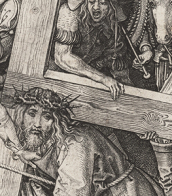
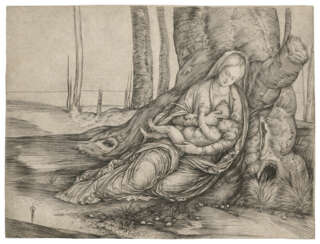

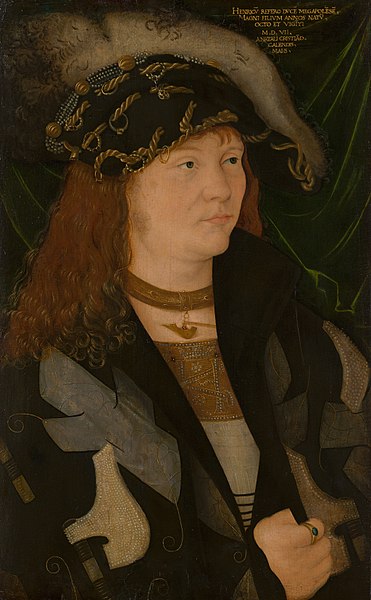

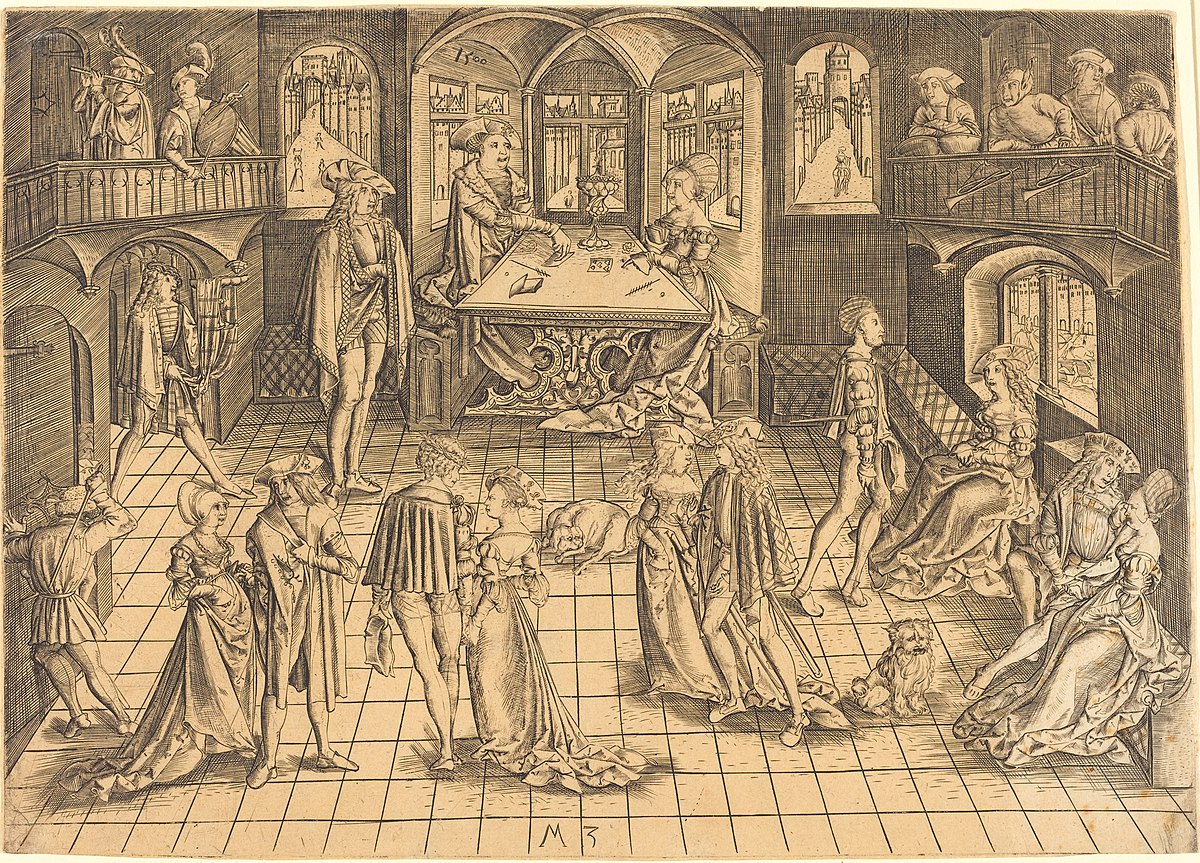
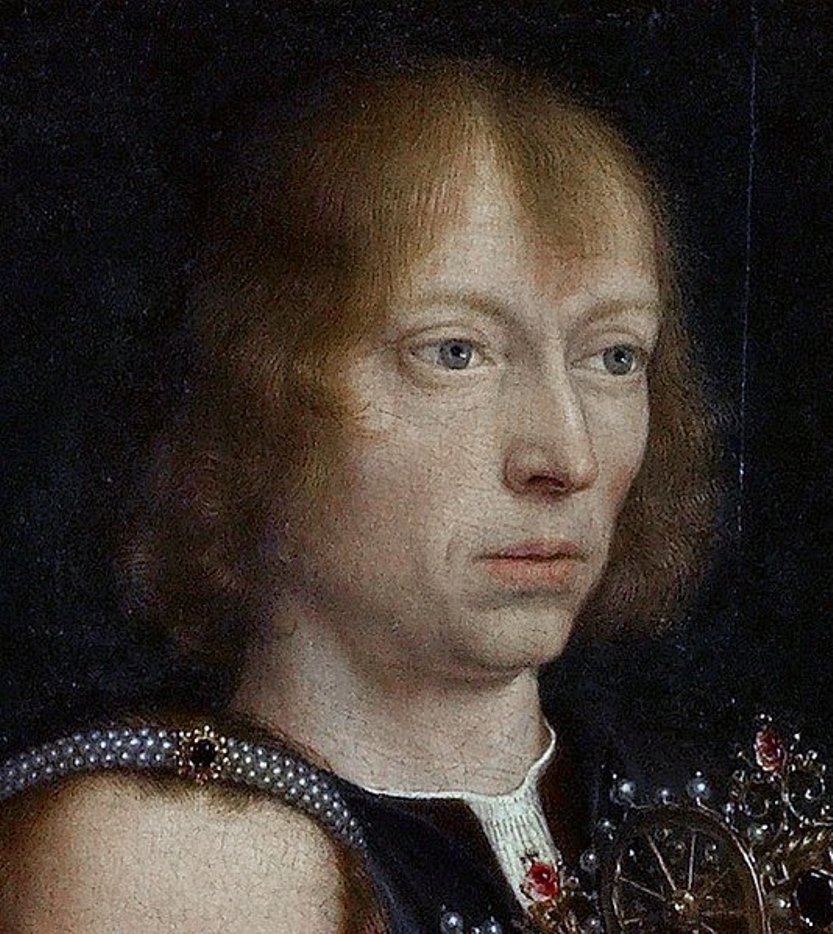
Master MZ was an engraver active in south Germany around 1500. He signed his 22 engravings with his monogram "MZ", and six are dated, all 1500, 1501 or 1503. He worked in Munich in Bavaria, and in 1500 seems to have been connected to the court of Albert IV, Duke of Bavaria.