möbel/tep
































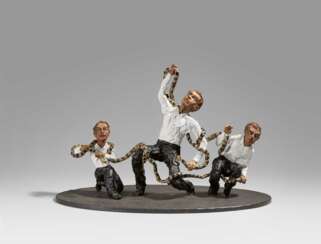

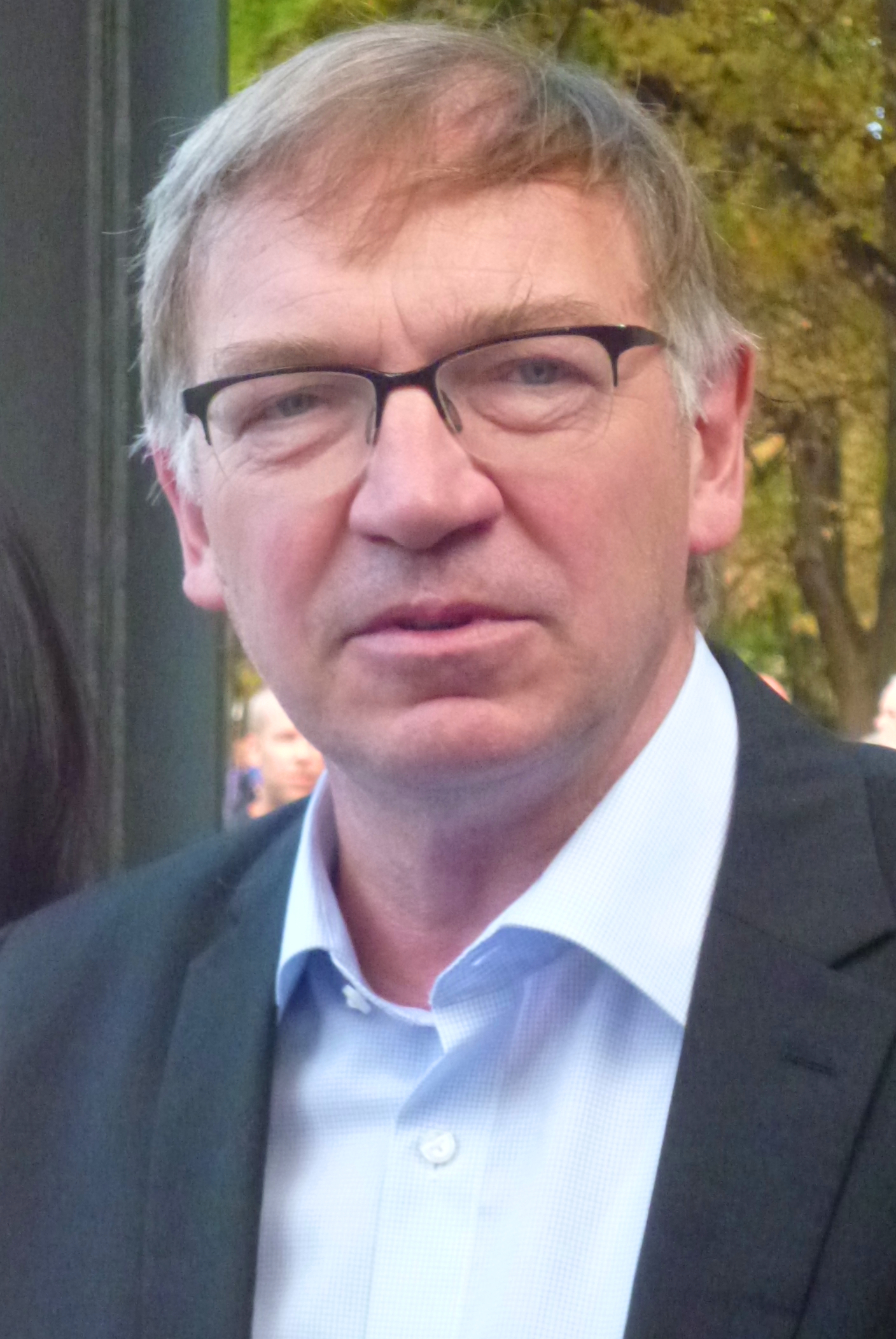
Stephan Balkenhol is a German artist known for his sculptures capturing the human form. Based in France and Germany, he specializes in wood sculptures, reliefs, drawings, and graphic techniques like lithography, woodcuts, and stencils. His distinct style features roughly carved and vibrantly painted wooden sculptures, often depicting people, animals, and architecture.
Balkenhol's subjects lack emotions, often gazing into emptiness, resulting in a distant and enigmatic aura. Wood is his primary medium, with softer woods allowing precise facial details while maintaining imperfections like chips, knots, and tool marks. The artist adds paint as a finishing touch, accentuating anatomy and vitality. The textured surfaces beneath the paint layer amplify the sense of life in Balkenhol's works.
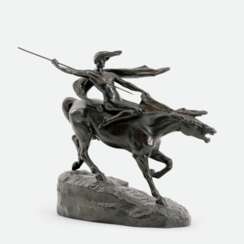

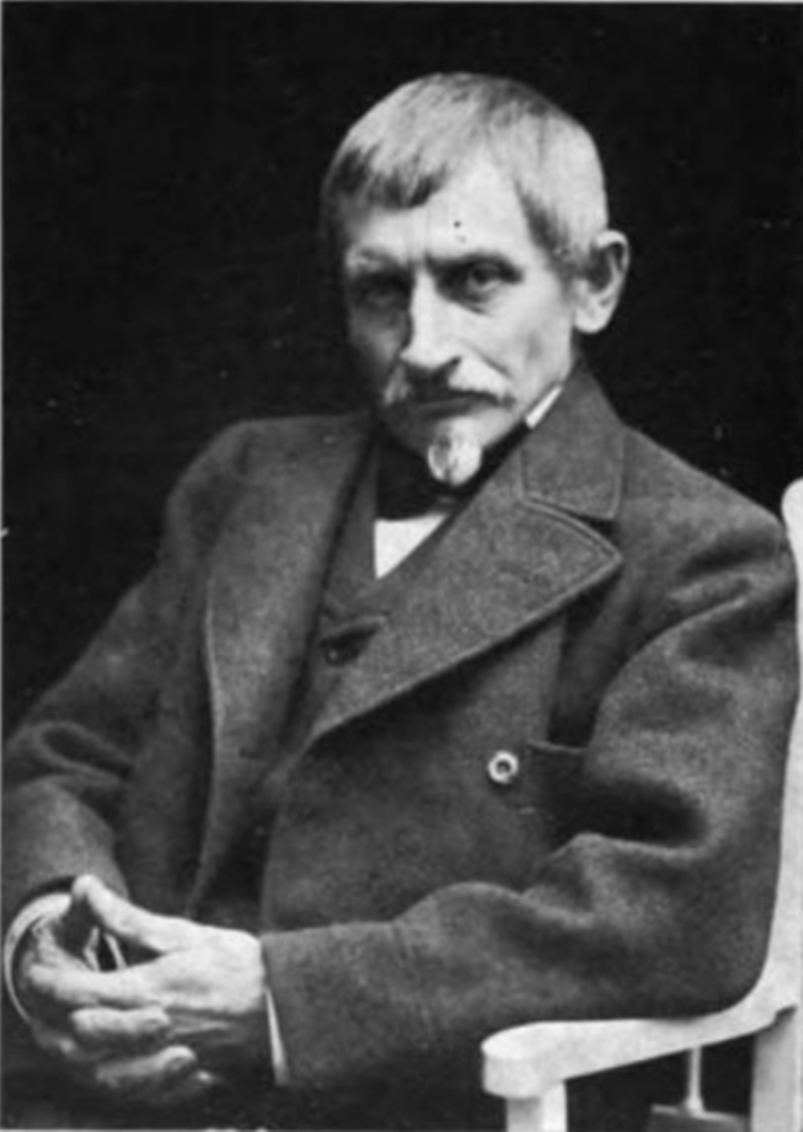
Stephan Abel Sinding is a Norwegian and Danish sculptor.
Stephan comes from a creative family, his brothers being composer Christian Sinding and painter Otto Sinding. He entered the Royal College of Drawing and studied art with Albert Wolf in Berlin. In France in 1874 he was impressed by the works of Auguste Rodin and Paul Dubois, and as a result Stephan Sinding abandoned the popular neoclassical movement of the time and moved towards a style inspired by Michelangelo, with flowing lines, raising themes of Scandinavian mythology as well as reality and eroticism.
Sinding created many realistic but also deeply symbolic sculptures, one of which, Mother in Captivity, won him the Grand Prix at the World's Fair in 1889.
In 1883 Stephan Sinding moved to Copenhagen, later becoming a Danish citizen and professor at the Academy of Fine Arts in Copenhagen. In 1910 he settled in Paris, where he lived and worked until his death in 1922. He became one of Norway's most famous sculptors, along with Gustav Vigeland.
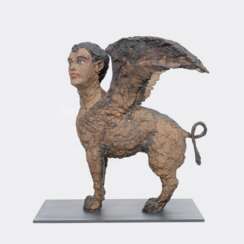

Stephan Balkenhol is a German artist known for his sculptures capturing the human form. Based in France and Germany, he specializes in wood sculptures, reliefs, drawings, and graphic techniques like lithography, woodcuts, and stencils. His distinct style features roughly carved and vibrantly painted wooden sculptures, often depicting people, animals, and architecture.
Balkenhol's subjects lack emotions, often gazing into emptiness, resulting in a distant and enigmatic aura. Wood is his primary medium, with softer woods allowing precise facial details while maintaining imperfections like chips, knots, and tool marks. The artist adds paint as a finishing touch, accentuating anatomy and vitality. The textured surfaces beneath the paint layer amplify the sense of life in Balkenhol's works.
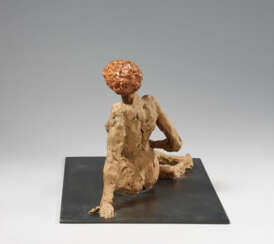

Stephan Balkenhol is a German artist known for his sculptures capturing the human form. Based in France and Germany, he specializes in wood sculptures, reliefs, drawings, and graphic techniques like lithography, woodcuts, and stencils. His distinct style features roughly carved and vibrantly painted wooden sculptures, often depicting people, animals, and architecture.
Balkenhol's subjects lack emotions, often gazing into emptiness, resulting in a distant and enigmatic aura. Wood is his primary medium, with softer woods allowing precise facial details while maintaining imperfections like chips, knots, and tool marks. The artist adds paint as a finishing touch, accentuating anatomy and vitality. The textured surfaces beneath the paint layer amplify the sense of life in Balkenhol's works.