templer
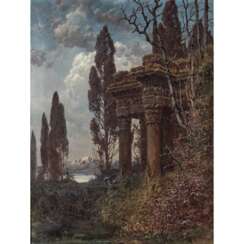

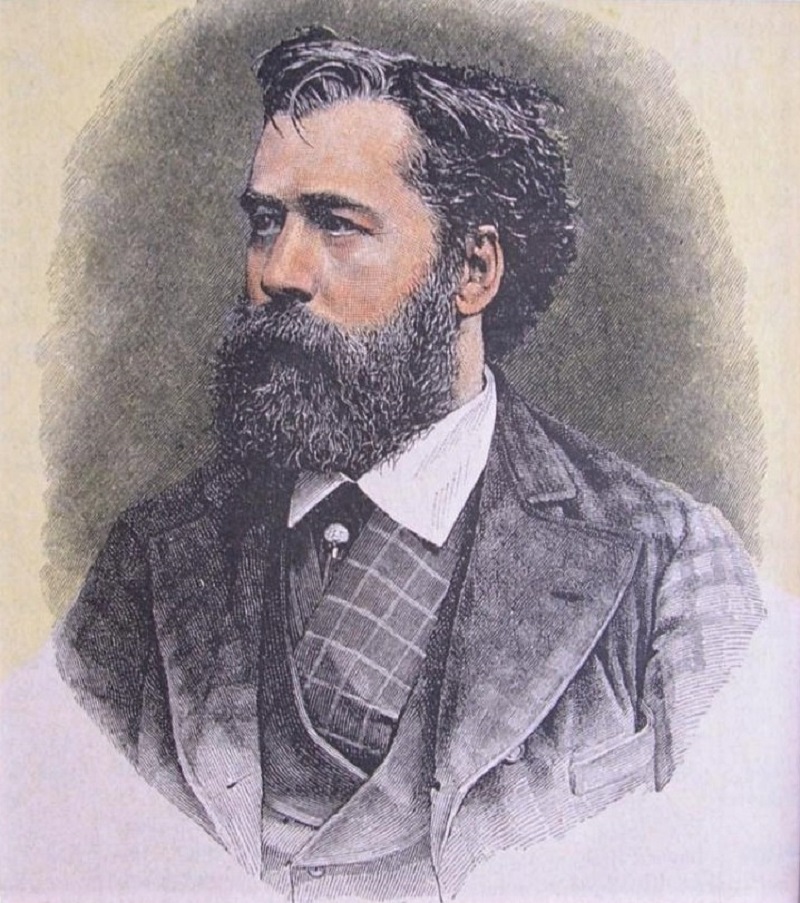
Ferdinand Knab was a German landscape painter, neo-romanticist and master of ruins.
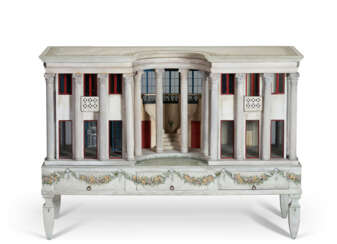




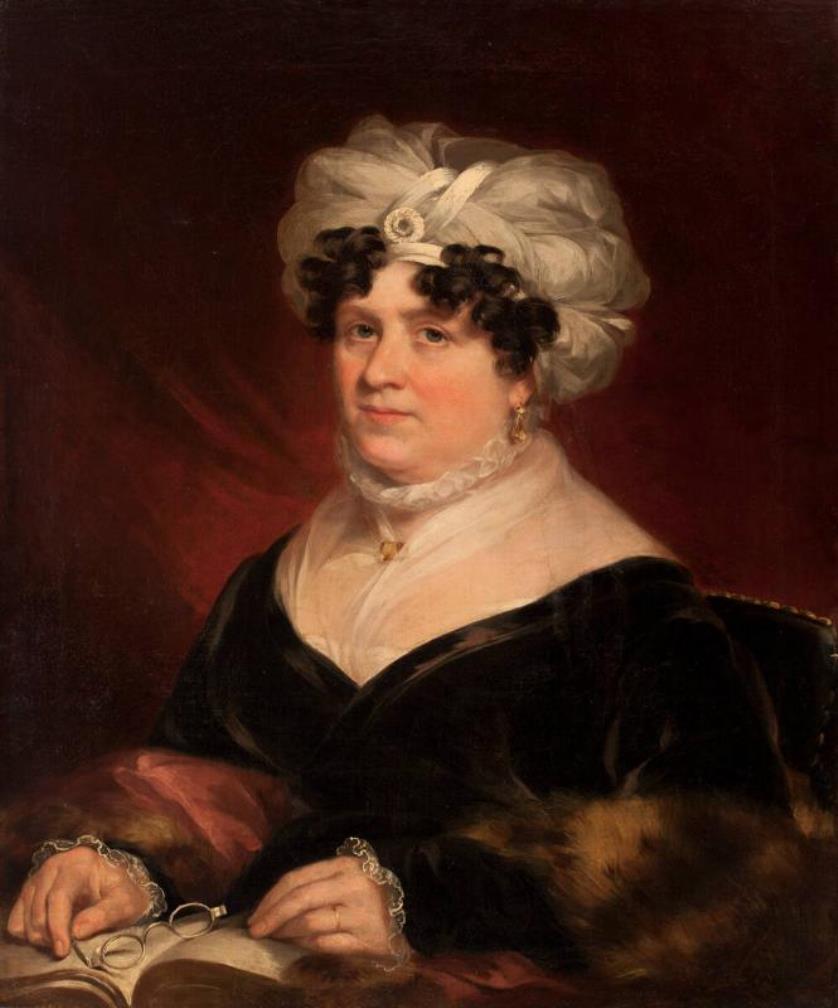
Susanna Rowson, née Haswell, was an American writer and poet, playwright, actress, and educator.
Susanna Haswell was the daughter of an officer in the Royal Navy. She published her first novel, Victoria, in 1786 and soon married businessman William Rowson. Susanna's greatest success was her first American bestseller, the novel Charlotte, A Tale of Truth (1791, in later editions under the title Charlotte Temple). This novel, a conventional sentimental story of seduction and remorse, was immensely popular and went through more than 200 editions.
In 1792 she became an actress and performed with her bankrupt husband in Scotland, as well as in Philadelphia, Baltimore, and Boston. In 1797, after retiring from the stage, Susanna opened the first "female academy" in Boston. Susanna Rowson also wrote many plays and musicals, and in doing so, helped to develop the performing arts in the United States. Later, she also edited the Boston Weekly Magazine, wrote geography and spelling textbooks, and moralizing manuals.


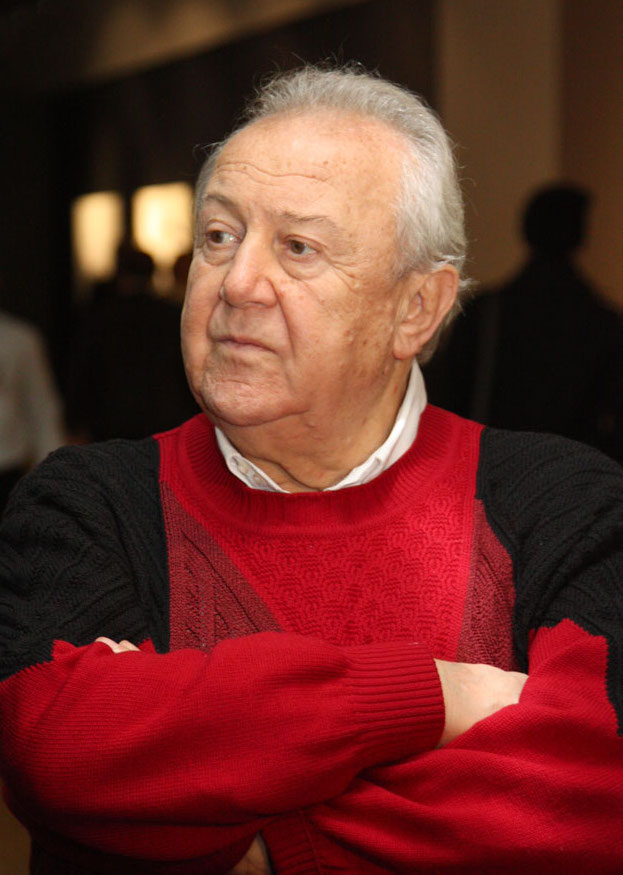
Zurab Konstantinovich Tsereteli (Russian: Зураб Константинович Церетели), a Georgian-Russian artist renowned for his monumental sculptures, has left an indelible mark on the landscape of modern art. Born in Tbilisi in 1934, Tsereteli expanded his artistic vision beyond painting after moving to Paris in the 1960s, where he was influenced by luminaries such as Picasso and Chagall. His work is characterized by a blend of dramatic, unconventional styles that have spurred debate but undeniably contributed to the cultural fabric of cities around the world.
Tsereteli's artworks, ranging from sculptures to paintings, are displayed globally, embodying his ethos that "art unites people." Noteworthy projects include the Peter the Great statue in Moscow, the Birth of the New Man in Seville, Spain, and the Tear of Grief in Bayonne, New Jersey, a poignant memorial to the victims of the 9/11 attacks. His commitment to fostering international cultural exchanges is evident in his role as the President of the Russian Academy of Arts and a UNESCO Goodwill Ambassador.
Beyond his public commissions, Tsereteli's contributions to education and the arts are profound. He founded the Moscow Museum of Modern Art and the Museum of Modern Art in Tbilisi, promoting modern and contemporary art in Russia and Georgia. His dedication to the Russian Academy of Arts underscores his belief in the importance of nurturing artistic talent and preserving the heritage of the academic school of fine arts.
For collectors and experts in art and antiques, Tsereteli's oeuvre offers a unique investment in pieces that are not only visually striking but also rich with cultural significance. His work encapsulates the dynamic interplay between traditional and contemporary art forms, making each piece a testament to his lifelong dedication to artistic innovation and cross-cultural dialogue.
To stay updated on new exhibitions, sales, and auction events related to Zurab Konstantinovich Tsereteli, sign up for updates. This subscription is a gateway to the latest developments in the world of a towering figure in art, offering exclusive insights into his ongoing contributions to the global art scene.
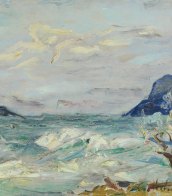
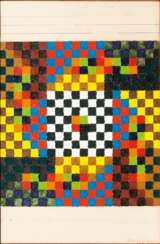

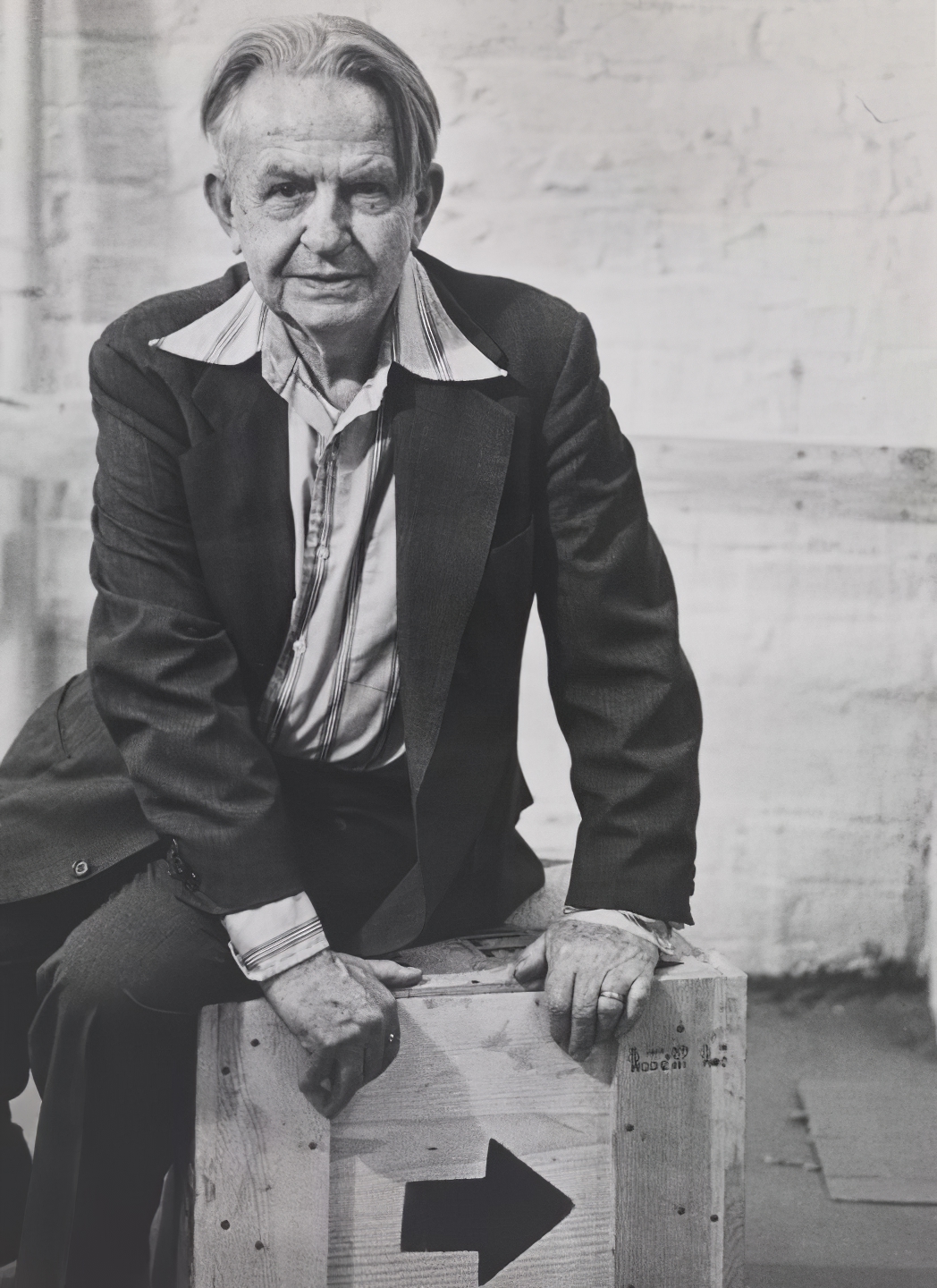
Alfred Jensen was an American abstract painter associated with the Abstract Expressionist movement. Jensen's work often incorporated complex systems of symbols and numerals, which he believed could be used to represent the structure of the universe.
Jensen spent much of his childhood in Europe before immigrating to the United States in the 1920s. He studied at the Art Students League in New York and began his career as an artist in the 1930s, creating figurative paintings that were influenced by the work of Picasso and other European modernists.
In the 1950s and 1960s, Jensen began exploring abstraction and began incorporating his interest in numerology and symbolism into his work. He developed a complex system of symbols and numerals, which he believed could be used to represent the underlying structure of the universe. His paintings often featured grids, mandalas, and other geometric forms, and he believed that his art could serve as a kind of visual language that could help unlock the mysteries of the universe.
Jensen's work was exhibited widely in the United States and Europe, and he was the recipient of several awards and honors throughout his career.
Jensen's unique approach to abstraction and his interest in numerology and symbolism have made him an important figure in the development of abstract painting in the mid-20th century.
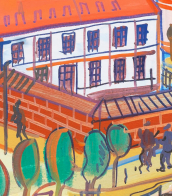
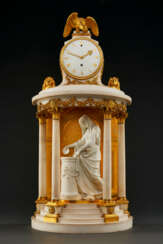

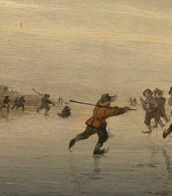


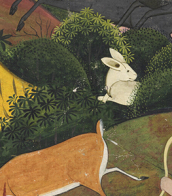






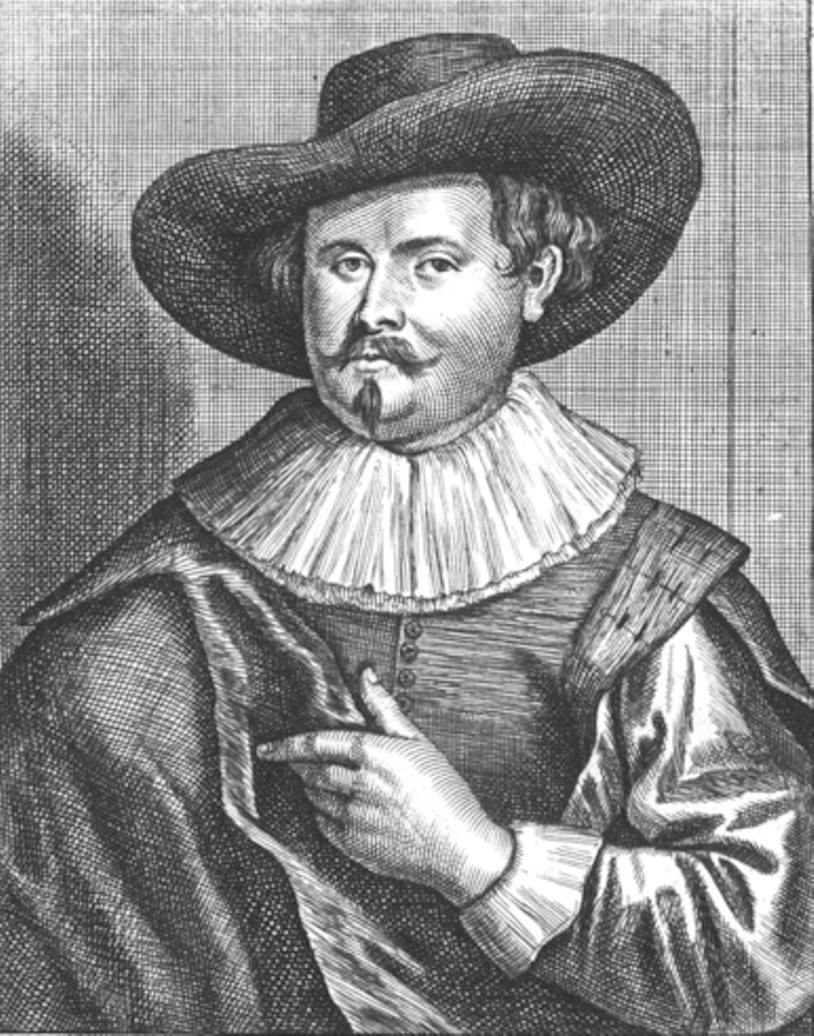






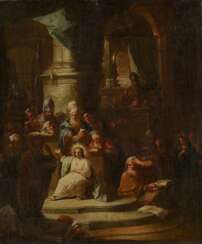

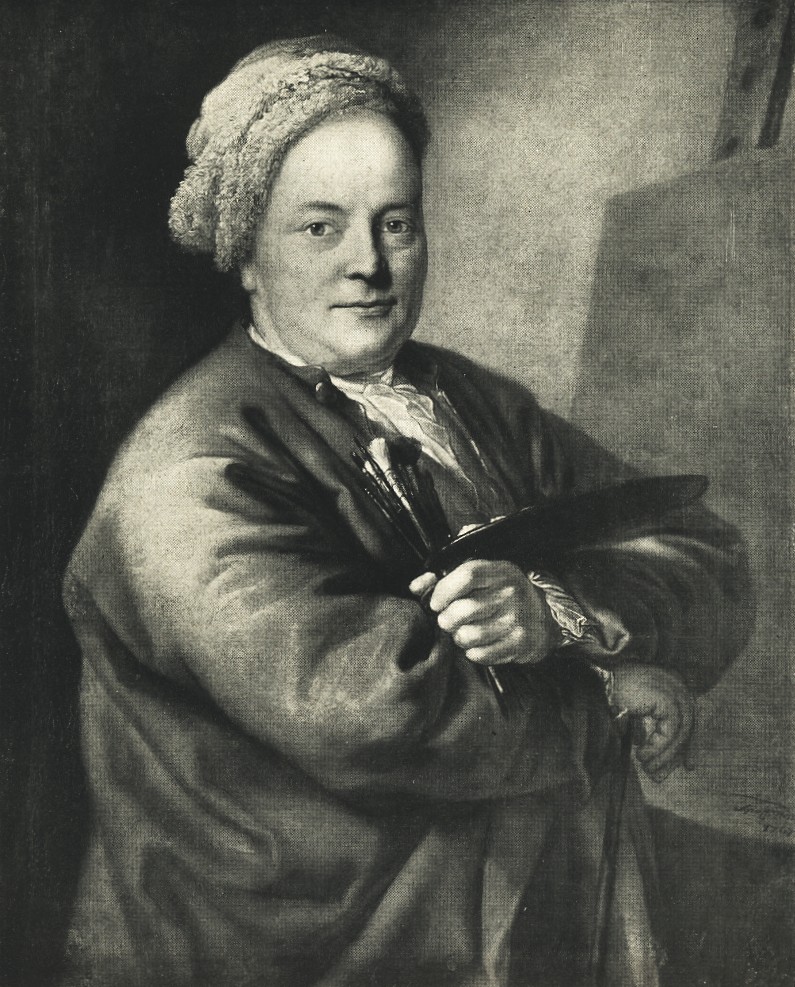
Christian Wilhelm Ernst Dietrich, also known as Christian Guillaume Ernest Dietricy, was a German painter and printmaker.
He was born in Weimar, Thuringia, into the family of the court painter Johann Georg Dietrich, and received his first training from his father. Dietrich worked in a variety of techniques and artistic movements of his time.
The talented artist took up any subjects: stories from the Old and New Testament, allegory and mythology, as well as portraits, genre scenes, portrayed ordinary people and livestock, painted coats of arms and vignettes, and more.
In 1764, Dietrich was appointed director of the painting school of the Meissen porcelain manufactory. The following year he became a professor at the Dresden Academy of Fine Arts. Works of Christian Wilhelm Dietrich can be found in many museums in Europe.




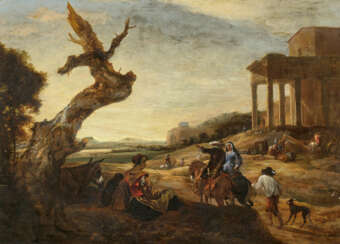

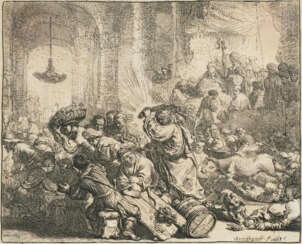


Rembrandt Harmenszoon van Rijn, a Dutch Baroque painter and printmaker, was born on July 15, 1606, in Leiden, Netherlands, and died on October 4, 1669, in Amsterdam. He is celebrated as one of the greatest storytellers in art history, acclaimed for his adept portrayal of human emotions and dramatic narratives. Rembrandt's extensive oeuvre includes portraits, self-portraits, landscapes, genre scenes, allegorical, historical, and biblical themes, as well as animal studies. His artistry shined during the Dutch Golden Age, a period marked by cultural and scientific achievements in the Netherlands.
Rembrandt's education in art began around the age of 10 when he left the Latin School in Leiden to train as an artist. He apprenticed with artists like Jacob van Swanenburg and Pieter Lastman, mastering various aspects of painting. He opened his own studio in Leiden around 1624 or 1625, sharing it with his colleague Jan Lievens. By 1631, he had moved to Amsterdam, where he achieved significant success and trained many important Dutch painters.
Among Rembrandt's notable works are "The Anatomy Lesson of Dr. Nicolaes Tulp" (1632), "The Night Watch" (1642), and "The Syndics of the Amsterdam Drapers’ Guild" (1662). He was also renowned for his self-portraits, creating around 80 over his lifetime, more than any other artist until the 20th century. These self-portraits were not just artistic endeavors but also experiments with facial expressions and lighting effects. Additionally, Rembrandt was a master etcher, transforming etching from a reproductive technique into an art form.
Rembrandt's painting style is characterized by its dramatic use of light and shadow, known as chiaroscuro. His ability to depict materials realistically was unparalleled; his portrayal of metals and fabrics was so lifelike that they appeared to glow and be tangible. He was also known for his impasto technique, applying paint thickly to the canvas, adding a three-dimensional quality to his works.
Despite his artistic prowess, Rembrandt faced financial difficulties and personal tragedies throughout his life. He declared bankruptcy in 1656, a downfall attributed partly to his extensive collection of art objects and curiosities. His masterpieces, however, continued to garner appreciation and influence generations of artists that followed.
For collectors and experts in art and antiques, Rembrandt's works represent a pinnacle of artistic achievement in the Dutch Golden Age. His mastery in portraying the human condition and his innovative techniques in painting and etching make his works highly prized and influential in the art world.
To stay updated on new product sales and auction events related to Rembrandt van Rijn, sign up for our updates. This subscription service is dedicated exclusively to news and events concerning works related to this unparalleled master of the Dutch Golden Age.


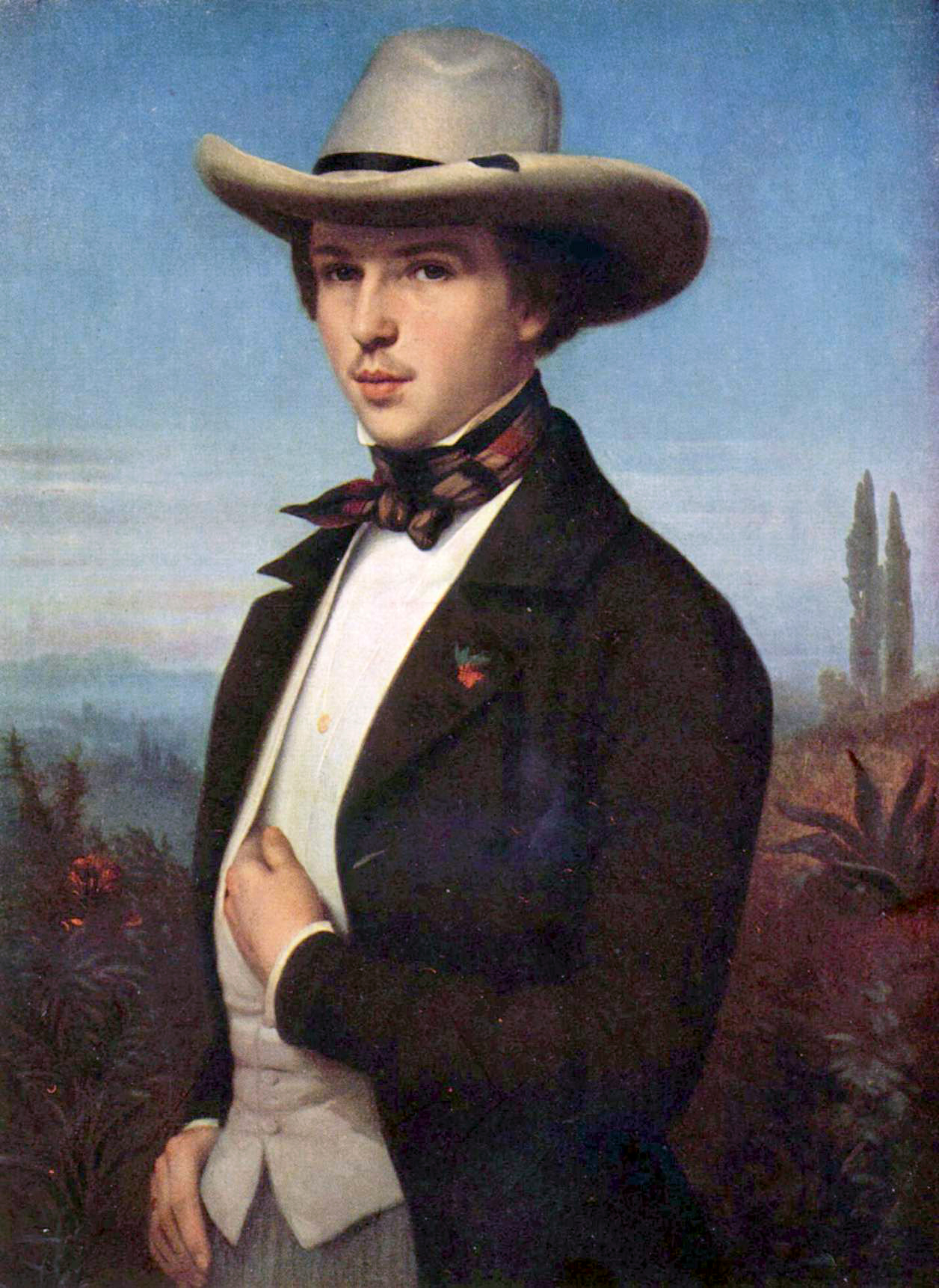
Oswald Achenbach was a German painter associated with the Düsseldorf school of painting. Though little known today, during his lifetime he was counted among the most important landscape painters of Europe. Through his teaching activities, he influenced the Kunstakademie Düsseldorf. His brother, Andreas Achenbach, who was twelve years older, was also among the most important German landscape painters of the 19th century. The two brothers were humorously called "the A and O of Landscapes" (a reference to their initials matching a common German reference to the Alpha and Omega).

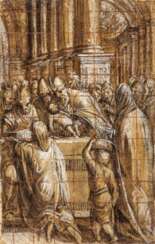

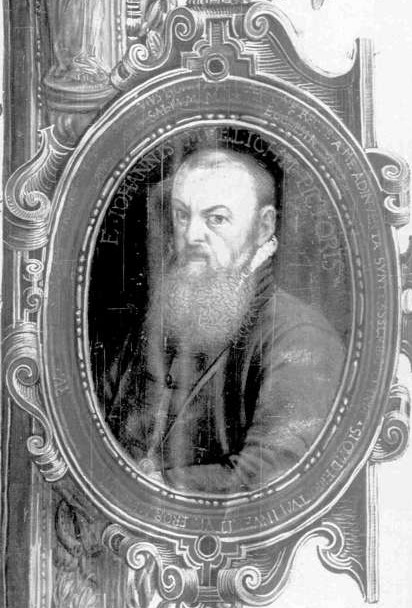
Hans Mielich was a German painter of the late Renaissance, mid-16th century. He is known as a painter, graphic artist, and court painter to Duke Albrecht V of Bavaria.
Mielich painted many religious paintings, portraits, and historical canvases (usually on boards), and he also decorated altars in churches. After a trip to Rome, his style became close to Italian Mannerism. His most famous work is the altarpiece of the Cathedral of Our Lady of Ingolstadt. He was also famous as the author of miniatures for manuscripts, including the Duchess Anna of Bavaria's Treasure Book, made for Duke Albrecht V and his wife Anna of Bavaria in 1555. In the same year, Milich became head of the Munich Artists' Guild.