vie


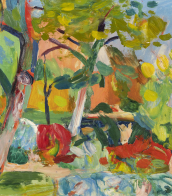
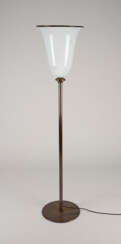

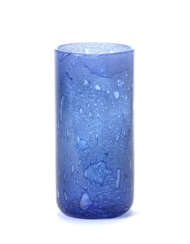


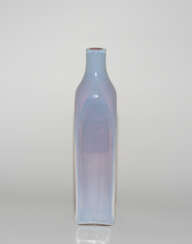




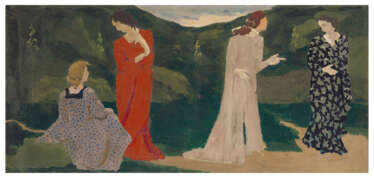

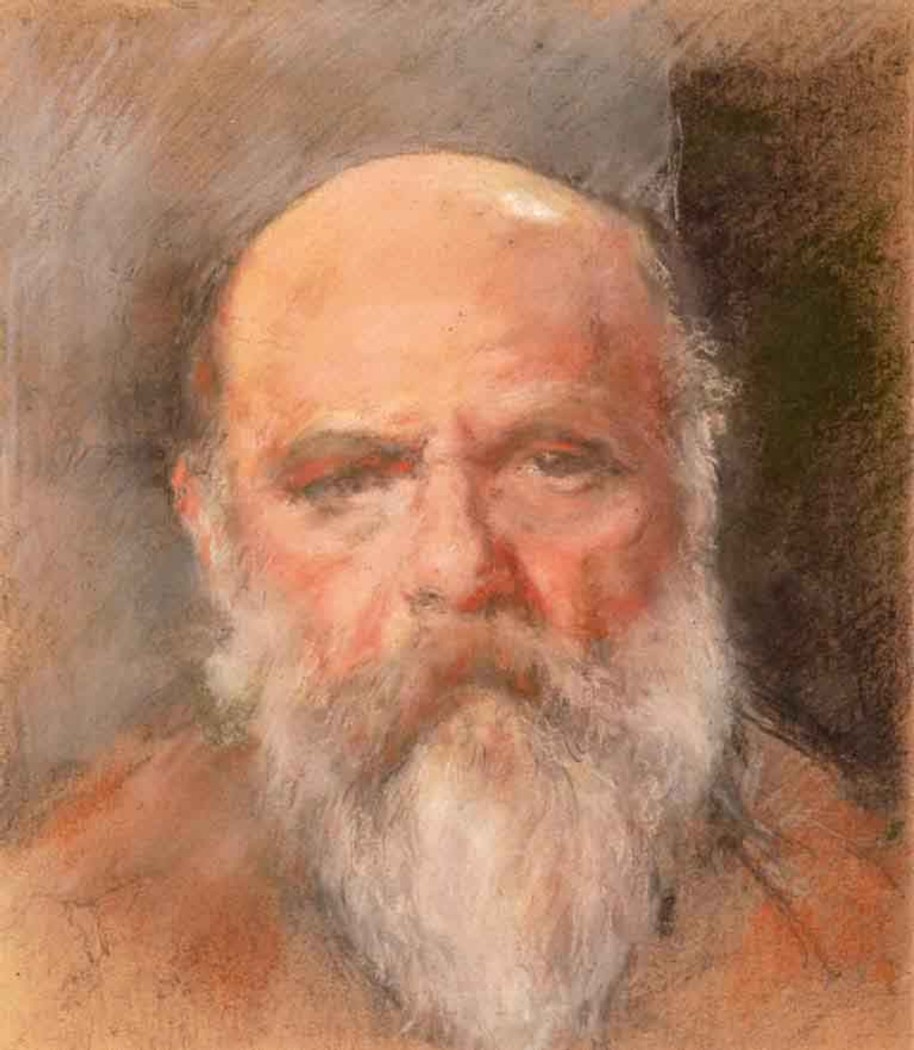
Ker-Xavier Roussel was a French painter, renowned for his distinctive post-impressionist style and his affiliation with the Nabis, an avant-garde artist group. Born in 1867, Roussel's artistic journey began in his teens and continued robustly into the 20th century, leaving a legacy celebrated for its mythological and bucolic themes.
Roussel's art is characterized by its vivid portrayal of mythological scenes and landscapes, often infused with a sense of eroticism and joy. His work frequently depicts Greek myths set against the backdrop of the Mediterranean, featuring figures like women, nymphs, centaurs, and fauns. These large, brightly colored paintings, such as "Rural Festival, Summer" and "The Seasons of Life," marked a departure from the smaller formats typical of the Nabis, showcasing his evolution towards a more expansive and expressive style.
A master of pastels, Roussel's work from the 1890s, such as "La Barrière," displayed at the Musée d'Orsay, reflects the Nabi style with its Japanese print influences, absence of perspective, and contrasting values. His later works, created between 1930 and 1944, often depicted violent mythological deaths, revealing a darker aspect of his artistic expression.
Roussel's contributions extended beyond canvas, as he created large paintings for public spaces and private clients, including a significant panel for the Palais des Nations in Geneva and the front curtain of the Théâtre des Champs-Élysées. His recognition peaked in the 1930s, with a multi-panel scheme for the Palais de Chaillot and winning the Carnegie Prize for art in 1926.
Despite a period of obscurity, Roussel's work regained attention through exhibitions like "Ker-Xavier Roussel, Private Garden, Dreamed Garden" at the Musée des Impressionnismes in Giverny, showcasing his significant contributions to art history.
For art collectors and experts, understanding Roussel's work offers insights into the evolution of post-impressionism and the Nabis' influence on modern art. His unique blend of mythological themes and vibrant landscapes represents an important chapter in art history. For those interested in exploring Roussel's work further or keeping updated on related art sales and auctions, signing up for updates is a valuable opportunity to deepen your engagement with this influential artist's legacy.
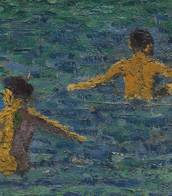
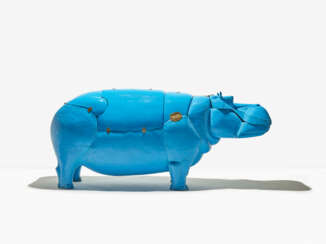

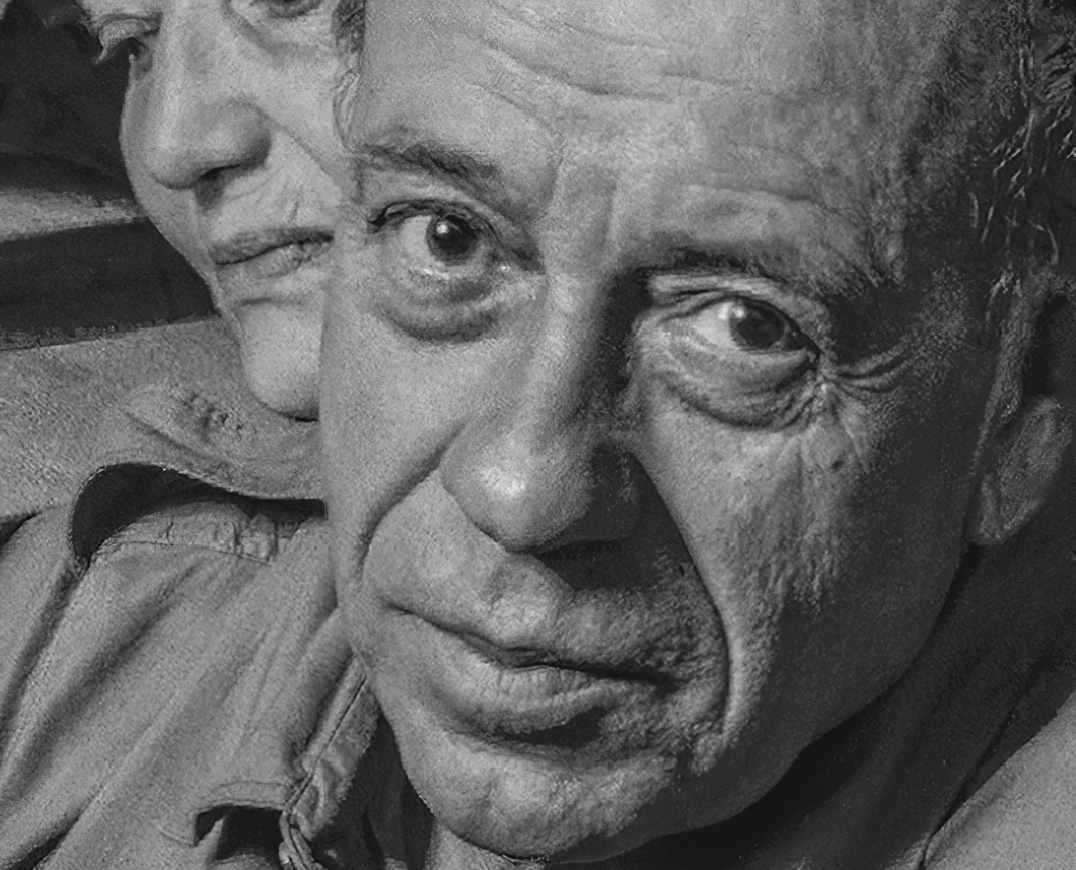
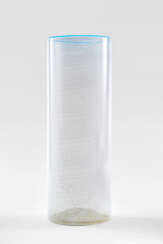
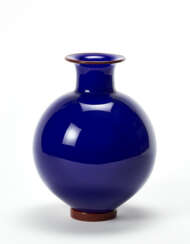
François-Xavier Lalanne was a French painter and sculptor. He studied sculpture, drawing and painting at the Académie Julian. Since the 1960s he has worked as a couple with his wife Claude Lalanne.


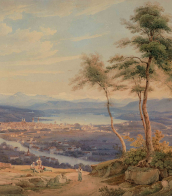
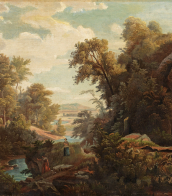
Ferdinand Johann von Olivier was a German painter, draughtsman, engraver-xylographer and lithographer of the Romantic era. Member of the Olivier family of painters. Worked mainly in the genre of landscape. Artistically, he was close to the Nazarenes.
In 1830, Ferdinand Johann Olivier moved to Munich. There, at the request of Peter von Cornelius, he succeeded Ludwig von Schorn as secretary general of the Munich Academy of Arts. In 1833, Olivier was appointed professor of art history.

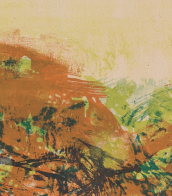
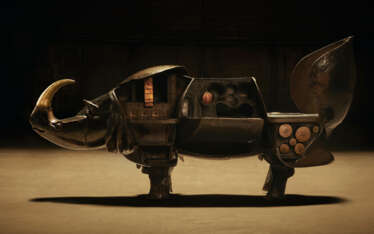

François-Xavier Lalanne was a French painter and sculptor. He studied sculpture, drawing and painting at the Académie Julian. Since the 1960s he has worked as a couple with his wife Claude Lalanne.
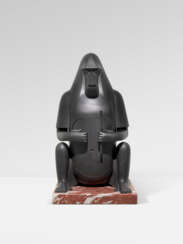

François-Xavier Lalanne was a French painter and sculptor. He studied sculpture, drawing and painting at the Académie Julian. Since the 1960s he has worked as a couple with his wife Claude Lalanne.

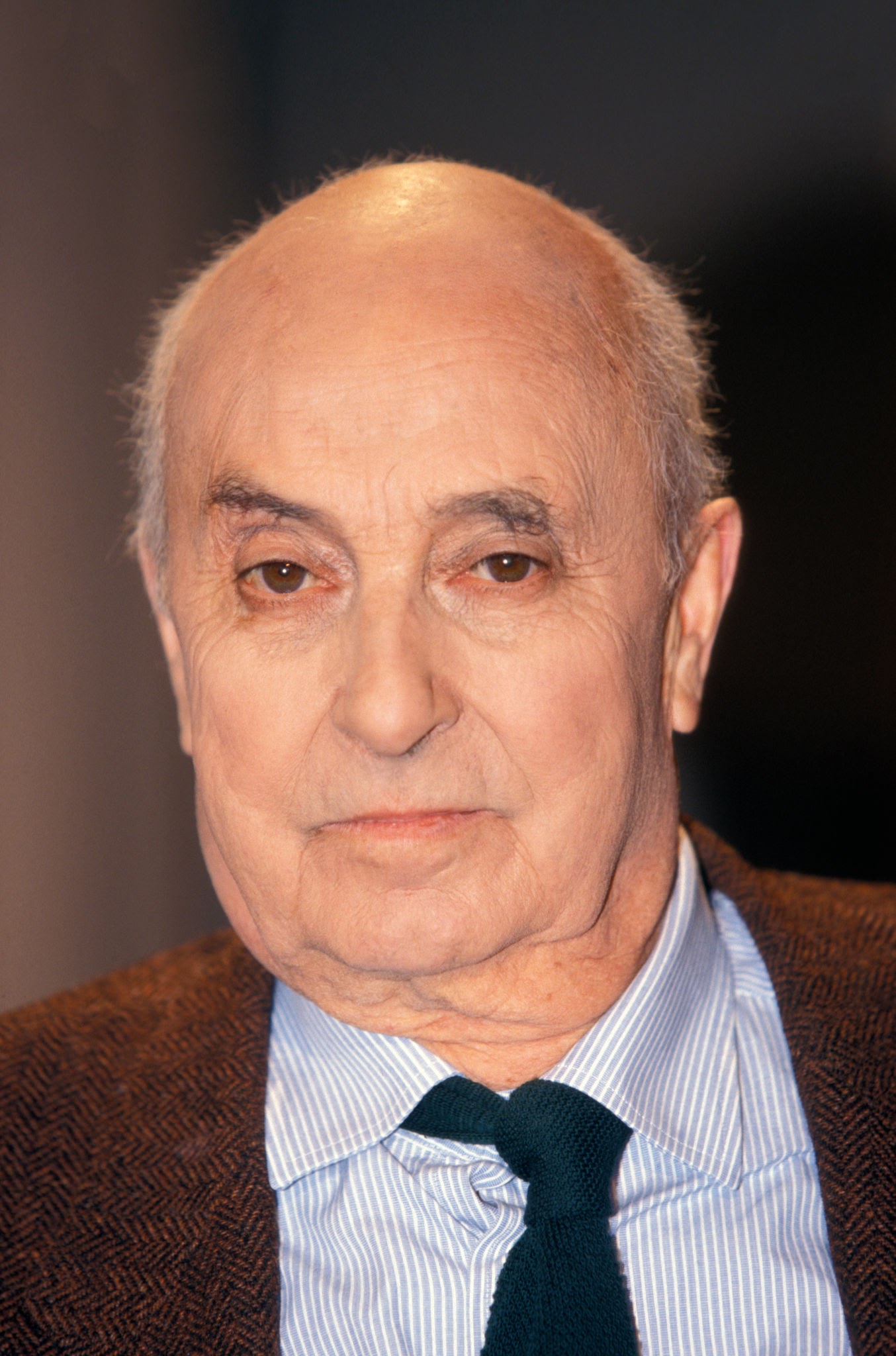

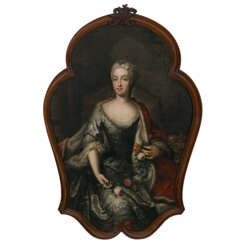

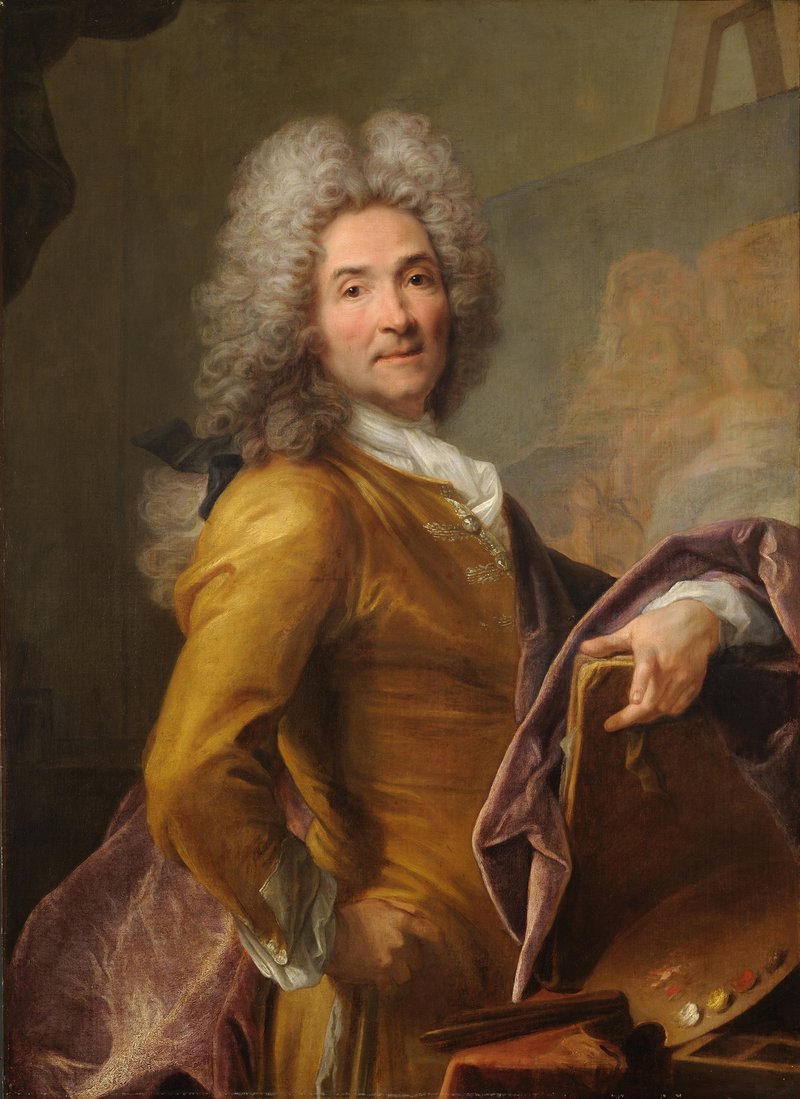
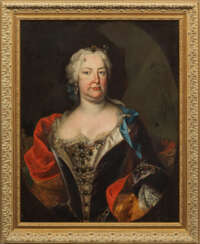
Joseph Vivien was a French painter from Lyon.
He left Lyon for Paris at the age of twenty and found employment in the large atelier of Charles Le Brun, the equivalent of an academy. He made his reputation with his portraits in pastels, to which he gave a sparkle and immediacy previously unreached in that medium.
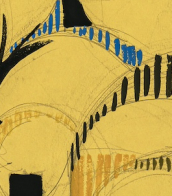
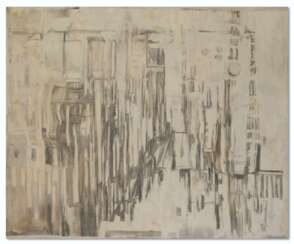

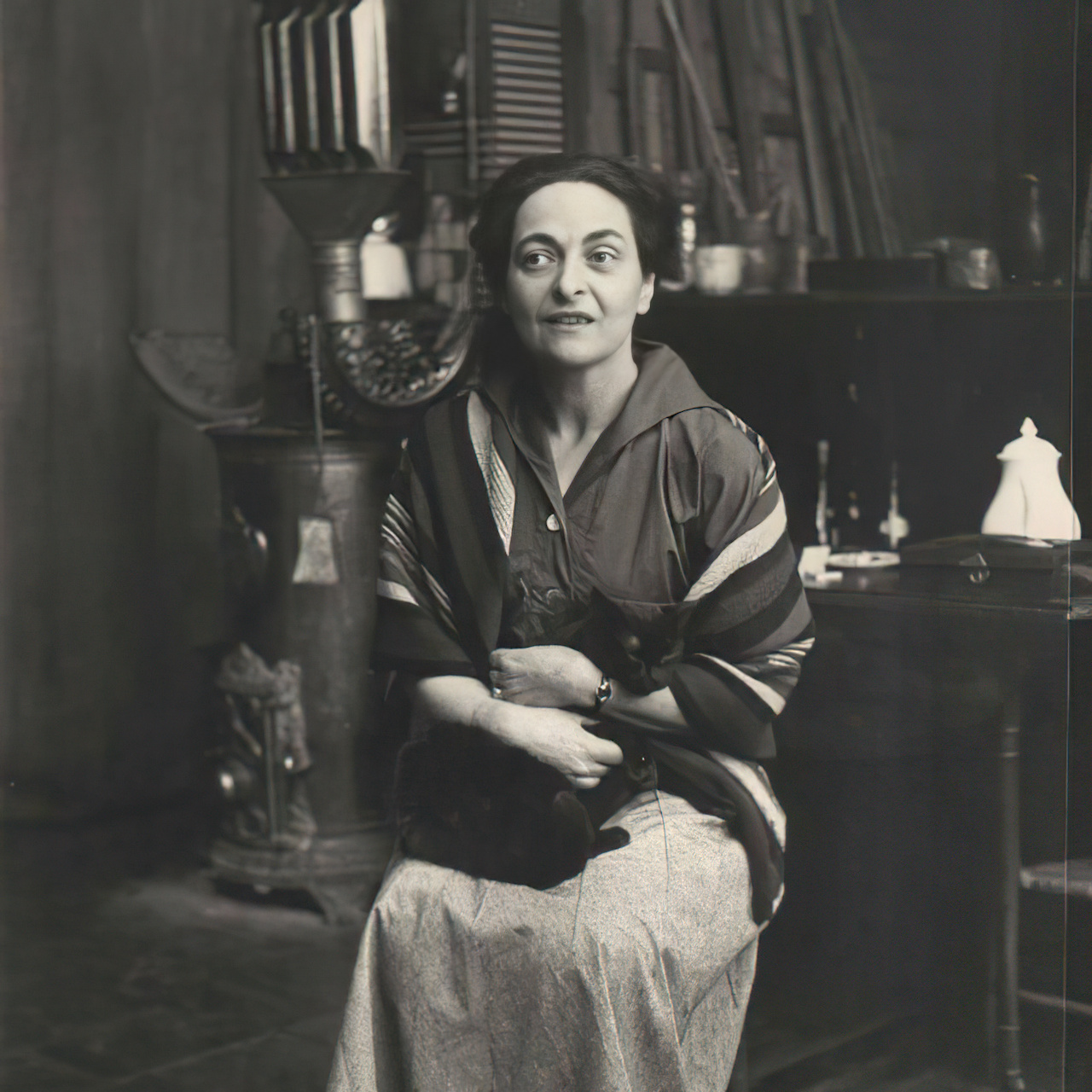
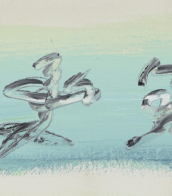
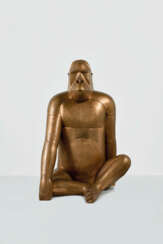

François-Xavier Lalanne was a French painter and sculptor. He studied sculpture, drawing and painting at the Académie Julian. Since the 1960s he has worked as a couple with his wife Claude Lalanne.
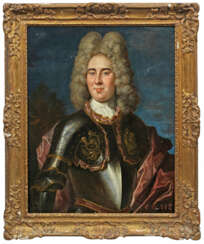

Joseph Vivien was a French painter from Lyon.
He left Lyon for Paris at the age of twenty and found employment in the large atelier of Charles Le Brun, the equivalent of an academy. He made his reputation with his portraits in pastels, to which he gave a sparkle and immediacy previously unreached in that medium.

Joseph Vivien was a French painter from Lyon.
He left Lyon for Paris at the age of twenty and found employment in the large atelier of Charles Le Brun, the equivalent of an academy. He made his reputation with his portraits in pastels, to which he gave a sparkle and immediacy previously unreached in that medium.

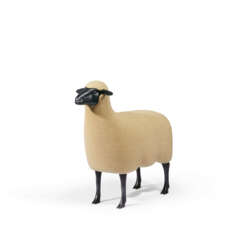

François-Xavier Lalanne was a French painter and sculptor. He studied sculpture, drawing and painting at the Académie Julian. Since the 1960s he has worked as a couple with his wife Claude Lalanne.
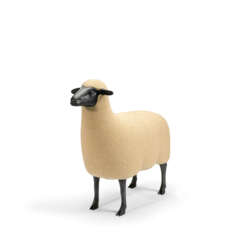

François-Xavier Lalanne was a French painter and sculptor. He studied sculpture, drawing and painting at the Académie Julian. Since the 1960s he has worked as a couple with his wife Claude Lalanne.
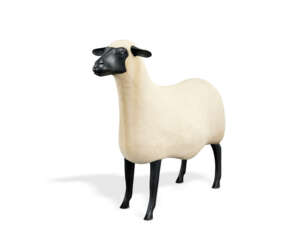

François-Xavier Lalanne was a French painter and sculptor. He studied sculpture, drawing and painting at the Académie Julian. Since the 1960s he has worked as a couple with his wife Claude Lalanne.
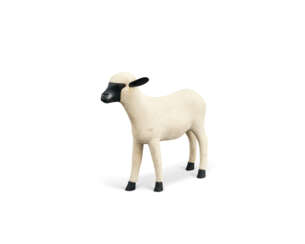

François-Xavier Lalanne was a French painter and sculptor. He studied sculpture, drawing and painting at the Académie Julian. Since the 1960s he has worked as a couple with his wife Claude Lalanne.


François-Xavier Lalanne was a French painter and sculptor. He studied sculpture, drawing and painting at the Académie Julian. Since the 1960s he has worked as a couple with his wife Claude Lalanne.
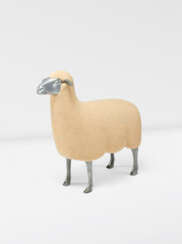

François-Xavier Lalanne was a French painter and sculptor. He studied sculpture, drawing and painting at the Académie Julian. Since the 1960s he has worked as a couple with his wife Claude Lalanne.


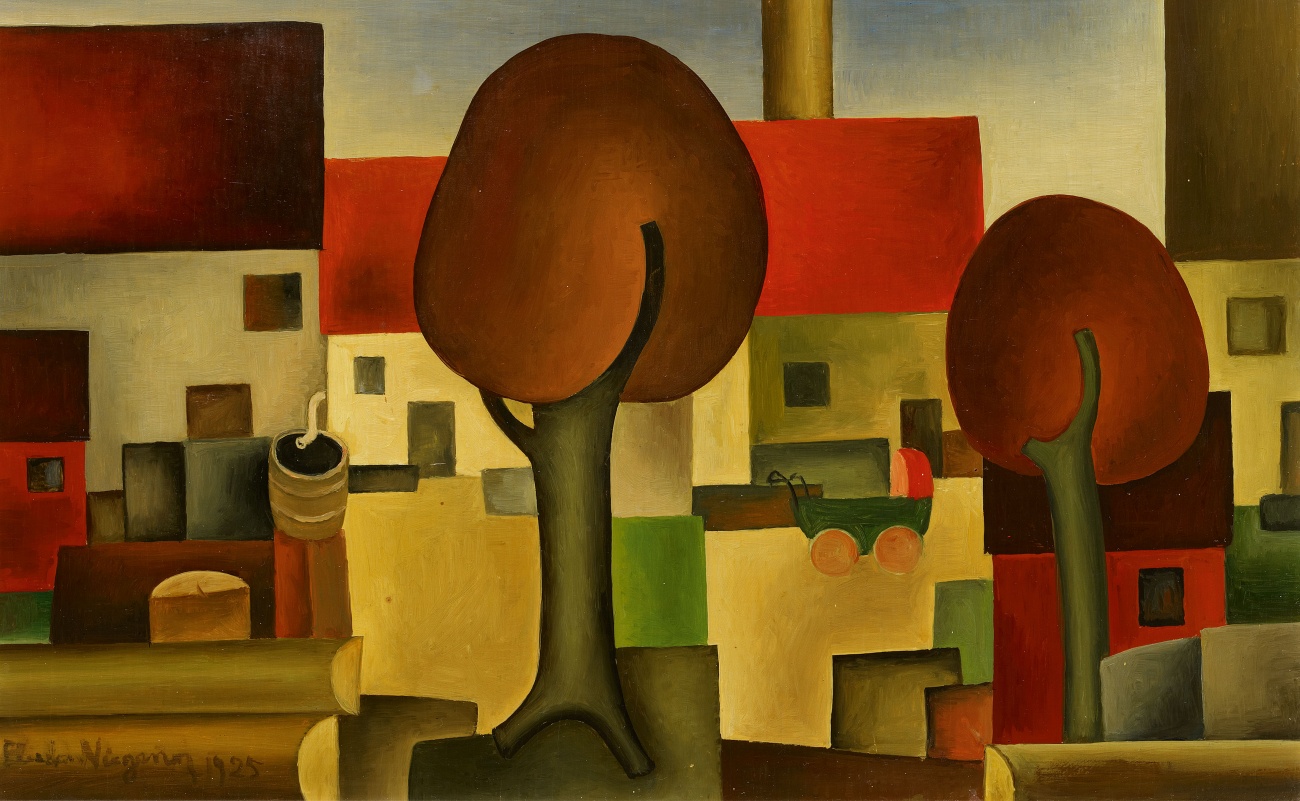
Eberhard Viegener was a German expressionist painter, decorator, and printmaker.
In the 1930s his expressionist works were deemed "degenerate," and during the Nazi "Degenerate Art" campaign a considerable number of them were removed from state collections and destroyed.
Later Figener shifted abruptly from the expressionist style to the style of New Objectivity, or Neue Sachlichkeit. He began to paint, in particular, architectural still lifes with ceramic objects.
Eberhard Figener was the brother of the painter and sculptor Fritz Figener.

Eberhard Viegener was a German expressionist painter, decorator, and printmaker.
In the 1930s his expressionist works were deemed "degenerate," and during the Nazi "Degenerate Art" campaign a considerable number of them were removed from state collections and destroyed.
Later Figener shifted abruptly from the expressionist style to the style of New Objectivity, or Neue Sachlichkeit. He began to paint, in particular, architectural still lifes with ceramic objects.
Eberhard Figener was the brother of the painter and sculptor Fritz Figener.


Herbert Arnould Olivier is a British artist.
He studied at the Royal Academy Schools and exhibited extensively, taught at the Bombay School of Art and traveled to Kashmir with His Royal Highness the Duke and Duchess of Connaught, painting 66 paintings on this trip. Herbert Olivier was a widely recognized and very versatile artist.
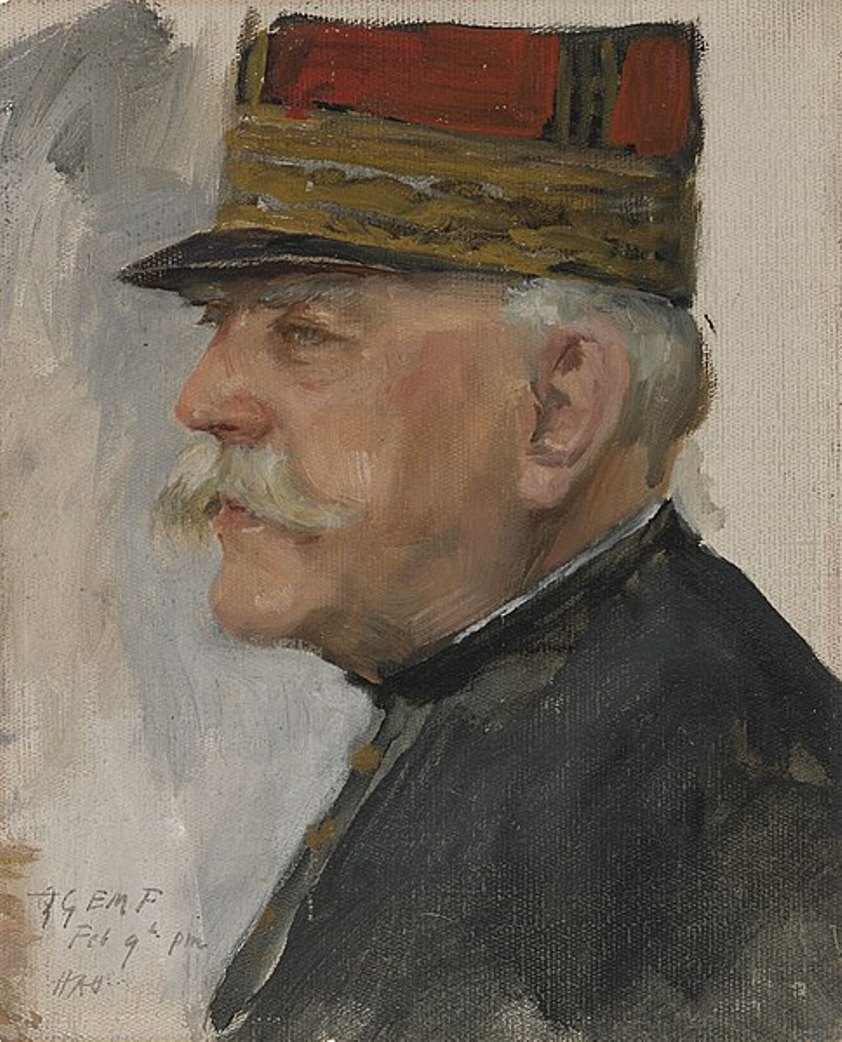
He painted portraits of famous Victorian and Edwardian figures including King George V and King Edward VIII, Prince of Wales. With the outbreak of the First World War, he painted two large-scale group portraits featuring army commanders. In 1917 he was appointed official war artist and painted many portraits of military commanders and officials from various countries, these his paintings can be seen in the Imperial War Museum and the Government Art Collection.
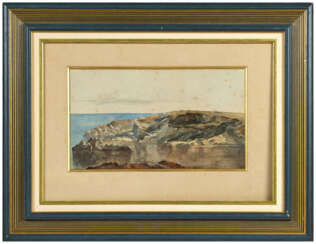
Herbert Olivier also painted many paintings of allegorical and mythological subjects and romantic landscapes. He was a member of the Royal Society of British Artists and the Royal Institute of Watercolorists.