Denmark

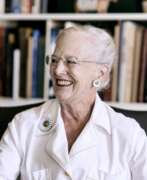

Margrethe Alexandrine Thorhildur Ingrid (Danish: Margrethe Alexandrine Þórhildur Ingrid) is Her Majesty Queen Margrethe II of Denmark.
Since 1970 she has been active in several artistic expressions: painting, church textiles, watercolours, prints, book illustrations, decoupage, set design and embroidery. Many of these artistic works have been shown at exhibitions in Denmark and abroad.
Margrethe II's works are represented in art museums such as the Statens Museum for Kunst (Danish National Gallery), Aarhus Art Museum, ARoS and Køge Art Gallery Sketch Collection (sketches for church textiles).
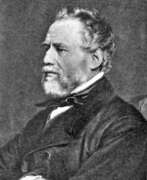

Nicolai Wilhelm Marstrand, painter and illustrator, was born in Copenhagen, Denmark, to Nicolai Jacob Marstrand, instrument maker and inventor, and Petra Othilia Smith. Marstrand is one of the most renowned artists belonging to the Golden Age of Danish Painting.
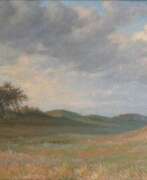


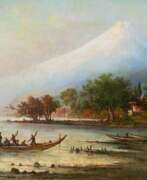

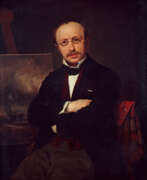

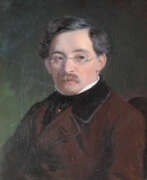

Ernst Meyer was a Danish genre painter of Jewish origin. He studied painting at the Royal Danish Academy of Arts.
Ernst Meyer travelled extensively, living for a time in Germany, France, Switzerland and Italy. It was the colourful street life of Rome that first inspired him to create genre scenes.
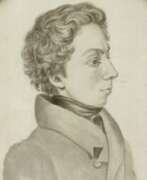

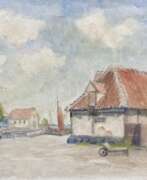


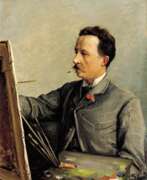

Peder Mork Monsted (Danish: Peder Mørk Mønsted) was a Danish realist painter, representative of the Golden Age of Danish painting.
Monsted studied at the Royal Academy of Fine Arts and gradually developed his own style of academic naturalism, almost photorealistic. During his long career, P. Monsted traveled extensively, often visiting Switzerland, Italy, North Africa, Greece, where he was a guest of the royal family and for a year painted their portraits.
Favorite themes of the artist were Danish landscapes - snowy winter or summer landscapes with boats on the water, forest. From the beginning of the XX century and until his death P. Monsted was one of the most popular and wealthy artists. He was especially popular in Germany among the Munich public.
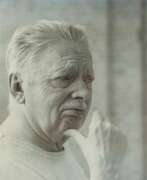

Richard Mortensen was a Danish painter.
During the Second World War, Mortensen's works reflected the violence of Europe. After the death of his wife Sonja Hauberg, in 1947 moved to Paris remaining there until 1964. Together with Robert Jacobsen, Mortensen became connected to the Galerie Denise René in Paris, which became famous for concrete art. His later works are concrete works of art characterised by large, clear, bright colour surfaces. After his return to Denmark in 1964, he received a professorship at the Royal Danish Academy of Art in Copenhagen, which he held until 1980.
Mortensen was awarded the Edvard Munch Prize (1946), the Kandinsky prize (1950), the Prince Eugen Medal (1967) and the Thorvaldsen Medal (1968).