

Animalists Orientalism
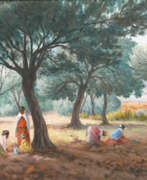

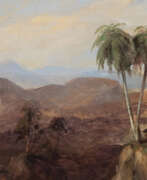

Charles Hamilton, active between 1831 and 1867, was a talented Orientalist painter. Although exact details of his life and work are unavailable, his art profile leaves a mark on art history.
It is known that Hamilton was a recognised master in his field and worked in a variety of genres. His art attracts the attention of collectors and experts, and his works are still highly valued at auctions.
For those who are interested in Orientalist art and want to know more about Charles Hamilton's works, his paintings are of particular interest. Each of his works is a reflection of the era and the artist's individual style, making them significant in the context of art history.
We invite anyone interested in unique artworks and cultural relics to subscribe to our updates. We will keep you informed of new sales and auctions related to the works of Charles Hamilton.
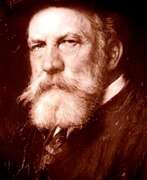

Adolf Schreyer was a German painter of the second half of the 19th century. He is known as an orientalist, landscape, battle and animalist, a representative of the Düsseldorf School of Art. Schreyer served in the Austrian army and participated in a military expedition to Wallachia during the Crimean War.
Schreyer also traveled to Egypt, Syria, and Algeria, where he painted many Orientalist paintings as well as images of horses with riders. His paintings of battle scenes, including events of the Crimean campaign, as well as genre paintings and landscapes, are characterized by vivid colors, vigorous movement, and drama.
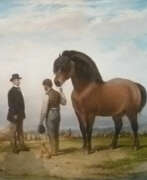

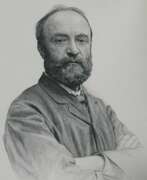

Charles Verlat was a Belgian painter, watercolorist, engraver (printmaker), art educator and director of the Antwerp Academy. He painted many subjects and was particularly known as an animalier and portrait painter. He also created Orientalist works, genre scenes, including a number of singeries, religious compositions and still lifes.
He was a professor of drawing and director of the Antwerp Academy when Vincent van Gogh spent a brief period as a student at the Academy in 1886. The two men got into arguments about van Gogh's unconventional style of drawing.
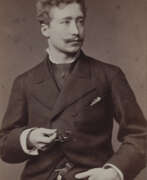

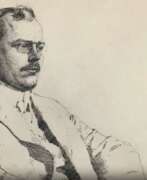

Erich Wolfsfeld was a German painter and etcher known for his classical painting and etching style, especially in portraiture. Born in Krojanke, Western Prussia, in 1884, Wolfsfeld moved to Berlin as a child and later studied at the Berlin Academy of Arts and the Académie Julian in Paris. He began his career with commissions from the Prussian government to make etched copies of Byzantine frescoes, though these were later lost.
Erich Wolfsfeld won the Kaiser Wilhelm Gold Medal in 1911 for his work "The Archers," and by 1914, he was exhibiting in Berlin, Leipzig, and Vienna. His success was notable, with articles about his work published in art journals such as Die Kunst and Kunst fur Alle. He also served in the German army during World War I, where he made studies of wounded soldiers.
In 1920, Erich Wolfsfeld became a professor at the Berlin Academy of Arts, where he taught painting and etching. The rise of Nazism led to his dismissal from the Academy, prompting him to move to Britain in 1939. Despite his move, Wolfsfeld continued to exhibit in the Royal Academy of Arts and had a solo exhibition at the Derby Museum and Art Gallery. His work is represented in various prominent collections, including the British Museum, the Victoria & Albert Museum, and the Metropolitan Museum of Art.
For collectors and art experts, Erich Wolfsfeld's works are highly valued. To stay updated on related product sales and auction events, consider signing up for updates from reputable art galleries and auction houses.