

Biologists
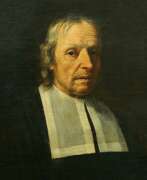

Marcello Malpighi was an Italian biologist, anatomist and physician, professor of logic, theoretical and practical medicine, and a member of the Royal Society of London.
After graduating from the University of Bologna with the degree of Doctor of Medicine and Philosophy, Malpighi soon took up a professorship there, then taught at the universities of Pisa and Messina. At the same time as teaching, he conducted biological research with his microscopes, which was an innovation in those days. In 1661, he identified and described the pulmonary and capillary network connecting small arteries to small veins, one of the most important discoveries in the history of science. He also isolated taste buds and regarded them as nerve endings, described the minute structure of the brain, the optic nerve, and in 1666 was the first to see red blood cells and attribute to them the color of blood. His treatise De polypo cordis (1666) explained the composition of blood and how it coagulates.
During his medical practice, Malpighi studied microscopic sections of the liver, brain, spleen, kidneys, and the bone and deep layers of skin that now bear his name. In his landmark 1673 work on the embryology of the chicken, the scientist concluded that the embryo forms in the egg after fertilization. In 1675-79 he also made extensive comparative studies of the microscopic anatomy of several different plants and saw analogies between plant and animal organisms. The Royal Society of London published two volumes of his botanical and zoological works in 1675 and 1679. His Anatome Plantarum is richly decorated with engravings by Robert White.
After his house was burned and looted by his adversaries, in 1691 Pope Innocent XII invited him to Rome as papal personal physician, which was a great honor.
Malpighi can be considered the first histologist. For almost 40 years he used the microscope to describe the main types of plant and animal structures and thus marked for future generations of biologists the main directions of research in botany, embryology, human anatomy and pathology. The conflict between ancient ideas and modern discoveries continued throughout the seventeenth century. Malpighi was convinced that microscopic anatomy, by showing the minute structure of living things, questioned the value of the old medicine. He laid the anatomical foundation for the subsequent understanding of human physiological exchanges.
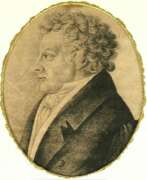

Johann Friedrich Meckel the Younger was a German anatomist, biologist and professor of anatomy.
Meckel came from a family of physicians; his grandfather and father were physicians and anatomists and had their own anatomical museum at home. Meckel studied medicine at the universities of Halle and Göttingen, writing his doctoral dissertation on congenital anomalies of the heart. As a pathologist, he specialized in the study of congenital malformations and aspects of lung and blood vessel development. He also described Meckel's diverticulum, which he discovered during a pathologic examination, and became the founder of the science of teratology.
After Napoleon's occupation, the University of Halle reopened in May 1808, and Meckel was appointed professor of surgery, normal and pathological anatomy, and obstetrics. He taught throughout his life, continued to conduct research in pathology, and collected specimens for his collection. The scientist was the author of numerous articles and several multi-volume treatises, including one on pathologic anatomy and an atlas depicting human anomalies. His principal labors were devoted to the comparative morphology of vertebrates. In 1810 he completed the translation of Cuvier's (1769-1832) five-volume Leçons d'anatomie Comparée from French into German.
Meckel was a member of the German Academy of Naturalists "Leopoldina," a corresponding member of the Paris Academy of Sciences, and a foreign member of the Royal Society of London.

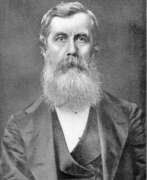

Frederic Moore was a British illustrator, naturalist and entomologist.
Moore worked for many years as assistant curator for the East India Company at the London Museum and discovered many species of butterflies. He also published six volumes on the butterflies of South Asia (Lepidoptera Indica) and a catalog of birds in the East India Company's collection.
Frederic Moore was a member of the Linnean Society of London and the Entomological Society of London.
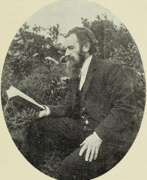

Seth Lister Mosley was a British artist, naturalist and ornithologist.
Although Mosley had no specialized training, he came from a naturalist's family and from a young age was involved in the study of natural history. He visited almost every museum in Britain and became one of the foremost British naturalists in the late nineteenth century.
Mosley was widely known as a taxidermist, illustrator, naturalist, magazine editor, and newspaper columnist. He managed several private museums in Huddersfield before being appointed Keeper of Collections at Huddersfield Technical College, and in 1922 he became the first curator of the Tolson Memorial Museum.