Ceramists
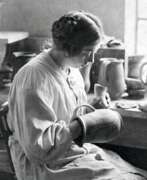




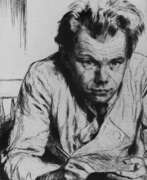

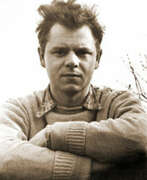
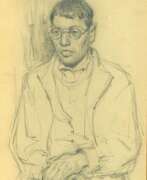
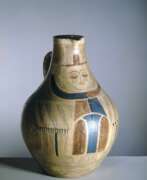
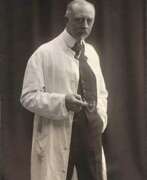
Hermann Kätelhön was a German artist of the first half of the twentieth century. He is known as a realist painter, graphic artist, woodcarver and ceramicist.
Kätelhön created works depicting the people and nature of middle Germany, including portraits of peasants and sketches of fieldwork scenes. His graphic series "Work" as well as his drawings on the theme "Mining Leaders" explore the labor of miners. The artist later turned to depicting nature, especially water, including springs, rivers, glaciers, and seas.

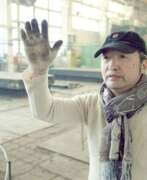

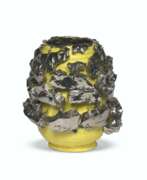
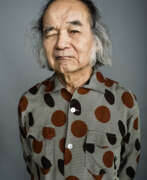
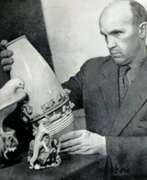
Matsumaro Khan (Russian: Мацумаро Хан), also known as Victor Khan (Виктор Хан), is a Russian sculptor and media artist of Korean descent. His artistic approach is eye-catching, especially when he works with fired and heat-treated materials, which gives his work an unpredictable visual effect. For Matsumaro, fire is not only a tool but also an ally in creating unique works of art.
Tireless in his creativity, Matsumaro experiments with and is inspired by unusual objects such as mugs and pots, creating masterpieces that seem to open the door to an alien world. His work is a perfect blend of tradition and modernity, which makes his art recognizable and in demand both in Russia and abroad.
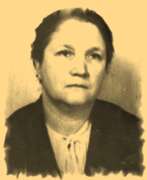

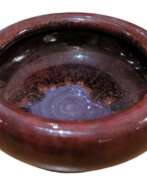

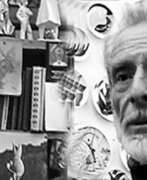



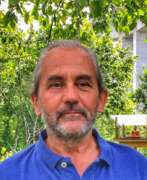

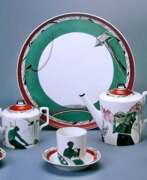

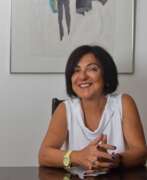

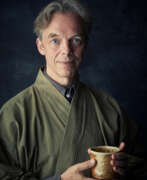

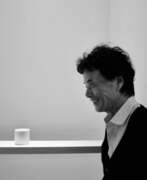
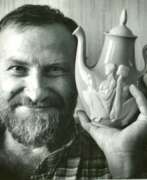
Jan Kollwitz is a German ceramic artist.
In his youth Kollwitz became interested in pottery, studying it with recognized masters Horst Kerstan and Yutaka Nakamura. In 1988, the Japanese kiln builder Tatsuo Watanabe built a traditional Japanese anagama kiln in his workshop in Sismar (Ostholstein). Since then Jan Kollwitz has been firing his ceramics here, the roots of which can be found deep in Zen Buddhism and the Japanese tea ceremony.
Since 1990, Jan Kollwitz's work has been shown in numerous exhibitions. The artist's work can be found in the Boston Museum of Fine Arts, the Museum of Asian Art in Berlin and other European museums and collections.


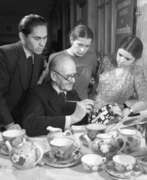

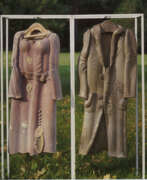

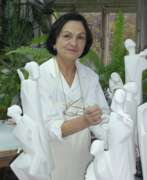

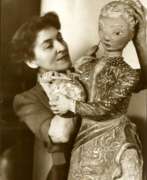






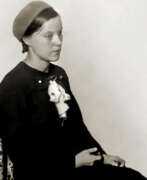

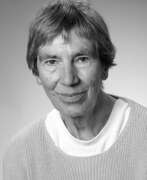

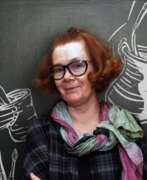
Beate Kuhn is a German ceramic sculptor.
She had an unprecedented influence on the development of German ceramics after the war, when in the mid-1960s she abandoned utilitarian ceramics in favor of free art.
After graduating from the Werkkunstschule in Wiesbaden, she founded her own workshop in Düdelsheim in 1957, developing a style that was already unmistakably her own. Here Beate Kuhn's sculptures were created from individual hand-carved and chiseled elements, which she assembled into a coherent whole. She transferred this stylistic principle of stringing geometric bodies to her designs of large-scale ceramic fountains. The artist's characteristic work can be found in every outstanding collection. The enormous number of prizes awarded to her underscores the recognition and appreciation she has enjoyed.