Educators German Expressionism

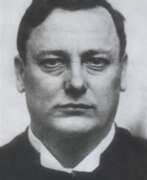
Christian Arnold was a German painter and graphic artist. He is best known for his landscape paintings that often depicted the rural and coastal regions of northern Germany.
Arnold studied at the Academy of Fine Arts in Munich and later taught at the School of Arts and Crafts in Bremen. His work was heavily influenced by the German Expressionist movement, and he often used bold colors and thick brushstrokes to create a sense of emotional intensity in his paintings.
In addition to his landscapes, Arnold also produced numerous portraits, still lifes, and religious works. He worked in a variety of mediums, including oil paints, watercolors, and printmaking.
Arnold's work was exhibited widely during his lifetime, and he received numerous awards and honors for his contributions to the arts. Today, his paintings are held in collections around the world, including the National Gallery in Berlin and the Kunsthalle Bremen.
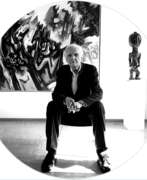

Gerhard Fietz was a German painter, professor and representative of non-objective painting. He is considered an important painter of the second half of the 20th century in Germany.
As a co-founder of the artist group ZEN 49, he opposed traditional representational art and, together with painters such as Willi Baumeister, Fritz Winter and Rupprecht Geiger, developed a style of painting that focused on experimenting with artistic means. Fietz exhibited at numerous national and international exhibitions, including the highly regarded exhibition at the Cercle Volnay in Paris in 1955.



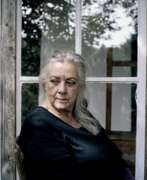

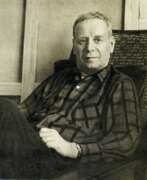

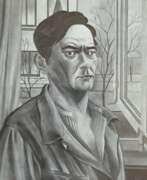
Yuri Ivanovich Pimenov (Russian: Юрий Иванович Пименов) was a distinguished Russian and Soviet painter, renowned for his pivotal role in the "lyrical Thaw" movement within Soviet art. Born in Moscow in 1903, Pimenov emerged as a vital figure in the realm of Soviet impressionism, a title he embraced despite the political and artistic shifts of his time. His unique blend of realism and impressionism, often termed "realistic impressionism," showcased his versatility and defiance against abandoning his creative principles.
Pimenov's journey in the arts was marked by his participation in the OST group and later the "Isobrigade," reflecting his adaptation and response to the evolving Soviet art scene. Despite facing challenges, including a significant psychological crisis in 1931, Pimenov's resilience and dedication to art remained unwavering. His works from this period, characterized by a rose-colored palette and an optimistic view of Moscow, highlight his evolution as an artist and his ability to portray the Soviet reality through a unique lens.
Among Pimenov's notable contributions to Soviet art are masterpieces like "Wedding on Tomorrow Street," "Lyrical Housewarming," and "Japanese Girl Kyoko," each reflecting various facets of Soviet life and Pimenov's personal experiences. These works, celebrated for their vibrant storytelling and intricate details, have solidified Pimenov's legacy as a master of Soviet impressionism.
Pimenov's influence extended beyond the canvas, as he engaged deeply with the world of theater and film, designing sets and posters that further showcased his artistic versatility. His travels abroad, particularly to Japan, enriched his perspective and influenced his later works, demonstrating his global appeal and the universal resonance of his art.
For art collectors and experts, Pimenov's oeuvre represents a unique investment in the history and evolution of Soviet art. His works, a blend of political narrative and personal expression, offer a profound insight into the era of the Soviet Union, making them invaluable pieces for any collection.
To stay updated on new product sales and auction events related to Yuri Ivanovich Pimenov, sign up for our updates. This subscription is your gateway to exploring the rich legacy and enduring impact of Pimenov's art on the Soviet and global art scenes.


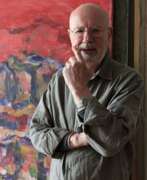
Mildred Jean Thompson was an American artist who worked in painting, drawing, printmaking, sculpture and photography. Critics have related her art to West African textiles and Islamic architecture; they have also cited German Expressionism, music (both American jazz and classical European) and Thompson's readings in astronomy, spiritualism and metaphysics as important artistic influences. She also wrote and was an associate editor for the magazine Art Papers.