Icon painters
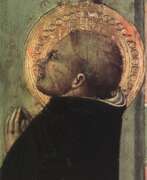

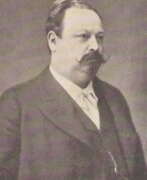

Ludwig Seitz was a German-born Italian painter of the last third of the nineteenth and early twentieth centuries. He is known as a historical and religious painter, the son of the famous painter Alexander Maximilian Seitz.
Ludwig Seitz dealt mainly with religious subjects and was characterized by his ability to masterfully recreate the styles of the Old Masters. He made an important contribution to the restoration and decoration of churches in Rome and created a number of frescoes and images for various cathedrals and chapels. In particular, he worked on the altarpieces and the restoration of the paintings in the castle of Prince Fürstenberg on the shores of Lake Constance.
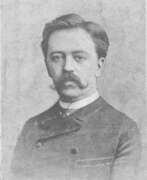

Ivan Fyodorovich Seleznyov (Russian: Иван Федорович Селезнёв) was a Russian and Soviet artist of the last third of the 19th - first third of the 20th centuries. He is known as a painter of academic direction and a teacher.
Ivan Seleznyov worked in historical, portrait and domestic genres, as well as painted landscapes and still lifes. He became famous for his paintings on the subjects of Russian history, life scenes and realistic genre portraits. He also created and restored frescoes in churches in Kiev and was one of the organizers of the Kiev Fellowship of Religious Painting.
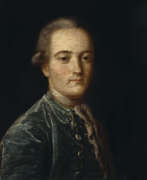

Mikhail Shibanov (Russian: Михаил Шибанов) was a Russian painter renowned for his contributions to the genre of portrait painting during the 1780s. His origins are humble; he was born into serfdom under the ownership of Prince Grigory Potemkin, with no definite records of his birth date available. Shibanov's artistic education took place at the Academy of Arts where he studied household painting from 1770 to 1780.
Shibanov's work primarily captured the life of peasants and Russian nobility through his realistic and genre paintings. Notably, he painted "Peasants' Meal" in 1774 and "The Celebration of the Wedding Agreement" in 1777. His mastery is exemplified in the portraits of significant historical figures, including the "Portrait of Count Alexander Dmitriev-Mamonov" from 1785, and the "Portrait of Empress Catherine II with Traveling Dress" created in 1787. These paintings are preserved in prominent Russian museums such as the Tretyakov Gallery and the Russian Museum.
Despite the limitations of his status and era, Shibanov's work left a lasting impression in Russian art history, embodying the characteristics of the Neoclassicism movement. His exact death date remains uncertain but is recognized as post-1798.
If you're captivated by the artistry and historical significance of Mikhail Shibanov, sign up for updates to stay informed about new findings, upcoming sales, and auction events featuring his work. This subscription ensures you remain connected to the fascinating world of Russian neoclassical art and Shibanov's lasting legacy. Subscribe today to enhance your collection and deepen your knowledge.
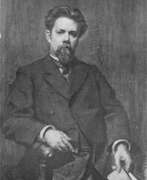

Nikolay Gustavovich Schilder (Russian: Николай Густавович Шильдер) was a Russian painter known for his genre and battle scenes. Born in 1828 in Kharkiv, Schilder became an influential figure in Russian art. He studied at the Imperial Academy of Arts and was influenced by the works of Pavel Fedotov, which led him to focus on genre painting.
Schilder's notable works include "The Temptation" (1857), "Family Happiness" (1858), and "The Repayment of Creditors" (1861), the latter earning him the title of academician. His detailed and emotive portrayal of everyday life and historical events made his works highly regarded in art circles.
Several of his paintings, including portraits of prominent figures such as Alexander III and Maria Feodorovna, are displayed in museums like the State Russian Museum and the Orsay Museum in Paris.
Stay updated on new sales and auction events related to Nikolay Gustavovich Schilder by signing up for our updates.
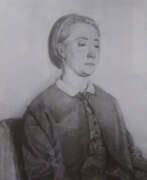

Helena Skirmunt was a Polish, Lithuanian, and Belarusian artist of the mid-19th century. She is known as a painter, graphic artist and sculptor.
As an artist, Helena Skirmunt painted landscapes, portraits, and icons; as a sculptor, she created numerous portrait medallions and religious works. She was also famous for creating "historical" chess pieces, choosing as their theme the Viennese campaign of the Polish King Jan III Sobieski, who defeated the Turkish army in 1683.