

Naturalists
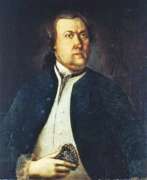

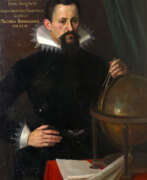

Johannes Kepler was a German mathematician and astronomer who discovered that the Earth and planets move around the Sun in elliptical orbits.
Kepler created the three fundamental laws of planetary motion. He also did seminal work in optics and geometry, calculated the most accurate astronomical tables, and made many inventions and discoveries in physics on which further scientific discoveries by advanced scientists were based.
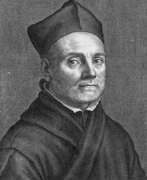

Athanasius Kircher was a German scholar, inventor, professor of mathematics and oriental studies, and a friar of the Jesuit order.
Kircher knew Greek and Hebrew, did scientific and humanities research in Germany, and was ordained in Mainz in 1628. During the Thirty Years' War he was forced to flee to Rome, where he remained for most of his life, serving as a kind of intellectual and information center for cultural and scientific information drawn not only from European sources but also from an extensive network of Jesuit missionaries. He was particularly interested in ancient Egypt and attempted to decipher hieroglyphics and other riddles. Kircher also compiled A Description of the Chinese Empire (1667), which was long one of the most influential books that shaped the European view of China.
A renowned polymath, Kircher conducted scholarly research in a variety of disciplines, including geography, astronomy, mathematics, languages, medicine, and music. He wrote some 44 books, and more than 2,000 of his manuscripts and letters have survived. He also assembled one of the first natural history collections.

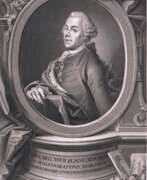

Georg Wolfgang Knorr was a German engraver, naturalist, and one of the first paleontologists of the 18th century.
Knorr was first apprenticed to his father as a lathe operator, and at the age of eighteen became a copper engraver for Leongard Blank, working with Martin Tiroff on the illustrations for Jacob Scheuchzer's Physica Sacra (1731). This work and his acquaintance with J.A. Beurer, a mineralogist and correspondent of the Royal Society, awakened Knorr's interest in natural history.
In the 1750s Knorr began publishing his own sumptuous folios. One of the most beautiful books of the eighteenth century is devoted to sea shells.