Posterists



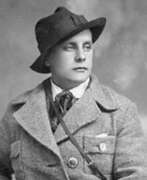
Aminadav Moiseyevich Kanevsky (Russian: Аминадав Моисеевич Каневский) was a Russian graphic artist and illustrator, celebrated for his satirical works and contributions to children's literature. Born into a large family in Elisavetgrad, Kherson province (now Kropyvnytskyi), Ukraine, in 1898, Kanevsky's early life was marked by poverty, prompting him to work from a young age in various capacities, including as a photographer's assistant and factory worker. His talent in art led him to Moscow's VKHUTEMAS, where under the guidance of Dmitry Moor, he honed his skills in cartooning and illustration, eventually becoming a prominent figure in Soviet satirical and children's publications.
Kanevsky's notable contributions include the creation of the iconic character Murzilka for children's literature, and his illustrations for "The Golden Key" by Alexei Tolstoy and "Moidodyr" by Korney Chukovsky. His work extended beyond books to satirical magazines and posters, where he depicted political themes and everyday Soviet life with humor and insight. During the Great Patriotic War, he produced anti-Nazi propaganda, showcasing his commitment to the Soviet cause through art.
Kanevsky's legacy is preserved in the State Tretyakov Gallery, the State Russian Museum, and other prestigious collections, affirming his enduring impact on Russian cultural and artistic heritage. His artworks, often executed in ink or watercolor, continue to attract collectors, with auction prices reflecting the significant interest in his oeuvre.
For enthusiasts and collectors of Aminadav Kanevsky's work, signing up for updates can provide valuable information on new sales and auction events related to his creations. This ensures that aficionados do not miss out on the opportunity to acquire pieces by this remarkable artist, whose work spans the humorous to the historically significant.

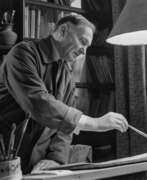
Iosif Artemievich Karalyan was a Soviet artist, member of the USSR Union of Artists and Honoured Artist of the Armenian SSR.
Karalyan's creative work is a kind of nostalgia for the country of childhood, which you can visit only in dreams and imagination, as it no longer exists, because childhood of every person, like his era, is unique, the unrepeatable sensations experienced, they are preserved visually only in the fine arts.
His works are kept in the Museum of Modern Art (Yerevan), National Gallery of Armenia (Yerevan), State Tretyakov Gallery (Moscow), Museum of Oriental Art (Moscow), home-museum of Hovhannes Tumanyan (Yerevan), the funds of the Ministry of Culture of Armenia and numerous private collections in Armenia and abroad.

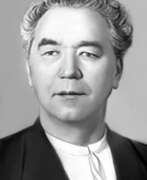

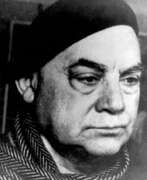
Vasyl Illich Kasiyan (Russian: Василий Ильич Касиян) Vasyl Illich Kasiyan was a Ukrainian artist and graphic designer, celebrated for his contributions to Soviet and Ukrainian visual arts. Born on January 1, 1896, in Mykulyntsi, then part of Austria-Hungary, and passing on June 26, 1976, in Kyiv, Ukrainian SSR, Kasiyan's journey through art was marked by his distinct influence on Soviet-era visual narratives. A World War I veteran, he further honed his artistic skills at the Academy of Fine Arts in Prague in the 1920s under the mentorship of Czech painter Max Švabinský.
Kasiyan's body of work spans various mediums, reflecting the ethos of his times with a deep focus on people, their struggles, and the landscapes they inhabit. Notably, his artworks such as "Portrait of a Young Woman" (1950), "Taras Shevchenko" (1945), and "My Mother" (1940) underscore his mastery in capturing the essence of his subjects, rendering them with an emotional depth that speaks volumes about his connection to the cultural and political landscape of the Soviet Union.
His contributions were widely recognized, earning him titles like the People's Artist of the Soviet Union and the Shevchenko National Prize in 1964, affirming his status as a pivotal figure in Soviet and Ukrainian art. Kasiyan's legacy is not just in the beauty of his works but also in his role as an educator and influencer in the art community, contributing significantly to the National Academy of Visual Arts and Architecture and the Kharkiv Institute of Arts.
For collectors and experts in art and antiques, Vasyl Illich Kasiyan's works represent not only aesthetic beauty but also a historical narrative of the Soviet and Ukrainian people's resilience and spirit. His pieces, found in museums and galleries worldwide, continue to inspire and provoke thought, offering a window into the artist's profound connection with his heritage.
To stay updated on exhibitions and sales featuring Vasyl Illich Kasiyan's art, sign up for our newsletter. This subscription ensures you're the first to know about new discoveries, auction events, and exclusive sales related to this esteemed artist's works.
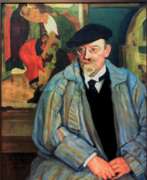

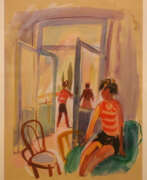
Ivan Semyonovich Kazakov (Russian: Иван Семёнович Казаков) was a Russian painter and graphic artist, known for his contributions to Orientalist art. Born on February 1, 1873, in Kasilova, Oryol Governorate, Kazakov studied at the Moscow School of Painting, Sculpture, and Architecture, and later at the Imperial Academy of Arts under the mentorship of Vladimir Makovsky.
Kazakov's work is notable for its vibrant depictions of Central Asian architecture and landscapes, particularly those of Samarkand, Bukhara, and Tashkent. His paintings often feature detailed portrayals of domes, minarets, and intricate patterns, capturing the essence of these historic cities. This unique focus on Orientalist themes distinguished him from his contemporaries and earned him a prominent place in Russian art history.
Throughout his career, Kazakov exhibited his works in significant venues in Saint Petersburg and Moscow. He also played a crucial role in the art community of Tashkent, where he taught and established his own studio. Several of his works are preserved in museums, including the State Russian Museum and regional art collections, which continue to attract art enthusiasts and collectors.
For updates on new works and auction events related to Ivan Semyonovich Kazakov, sign up for our exclusive alerts. Stay informed about the latest opportunities to acquire pieces by this remarkable artist.
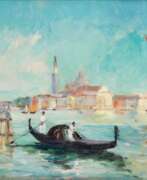

Serge Kislakoff was a French artist and decorator of Russian origin. He is the author of numerous film posters.
Serge Kislakoff painted city views and scenes (Montmartre, Paris boulevards, carnivals in Nice and Cannes), landscapes, harbour views (south of France, Sweden), religious subjects inspired by Old Russian painting. He was also involved in the restoration of church paintings.
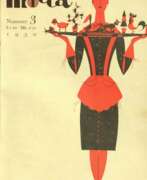

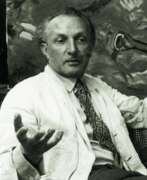

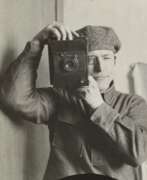

Gustav Gustavovich Klutsis (Russian: Густав Густавович Клуцис), a pioneering Latvian artist, played a significant role in the Constructivist avant-garde movement of the early 20th century. His work is celebrated for its innovative use of photomontage, which Klutsis developed alongside his wife, Valentina Kulagina. Klutsis's early career flourished with projects like the agitprop kiosks for the fifth anniversary of the Revolution, showcasing his talent for integrating various media such as "radio-orators," film screens, and newsprint displays. His commitment to the Constructivist ethos was evident through his dynamic compositions, which often featured distorted scales and perspectives, making his propaganda pieces for the Soviet regime perpetually modern.
Klutsis's art evolved under the shadow of Stalinist propaganda, with his later works reflecting the regime's increasing control over artistic expression. Despite this, he managed to innovate within the constraints, integrating large portraits of Stalin into his photomontages. However, this shift towards monumental propaganda also marked a departure from Constructivism's principles. Klutsis's dedication to the Soviet state did not shield him from its purges; he was arrested in 1938 and executed shortly thereafter, a tragic end for a loyal supporter of the Bolshevik regime.
His contributions to art and propaganda remain influential, with works housed in prestigious institutions like the Museum of Modern Art (MoMA) and the Latvian National Museum of Art. Klutsis's legacy as a key figure in Soviet art and his tragic fate reflect the complex relationship between artistic innovation and political ideology in the early Soviet Union.
For collectors and experts in art and antiques, Klutsis's work offers a fascinating insight into the power of visual communication and the turbulent history of Soviet art. To stay updated on new product sales and auction events related to Gustav Klutsis, signing up for updates is highly recommended. This subscription will ensure you're informed about the latest opportunities to engage with the enduring legacy of this revolutionary artist.
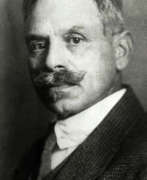


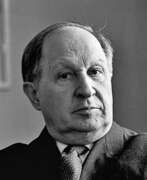

Porfiry Nikitich Krylov (Russian: Порфирий Никитич Крылов), a prominent Soviet artist, is celebrated for his extensive contributions as a painter, graphic artist, and cartoonist. Born on August 22, 1902, in Tula, Russia, Krylov emerged as a key figure in the "Kukryniksy" collective, which he formed with Mikhail Kupriyanov and Nikolai Sokolov. This group gained fame for their incisive political cartoons and evocative book illustrations that captured the spirit and challenges of their times. Beyond his collaborative work, Krylov's solo endeavors showcased his ability to delve into a range of subjects through portraits, landscapes, and still lifes, often brought to life through his plein air painting sessions. His artistry earned him several accolades, including the People's Artist of the USSR in 1958, numerous Stalin Prizes during the 1940s and 1950s, and the Lenin Prize in 1965. Krylov passed away on May 15, 1990, in Moscow, leaving behind a legacy that continues to resonate in prestigious collections such as the State Tretyakov Gallery and the State Russian Museum.
For collectors and experts in art and antiques, delving into Krylov's works presents a unique opportunity to explore the depths of Soviet artistic expression. His diverse body of work offers insights into the cultural and political dynamics of his time, making his pieces highly sought after in the art collection circuit.
To stay abreast of the latest sales and auction events featuring Porfiry Nikitich Krylov's works, enthusiasts and collectors are encouraged to sign up for updates. This ensures access to the opportunity to acquire pieces from the impressive oeuvre of this celebrated Soviet artist, enriching collections with works of significant historical and artistic value.
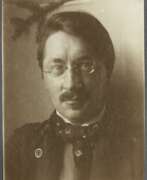

Erich Kuithan was a German artist of the late nineteenth and early twentieth centuries. He is known as a painter, graphic artist, graphic artist, illustrator and poster artist.
Erich Kuithan at different periods of his career was fascinated by modernism, symbolism and expressionism. His artistic legacy includes many paintings, drawings, illustrations, and designs for furniture, clothing, ex-libris, porcelain wares, and Art Nouveau advertising posters. Kuithan has conducted study tours, exhibited at art clubs, worked as an illustrator for magazines, and created illustrations for children's books.
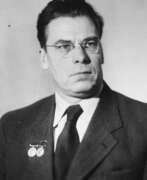

Mikhail Vasilyevich Kupriyanov (Russian: Михаил Васильевич Куприянов) was a Russian artist whose career spanned various facets of painting and graphic design, earning him a celebrated spot in the art world. Born in the early 20th century, his educational path led him from Tashkent Central Art Studios to VKhUTEMAS/VKhUTEIN in Moscow, where he honed his skills in graphic arts. Kupriyanov's artistry was not confined to a single genre; he adeptly moved between creating industrial landscapes, engaging in wartime propaganda work, and capturing serene European and Russian sceneries.
His early work, particularly in the 1920s and 1930s, showcases a profound affinity for the railway and its surrounding landscapes, depicted with remarkable precision and artistry in watercolor. These pieces uniquely blend technology with nature, showcasing dynamic compositions and an atmospheric quality that resonates with the viewer.
During World War II, Kupriyanov, along with his colleagues, ventured into the realm of anti-war propaganda, producing posters, caricatures, and leaflets that were instrumental in the Soviet Union's informational warfare. This period of his work highlights his ability to channel his artistic talent into powerful social commentary.
The post-war era saw a shift in Kupriyanov's focus to landscapes, where he captured the essence of Moscow and several European locales with a subtle and harmonious palette. These works, reminiscent of the French Barbizon school, are celebrated for their simplicity, emotional depth, and pictorial integrity, setting Kupriyanov apart as a master of landscape painting.
Kupriyanov's legacy is preserved through his numerous awards and the recognition he received, including being named a People's Artist of the USSR and a Hero of Socialist Labor. His works are featured in some of the most prestigious museums and private collections worldwide, demonstrating his enduring influence on the art world.
For collectors and art enthusiasts, Kupriyanov's oeuvre offers a compelling glimpse into the rich tapestry of Russian artistic heritage and its historical context. Engaging with his works offers not only aesthetic pleasure but also a deeper appreciation for the role of art in societal discourse. To remain informed about opportunities to acquire pieces by Kupriyanov or learn more about exhibitions featuring his work, signing up for updates is recommended. This ensures access to valuable information about sales and auction events related to this distinguished artist, enriching collections with pieces of significant historical and artistic merit.