Wood carvers

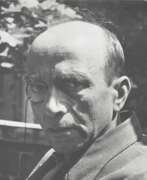

Paul Gangolf, real name Paul Löwy, was a German expressionist painter, lithographer, woodcarver and journalist.
Paul was born into a Jewish family, began his work with articles in magazines on political topics, using the pseudonym Gangolf, during the First World War he served in various troops.
The peak of Paul Gangolf's creative activity came in the 1920s, when he worked in lithography, published and exhibited in Berlin, London and Paris.
After the National Socialists came to power, he was arrested and taken to the Esterwegen concentration camp, where he was murdered. Already after his death, in 1937, as part of the "Degenerate Art" campaign, Gangolf's paintings were confiscated from museums in Nazi Germany and most were destroyed. Surviving works by the artist can be found at the Museum of Modern Art in New York and others.

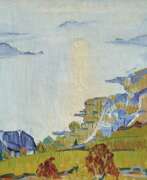


Franz Gertsch is one of Switzerland's most outstanding contemporary artists. Throughout his career, he has produced a wide range of paintings and graphic works in which he tries to find a particular approach to reality. Although the author uses photographs or slide projections as his starting points, the paintings adhere to a logic of their own which seeks the correctness of all elements. Woodcuts also occupy a special place in Franz Gertsch's work.

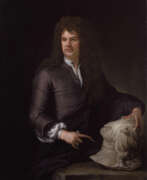

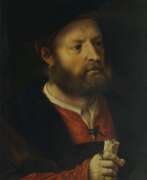

Jan Gossaert was a French-speaking painter from the Low Countries also known as Jan Mabuse (the name he adopted from his birthplace, Maubeuge) or Jennyn van Hennegouwe (Hainaut), as he called himself when he matriculated in the Guild of Saint Luke, at Antwerp, in 1503. He was one of the first painters of Dutch and Flemish Renaissance painting to visit Italy and Rome, which he did in 1508–09, and a leader of the style known as Romanism, which brought elements of Italian Renaissance painting to the north, sometimes with a rather awkward effect. He achieved fame across at least northern Europe, and painted religious subjects, including large altarpieces, but also portraits and mythological subjects, including some nudity.
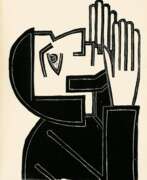

Werner Gothein was a German painter, sculptor, printmaker and ceramicist-designer.
Gothein studied art in Berlin and mastered the techniques of painting, sculpture and wood engraving. In the 1920s, he began designing ceramic objects for the Karlsruhe State Maiolica Manufactory and the Felten-Vordamm ceramic factories.
In 1937, as part of the Nazi "Degenerate Art" campaign, Gothein's graphics were withdrawn from German museums and collections, most of them later destroyed. After the end of World War II, the artist continued to create woodcuts.
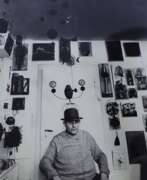

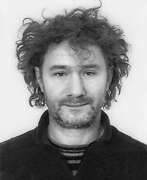

Kęstutis Grigaliūnas - Lithuanian graphic artist, art teacher. 1988-1989 created linen carvings, wood carvings, screen prints, etchings, illustrated books. Since 1990 one of the first Lithuanian graphic designers to use the color screen printing technique. Made a cut out of cardboard and plywood. It is characterized by a pronounced graphic beginning - lines, signs, ornaments, figurative and abstract motifs are used. Since 1998 creates more complex plastic graphic works and cut-outs, they feature postmodernism features, pop art, Fluxus elements, decorative, eclectic images. A playful mood, irony, and various intellectual references to the images of Lithuania and other cultures and civilizations prevail.