

Writers Naïve art
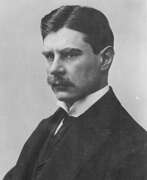

Hans Baluschek, full name Alphons Anton Alexander Hans Ernst Karl Maria Baluschek, was a German painter, graphic artist and writer, representative of the New Materiality style.
Baluschek studied at the Royal Academy of Arts, and in 1900 became a member of the Berlin Secession, a group of artists that also included Ernst Barlach, Max Beckmann, and Wassily Kandinsky. Baluschek was always socially critical, which was reflected in the subjects of his paintings. Many of his paintings are dedicated to the working class of Berlin, he addressed the gray everyday life of Berlin: gray air, gray walls, gray people. Baluschek is often categorized as a German Expressionist because of his emotional style, but his style has something of New Objectivity, Impressionism, and naive painting. He also drew illustrations for the popular children's book Little Peter's Trip to the Moon, and collaborated with periodicals as an illustrator.
World War I instilled patriotic feelings in Baluschek, and he painted a number of subjects on this theme. After the war, he joined the Social Democratic Party and became involved in labor movements. In 1926 he helped establish an artists' relief fund and later became director of the annual Berlin Exhibition. The German Nazis, who came to power in 1933, declared Baluschek a Marxist and a "degenerate artist," suspended him from all positions, and banned him from exhibiting.
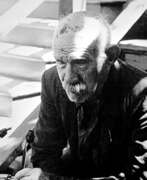

Henry Joseph Darger was an American writer, novelist and artist who worked as a hospital custodian in Chicago, Illinois. He has become famous for his posthumously discovered 15.145-page fantasy novel manuscript called The Story of the Vivian Girls, in What Is Known as the Realms of the Unreal, of the Glandeco-Angelinian War Storm, Caused by the Child Slave Rebellion, along with several hundred drawings and watercolor illustrations for the story.
The visual subject matter of his work ranges from idyllic scenes in Edwardian interiors and tranquil flowered landscapes populated by children and fantastic creatures, to scenes of horrific terror and carnage depicting young children being tortured and massacred. Much of his artwork is mixed media with collage elements. Darger's artwork has become one of the most celebrated examples of outsider art.


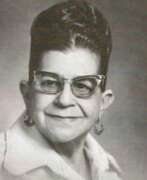
Madge Gill was a British artist.
Gill was born into a large family and was raised in poverty. She suffered from various health problems throughout her life, including blindness in one eye and later the loss of her son, which led her to experience bouts of depression.
Despite her challenging circumstances, Gill was a prolific artist, creating thousands of drawings and embroideries over the course of her life. Her work was often inspired by spiritualism and included intricate and highly detailed patterns and symbols.
Gill's work was first discovered by chance in 1963, two years after her death. Her work has since been exhibited in major galleries and museums around the world, including the Hayward Gallery in London and the American Folk Art Museum in New York City.
Today, Gill is considered an important figure in the history of outsider art and is celebrated for her unique and distinctive style. Her work continues to inspire and captivate art lovers and collectors around the world.

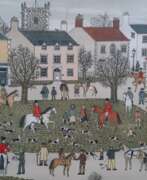

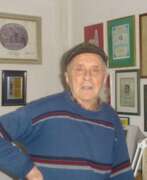

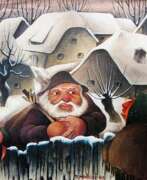



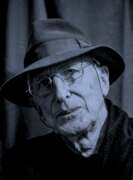

Jean-Thomas "Tomi" Ungerer was an Alsatian artist and writer. He published over 140 books ranging from children's books to adult works and from the fantastic to the autobiographical. He was known for sharp social satire and witty aphorisms. Ungerer is also famous as a cartoonist and designer of political posters and film posters.
Ungerer received the international Hans Christian Andersen Medal in 1998 for his "lasting contribution" as a children's illustrator.