Norway — Auction price


.webp)
Edvard Munch, a renowned Norwegian painter and graphic artist, left an indelible mark on the world of art with his emotionally charged and symbolically rich compositions. Born on December 12, 1863, in Løten, Norway, Munch's work is emblematic of the Expressionist and Symbolist movements, through which he explored complex themes of life, death, fear, love, and anxiety. His most famous painting, "The Scream," conceived during a walk at sunset when Munch experienced an intense emotional episode, has become a universal symbol of human anxiety and existential dread.
Munch's upbringing was marred by illness, bereavement, and the fear of inheriting mental illness, themes that deeply influenced his artistic expression. This personal turmoil, coupled with his encounters with the works of Paul Gauguin, Vincent van Gogh, and Henri de Toulouse-Lautrec in Paris, and his association with the radical intellectual circle in Kristiania (now Oslo), propelled Munch to depict his own psychological and emotional states through his art. These experiences culminated in "The Frieze of Life," a series of works exploring the depths of human emotion and experience.
Throughout his career, Munch's art was met with both controversy and acclaim. His early works, characterized by their bold use of color and innovative exploration of psychological themes, sparked debate and scandal, particularly in Berlin where his first solo exhibition was closed prematurely. However, this controversy only served to increase Munch's fame and influence, particularly within the German Expressionist movement.
Later in life, after a nervous breakdown in 1908, Munch's style evolved towards a brighter palette and more optimistic themes, reflecting his recovery and a newfound interest in portraying the Norwegian landscape and rural life. Despite the challenges he faced, including the Nazi occupation of Norway during which many of his works were deemed "degenerate," Munch's legacy as a pioneer of Expressionism remained unshaken. He died on January 23, 1944, leaving behind a body of work that continues to resonate with audiences for its profound emotional depth and raw, unfiltered exploration of the human condition.
For collectors and art and antiques experts, Munch's works not only represent significant artistic achievements but also embody the tumultuous journey of an artist who used his canvas to navigate and make sense of the complexities of human emotion and existence. His paintings, many of which are displayed in museums and galleries around the world, continue to captivate and inspire.
To stay informed on new sales, auction events, and exhibitions related to Edvard Munch, sign up for updates. This subscription is a valuable resource for those keen on expanding their collection and knowledge of one of the most influential figures in modern art.


Edvard Munch, a renowned Norwegian painter and graphic artist, left an indelible mark on the world of art with his emotionally charged and symbolically rich compositions. Born on December 12, 1863, in Løten, Norway, Munch's work is emblematic of the Expressionist and Symbolist movements, through which he explored complex themes of life, death, fear, love, and anxiety. His most famous painting, "The Scream," conceived during a walk at sunset when Munch experienced an intense emotional episode, has become a universal symbol of human anxiety and existential dread.
Munch's upbringing was marred by illness, bereavement, and the fear of inheriting mental illness, themes that deeply influenced his artistic expression. This personal turmoil, coupled with his encounters with the works of Paul Gauguin, Vincent van Gogh, and Henri de Toulouse-Lautrec in Paris, and his association with the radical intellectual circle in Kristiania (now Oslo), propelled Munch to depict his own psychological and emotional states through his art. These experiences culminated in "The Frieze of Life," a series of works exploring the depths of human emotion and experience.
Throughout his career, Munch's art was met with both controversy and acclaim. His early works, characterized by their bold use of color and innovative exploration of psychological themes, sparked debate and scandal, particularly in Berlin where his first solo exhibition was closed prematurely. However, this controversy only served to increase Munch's fame and influence, particularly within the German Expressionist movement.
Later in life, after a nervous breakdown in 1908, Munch's style evolved towards a brighter palette and more optimistic themes, reflecting his recovery and a newfound interest in portraying the Norwegian landscape and rural life. Despite the challenges he faced, including the Nazi occupation of Norway during which many of his works were deemed "degenerate," Munch's legacy as a pioneer of Expressionism remained unshaken. He died on January 23, 1944, leaving behind a body of work that continues to resonate with audiences for its profound emotional depth and raw, unfiltered exploration of the human condition.
For collectors and art and antiques experts, Munch's works not only represent significant artistic achievements but also embody the tumultuous journey of an artist who used his canvas to navigate and make sense of the complexities of human emotion and existence. His paintings, many of which are displayed in museums and galleries around the world, continue to captivate and inspire.
To stay informed on new sales, auction events, and exhibitions related to Edvard Munch, sign up for updates. This subscription is a valuable resource for those keen on expanding their collection and knowledge of one of the most influential figures in modern art.


Edvard Munch, a renowned Norwegian painter and graphic artist, left an indelible mark on the world of art with his emotionally charged and symbolically rich compositions. Born on December 12, 1863, in Løten, Norway, Munch's work is emblematic of the Expressionist and Symbolist movements, through which he explored complex themes of life, death, fear, love, and anxiety. His most famous painting, "The Scream," conceived during a walk at sunset when Munch experienced an intense emotional episode, has become a universal symbol of human anxiety and existential dread.
Munch's upbringing was marred by illness, bereavement, and the fear of inheriting mental illness, themes that deeply influenced his artistic expression. This personal turmoil, coupled with his encounters with the works of Paul Gauguin, Vincent van Gogh, and Henri de Toulouse-Lautrec in Paris, and his association with the radical intellectual circle in Kristiania (now Oslo), propelled Munch to depict his own psychological and emotional states through his art. These experiences culminated in "The Frieze of Life," a series of works exploring the depths of human emotion and experience.
Throughout his career, Munch's art was met with both controversy and acclaim. His early works, characterized by their bold use of color and innovative exploration of psychological themes, sparked debate and scandal, particularly in Berlin where his first solo exhibition was closed prematurely. However, this controversy only served to increase Munch's fame and influence, particularly within the German Expressionist movement.
Later in life, after a nervous breakdown in 1908, Munch's style evolved towards a brighter palette and more optimistic themes, reflecting his recovery and a newfound interest in portraying the Norwegian landscape and rural life. Despite the challenges he faced, including the Nazi occupation of Norway during which many of his works were deemed "degenerate," Munch's legacy as a pioneer of Expressionism remained unshaken. He died on January 23, 1944, leaving behind a body of work that continues to resonate with audiences for its profound emotional depth and raw, unfiltered exploration of the human condition.
For collectors and art and antiques experts, Munch's works not only represent significant artistic achievements but also embody the tumultuous journey of an artist who used his canvas to navigate and make sense of the complexities of human emotion and existence. His paintings, many of which are displayed in museums and galleries around the world, continue to captivate and inspire.
To stay informed on new sales, auction events, and exhibitions related to Edvard Munch, sign up for updates. This subscription is a valuable resource for those keen on expanding their collection and knowledge of one of the most influential figures in modern art.
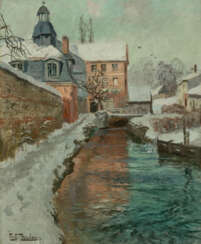

Johan Frederik Thaulov was a Norwegian painter known for his landscapes, cityscapes, and genre scenes. He studied at the Royal Danish Academy of Fine Arts in Copenhagen, where he was influenced by the Danish Realist painters. He also studied in Karlsruhe, Germany and Paris, France, where he was exposed to French Impressionism.
Thaulov's style was characterized by loose brushwork, a sensitive use of color, and an ability to capture the effects of light and atmosphere. He was particularly skilled at depicting water, whether it was the calm surface of a river or the choppy waves of the sea.
Thaulov was a prolific artist, and he traveled extensively throughout Europe, painting scenes from Norway, France, Italy, and England, among other places. He was a member of many important art societies, including the Royal Norwegian Society of Fine Arts and the Société Nationale des Beaux-Arts in Paris.
Thaulov's work was widely exhibited during his lifetime, and his paintings are now included in many important collections, including the National Museum of Art, Architecture and Design in Oslo and the Musée d'Orsay in Paris.

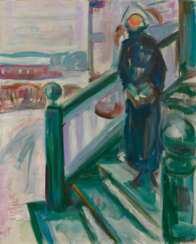

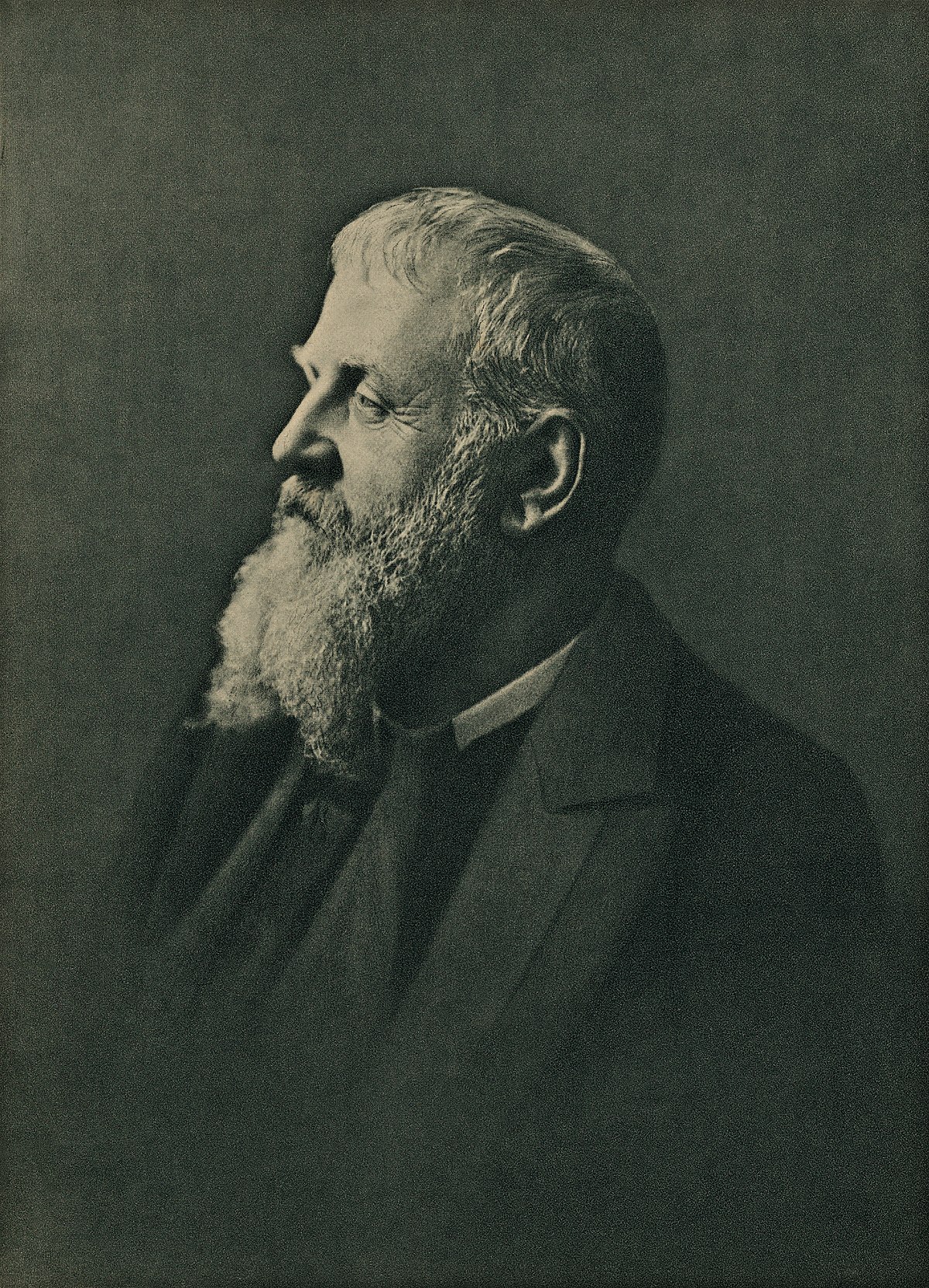
Edvard Munch, a renowned Norwegian painter and graphic artist, left an indelible mark on the world of art with his emotionally charged and symbolically rich compositions. Born on December 12, 1863, in Løten, Norway, Munch's work is emblematic of the Expressionist and Symbolist movements, through which he explored complex themes of life, death, fear, love, and anxiety. His most famous painting, "The Scream," conceived during a walk at sunset when Munch experienced an intense emotional episode, has become a universal symbol of human anxiety and existential dread.
Munch's upbringing was marred by illness, bereavement, and the fear of inheriting mental illness, themes that deeply influenced his artistic expression. This personal turmoil, coupled with his encounters with the works of Paul Gauguin, Vincent van Gogh, and Henri de Toulouse-Lautrec in Paris, and his association with the radical intellectual circle in Kristiania (now Oslo), propelled Munch to depict his own psychological and emotional states through his art. These experiences culminated in "The Frieze of Life," a series of works exploring the depths of human emotion and experience.
Throughout his career, Munch's art was met with both controversy and acclaim. His early works, characterized by their bold use of color and innovative exploration of psychological themes, sparked debate and scandal, particularly in Berlin where his first solo exhibition was closed prematurely. However, this controversy only served to increase Munch's fame and influence, particularly within the German Expressionist movement.
Later in life, after a nervous breakdown in 1908, Munch's style evolved towards a brighter palette and more optimistic themes, reflecting his recovery and a newfound interest in portraying the Norwegian landscape and rural life. Despite the challenges he faced, including the Nazi occupation of Norway during which many of his works were deemed "degenerate," Munch's legacy as a pioneer of Expressionism remained unshaken. He died on January 23, 1944, leaving behind a body of work that continues to resonate with audiences for its profound emotional depth and raw, unfiltered exploration of the human condition.
For collectors and art and antiques experts, Munch's works not only represent significant artistic achievements but also embody the tumultuous journey of an artist who used his canvas to navigate and make sense of the complexities of human emotion and existence. His paintings, many of which are displayed in museums and galleries around the world, continue to captivate and inspire.
To stay informed on new sales, auction events, and exhibitions related to Edvard Munch, sign up for updates. This subscription is a valuable resource for those keen on expanding their collection and knowledge of one of the most influential figures in modern art.