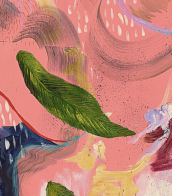
Portrait Painted Abstract art — Auction price
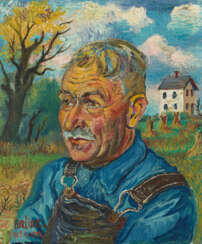

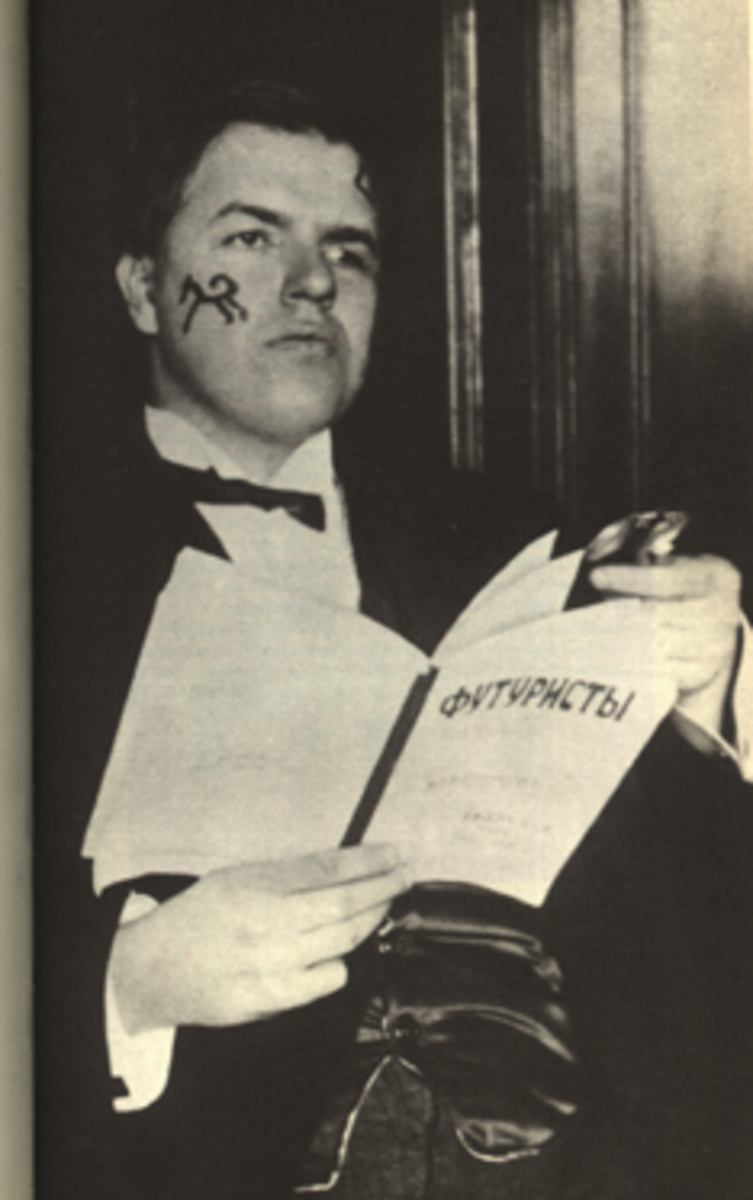
David Davidovich Burliuk (Russian: Давид Давидович Бурлюк), a pioneering figure of the Russian Futurist movement, was a Ukrainian poet, artist, and publicist, born in 1882 in Semirotovshchina, Kharkov, Ukraine, and died in 1967 on Long Island, N.Y., U.S. Known for his eclectic contributions that spanned poetry, painting, criticism, and publishing, Burliuk's work was instrumental in introducing the Russian avant-garde to Europe and the United States. Despite having a lesser volume of work in poetry and painting compared to his contemporaries, Burliuk's knack for discovering talent and promoting it was unparalleled. He was among the first to publish the works of Velimir Khlebnikov and to recognize the genius of Vladimir Mayakovsky, significantly contributing to their renown.
Burliuk's artistic journey was marked by his involvement with the Futurist and Neo-Primitivist movements. His early work, including an exhibition with the group Zveno ("The Link") in Kiev in 1908 and his participation in the Hylaea group, set the stage for his later achievements. He was a co-author of the influential Futurist manifesto "A Slap in the Face of Public Taste" in 1912, advocating for a break from traditional art forms and the embrace of modernity. Burliuk's commitment to Futurism was evident in his publishing endeavors and his collaborations with notable artists of the time.
In his later years, after emigrating to the United States in 1922, Burliuk continued to engage with the art world, contributing to pro-Soviet groups and publishing his works and those of his contemporaries. His efforts were recognized in several exhibitions, including a significant show at the Brooklyn Museum's 1926 International Exhibition of Modern Art. Despite facing challenges, such as being denied permission to visit his homeland by the Soviet government, Burliuk's influence remained steadfast. His legacy as a central figure in Russian Futurism and his contributions to the broader art movement are celebrated to this day.
To stay informed about updates and events related to David Davidovich Burliuk, including sales of his works and auction events, sign up for our newsletter. This subscription will ensure you're the first to know about new discoveries and opportunities to engage with Burliuk's enduring legacy.
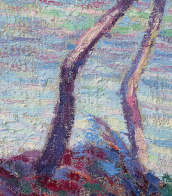
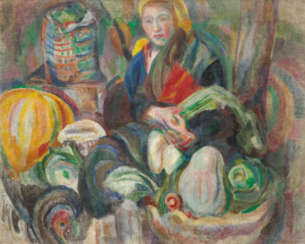

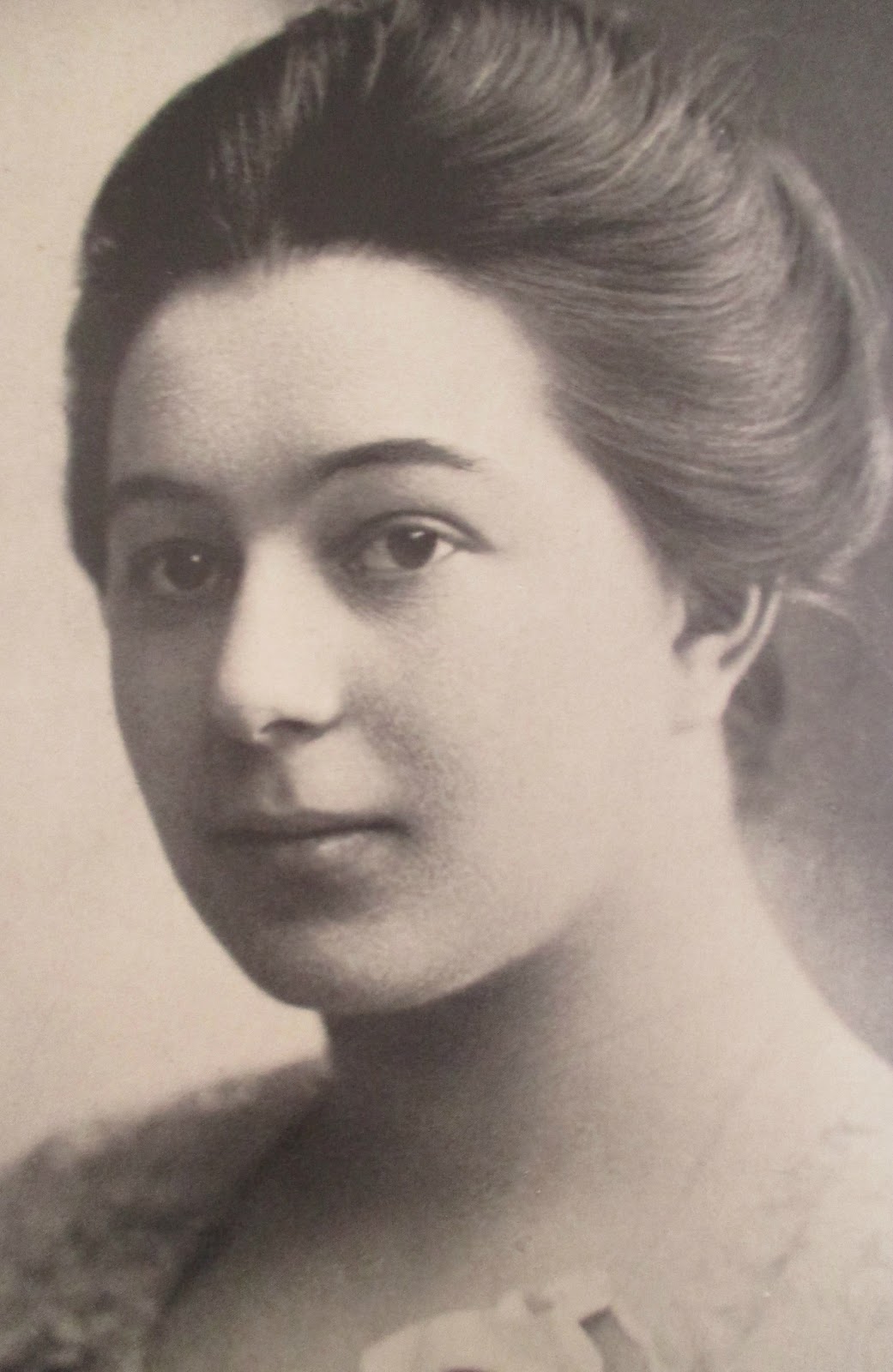
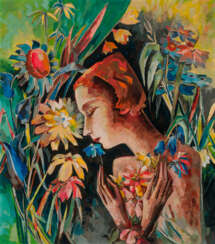
Sonia Delaunay-Terk (Russian: Соня Делоне-Терк) was a Russian-French painter and designer of Jewish descent. She received the name Sonia Terk, by which she is known, in 1890 after being adopted by her uncle. She is also called Sonia Delaunay in literature. She is considered a representative of geometric abstraction. Her artistic role models include Vincent van Gogh and Paul Gauguin. From 1912, she developed the so-called Orphism with her husband Robert Delaunay.

.jpg)
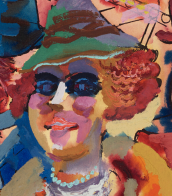
Hannah Höch was a German Dada artist. She is best known for her work of the Weimar period, when she was one of the originators of photomontage. Photomontage, or fotomontage, is a type of collage in which the pasted items are actual photographs, or photographic reproductions pulled from the press and other widely produced media.
Höch's work was intended to dismantle the fable and dichotomy that existed in the concept of the "New Woman": an energetic, professional, and androgynous woman, who is ready to take her place as man's equal. Her interest in the topic was in how the dichotomy was structured, as well as in who structures social roles.
Other key themes in Höch's works were androgyny, political discourse, and shifting gender roles. These themes all interacted to create a feminist discourse surrounding Höch's works, which encouraged the liberation and agency of women during the Weimar Republic (1919-1933) and continuing through to today.
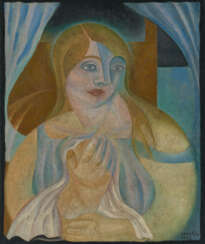

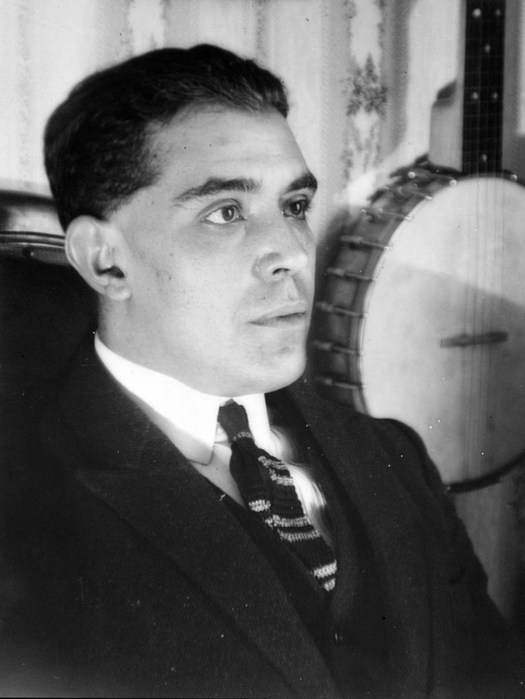
Juan Gris, a Spanish painter and sculptor born José Victoriano Carmelo Carlos González-Pérez in Madrid, is celebrated for his significant contribution to the Cubist movement. Gris moved to Paris in 1906, where he developed a close relationship with notable figures such as Henri Matisse, Georges Braque, Fernand Léger, and Pablo Picasso, adopting the vibrant city as his primary residence and embracing the avant-garde art scene.
In his early years, Gris pursued engineering but quickly shifted his focus to art, demonstrating a natural talent that led him to study under José Moreno Carbonero, a respected artist in Madrid. His artistic journey took a significant turn upon his move to Paris, where he immersed himself in the world of illustration before evolving into a pivotal Cubist painter. Unlike his contemporaries, Picasso and Braque, Gris's Cubist works are known for their bright, harmonious colors and innovative use of papier collé (collage), marking a departure from the more monochromatic style of Analytical Cubism to a more vibrant Synthetic Cubism.
Gris's transition to Synthetic Cubism after 1913, marked by his unique approach to color and composition, set him apart. His works, characterized by their clarity, order, and integration of geometric forms with a distinctive color palette, made significant impacts on both the Purist style and the post-war "return to order" movement. Notable works by Gris are held in prestigious collections worldwide, including "Portrait of Picasso" (1912) at the Art Institute of Chicago and "Still Life before an Open Window, Place Ravignan" (1915) at the Philadelphia Museum of Art, exemplifying his innovative approach to Cubism.
For collectors and experts in art and antiques, Juan Gris remains a figure of immense historical and aesthetic importance, embodying the spirit of innovation and the search for new means of expression that defined the early 20th century. His commitment to exploring the boundaries of Cubism, combined with his unique palette and compositional techniques, continues to inspire and captivate audiences. To stay updated on new product sales and auction events related to Juan Gris, signing up for updates is highly recommended for those with a keen interest in his work and Cubism at large.

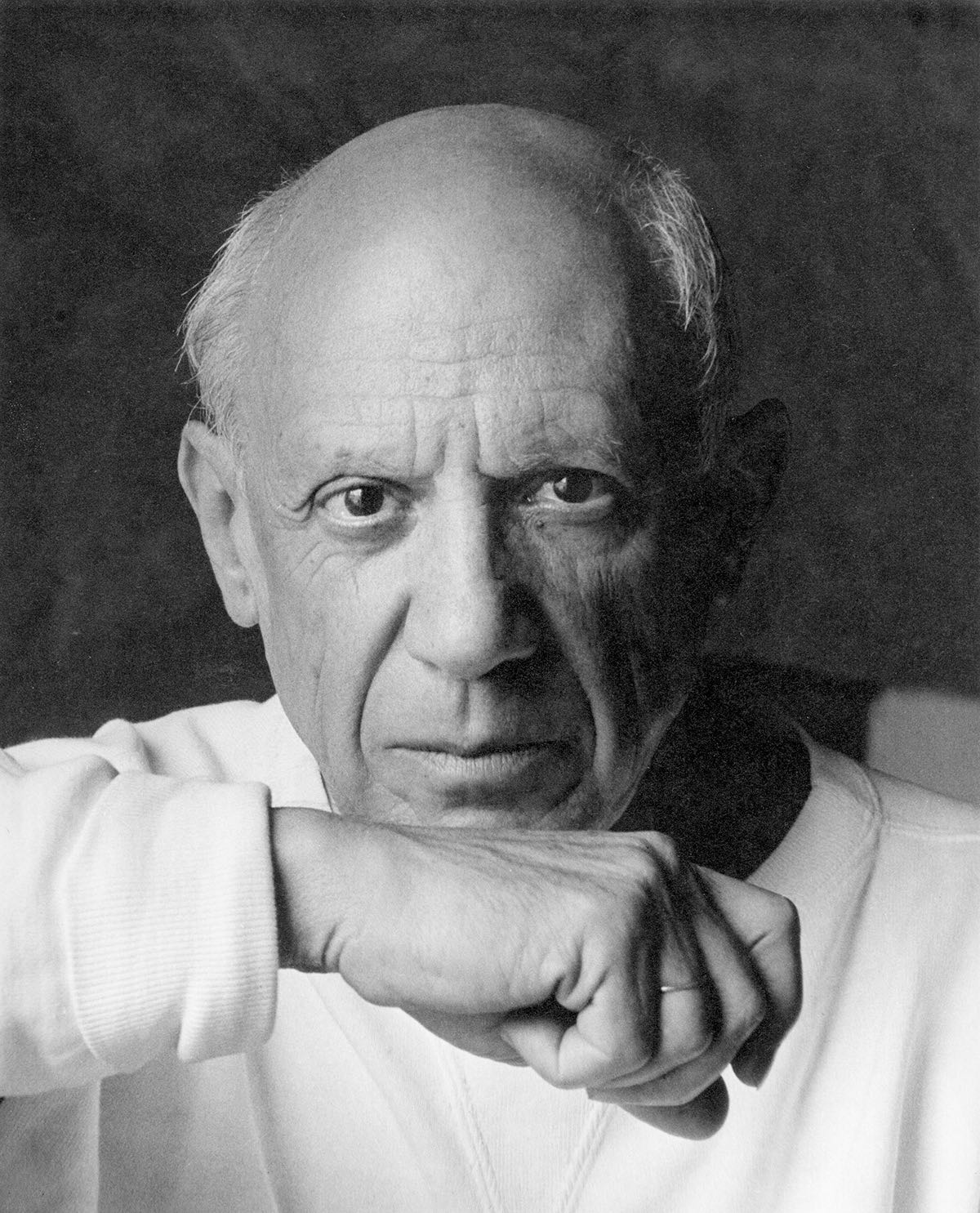
Pablo Ruiz Picasso, a Spanish artist renowned for his revolutionary contributions to the 20th-century art scene, is a figure that resonates profoundly with collectors and art experts. His unique blend of talents in painting, sculpture, printmaking, and ceramic art, infused with his time in France, positioned him as a pivotal character in modern art history.
Picasso's artistic journey was marked by distinct periods, each showcasing his evolving style and genius. His early years were characterized by the Blue Period (1901-1904), followed by the Rose Period (1904-1906), and then the African-influenced Period (1907-1909). Picasso's name is synonymous with Cubism, a movement he co-founded, which significantly altered artistic perspectives and methods. Works like "Les Demoiselles d'Avignon" (1907) and "Guernica" (1937) are emblematic of his cubist legacy, the latter being a poignant anti-war statement that remains influential.
His later years saw a return to more traditional styles, with neoclassical and surrealist influences becoming evident. Works from these phases reflect a deep engagement with mythological themes, as seen in "Faun with Stars" (1955), symbolizing his late-life romance with Jacqueline Roque, his second wife.
Picasso's prolific output and innovative spirit made him a legend in his own time, a status that only grew after his death. His works, housed in major museums and private collections worldwide, continue to captivate and inspire.
As a collector or expert in art and antiques, staying informed about Picasso's works, their auction events, and sales is essential. To stay updated on the latest developments and opportunities related to Pablo Picasso, sign up for our specialized updates. Rest assured, this subscription will focus solely on new product sales and auction events pertaining to Picasso's art, ensuring that you receive only the most relevant and valuable information.