

Ceramic — Auction price


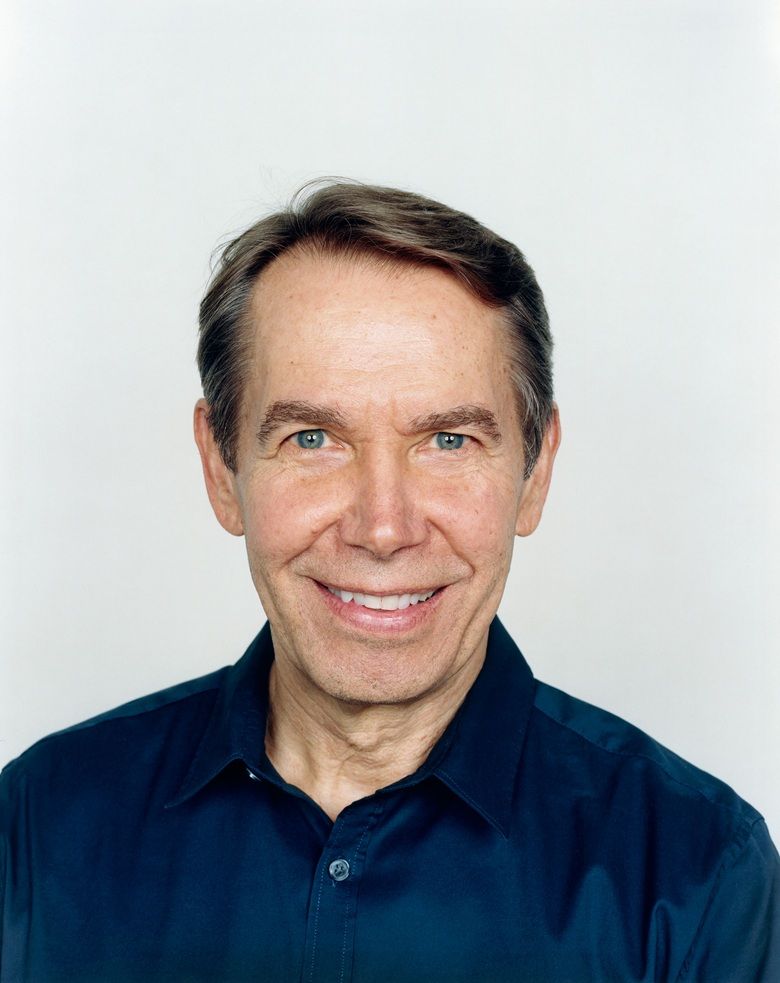
Jeffrey Lynn Koons is an American artist recognized for his work dealing with popular culture and his sculptures depicting everyday objects, including balloon animals produced in stainless steel with mirror-finish surfaces. He lives and works in both New York City and his hometown of York, Pennsylvania. His works have sold for substantial sums, including at least two record auction prices for a work by a living artist: US$58.4 million for Balloon Dog (Orange) in 2013 and US$91.1 million for Rabbit in 2019.
Critics are sharply divided in their views of Koons. Some view his work as pioneering and of major art-historical importance. Others dismiss his work as kitsch, crass, and based on cynical self-merchandising. Koons has stated that there are no hidden meanings and critiques in his works.
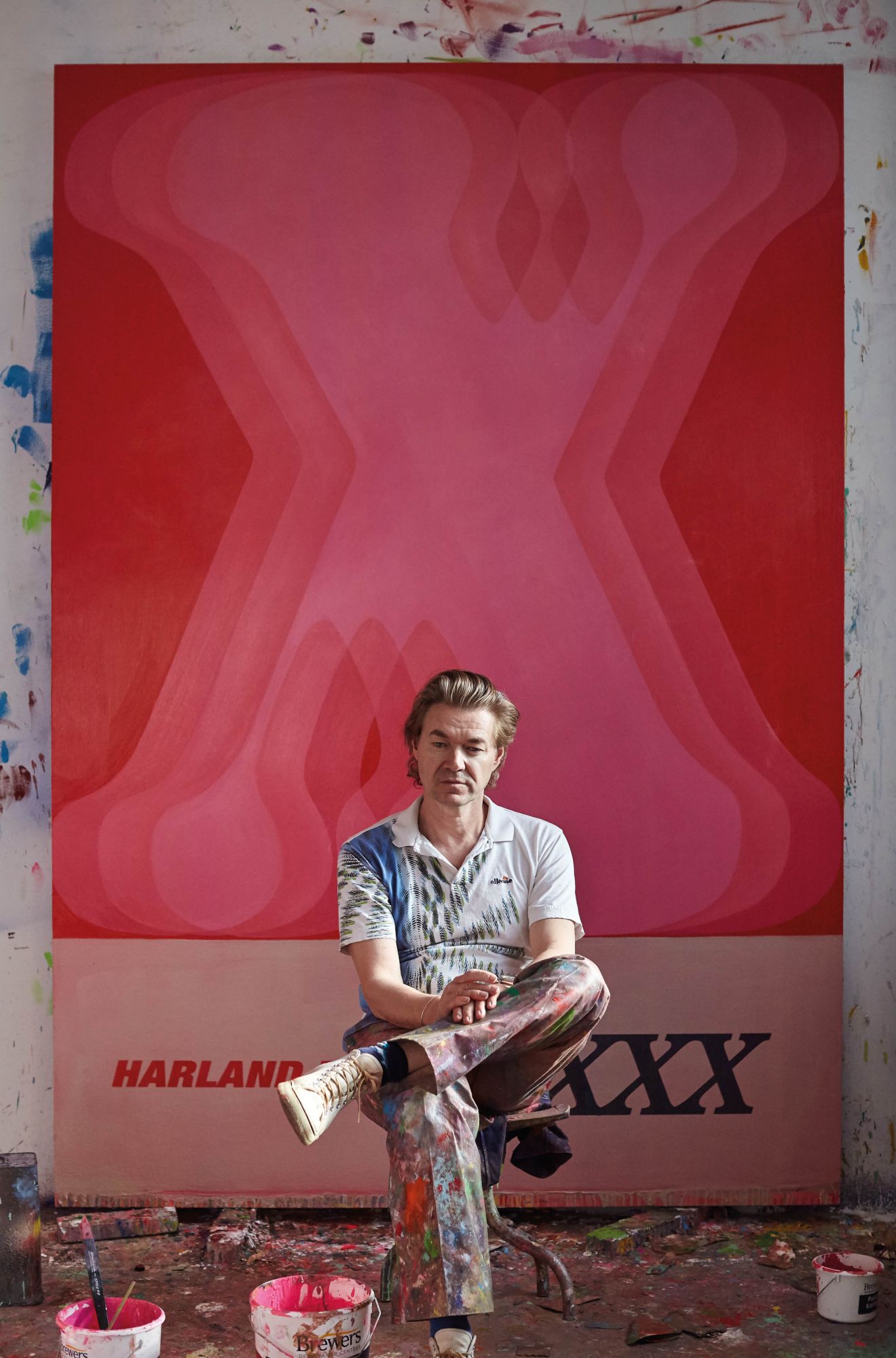



Roy Fox Lichtenstein, an American icon of the Pop Art movement, is celebrated for his comic strip-inspired art. Born in 1923 in New York City, Lichtenstein's journey into the art world was marked by various phases, evolving from Cubism and Abstract Expressionism to the distinctive Pop Art style he is renowned for.
Roy Lichtenstein's artistic career gained momentum in the 1960s, a period during which he embraced the comic strip as his primary source of inspiration. His pioneering use of Ben-Day dots, a technique borrowed from commercial printing, became his signature style, bringing a new visual language to fine art. His approach transformed mundane subjects from popular culture into compelling fine art, challenging traditional notions of artistry.
Among his most notable works, "Drowning Girl" (1963), displayed at the Museum of Modern Art in New York, exemplifies his iconic style with its bold lines, vivid colors, and Ben-Day dots. This piece, along with others like "Look Mickey" and "Whaam!", played a critical role in establishing Pop Art as a major art movement, contrasting starkly with the Abstract Expressionism prevalent at the time.
Roy Lichtenstein's art was not just limited to canvas; he explored multiple media, showcasing his versatility. His shift to Pop Art marked a significant turn in his career, bringing him fame and controversy alike. His works, often based on comic strips and advertisements, were both a parody and homage to the mass-produced, consumerist culture of his time.
For art collectors and experts, Lichtenstein's works offer a fascinating glimpse into a transformative era in art history. His approach to Pop Art remains influential, and his works are celebrated worldwide for their innovative and provocative style.
Interested in staying updated on sales and auction events featuring Roy Lichtenstein's works? Sign up for our updates. We provide straightforward, no-nonsense information on the latest in art sales and auctions related to Lichtenstein.


.jpg)
Jean Elysée Puiforcat was a French silversmith, sculptor and designer. Miller's Antiques Encyclopedia calls Puiforcat the «most important French Art Deco silversmith».


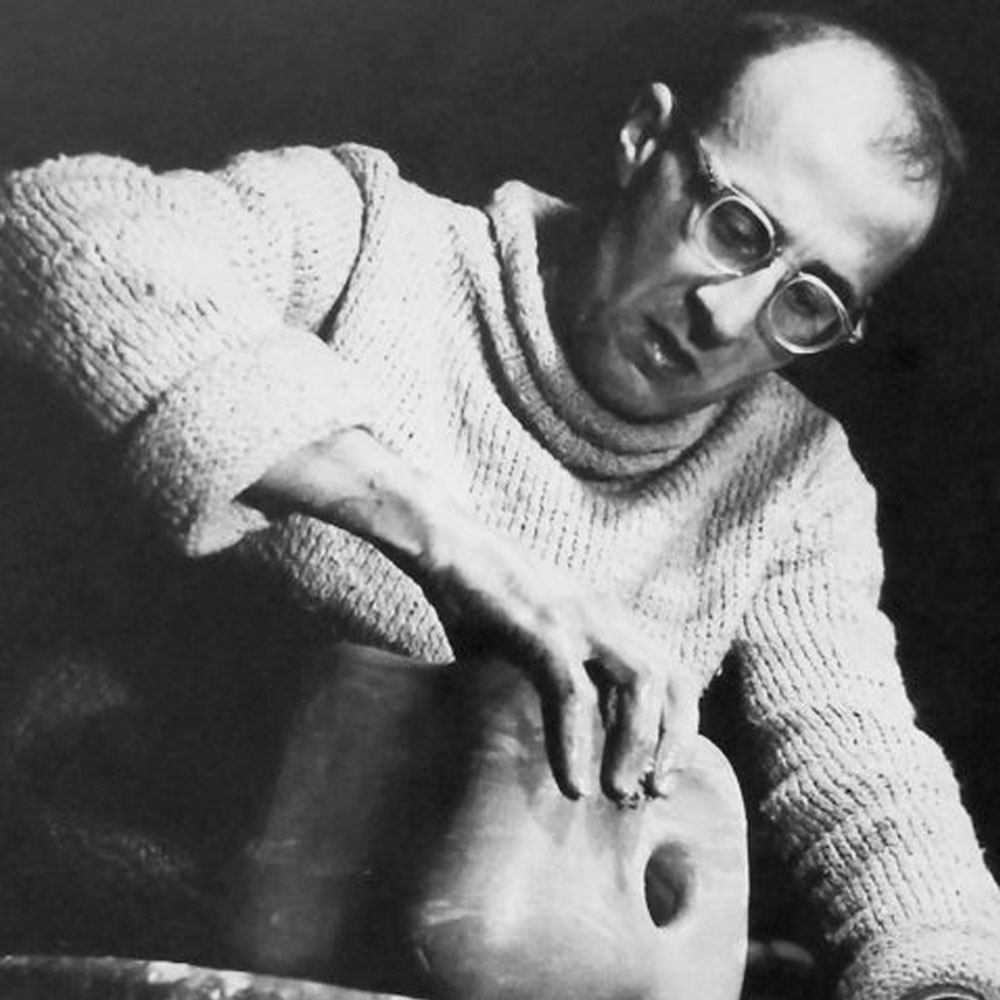
Georges Jouve was an important ceramist of the 20th century. At 17 years old, Jouve enrolled at the prestigious Ecole Boulle in Paris where he received theoretical instruction in Art History in addition to his technical studies as a sculptor. After Graduation in 1930 he first embarked on his artistic career as a theatrical set designer. During World War II, Jouve was captured by the Germans and interned in a German camp. After several attempts he escaped from the camp and took refuge at his step parents home in a potters village in the South of France called Dieulefit. In 1944, Jouve and his family moved back to Paris. He opened his studio in Paris and was invited by Jacques Adnet to participate in the exhibition “La Ceramique Contemporaine” by the Compagnie des Arts Francais. He then participated annually in numerous 'Salons' in France and internationally such as the “Salon des Artistes Decorateurs” in Paris, Association Francaise d'Action Artistique in Rio de Janeiro, and Vienna, Toronto, Rome, Milan, and Cairo.
Jean Elysée Puiforcat was a French silversmith, sculptor and designer. Miller's Antiques Encyclopedia calls Puiforcat the «most important French Art Deco silversmith».


Georges Jouve was an important ceramist of the 20th century. At 17 years old, Jouve enrolled at the prestigious Ecole Boulle in Paris where he received theoretical instruction in Art History in addition to his technical studies as a sculptor. After Graduation in 1930 he first embarked on his artistic career as a theatrical set designer. During World War II, Jouve was captured by the Germans and interned in a German camp. After several attempts he escaped from the camp and took refuge at his step parents home in a potters village in the South of France called Dieulefit. In 1944, Jouve and his family moved back to Paris. He opened his studio in Paris and was invited by Jacques Adnet to participate in the exhibition “La Ceramique Contemporaine” by the Compagnie des Arts Francais. He then participated annually in numerous 'Salons' in France and internationally such as the “Salon des Artistes Decorateurs” in Paris, Association Francaise d'Action Artistique in Rio de Janeiro, and Vienna, Toronto, Rome, Milan, and Cairo.
Jean Elysée Puiforcat was a French silversmith, sculptor and designer. Miller's Antiques Encyclopedia calls Puiforcat the «most important French Art Deco silversmith».


Jean Elysée Puiforcat was a French silversmith, sculptor and designer. Miller's Antiques Encyclopedia calls Puiforcat the «most important French Art Deco silversmith».
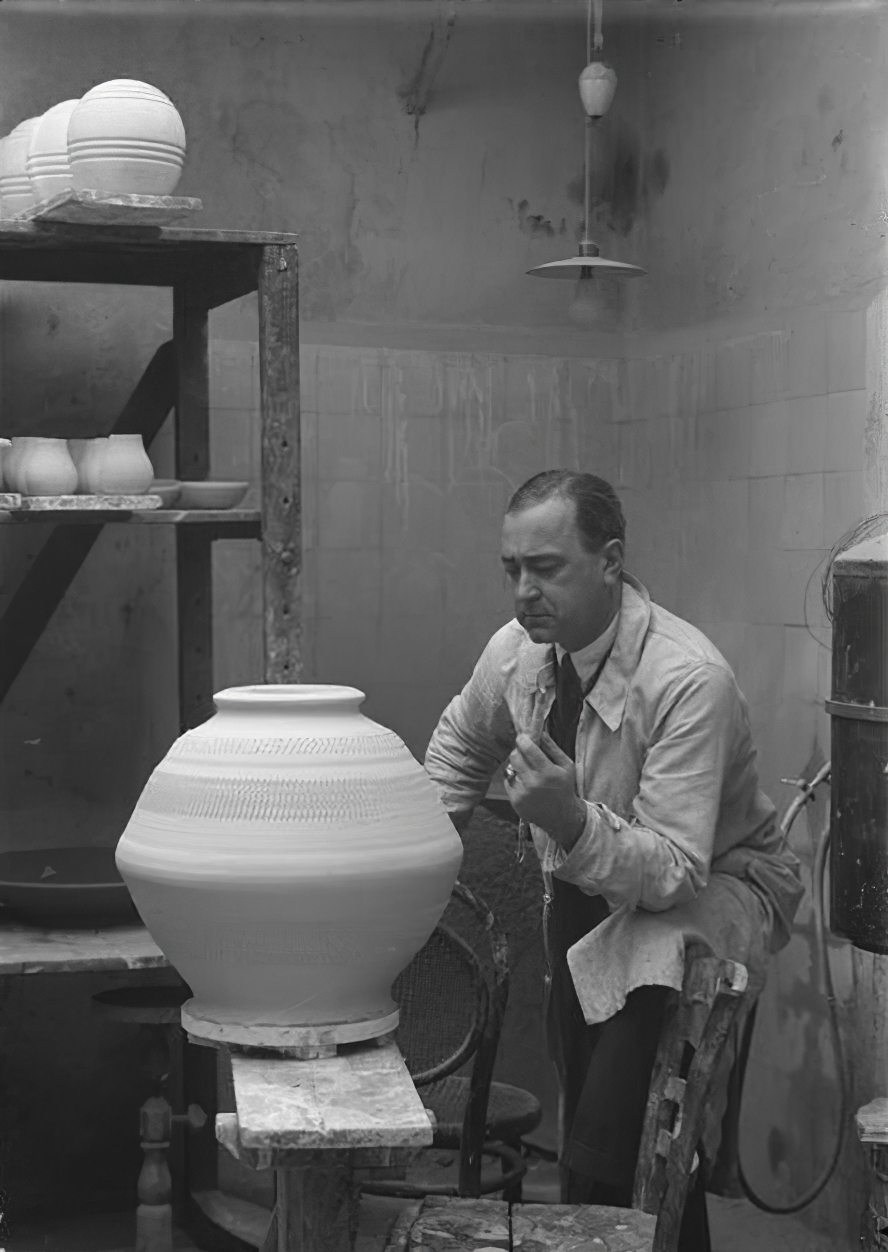
Jean Besnard was a French master potter.


Georges Jouve was an important ceramist of the 20th century. At 17 years old, Jouve enrolled at the prestigious Ecole Boulle in Paris where he received theoretical instruction in Art History in addition to his technical studies as a sculptor. After Graduation in 1930 he first embarked on his artistic career as a theatrical set designer. During World War II, Jouve was captured by the Germans and interned in a German camp. After several attempts he escaped from the camp and took refuge at his step parents home in a potters village in the South of France called Dieulefit. In 1944, Jouve and his family moved back to Paris. He opened his studio in Paris and was invited by Jacques Adnet to participate in the exhibition “La Ceramique Contemporaine” by the Compagnie des Arts Francais. He then participated annually in numerous 'Salons' in France and internationally such as the “Salon des Artistes Decorateurs” in Paris, Association Francaise d'Action Artistique in Rio de Janeiro, and Vienna, Toronto, Rome, Milan, and Cairo.
Jean Elysée Puiforcat was a French silversmith, sculptor and designer. Miller's Antiques Encyclopedia calls Puiforcat the «most important French Art Deco silversmith».


Georges Jouve was an important ceramist of the 20th century. At 17 years old, Jouve enrolled at the prestigious Ecole Boulle in Paris where he received theoretical instruction in Art History in addition to his technical studies as a sculptor. After Graduation in 1930 he first embarked on his artistic career as a theatrical set designer. During World War II, Jouve was captured by the Germans and interned in a German camp. After several attempts he escaped from the camp and took refuge at his step parents home in a potters village in the South of France called Dieulefit. In 1944, Jouve and his family moved back to Paris. He opened his studio in Paris and was invited by Jacques Adnet to participate in the exhibition “La Ceramique Contemporaine” by the Compagnie des Arts Francais. He then participated annually in numerous 'Salons' in France and internationally such as the “Salon des Artistes Decorateurs” in Paris, Association Francaise d'Action Artistique in Rio de Janeiro, and Vienna, Toronto, Rome, Milan, and Cairo.
Jean Elysée Puiforcat was a French silversmith, sculptor and designer. Miller's Antiques Encyclopedia calls Puiforcat the «most important French Art Deco silversmith».


Jean Elysée Puiforcat was a French silversmith, sculptor and designer. Miller's Antiques Encyclopedia calls Puiforcat the «most important French Art Deco silversmith».
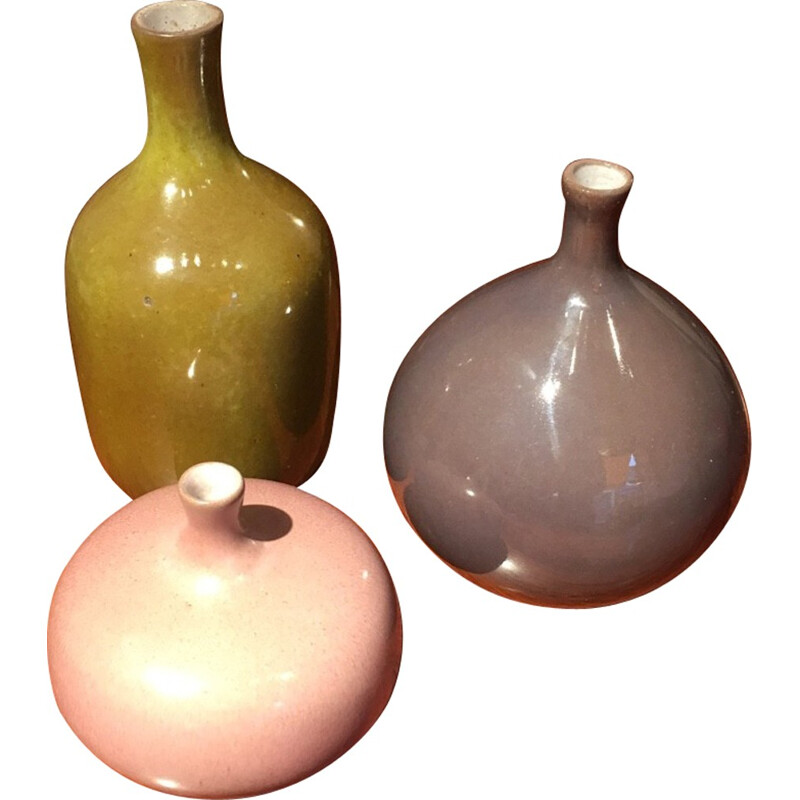


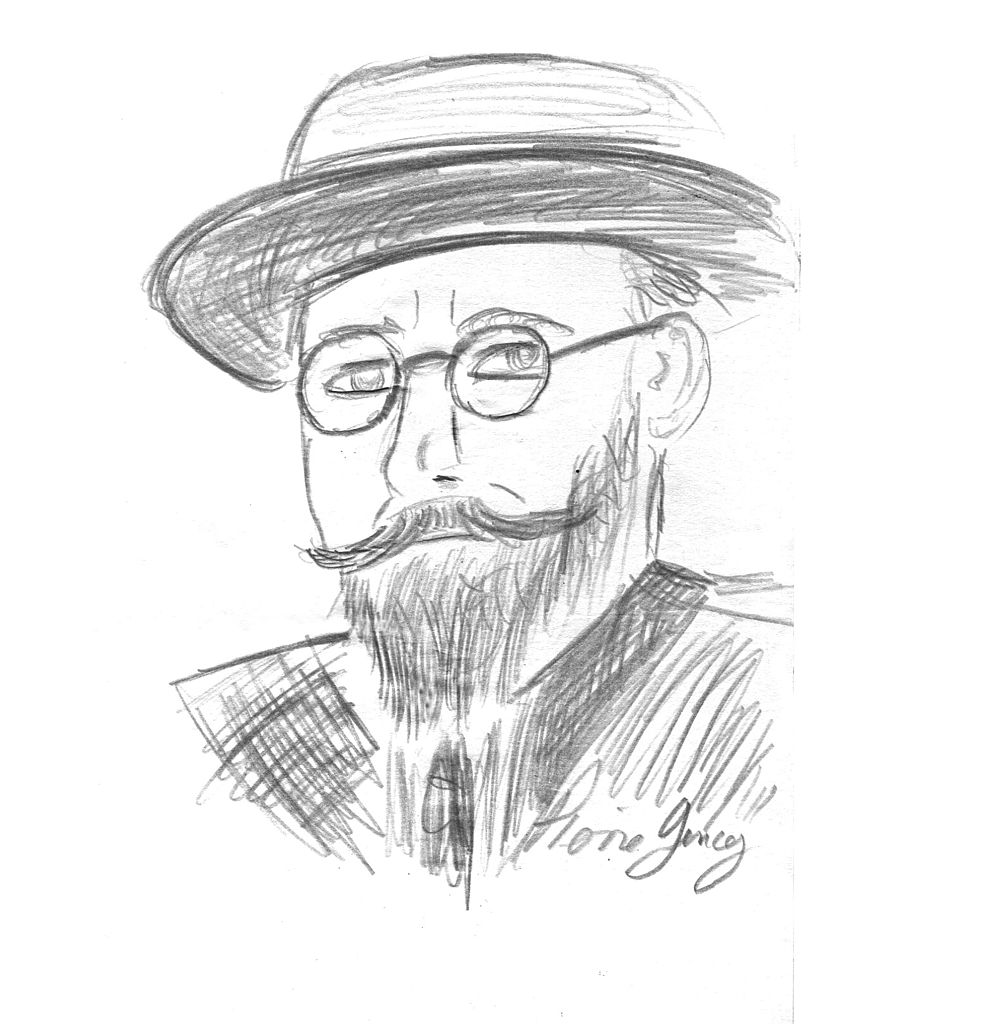
Jean Elysée Puiforcat was a French silversmith, sculptor and designer. Miller's Antiques Encyclopedia calls Puiforcat the «most important French Art Deco silversmith».


Jean Elysée Puiforcat was a French silversmith, sculptor and designer. Miller's Antiques Encyclopedia calls Puiforcat the «most important French Art Deco silversmith».


Georges Jouve was an important ceramist of the 20th century. At 17 years old, Jouve enrolled at the prestigious Ecole Boulle in Paris where he received theoretical instruction in Art History in addition to his technical studies as a sculptor. After Graduation in 1930 he first embarked on his artistic career as a theatrical set designer. During World War II, Jouve was captured by the Germans and interned in a German camp. After several attempts he escaped from the camp and took refuge at his step parents home in a potters village in the South of France called Dieulefit. In 1944, Jouve and his family moved back to Paris. He opened his studio in Paris and was invited by Jacques Adnet to participate in the exhibition “La Ceramique Contemporaine” by the Compagnie des Arts Francais. He then participated annually in numerous 'Salons' in France and internationally such as the “Salon des Artistes Decorateurs” in Paris, Association Francaise d'Action Artistique in Rio de Janeiro, and Vienna, Toronto, Rome, Milan, and Cairo.
Jean Elysée Puiforcat was a French silversmith, sculptor and designer. Miller's Antiques Encyclopedia calls Puiforcat the «most important French Art Deco silversmith».


Georges Jouve was an important ceramist of the 20th century. At 17 years old, Jouve enrolled at the prestigious Ecole Boulle in Paris where he received theoretical instruction in Art History in addition to his technical studies as a sculptor. After Graduation in 1930 he first embarked on his artistic career as a theatrical set designer. During World War II, Jouve was captured by the Germans and interned in a German camp. After several attempts he escaped from the camp and took refuge at his step parents home in a potters village in the South of France called Dieulefit. In 1944, Jouve and his family moved back to Paris. He opened his studio in Paris and was invited by Jacques Adnet to participate in the exhibition “La Ceramique Contemporaine” by the Compagnie des Arts Francais. He then participated annually in numerous 'Salons' in France and internationally such as the “Salon des Artistes Decorateurs” in Paris, Association Francaise d'Action Artistique in Rio de Janeiro, and Vienna, Toronto, Rome, Milan, and Cairo.
Jean Elysée Puiforcat was a French silversmith, sculptor and designer. Miller's Antiques Encyclopedia calls Puiforcat the «most important French Art Deco silversmith».


Georges Jouve was an important ceramist of the 20th century. At 17 years old, Jouve enrolled at the prestigious Ecole Boulle in Paris where he received theoretical instruction in Art History in addition to his technical studies as a sculptor. After Graduation in 1930 he first embarked on his artistic career as a theatrical set designer. During World War II, Jouve was captured by the Germans and interned in a German camp. After several attempts he escaped from the camp and took refuge at his step parents home in a potters village in the South of France called Dieulefit. In 1944, Jouve and his family moved back to Paris. He opened his studio in Paris and was invited by Jacques Adnet to participate in the exhibition “La Ceramique Contemporaine” by the Compagnie des Arts Francais. He then participated annually in numerous 'Salons' in France and internationally such as the “Salon des Artistes Decorateurs” in Paris, Association Francaise d'Action Artistique in Rio de Janeiro, and Vienna, Toronto, Rome, Milan, and Cairo.
Jean Elysée Puiforcat was a French silversmith, sculptor and designer. Miller's Antiques Encyclopedia calls Puiforcat the «most important French Art Deco silversmith».


Georges Jouve was an important ceramist of the 20th century. At 17 years old, Jouve enrolled at the prestigious Ecole Boulle in Paris where he received theoretical instruction in Art History in addition to his technical studies as a sculptor. After Graduation in 1930 he first embarked on his artistic career as a theatrical set designer. During World War II, Jouve was captured by the Germans and interned in a German camp. After several attempts he escaped from the camp and took refuge at his step parents home in a potters village in the South of France called Dieulefit. In 1944, Jouve and his family moved back to Paris. He opened his studio in Paris and was invited by Jacques Adnet to participate in the exhibition “La Ceramique Contemporaine” by the Compagnie des Arts Francais. He then participated annually in numerous 'Salons' in France and internationally such as the “Salon des Artistes Decorateurs” in Paris, Association Francaise d'Action Artistique in Rio de Janeiro, and Vienna, Toronto, Rome, Milan, and Cairo.
Jean Elysée Puiforcat was a French silversmith, sculptor and designer. Miller's Antiques Encyclopedia calls Puiforcat the «most important French Art Deco silversmith».


Jean Elysée Puiforcat was a French silversmith, sculptor and designer. Miller's Antiques Encyclopedia calls Puiforcat the «most important French Art Deco silversmith».