

5 x 62







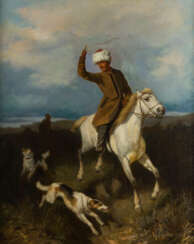

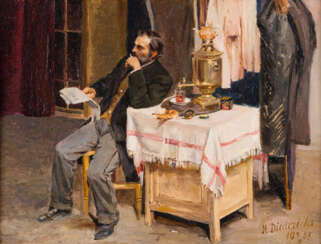



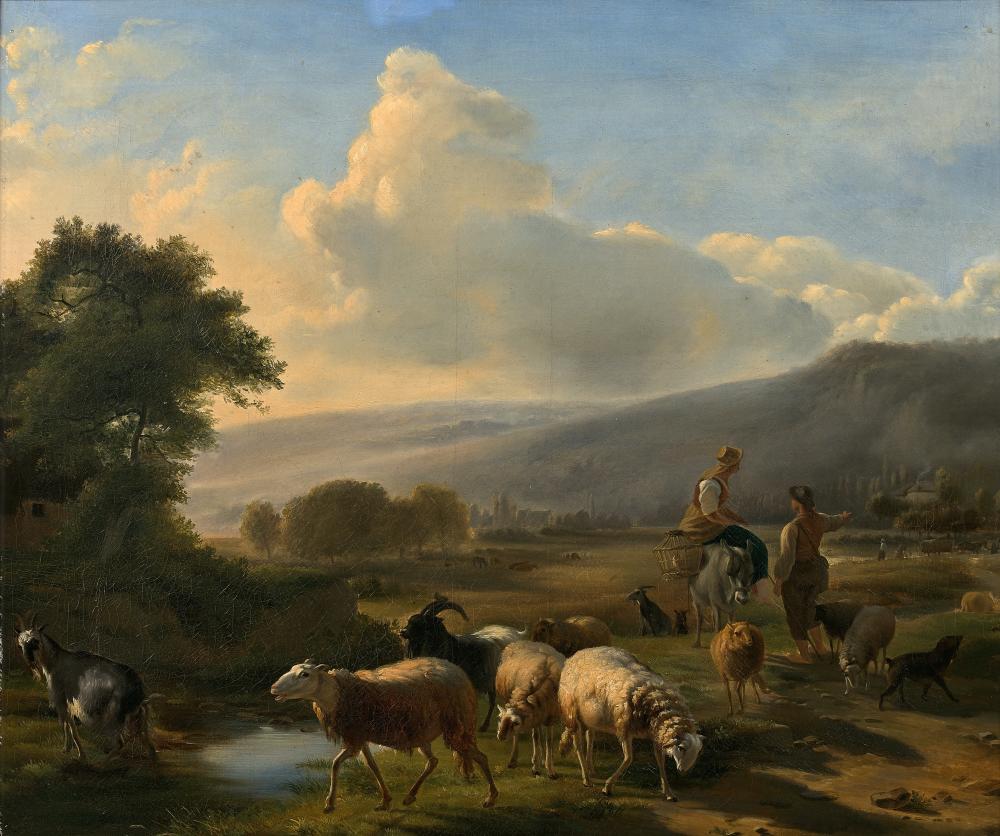
Balthasar Paul Ommeganck was a distinguished Flemish painter, born in Antwerp, Belgium, in 1755. He garnered acclaim for his unique approach to landscape painting, blending realism with an idealized portrayal of nature. Ommeganck's work is characterized by detailed observation of nature, a sure line, and subtle use of color. His favorite subjects were undulating landscapes, often featuring grazing animals like cows, sheep, and goats.
Balthasar Paul Ommeganck's talent was not confined to painting alone; he was also a skilled draughtsman and dabbled in sculpture, producing some clay models of sheep and cows. His main contribution to art was combining the light found in Dutch Italianate painters' work from the 17th century with meticulous observation of nature, finding a synthesis between realism and an idealized representation of nature.
In 1799, Balthasar Paul Ommeganck's landscape painting won the first prize in Paris, a competition he had not intended to enter but was submitted to by a friend. His success extended beyond the borders of Belgium, as he became a member of several academies, including those in Amsterdam, Brussels, Ghent, Munich, and Vienna. In 1809, he was recognized as a corresponding member of the Institut de France.
Despite his death in 1826, Balthasar Paul Ommeganck's style continued to influence landscape painting in the 18th and early 19th centuries. However, later art critics have sometimes viewed his adherence to classic tradition and preference for the picturesque and conventional as a form of 'hopeless traditionalism'.
For collectors and enthusiasts of art and antiques, Balthasar Paul Ommeganck's works represent a significant period in the history of landscape painting. His paintings, with their fusion of realistic detail and atmospheric beauty, are a testament to his skill and vision.
To keep abreast of the latest news, sales, and auction events related to Balthasar Paul Ommeganck's art, consider subscribing to our updates. This service ensures you stay informed about opportunities to delve deeper into the works of this notable landscape artist.





James Rizzi was a renowned American artist, celebrated for his vibrant and playful Pop Art style. Born in Brooklyn, New York, Rizzi's unique approach to art combined childlike whimsy with bold, animated creations. His 3D artworks, characterized by their intricate detail and lively city scenes, set him apart in the art world.
James Rizzi's artistic journey was marked by a series of notable achievements and contributions. He gained recognition in the late 1970s and early 1980s, showcasing his works at prestigious venues like the Brooklyn Museum and creating album covers and animations for the Tom Tom Club. His style evolved into creating 3D constructions, where he meticulously sketched scenes, added vibrant colors, and transformed them into three-dimensional art pieces. This method resulted in captivating prints that exuded a sense of movement and playfulness, drawing viewers into the energetic and diverse atmosphere of New York City.
Throughout his career, James Rizzi undertook various notable projects, including designing for the Montreux Jazz Festival, the FIFA World Cup, and the Olympics. His works were not only limited to canvases but also extended to designing cars for Volkswagen and contributing to charity projects. The "Happy Rizzi House" in Braunschweig, Germany, stands as a testament to his architectural creativity.
Art enthusiasts and collectors will find James Rizzi's work particularly intriguing due to his unique process and the joyous portrayal of urban life. His art is celebrated globally, and his influence remains significant in the Pop Art movement.
If you are a collector or an expert in art and antiques, and James Rizzi's work intrigues you, sign up for updates. Stay informed about new product sales and auction events related to James Rizzi without any pompous flair. Just the essential information, directly to your inbox.













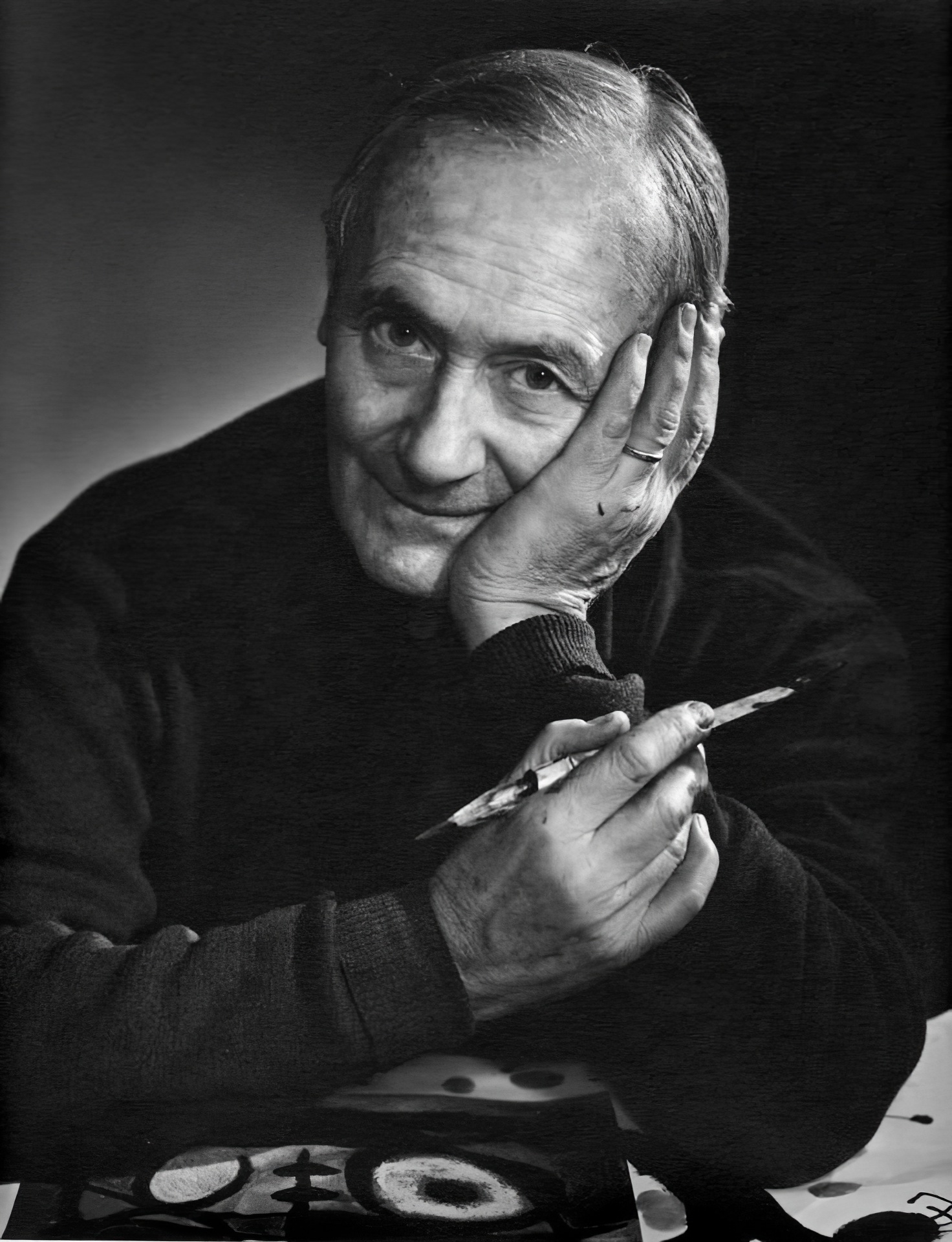
Joan Miró, a celebrated Spanish artist, was a master in painting, sculpture, and ceramics, renowned for his unique style that blurred the lines between Surrealism, Fauvism, and Expressionism. Born in Barcelona to a family of a goldsmith and a watchmaker, Miró grew up immersed in the rich cultural heritage of the Barri Gòtic neighborhood. His artistic journey began with drawing classes at the age of seven and continued at the prestigious La Llotja art academy. Despite an initial venture into the business world, Miró's passion for art prevailed, leading him to abandon his clerical career after a nervous breakdown.
Miró's work is noted for its exploration of the subconscious, often depicting a childlike perspective. This approach was both a critique of traditional painting methods and a means of expressing Catalan pride. His art, challenging to categorize, often featured symbolic elements and nationalistic qualities. One of his notable early works, "The Farm," reflects a transition to a more individual style, blending elements of his Catalan roots with broader artistic influences. This piece, later purchased by Ernest Hemingway, encapsulated the essence of Spain in its imagery.
In Paris, Miró joined the Surrealist movement in 1924, where his work began to reflect the influence of automatism, emphasizing spontaneous, automatic, or subconscious creation. He experimented with various mediums, including painting-poetry and collage, and even ventured into set and costume design for Sergei Diaghilev's Ballets Russes.
During World War II, Miró remained in Spain, and his work from this period, including the 22 Constellations series, reflected an interest in the night, music, and stars. His forms became increasingly abstracted, and he experimented with various techniques, often incorporating primary colors and evocative titles.
Miró's career spanned several decades, during which he continually evolved his style and explored new mediums. His contributions to art were recognized with numerous awards and retrospectives, including a major career retrospective at MoMA in 1941 and the Spanish Gold Medal for Fine Arts in 1980. Among his last major works was a tapestry for the World Trade Center in New York City, created in 1974.
For art collectors and enthusiasts, Joan Miró remains a figure of immense interest, not only for his distinct style and contributions to Surrealism but also for his ability to blend poetic imagery with political commentary. To stay updated on new product sales and auction events related to Joan Miró, sign up for our updates and immerse yourself in the world of this extraordinary artist.






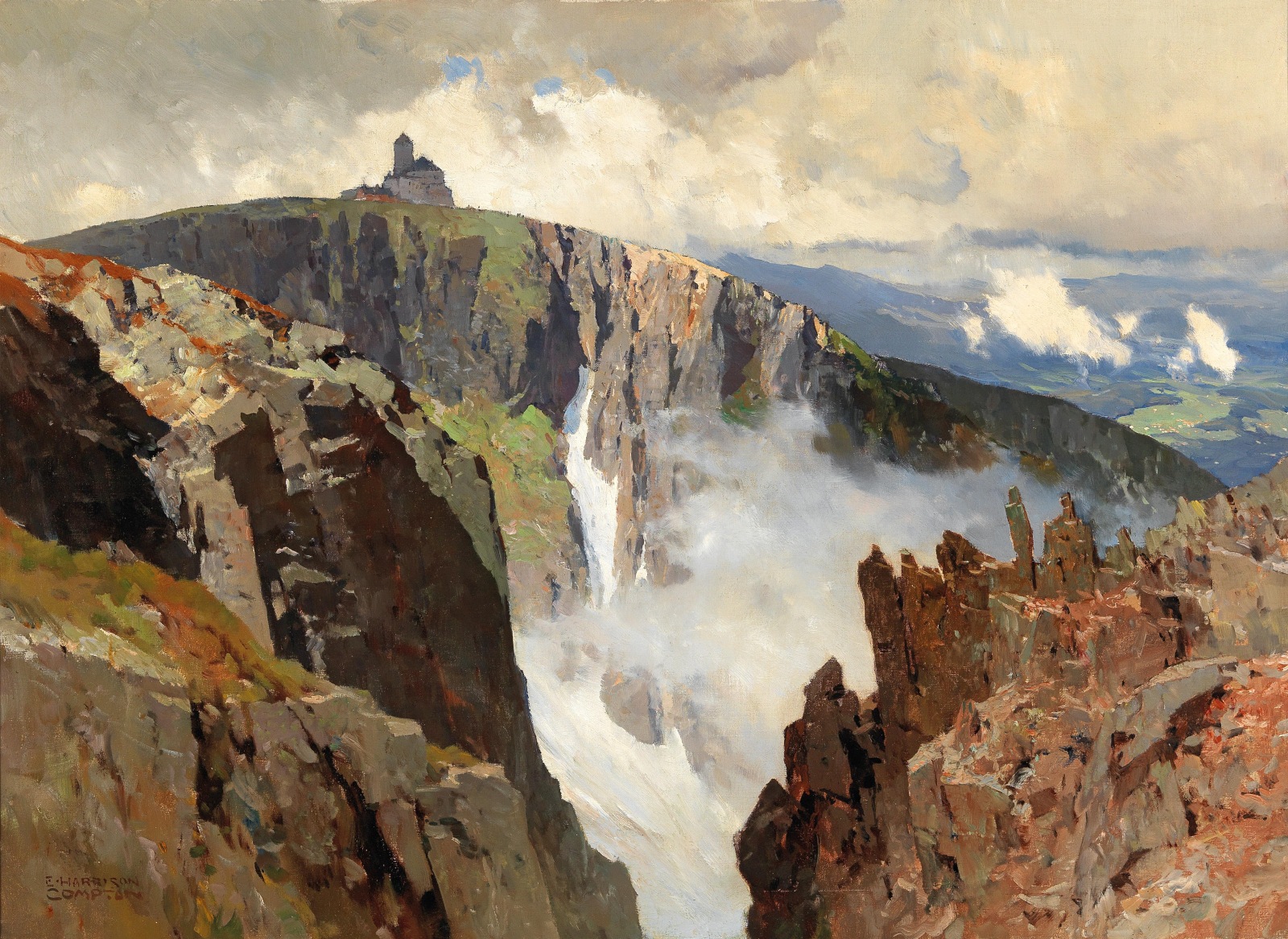
Edward Harrison Compton was a German landscape painter and illustrator of English descent.
Like his father he was inspired by the Alps to become a mountain painter (Bergmaler) working in both oils and watercolour. However, an attack of Polio at the age of 28 meant that he had to find more accessible landscapes to paint in Germany, England, northern Italy and Sicily. He also provided illustrations for several travel books published by A & C Black.


