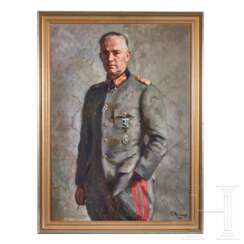
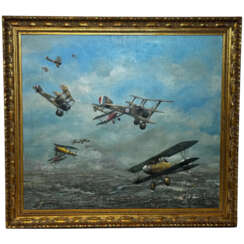
art in the third reich


Abraham Ortelius (Ortels) was a Brabantian cartographer, geographer, and cosmographer. He is recognized as the creator of the first modern atlas, the Theatrum Orbis Terrarum (Theatre of the World). Along with Gemma Frisius and Gerardus Mercator, Ortelius is generally considered one of the founders of the Netherlandish school of cartography and geography. He was a notable figure of this school in its golden age (approximately 1570s–1670s) and an important geographer of Spain during the age of discovery. The publication of his atlas in 1570 is often considered as the official beginning of the Golden Age of Netherlandish cartography. He was the first person proposing that the continents were joined before drifting to their present positions. Beginning as a map-engraver, in 1547 he entered the Antwerp Guild of Saint Luke as an illuminator of maps. In 1560 when travelling with Mercator to Trier, Lorraine, and Poitiers, he seems to have been attracted, largely by Mercator's influence, towards the career of a scientific geographer. In 1564 he published his first map, Typus Orbis Terrarum, an eight-leaved wall map of the world. On 20 May 1570, Gilles Coppens de Diest at Antwerp issued Ortelius's Theatrum Orbis Terrarum, the "first modern atlas" (of 53 maps).


Albert Einstein was a German-born theoretical physicist, widely acknowledged to be one of the greatest and most influential physicists of all time. Einstein is best known for developing the theory of relativity, but he also made important contributions to the development of the theory of quantum mechanics. Relativity and quantum mechanics are together the two pillars of modern physics. His mass–energy equivalence formula E = mc2, which arises from relativity theory, has been dubbed "the world's most famous equation". His work is also known for its influence on the philosophy of science. He received the 1921 Nobel Prize in Physics "for his services to theoretical physics, and especially for his discovery of the law of the photoelectric effect", a pivotal step in the development of quantum theory. His intellectual achievements and originality resulted in "Einstein" becoming synonymous with "genius".


![[TOFT, Mary (c.1703-1763)]](/assets/image/picture_5108857/0a548/8f614f9112b9d09c882d5f7b50ca63a81765321200jpg__fix_374_244.jpeg)
![[TOFT, Mary (c.1703-1763)]](https://veryimportantlot.com/assets/image/picture_5108857/0a548/8f614f9112b9d09c882d5f7b50ca63a81765321200jpg__fix_374_244.jpeg)


![[AUSTEN, Jane (1775-1817)]](/assets/image/picture_5108942/9da8a/4965c1611c07b4053ad29ed3b2c6728e1765321200jpg__fix_374_244.jpeg)
![[AUSTEN, Jane (1775-1817)]](https://veryimportantlot.com/assets/image/picture_5108942/9da8a/4965c1611c07b4053ad29ed3b2c6728e1765321200jpg__fix_374_244.jpeg)


![[AUSTEN, Jane (1775-1817)]](/assets/image/picture_5109054/aee7a/7d5f7d1d7648adb3891d9f10b426b5541765321200jpg__fix_374_244.jpeg)
![[AUSTEN, Jane (1775-1817)]](https://veryimportantlot.com/assets/image/picture_5109054/aee7a/7d5f7d1d7648adb3891d9f10b426b5541765321200jpg__fix_374_244.jpeg)