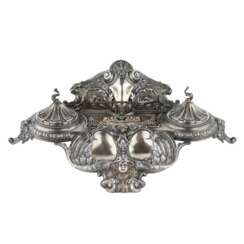
male torso







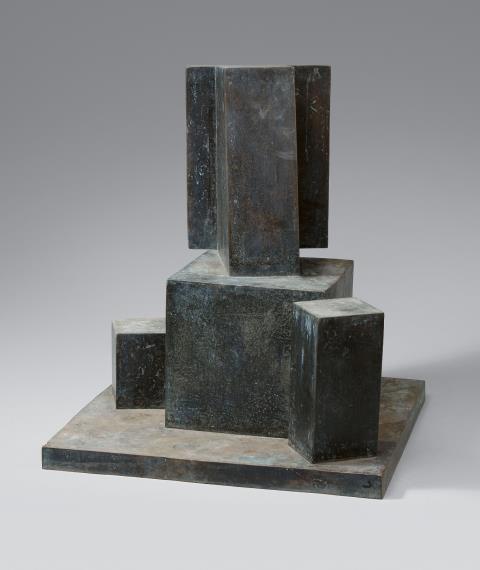
Anton Hiller was a Bavarian sculptor and painter. He grew up in a Catholic farming family in Sigmaringendorf, Hohenzollern. Hiller then studied sculpture at the Academy of Fine Arts Munich under Hermann Hahn (1868–1945), graduating in 1923 and worked later as a freelance sculptor in Munich from 1923, executing commissions for the Bavarian State Gallery and the Municipal Gallery.
From 1946 to 1961, Hiller served as a professor of sculpture at the Academy of Fine Arts Munich, becoming one of the leading representatives of the Munich School of Sculpture in the third quarter of the 20th century. Hiller was a member of the German Artists' Association from 1952 to 1960.


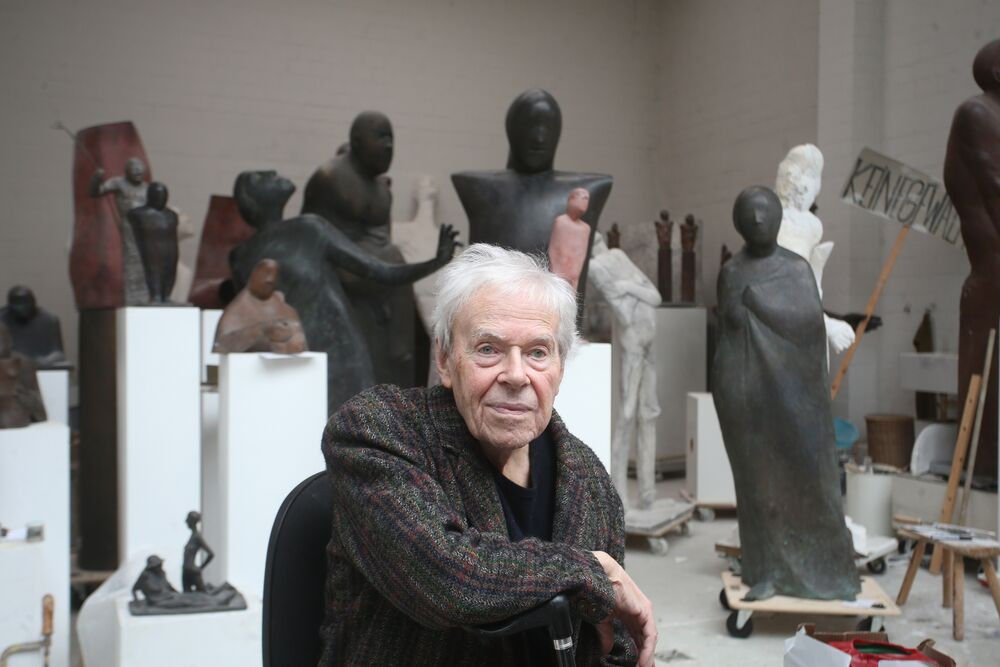
Waldemar Otto is a German sculptor of Polish descent.
Otto studied sculpture at the Academy of Fine Arts in Berlin, won the 1957 Grosse Berliner Kunstausst Prize, lived with his family in the United States, and moved to Bremen in 1973, accepting a professorship at the University of the Arts. He founded the Bremer School of Sculpture there and then moved to Worpswede.
Waldemar Otto practiced figurative sculpture in the form of torsos, creating his figurative human images in wood, granite, bronze and cast stone. Many of his works can be seen in public spaces in various German cities.

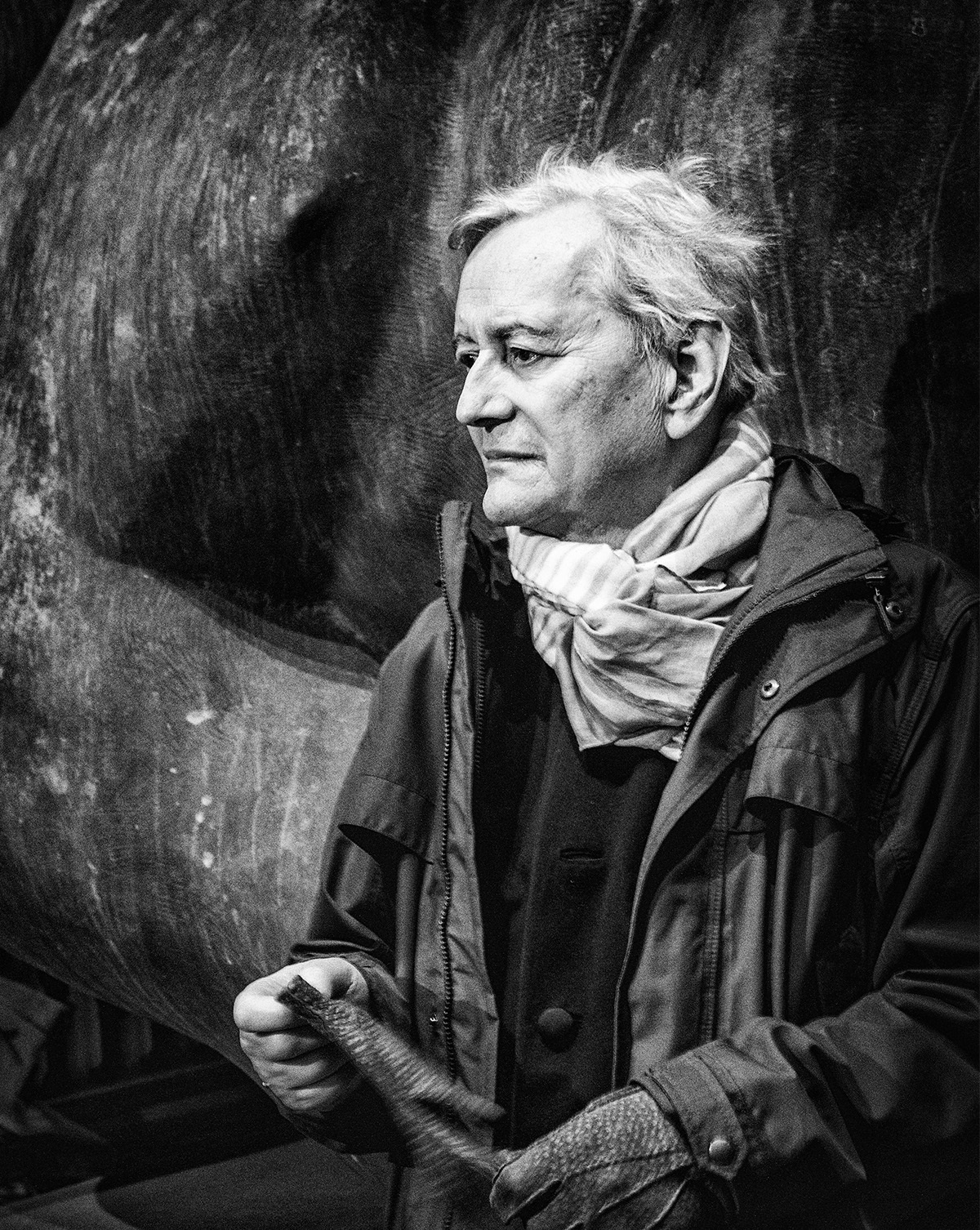
Igor Mitoraj, a renowned Polish sculptor, was celebrated for his unique approach to sculptural art, which combined classical techniques with modernist interpretations. Igor Mitoraj's artistic journey led him across Europe, studying under notable figures such as Tadeusz Kantor at the Krakow Academy of Fine Arts before expanding his horizons in Paris and Italy.
Igor Mitoraj's works are distinguished by their classical inspiration, often focusing on the human body's beauty and fragility. Yet, he introduced a contemporary twist by presenting his figures as fragmented or truncated, a nod to the imperfections and vulnerabilities inherent in human nature. This stylistic choice not only set him apart in the art world but also allowed him to explore deeper themes of human experience and existential reflection.
His sculptures, often large-scale, are displayed in public spaces across the globe, from the streets of European cities to the ruins of Pompeii, where his piece "Daedalus" stands as a testament to his artistic legacy. Igor Mitoraj's influence extends beyond public installations, with his works featured in various prestigious exhibitions and collections, illustrating a career marked by a commitment to exploring the human condition through art.
For art collectors and enthusiasts interested in Mitoraj's work, staying informed about upcoming sales and auction events can provide unique opportunities to acquire pieces by this influential artist. Subscribing to updates related to Igor Mitoraj can ensure you're always in the know about new offerings and events celebrating his artistic contributions.








Anton Hiller was a Bavarian sculptor and painter. He grew up in a Catholic farming family in Sigmaringendorf, Hohenzollern. Hiller then studied sculpture at the Academy of Fine Arts Munich under Hermann Hahn (1868–1945), graduating in 1923 and worked later as a freelance sculptor in Munich from 1923, executing commissions for the Bavarian State Gallery and the Municipal Gallery.
From 1946 to 1961, Hiller served as a professor of sculpture at the Academy of Fine Arts Munich, becoming one of the leading representatives of the Munich School of Sculpture in the third quarter of the 20th century. Hiller was a member of the German Artists' Association from 1952 to 1960.