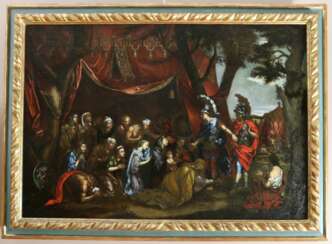
10 Items by auctions and galleries:
sequence
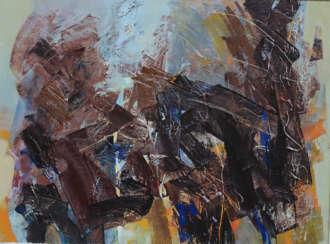




Cuibul, Очаг, Heart
Michitici Maria (b. 1993)  Shop Maria Michitici
Michitici Maria
07.01.1993
Moldova
I am a young artist, my activity is Decorative Textile Art. My profile is wide and varied. Among my works you will find abstract compositions, decorative panels, hand made weaved gobellins, decorative felt objects. Also, you will see the contact and combination between Fashion industry and Decorative Fine Art.
For more information write me, I will be happy to respond and argue all possible art projects and ideas.
Enjoy watching =)
Artist shop
Maria Michitici
Moldova
Number of products: 3
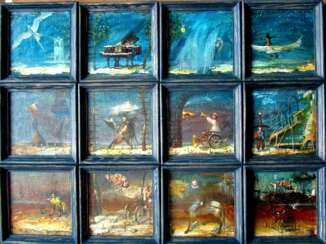





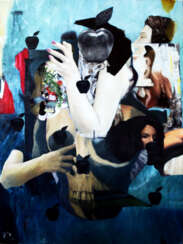

Black Apples
Daniel Wille (b. 1987)  Shop Wille Daniel
Daniel Wille
27.02.1987
Austria
In art I always was seeking for the opportunity to make the viewer feel the picture as something alive, to feel the presence. But not only with the help of classical techniques, or not only with the help of it, but more through associative, subconscious or intuitive.
Using various objects, fabrics, textures, you can create something you can touch to change, something that is exposed to the environment, natural and aging. And that can revive the canvas.
It was always paradoxical for me to feel impressionism more alive comparing to classical realism, I found the key to this answer in Alla prima techniques emotions and admiration are instantly imprinted on the canvas.
Therefore, I try to create work as quick as possible so as not to move out to another environment. To create a good picture you have to live it, survive it.
Even if the picture is not completed, then it will provide an opportunity viewer's imagination.
Everything you can imagine is real.- Picasso.
At recent moment I am working on a new direction "Anrealism".
Born in Samara, Russian Federation.
1987.
Studied interior design and architecture , joined the global art League 2014.
Was exhibiting works in Russia, USA, Israel.
2015 Relocated to Israel, joined the community of artists there.
In 2018 married and relocated to Austria where recently living.
Since childhood, I was surrounded by bunch of books about history of Italian art and architecture, and also most often visited this country with parents who were dealing with fashion boutiques. Grandmother was teacher of piano and singing , given private lessons. So house was fulfilled with atmosphere which motivated me to start creating from age of 3.
Artist shop
Wille Daniel
Austria
Number of products: 21