

tea and book


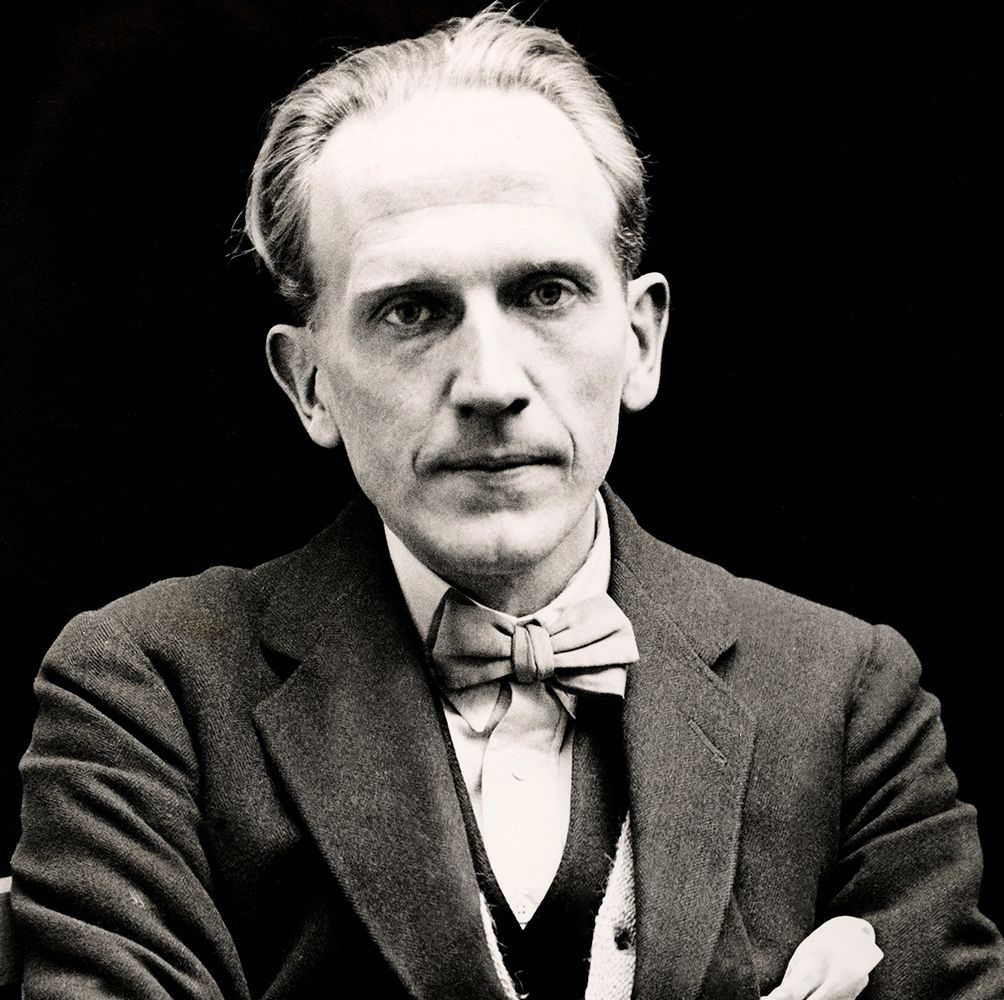
Alan Alexander Milne was a British journalist, playwright and children's author.
While studying at Trinity College, Cambridge, Milne began writing for Granta magazine, and in 1906 he joined the humor magazine Punch, where he wrote humorous poems and quirky essays until 1914. During World War I he served as a communications officer, and afterward, in 1920, Milne had a son, Christopher Robin, whose name soon became known to the world.
From 1921 Milne wrote several comedy plays and also began writing children's poetry and prose for his young son, having finally found his calling. Milne's major successes were his books Winnie the Pooh (1926) and The House on Pooh Corner (1928). These two volumes tell the adventures of a boy named Christopher Robin and his playmates - animals that were "born" from the toys of the real Christopher Robin. The central character is Winnie the Pooh Bear, accompanied by the fussy Rabbit, the sullen Donkey Ia, the bouncy tiger Tigger, the kind kangaroo Kanga and her baby Roo, the wise Owl and the timid Piglet. The adventures of Pooh and his friends in the forest of One Hundred Acres with illustrations by Ernest Shepard became bestsellers.
They were translated into different languages of the world and reprinted many times, filmed cartoons. In 1929 Milne adapted another children's classic, Kenneth Graham's The Wind in the Willows, for stage production as Toad of Toad Hall. Ten years later he wrote an autobiography, Now It's Too Late.

![Viertzehende Schiffart, oder, Gründliche und warhaffte Beschreibung dess Neuwen Engellandts [A Description of New England]](/assets/image/picture_5228493/e4bef/6368885411016896cd0418868e1c6e951769094000jpg__fix_374_244.jpeg)
![Viertzehende Schiffart, oder, Gründliche und warhaffte Beschreibung dess Neuwen Engellandts [A Description of New England]](https://veryimportantlot.com/assets/image/picture_5228493/e4bef/6368885411016896cd0418868e1c6e951769094000jpg__fix_374_244.jpeg)
![The Holy Land, Syria, Idumea, Arabia, Egypt & Nubia [With:] Egypt & Nubia](/assets/image/picture_5228522/f2c4a/62c2300fe14f52f338500e3ccd12d6bd1769094000jpg__fix_374_244.jpeg)
![The Holy Land, Syria, Idumea, Arabia, Egypt & Nubia [With:] Egypt & Nubia](https://veryimportantlot.com/assets/image/picture_5228522/f2c4a/62c2300fe14f52f338500e3ccd12d6bd1769094000jpg__fix_374_244.jpeg)


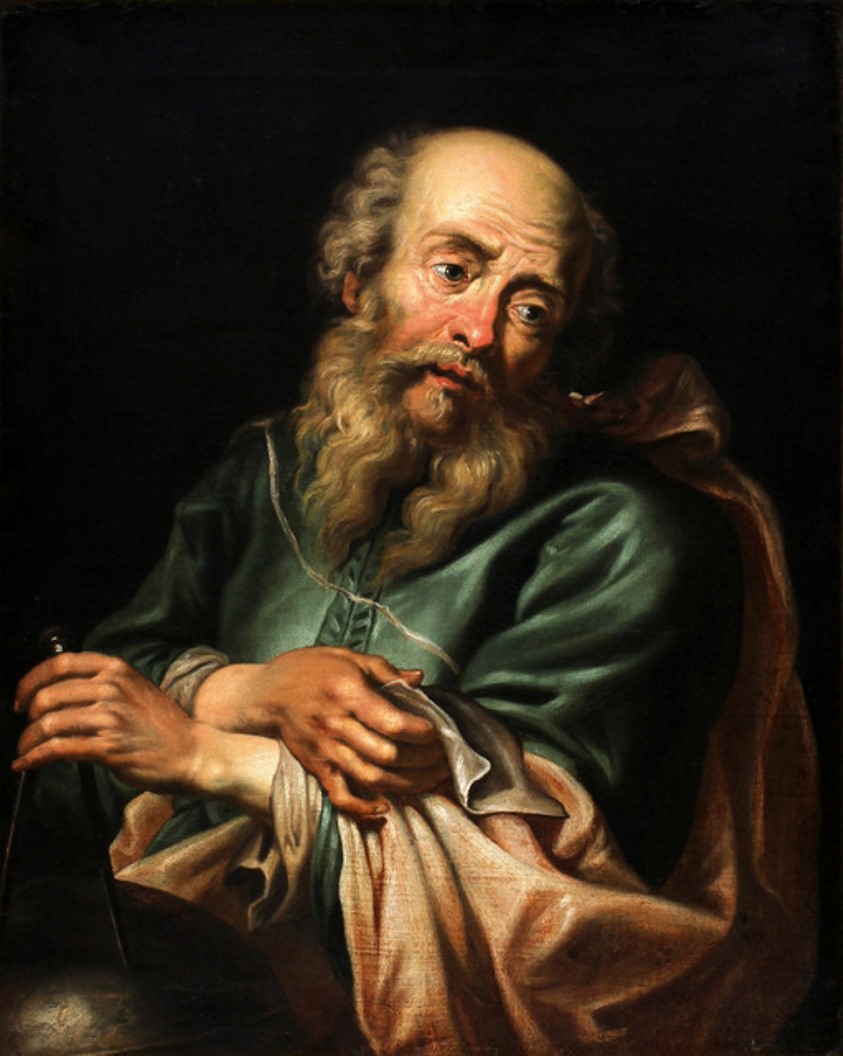
Galileo Galilei was an Italian naturalist, physicist, mechanic, astronomer, philosopher, and mathematician.
Using his own improved telescopes, Galileo Galilei observed the movements of the Moon, Earth's satellites, and the stars, making several breakthrough discoveries in astronomy. He was the first to see craters on the Moon, discovered sunspots and the rings of Saturn, and traced the phases of Venus. Galileo was a consistent and convinced supporter of the teachings of Copernicus and the heliocentric system of the world, for which he was subjected to the trial of the Inquisition.
Galileo is considered the founder of experimental and theoretical physics. He is also one of the founders of the principle of relativity in classical mechanics. Overall, the scientist had such a significant impact on the science of his time that he cannot be overemphasized.




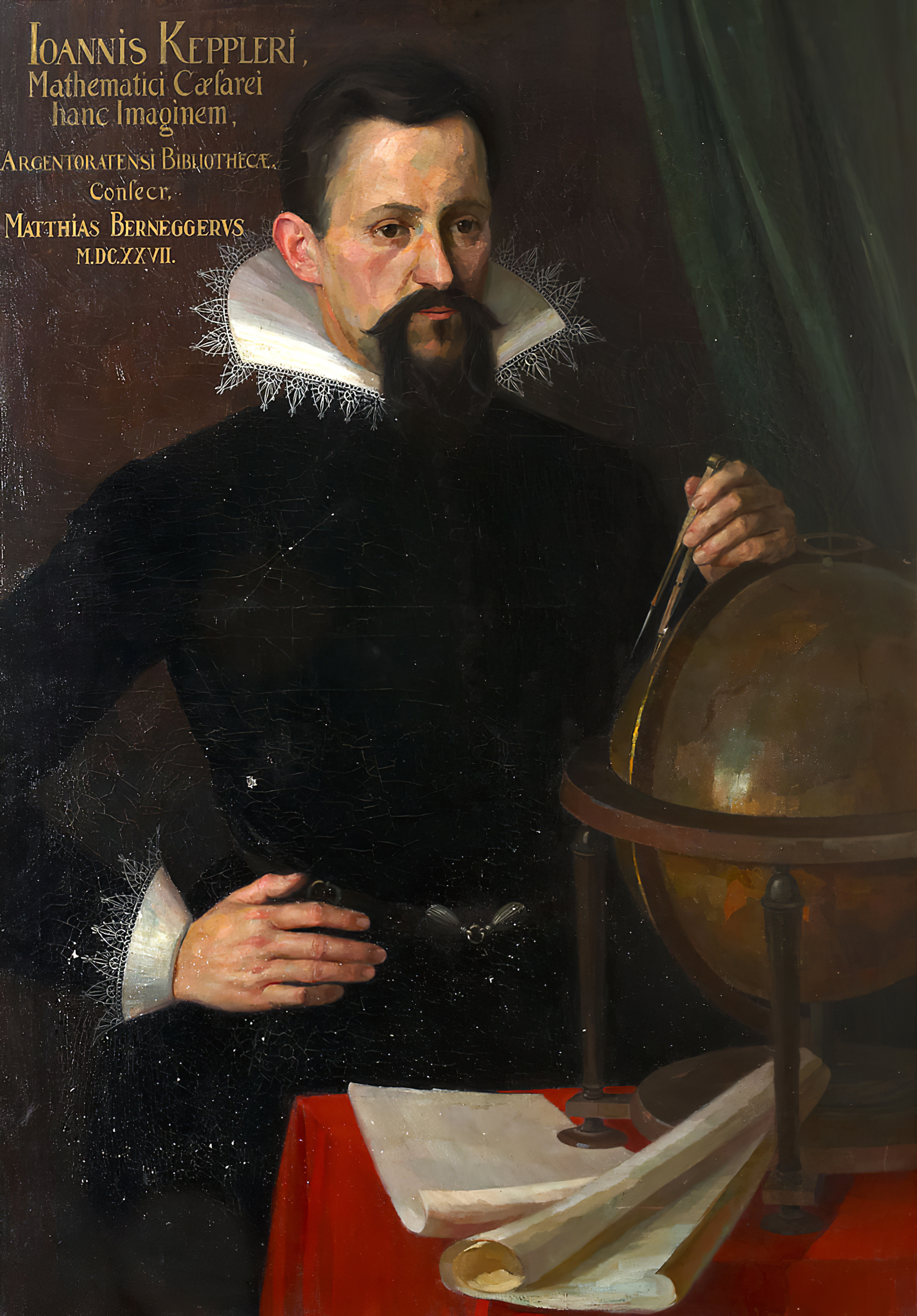
Johannes Kepler was a German mathematician and astronomer who discovered that the Earth and planets move around the Sun in elliptical orbits.
Kepler created the three fundamental laws of planetary motion. He also did seminal work in optics and geometry, calculated the most accurate astronomical tables, and made many inventions and discoveries in physics on which further scientific discoveries by advanced scientists were based.


Johannes Kepler was a German mathematician and astronomer who discovered that the Earth and planets move around the Sun in elliptical orbits.
Kepler created the three fundamental laws of planetary motion. He also did seminal work in optics and geometry, calculated the most accurate astronomical tables, and made many inventions and discoveries in physics on which further scientific discoveries by advanced scientists were based.




![Lessmann, Johanna: Italienische Majolika, Katalog der Sammlung [des Herzog Anton Ulrich-Museums], Braunschweig, 1979](/assets/image/picture_5038235/02e04/90p80fmgwxyuafjpqyxe5ehzqkgxsn41aovswk059aezuivckkpkukb-flvm2ri1761840251jpg__fix_374_244.jpeg)
![Lessmann, Johanna: Italienische Majolika, Katalog der Sammlung [des Herzog Anton Ulrich-Museums], Braunschweig, 1979](https://veryimportantlot.com/assets/image/picture_5038235/02e04/90p80fmgwxyuafjpqyxe5ehzqkgxsn41aovswk059aezuivckkpkukb-flvm2ri1761840251jpg__fix_374_244.jpeg)






Johannes Kepler was a German mathematician and astronomer who discovered that the Earth and planets move around the Sun in elliptical orbits.
Kepler created the three fundamental laws of planetary motion. He also did seminal work in optics and geometry, calculated the most accurate astronomical tables, and made many inventions and discoveries in physics on which further scientific discoveries by advanced scientists were based.


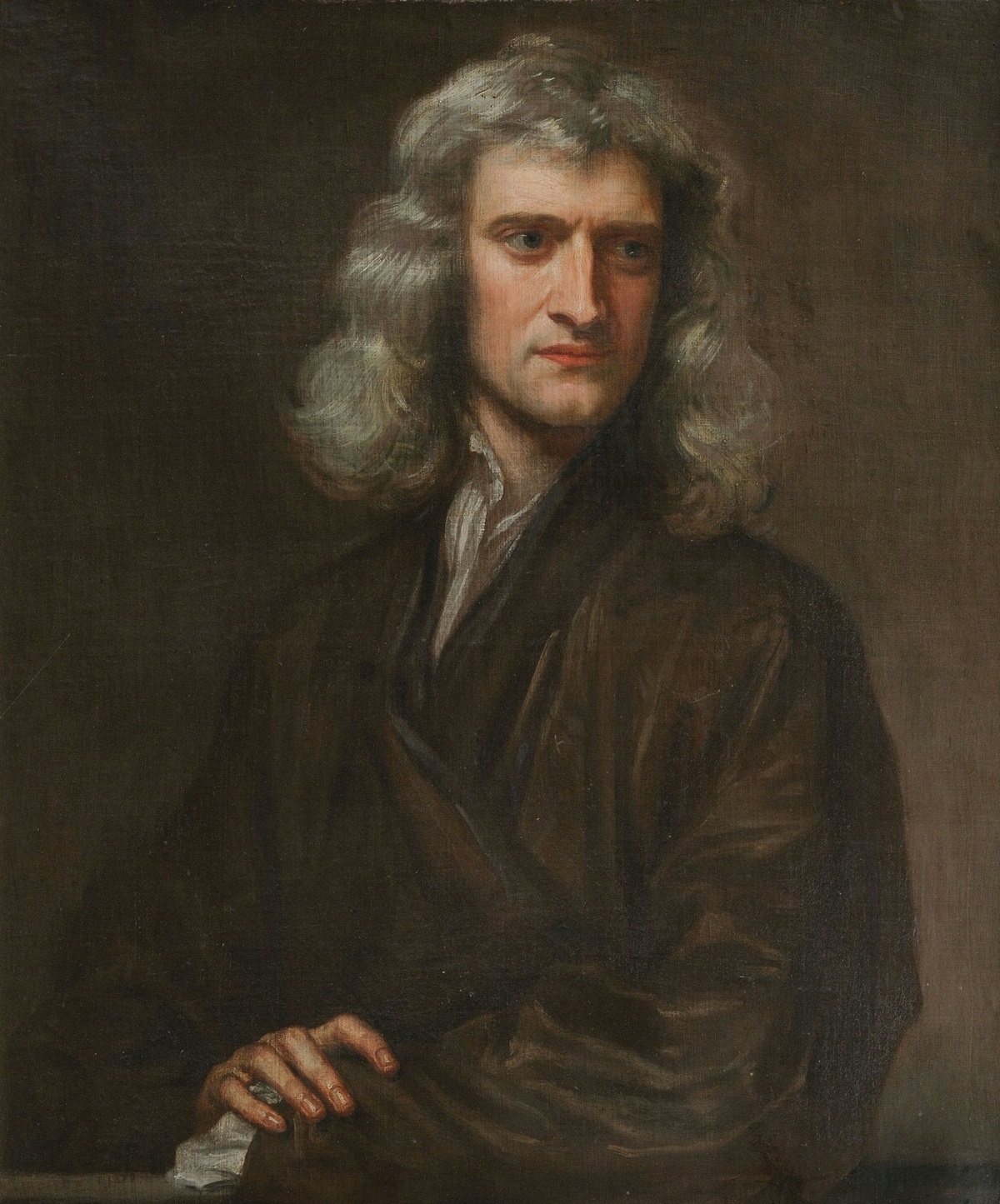
Isaac Newton was an English mathematician, physicist, astronomer, alchemist, theologian, and author (described in his time as a "natural philosopher"), widely recognised as one of the greatest mathematicians and physicists and among the most influential scientists of all time. He was a key figure in the philosophical revolution known as the Enlightenment. His book Philosophiæ Naturalis Principia Mathematica (Mathematical Principles of Natural Philosophy), first published in 1687, established classical mechanics. Newton also made seminal contributions to optics, and shares credit with German mathematician Gottfried Wilhelm Leibniz for developing infinitesimal calculus.
In the Principia, Newton formulated the laws of motion and universal gravitation that formed the dominant scientific viewpoint until it was superseded by the theory of relativity. Newton used his mathematical description of gravity to derive Kepler's laws of planetary motion, account for tides, the trajectories of comets, the precession of the equinoxes and other phenomena, eradicating doubt about the Solar System's heliocentricity. He demonstrated that the motion of objects on Earth and celestial bodies could be accounted for by the same principles. Newton's inference that the Earth is an oblate spheroid was later confirmed by the geodetic measurements of Maupertuis, La Condamine, and others, convincing most European scientists of the superiority of Newtonian mechanics over earlier systems.


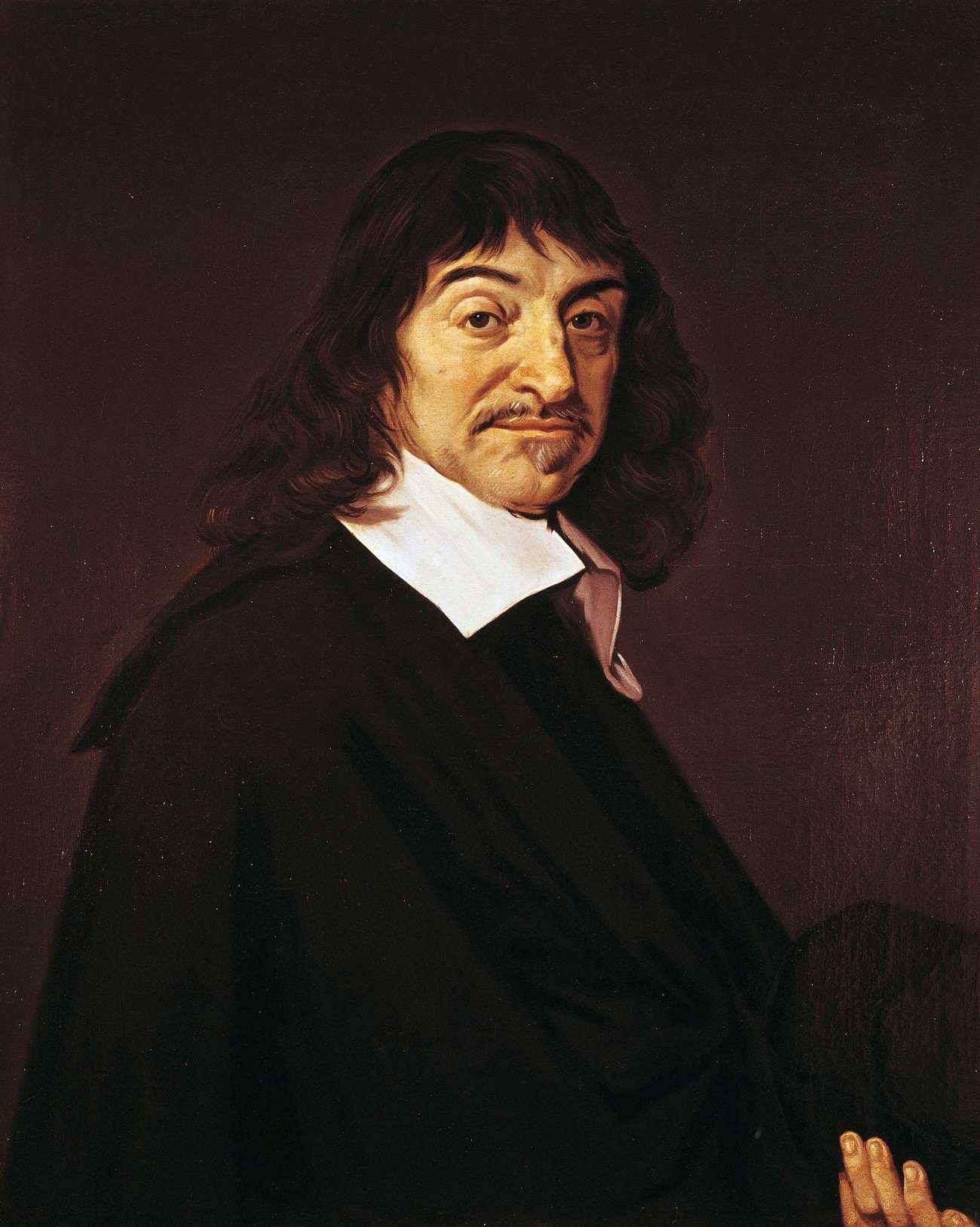
René Descartes was a French philosopher, mathematician, and natural scientist who is considered the founder of modern philosophy.
Descartes was a very versatile scientist: besides numerous philosophical reflections, he wrote works on optics, meteorology and geometry. Contemporaries noted his extensive knowledge in many sciences. Descartes owns the famous saying "I think, therefore I exist" (best known in the Latin formulation "Cogito, ergo sum", although it was originally written in French: "Je pense, donc je suis").
He developed a metaphysical dualism that radically distinguished between mind, whose essence is thought, and matter, whose essence is extension in three dimensions. Descartes' metaphysics is rationalistic, based on the postulation of innate ideas of mind, matter, and God, but his physics and physiology, based on sense experience, are mechanistic and empirical.
Unlike his scientific predecessors, who felt a holy awe at the incomprehensibility of the divine essence of the universe, Descartes admired the ability of the human mind to understand the cosmos and to generate happiness itself, and rejected the view that human beings were inherently unhappy and sinful. He believed that it was inappropriate to pray to God to change the state of things and the world; it was much more productive to change oneself.