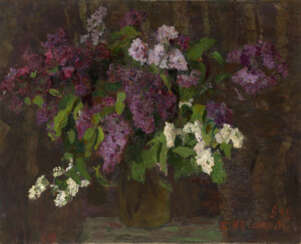
floral composition




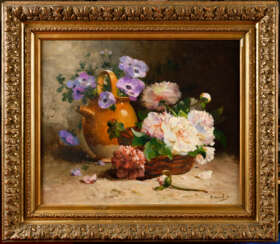

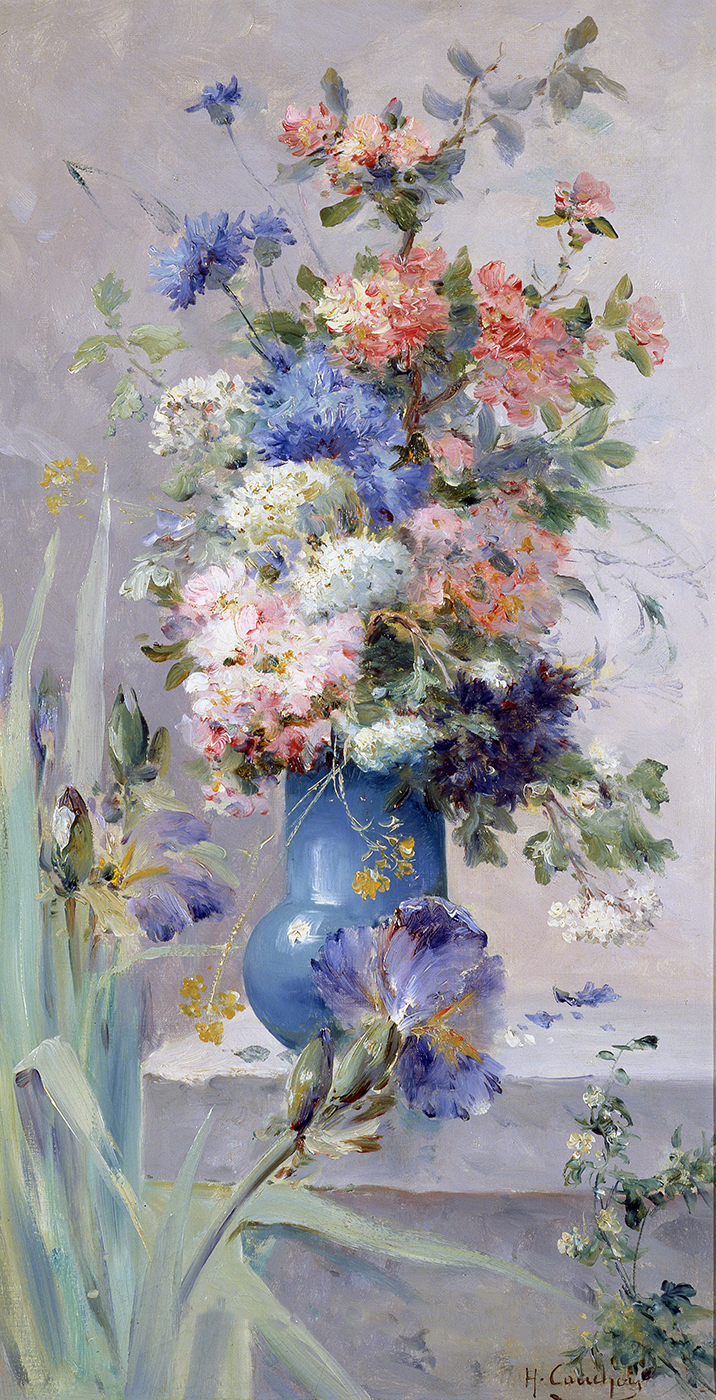
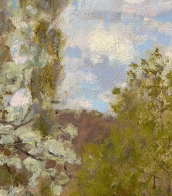
Eugène Henri Cauchois, a prominent French painter. He is celebrated for his enchanting floral still lifes, though he also dabbled in landscapes and seascapes. Eugène Henri Cauchois' journey in art began under the tutelage of master painters Ferdinand Duboc and Alexandre Cabanel. His style was significantly influenced by the Impressionist movement, characterized by soft, colorful, and lustrous compositions.
Eugène Henri Cauchois' technique involved layering paint with loose and fluid brush strokes, a method akin to that of the Impressionists. This approach allowed him to create vibrant canvases that stood out for their naturalism and intense color combinations. His talent was recognized early in his career, leading him to exhibit frequently at the Paris Salon from 1874. He received several accolades, including a Bronze medal in 1898 and 1900, and a Silver medal in 1904.
In the late 19th century, Eugène Henri Cauchois also ventured into large-scale decorative panel painting. His decorative works, just like his still lifes, were noted for their exquisite naturalism and bold color schemes. These works included commissions like the four panels representing the flowers of the four seasons for the École de filles de la 7ème arrondissement in Paris.
Eugène Henri Cauchois' work continues to be admired for its contribution to the tradition of still life and flower painting. His paintings are held in various public collections, such as in the museums of Chatellerault, Rouen, and Louviers. His legacy lives on, not just in the beauty of his art but also in the continued popularity and appreciation of still life as a significant art form.
For collectors and experts in art and antiques, the works of Eugène Henri Cauchois offer a glimpse into the world of French Impressionism and still life painting. His captivating floral compositions and skillful use of color and light make his pieces a prized addition to any collection.
If you are interested in staying informed about sales and auction events related to Eugène Henri Cauchois' art, consider signing up for updates. This subscription ensures that you are always in the know about opportunities to acquire pieces from this master of Impressionist still life.















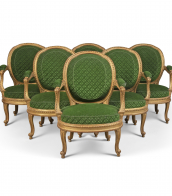
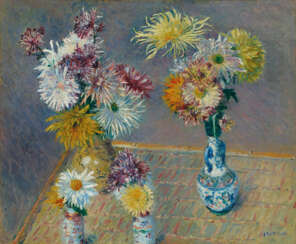

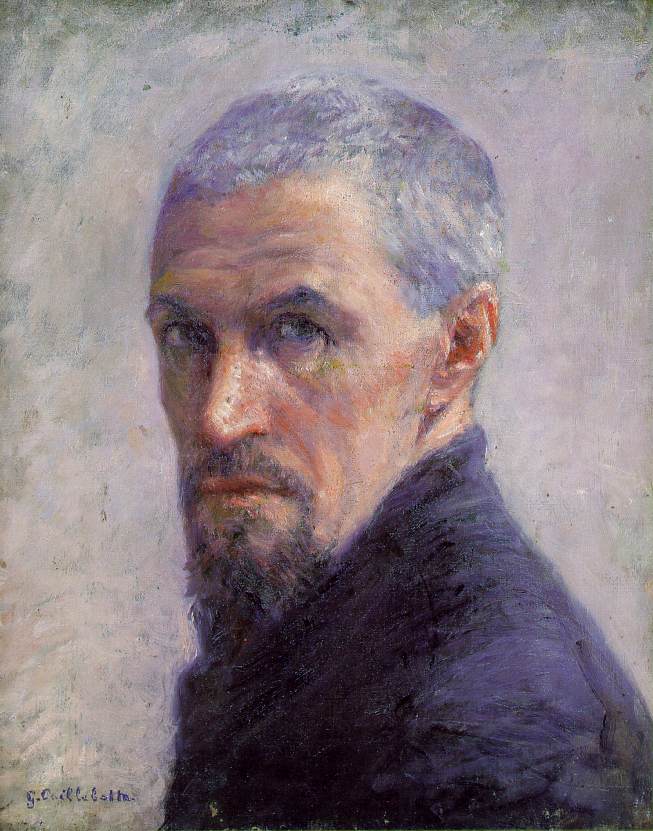
Gustave Caillebotte was a French Impressionist painter, collector, patron of art and impresario.
Caillebotte was born into a noble and wealthy family, educated as an engineer and lawyer, but became interested in painting and studied at the Paris School of Fine Arts. In 1874 he met Pierre-Auguste Renoir and Claude Monet and presented his work at Impressionist exhibitions. Over the next six years, Caillebotte became the chief organizer, promoter and financial sponsor of Impressionist exhibitions, and used his fortune to purchase works by other Impressionists, notably Monet, Renoir, Camille Pissarro, Paul Cézanne, Edgar Degas, Alfred Sisley and Berthe Morisot.
Caillebotte bequeathed his collection of paintings to the state, some of which later formed the basis of the Impressionist collection at the Musée d'Orsay.
In his paintings, Caillebotte combined in a unique synthesis of academic, realistic and impressionist styles. He painted many family scenes, interiors and landscapes, as well as domestic scenes and streets of Paris.









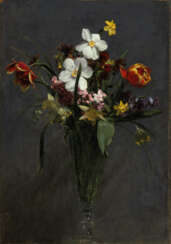

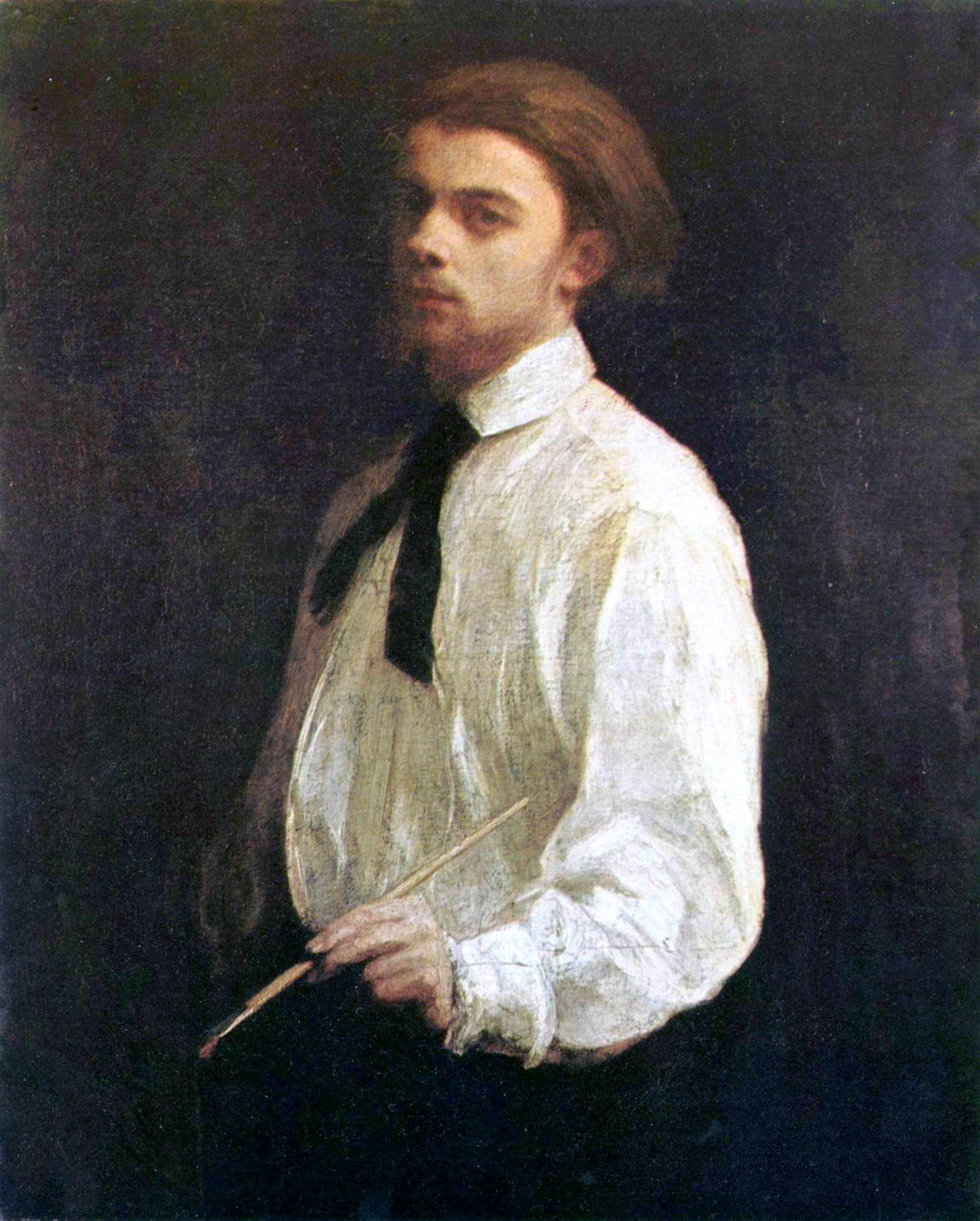
Henri Fantin-Latour was a French painter and lithographer renowned for his exquisite flower paintings and insightful group portraits of Parisian artists and writers. His artistic journey began in Grenoble, where he was born in 1836, but it flourished in Paris, where he moved at a young age to study art. Despite his associations with Impressionists like Édouard Manet and Claude Monet, Fantin-Latour carved his unique path, focusing on still life and portraiture rather than adopting the Impressionist style.
Henri Fantin-Latour's knack for capturing the essence of his subjects is evident in his group portraits, which were not just mere representations but insightful depictions of the artistic and literary circles of his time. His notable works like "A Studio at Les Batignolles" illustrate the camaraderie among artists like Manet, Renoir, and Monet, offering a window into the vibrant Parisian art scene of the 19th century. His still lifes, particularly his flower paintings, are celebrated for their realism and delicate precision, making them a favorite among collectors and art enthusiasts.
In addition to his painting, Henri Fantin-Latour's lithographs, inspired by classical music and imbued with a poetic and symbolic quality, reveal another dimension of his talent, showcasing his ability to transcend the boundaries of realism and delve into the realm of imagination.
For art collectors and experts, Henri Fantin-Latour's works offer a blend of technical mastery and a deep understanding of the interplay between art, music, and literature. His contributions to the art world are remembered and celebrated in museums around the globe, where his works continue to inspire and captivate audiences.
For those interested in exploring more about Henri Fantin-Latour's life and works, visiting exhibitions or keeping abreast of auctions featuring his art can provide valuable insights into his creative genius. To stay updated on related events and opportunities, consider subscribing to updates from art institutions or galleries specializing in 19th-century French art.


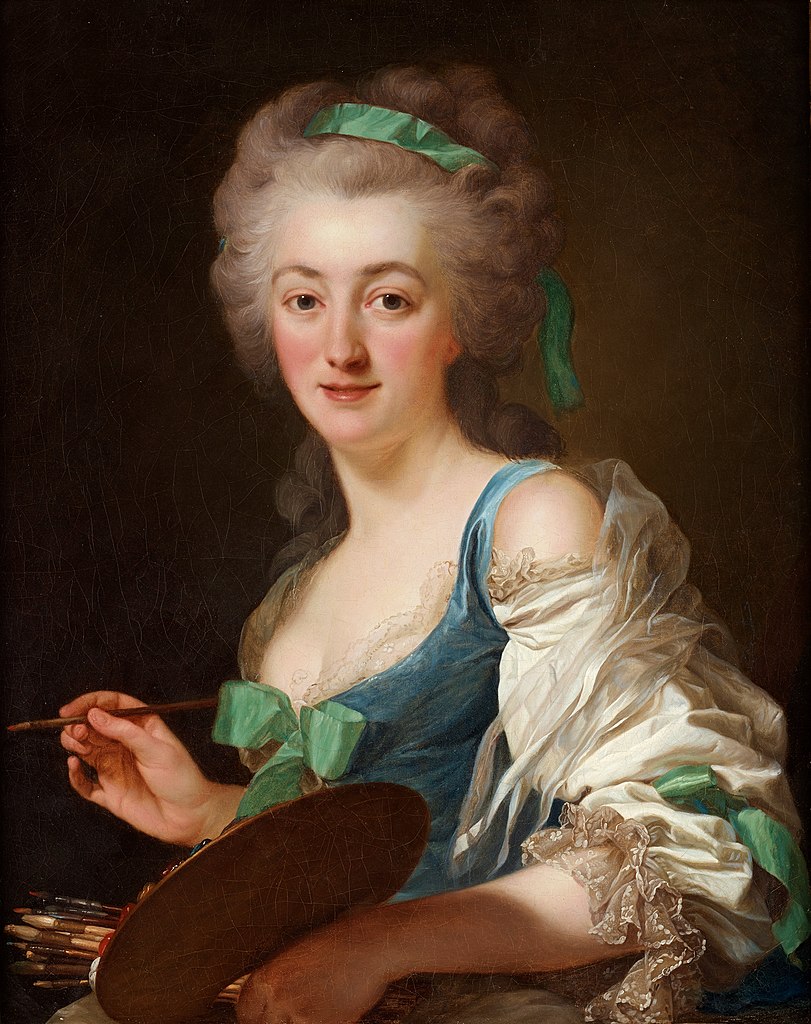
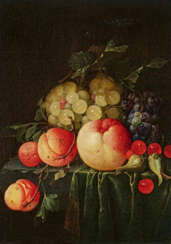
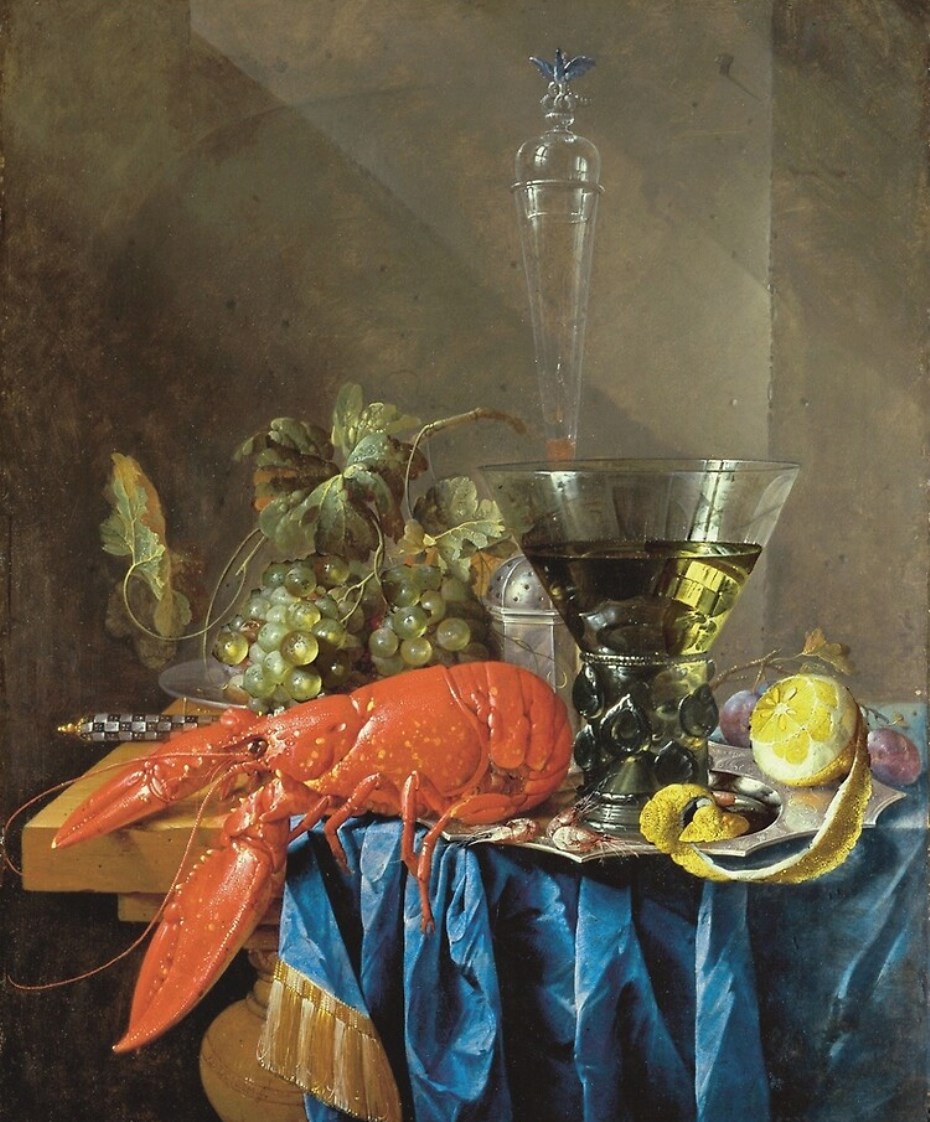
Anne Vallayer-Coster was a renowned French artist, celebrated for her exceptional still-life paintings that captivated 18th-century art enthusiasts, including the French Queen Marie Antoinette. Born into an artistic family in 1744, Vallayer-Coster's talent was evident early on, leading to her unanimous election into the prestigious Académie Royale at just 26 years old. Her works, characterized by their vibrant color, meticulous detail, and textural precision, often depicted bowls of fruit, game, shells, and flowers, showcasing the opulence of French aristocracy before the Revolution.
Vallayer-Coster's career was notable not only for her artistic achievements but also for her ability to navigate the male-dominated art world of her time. Despite the societal constraints on women artists, she gained the patronage of influential figures like Marie Antoinette and was one of the few women admitted to the Royal Academy of Painting and Sculpture. Her work received critical acclaim at the Salon, where she exhibited regularly from 1771 until 1817, and her still-lifes were praised for their sensuality, illusionistic perfection, and the rich, indulgent luxury they portrayed.
One of Vallayer-Coster's most ambitious works, Still Life with Flowers in an Alabaster Vase and Fruit (1783), exemplifies her unparalleled skill in capturing the soft textures of flowers and their harmonious arrangement. This masterpiece was hailed as such at the Salon of 1783 and is considered by Vallayer-Coster herself as her finest painting. Lost for nearly two centuries, it was recently rediscovered in an almost pristine state and is now part of the National Gallery of Art's collection, highlighting Vallayer-Coster's significant contributions to European art history.
Throughout her career, Vallayer-Coster produced more than 120 still lifes, always with a distinctive brilliance in color, earning her a place among the elite artists of her time. Despite facing challenges during the French Revolution due to her close association with the monarchy, she continued to exhibit her work and contribute to the art world until her death in 1818.
For collectors and experts in art and antiques, Anne Vallayer-Coster's legacy is a testament to her skill, resilience, and the impact of her work on the history of art. To stay updated on new product sales and auction events related to Anne Vallayer-Coster, sign up for updates that focus solely on this exceptional artist's contributions to the art world.
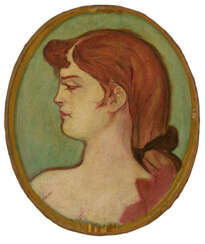

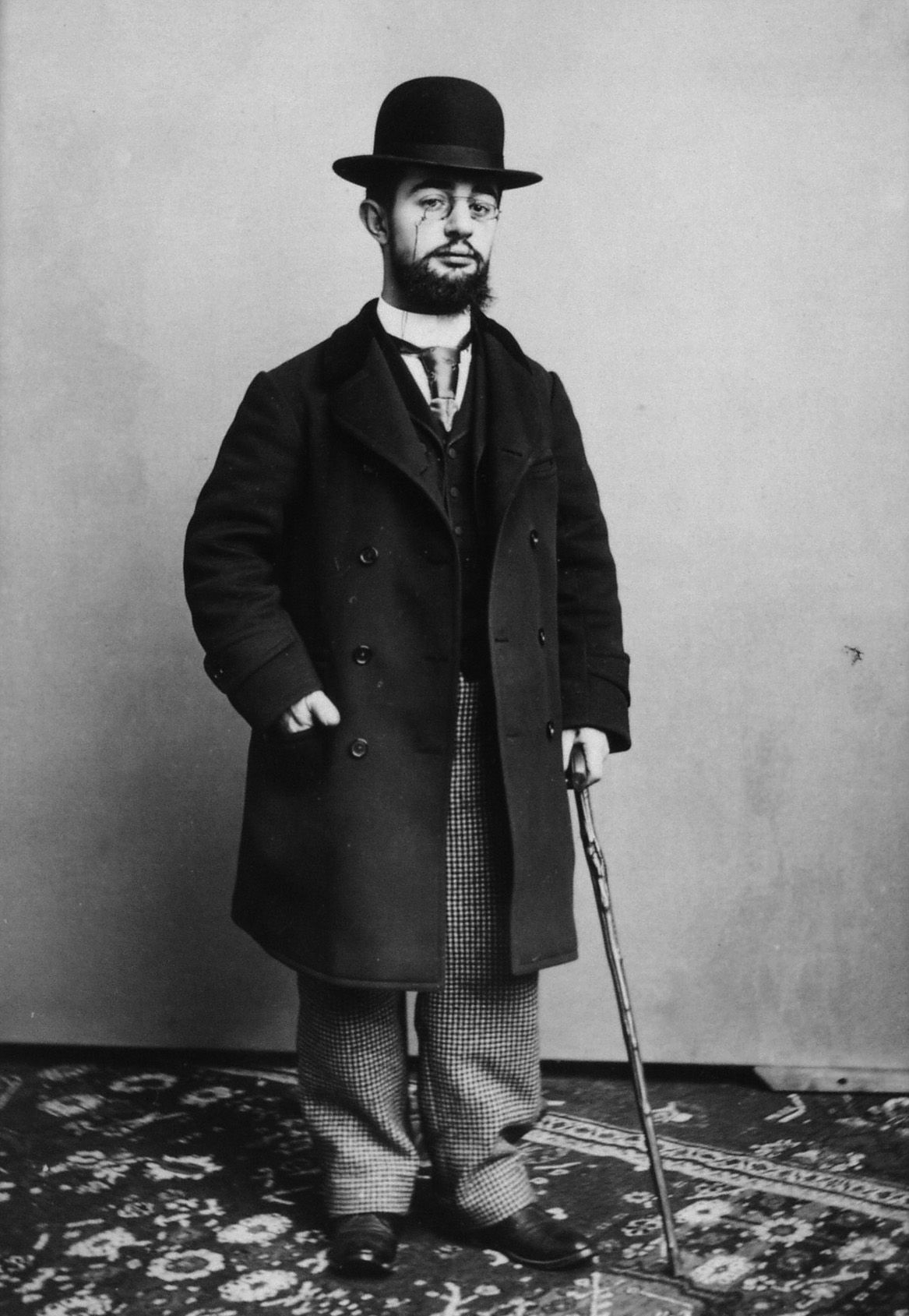
Henri de Toulouse-Lautrec was a distinguished French Post-Impressionist artist, renowned for his deep insights into Parisian nightlife and the world of entertainment in the 1890s. Born into an aristocratic family in Albi, France, Toulouse-Lautrec faced significant health challenges. He suffered from a rare condition, possibly pycnodysostosis, which stunted the growth of his legs following two fractures during his adolescence, leading to a notably short stature as an adult.
Despite his physical limitations, Toulouse-Lautrec immersed himself in art, becoming a key figure in the Post-Impressionist movement alongside artists like Paul Cézanne and Vincent van Gogh. He is particularly celebrated for his vibrant and expressive depictions of the bohemian lifestyle in late 19th-century Paris, often featuring scenes from brothels and nightlife venues. His unique style combined elements of Art Nouveau and lithography, as evidenced in famous works such as "Moulin Rouge: La Goulue" and "At the Moulin Rouge: The Dance".
Toulouse-Lautrec's work offers a window into the Parisian entertainment scene of his time, marked by a vivid use of color and a candid portrayal of his subjects. His ability to capture the essence of Parisian society, from dancers to prostitutes, in an era of great artistic and cultural dynamism, makes his work particularly valuable to art collectors and experts.
For those interested in the art and life of Henri de Toulouse-Lautrec, staying informed about sales and auction events is essential. Sign up for updates to receive the latest news on pieces by Toulouse-Lautrec available for purchase or auction. This subscription focuses exclusively on new product sales and auction events related to Toulouse-Lautrec, ensuring that enthusiasts and collectors don't miss out on any opportunity to acquire pieces from this iconic artist.