

get onto
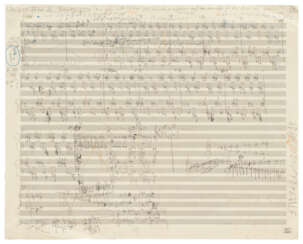

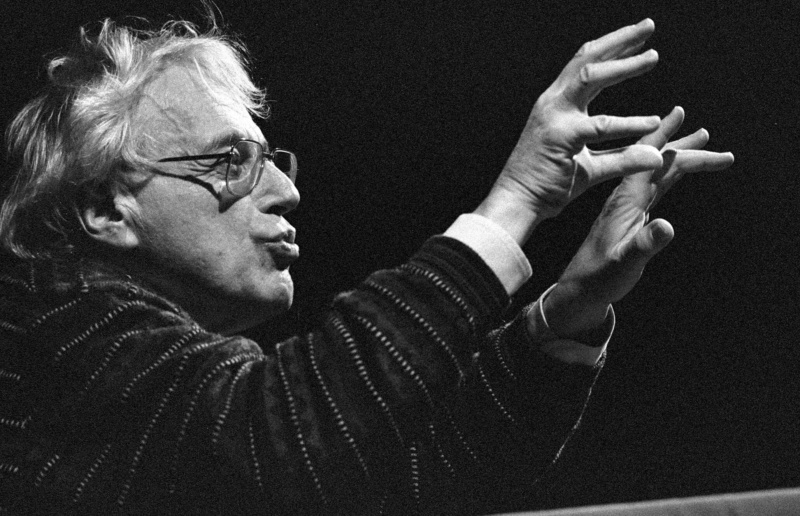
György Ligeti, full name György Sándor Ligeti, was a Hungarian and Austrian composer and musicologist.
Ligeti was born into a Jewish family, but his mother tongue was Hungarian and from an early age he was exposed to Romanian and Hungarian folk music. His first significant work was the Romanian Concerto, which he wrote in 1951. In 1956 Ligeti emigrated from Hungary to Austria, receiving Austrian citizenship in 1968.
In 1957 in Cologne, Ligeti met the experimental composers Karlheinz Stockhausen and Gottfried König and worked with them in the field of academic electronic music, but soon switched to instrumental music. He gained recognition from the Western avant-garde in 1961 with his work Visions and others, in which he used sonorics and the micropolyphony technique he had invented. In 1965 Ligeti completed one of his major works, Requiem.
During his life, Ligeti changed his compositional style and technique several times, ranging from electronic music and sonoricism (1950s and 1960s) to neoromanticism (1980s and 1990s). He has also written many theoretical articles on new currents in music.


![Telephoto panorama [Mosaic] of the far wall of Hadley Canyon showing the “Trophy Point” promontory dividing the two arms of the rille, station 10, July 26-August 7, 1971, EVA 3](/assets/image/picture_1220939/98314/7d83e9d9db5b4adf12875f9c4bf292e21604656800jpg__fix_374_244.jpeg)
![Telephoto panorama [Mosaic] of the far wall of Hadley Canyon showing the “Trophy Point” promontory dividing the two arms of the rille, station 10, July 26-August 7, 1971, EVA 3](https://veryimportantlot.com/assets/image/picture_1220939/98314/7d83e9d9db5b4adf12875f9c4bf292e21604656800jpg__fix_374_244.jpeg)




















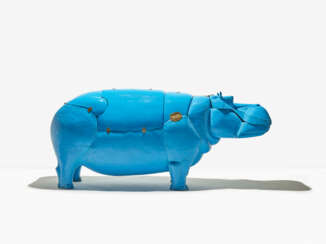

François-Xavier Lalanne was a French painter and sculptor. He studied sculpture, drawing and painting at the Académie Julian. Since the 1960s he has worked as a couple with his wife Claude Lalanne.


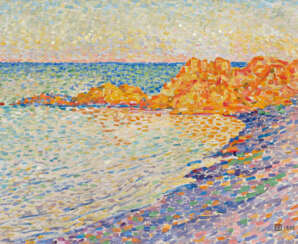

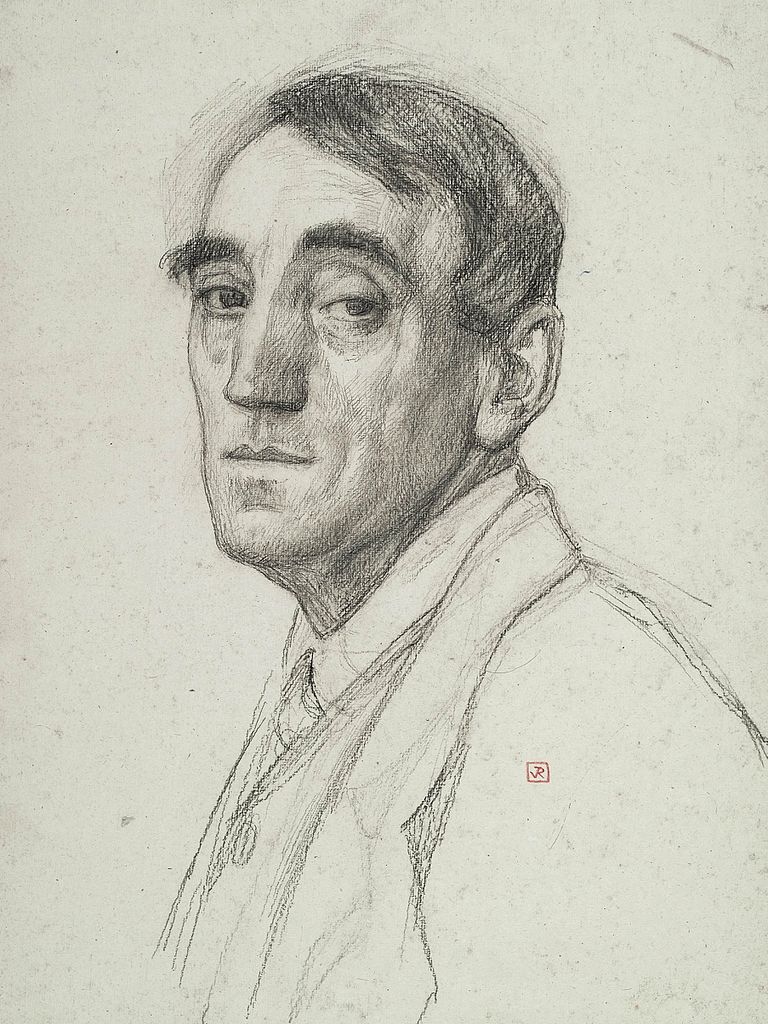
Théo van Rysselberghe, a prominent Belgian painter, was a key figure in the Neo-Impressionist movement, particularly known for his adoption of the pointillist technique. Born in Ghent, Belgium, in 1862, van Rysselberghe played a crucial role in the artistic circle Les XX, a group of avant-garde artists who sought to break away from traditional academic art norms. His early works displayed an Impressionist influence, which evolved significantly after he encountered Georges Seurat's pointillist masterpiece at an Impressionist exhibition in Paris in 1886.
Van Rysselberghe's career saw a significant shift after this encounter, as he embraced pointillism, a technique involving the application of small, distinct dots of color to form an image. His mastery in this style is evident in his landscapes and portraiture, where he employed vibrant colors and meticulous attention to light and detail. His work during this period is considered the pinnacle of his artistic achievements, showcasing his talent not only in landscapes but also in pointillist portraiture, a genre he significantly contributed to within the Neo-Impressionist movement.
Despite his success and contributions to pointillism, Théo van Rysselberghe eventually moved away from this technique around 1904, exploring other artistic expressions. Throughout his career, he remained an influential figure in the Belgian art scene, his works continuing to inspire and attract attention for their innovative approach and technical prowess.
For art collectors and enthusiasts, delving into Théo van Rysselberghe's oeuvre offers a fascinating glimpse into the evolution of Neo-Impressionism and pointillism, highlighting the artist's significant role in these movements. To stay updated on sales and auctions featuring van Rysselberghe's works, signing up for updates can provide exclusive insights into opportunities to acquire pieces by this remarkable artist.
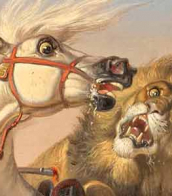
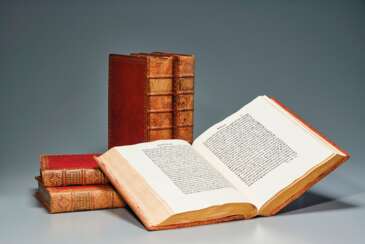


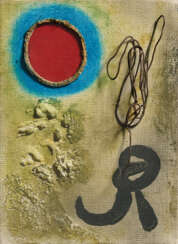

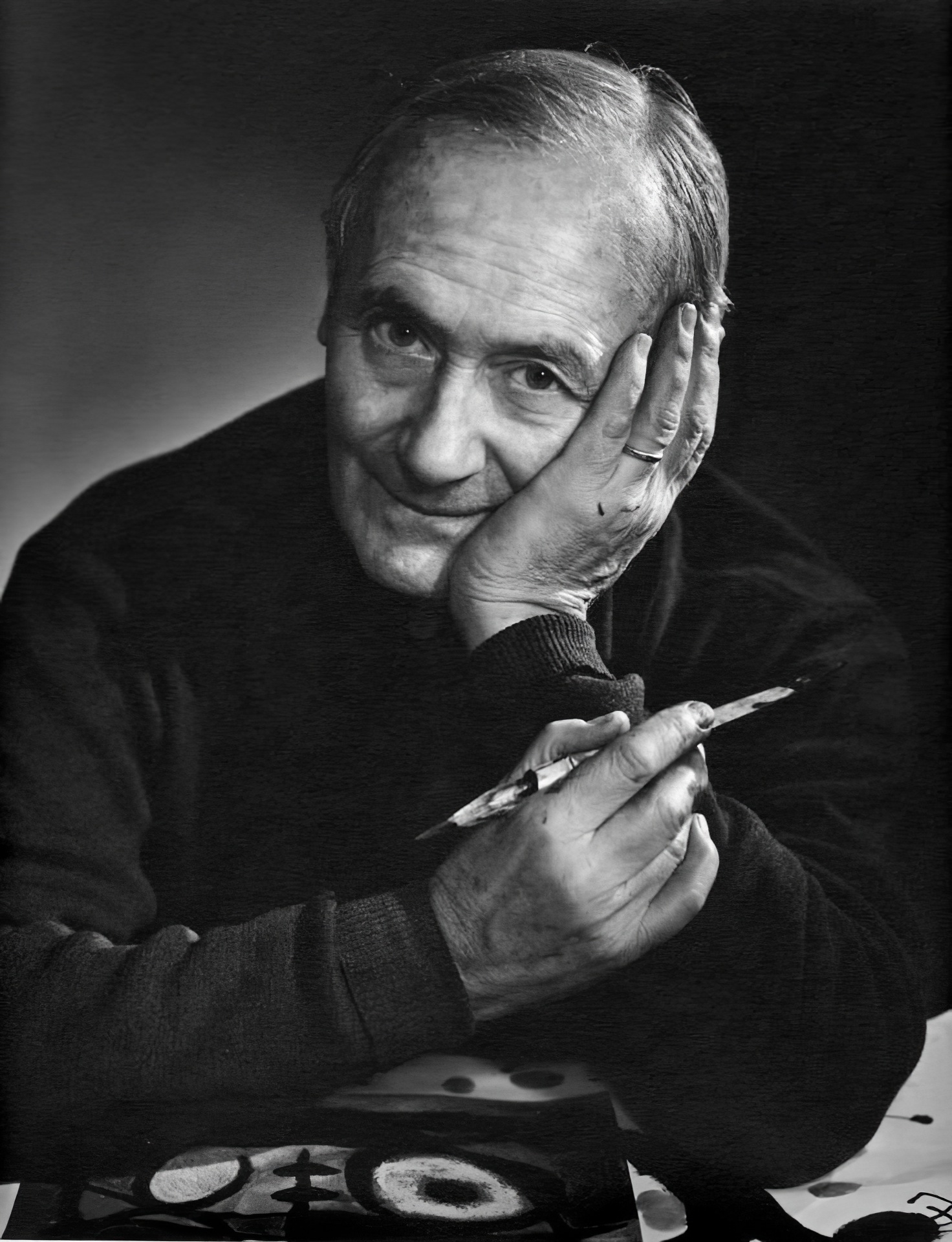
Joan Miró, a celebrated Spanish artist, was a master in painting, sculpture, and ceramics, renowned for his unique style that blurred the lines between Surrealism, Fauvism, and Expressionism. Born in Barcelona to a family of a goldsmith and a watchmaker, Miró grew up immersed in the rich cultural heritage of the Barri Gòtic neighborhood. His artistic journey began with drawing classes at the age of seven and continued at the prestigious La Llotja art academy. Despite an initial venture into the business world, Miró's passion for art prevailed, leading him to abandon his clerical career after a nervous breakdown.
Miró's work is noted for its exploration of the subconscious, often depicting a childlike perspective. This approach was both a critique of traditional painting methods and a means of expressing Catalan pride. His art, challenging to categorize, often featured symbolic elements and nationalistic qualities. One of his notable early works, "The Farm," reflects a transition to a more individual style, blending elements of his Catalan roots with broader artistic influences. This piece, later purchased by Ernest Hemingway, encapsulated the essence of Spain in its imagery.
In Paris, Miró joined the Surrealist movement in 1924, where his work began to reflect the influence of automatism, emphasizing spontaneous, automatic, or subconscious creation. He experimented with various mediums, including painting-poetry and collage, and even ventured into set and costume design for Sergei Diaghilev's Ballets Russes.
During World War II, Miró remained in Spain, and his work from this period, including the 22 Constellations series, reflected an interest in the night, music, and stars. His forms became increasingly abstracted, and he experimented with various techniques, often incorporating primary colors and evocative titles.
Miró's career spanned several decades, during which he continually evolved his style and explored new mediums. His contributions to art were recognized with numerous awards and retrospectives, including a major career retrospective at MoMA in 1941 and the Spanish Gold Medal for Fine Arts in 1980. Among his last major works was a tapestry for the World Trade Center in New York City, created in 1974.
For art collectors and enthusiasts, Joan Miró remains a figure of immense interest, not only for his distinct style and contributions to Surrealism but also for his ability to blend poetic imagery with political commentary. To stay updated on new product sales and auction events related to Joan Miró, sign up for our updates and immerse yourself in the world of this extraordinary artist.



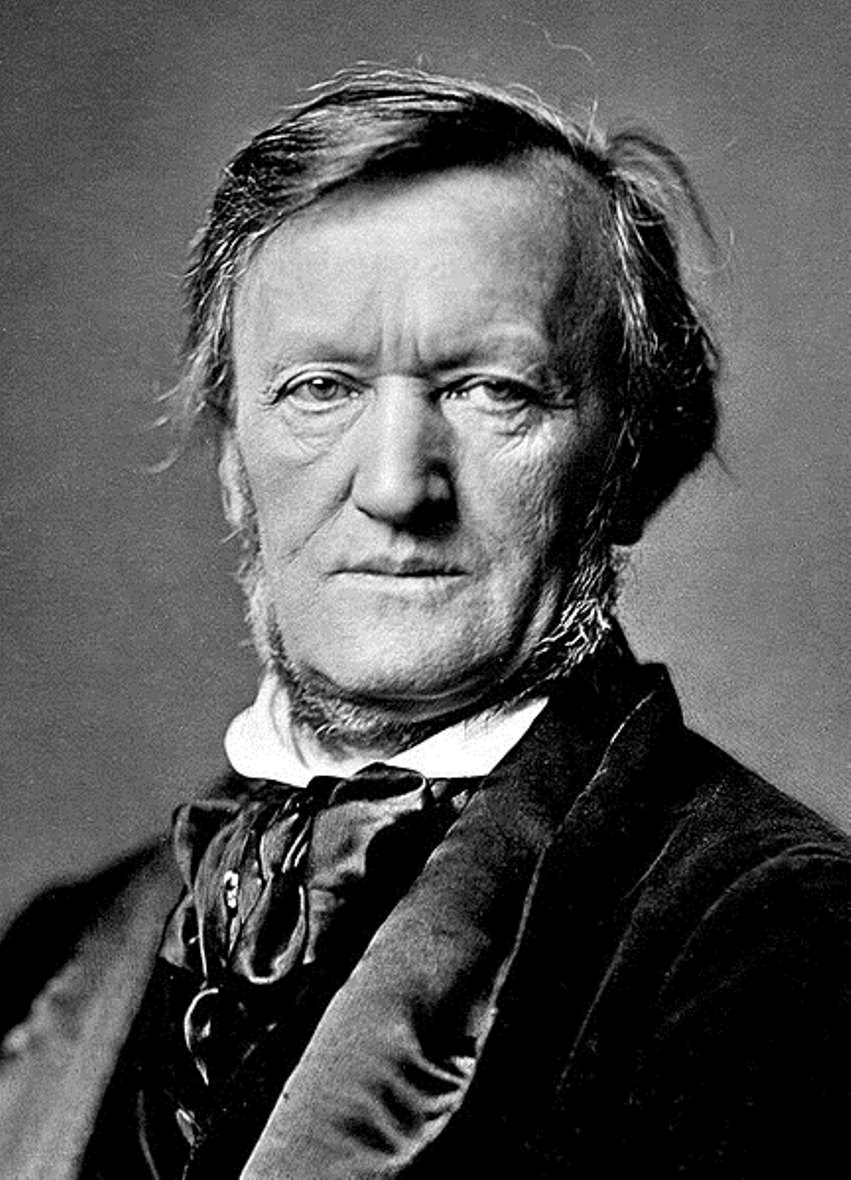
Wilhelm Richard Wagner was a German pioneering composer, conductor and opera reformer.
His first proper Symphony in C major was performed at the Leipzig Gewandhaus concerts in 1833. Wagner lived in a colony of poor German artists and made his living in music journalism. Nevertheless, in 1841 he wrote his first representative opera, The Flying Dutchman, based on the legend of a ship captain doomed to sail forever. In 1842 his Rienzi was triumphantly performed in Dresden, after which Wagner was appointed conductor of the court opera and held this position until 1849.
In 1848-49 Wagner became involved in the German Revolution, wrote a number of articles in support of it, and took an active part in the Dresden Uprising of 1849. When the uprising failed, he was forced to flee Germany. His subsequent years were occupied mainly with writing theoretical treatises on philosophy and music. Wagner held anti-Semitic and Nazi views. And reflecting on the future of music, he predicted the disappearance of opera as an artificial entertainment for the elite and the emergence of a new kind of musical stage work for the people, expressing the self-realization of free humanity. This new work was later called "musical drama."
By 1857 his style had been enriched with new interpretations, and Wagner had composed "Rheingold," "Die Walküre," and two acts of "Siegfried." By 1864, however, unwise financial habits had driven him into debt and ruin, and he was forced to flee from prison to Stuttgart. He was rescued by King Louis II, an ardent admirer of Wagner's work. Under his patronage for six years in Munich, the composer's operas were successfully staged. The King also practically ensured him a trouble-free life, thanks to his support Wagner built his own opera house (Bayreuther Festspielhaus), in which many new constructive ideas were realized. The premiere of "The Ring" and "Parsifal" took place here.
As a result of all Wagner's creative innovations and methods, a new kind of art emerged, the distinctive feature of which was a deep and complex symbolism, operating in three inseparable planes - dramatic, verbal and musical. He had a significant influence on European musical culture, especially on the development of opera and symphonic genres.
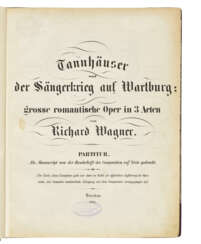
Richard Wagner's major works include The Flying Dutchman (1843), Tannhäuser (1845), Lohengrin (1850), Tristan und Isolde (1865), Parsifal (1882), and his great tetralogy, The Ring of the Nibelung (1869-76).
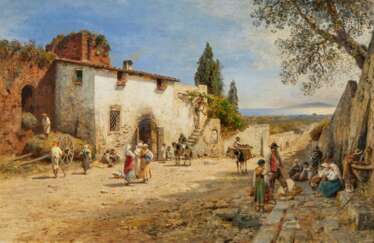

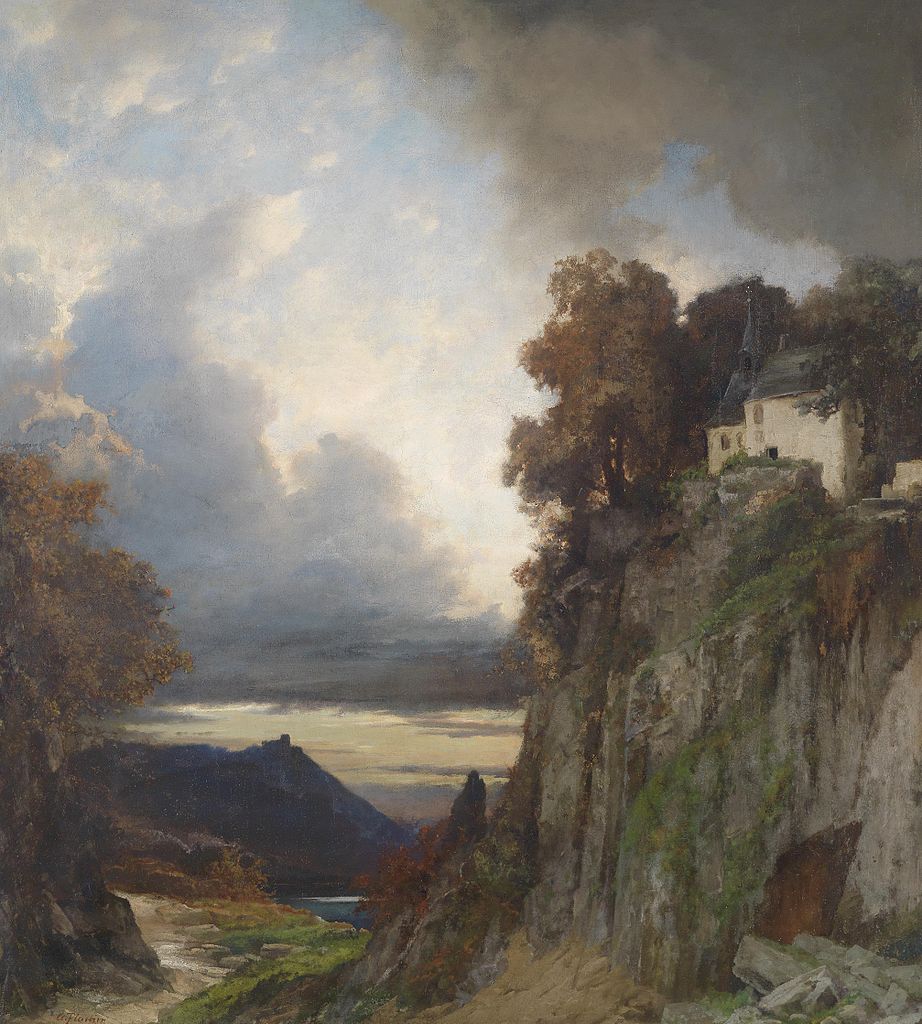
Albert Flamm was a German artist of the Düsseldorf school. He studied architecture at the Dusseldorf Academy of Art and in Antwerp. In 1841 he turned to painting and became a pupil of Andreas Achenbach. In 1848 Flamm became one of the founders of the Malkasten artists' association.
Albert Flamm painted mainly Italian landscapes, recognised for their truthfulness of nature, their vivid colours and their virtuosic treatments. He often chose an elevated viewing position to be able to create wide panoramic perspectives in warm, bright sunlight and with finely rendered detail.
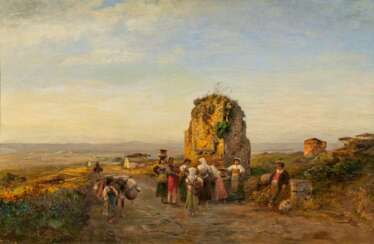

Albert Flamm was a German artist of the Düsseldorf school. He studied architecture at the Dusseldorf Academy of Art and in Antwerp. In 1841 he turned to painting and became a pupil of Andreas Achenbach. In 1848 Flamm became one of the founders of the Malkasten artists' association.
Albert Flamm painted mainly Italian landscapes, recognised for their truthfulness of nature, their vivid colours and their virtuosic treatments. He often chose an elevated viewing position to be able to create wide panoramic perspectives in warm, bright sunlight and with finely rendered detail.
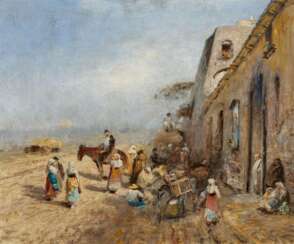

Albert Flamm was a German artist of the Düsseldorf school. He studied architecture at the Dusseldorf Academy of Art and in Antwerp. In 1841 he turned to painting and became a pupil of Andreas Achenbach. In 1848 Flamm became one of the founders of the Malkasten artists' association.
Albert Flamm painted mainly Italian landscapes, recognised for their truthfulness of nature, their vivid colours and their virtuosic treatments. He often chose an elevated viewing position to be able to create wide panoramic perspectives in warm, bright sunlight and with finely rendered detail.
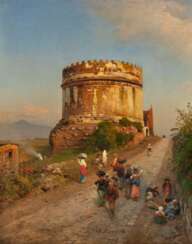

Albert Flamm was a German artist of the Düsseldorf school. He studied architecture at the Dusseldorf Academy of Art and in Antwerp. In 1841 he turned to painting and became a pupil of Andreas Achenbach. In 1848 Flamm became one of the founders of the Malkasten artists' association.
Albert Flamm painted mainly Italian landscapes, recognised for their truthfulness of nature, their vivid colours and their virtuosic treatments. He often chose an elevated viewing position to be able to create wide panoramic perspectives in warm, bright sunlight and with finely rendered detail.
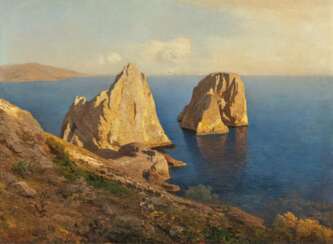

Albert Flamm was a German artist of the Düsseldorf school. He studied architecture at the Dusseldorf Academy of Art and in Antwerp. In 1841 he turned to painting and became a pupil of Andreas Achenbach. In 1848 Flamm became one of the founders of the Malkasten artists' association.
Albert Flamm painted mainly Italian landscapes, recognised for their truthfulness of nature, their vivid colours and their virtuosic treatments. He often chose an elevated viewing position to be able to create wide panoramic perspectives in warm, bright sunlight and with finely rendered detail.