hanne
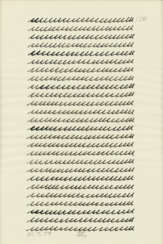

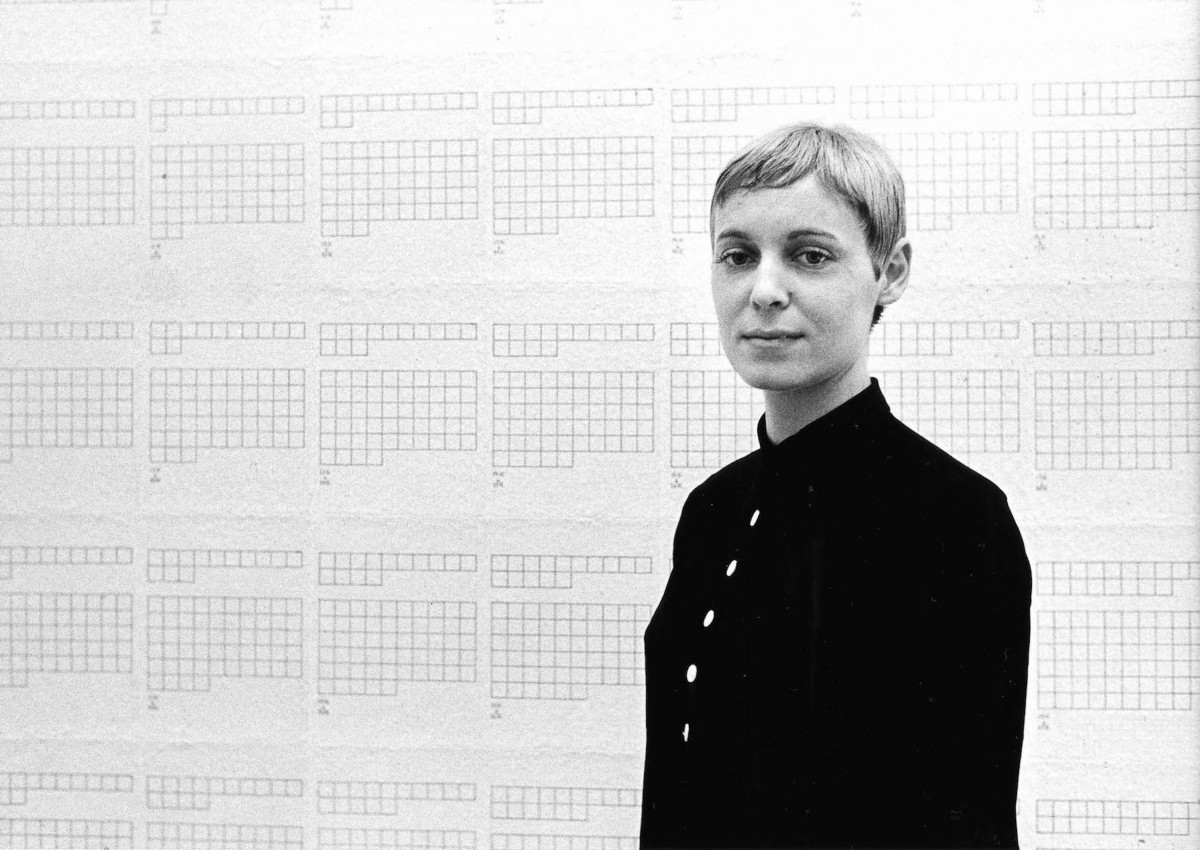
Hanne Darboven was a German conceptual artist known for her large-scale installations, drawings, and writings that explore the intersections of mathematics, language, and time.
Darboven studied at the Hochschule für Bildende Künste in Hamburg. In the 1960s, she became associated with the Conceptual Art movement, creating works that often involved systems of numerical and textual notation.
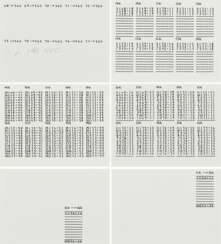
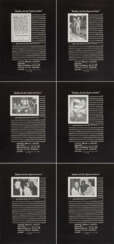
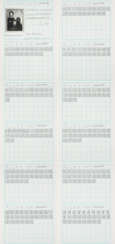
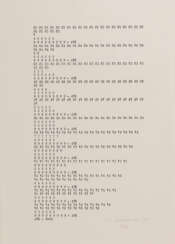
In the 1970s, Darboven began to produce her signature installations, which combined writing, drawing, and found objects to create immersive environments that explored complex systems of meaning and structure. One of her most famous works is "Kulturgeschichte 1880-1983", a monumental installation consisting of 1,590 framed sheets of paper, each containing a series of numbers, letters, and symbols that chart the course of modern history.
Throughout her career, Darboven continued to explore the relationship between language, numbers, and time, often drawing inspiration from her own life and experiences. She exhibited her work widely in Europe and the United States, and was the subject of numerous retrospectives and solo exhibitions.
Her legacy as a pioneering conceptual artist continues to be recognized and celebrated by the art world today.
.

Hanne Darboven was a German conceptual artist known for her large-scale installations, drawings, and writings that explore the intersections of mathematics, language, and time.
Darboven studied at the Hochschule für Bildende Künste in Hamburg. In the 1960s, she became associated with the Conceptual Art movement, creating works that often involved systems of numerical and textual notation.
In the 1970s, Darboven began to produce her signature installations, which combined writing, drawing, and found objects to create immersive environments that explored complex systems of meaning and structure. One of her most famous works is "Kulturgeschichte 1880-1983", a monumental installation consisting of 1,590 framed sheets of paper, each containing a series of numbers, letters, and symbols that chart the course of modern history.
Throughout her career, Darboven continued to explore the relationship between language, numbers, and time, often drawing inspiration from her own life and experiences. She exhibited her work widely in Europe and the United States, and was the subject of numerous retrospectives and solo exhibitions.
Her legacy as a pioneering conceptual artist continues to be recognized and celebrated by the art world today.
.



Hanne Darboven was a German conceptual artist known for her large-scale installations, drawings, and writings that explore the intersections of mathematics, language, and time.
Darboven studied at the Hochschule für Bildende Künste in Hamburg. In the 1960s, she became associated with the Conceptual Art movement, creating works that often involved systems of numerical and textual notation.
In the 1970s, Darboven began to produce her signature installations, which combined writing, drawing, and found objects to create immersive environments that explored complex systems of meaning and structure. One of her most famous works is "Kulturgeschichte 1880-1983", a monumental installation consisting of 1,590 framed sheets of paper, each containing a series of numbers, letters, and symbols that chart the course of modern history.
Throughout her career, Darboven continued to explore the relationship between language, numbers, and time, often drawing inspiration from her own life and experiences. She exhibited her work widely in Europe and the United States, and was the subject of numerous retrospectives and solo exhibitions.
Her legacy as a pioneering conceptual artist continues to be recognized and celebrated by the art world today.
.
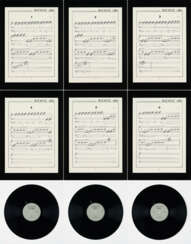

Hanne Darboven was a German conceptual artist known for her large-scale installations, drawings, and writings that explore the intersections of mathematics, language, and time.
Darboven studied at the Hochschule für Bildende Künste in Hamburg. In the 1960s, she became associated with the Conceptual Art movement, creating works that often involved systems of numerical and textual notation.
In the 1970s, Darboven began to produce her signature installations, which combined writing, drawing, and found objects to create immersive environments that explored complex systems of meaning and structure. One of her most famous works is "Kulturgeschichte 1880-1983", a monumental installation consisting of 1,590 framed sheets of paper, each containing a series of numbers, letters, and symbols that chart the course of modern history.
Throughout her career, Darboven continued to explore the relationship between language, numbers, and time, often drawing inspiration from her own life and experiences. She exhibited her work widely in Europe and the United States, and was the subject of numerous retrospectives and solo exhibitions.
Her legacy as a pioneering conceptual artist continues to be recognized and celebrated by the art world today.
.

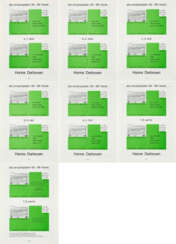

Hanne Darboven was a German conceptual artist known for her large-scale installations, drawings, and writings that explore the intersections of mathematics, language, and time.
Darboven studied at the Hochschule für Bildende Künste in Hamburg. In the 1960s, she became associated with the Conceptual Art movement, creating works that often involved systems of numerical and textual notation.
In the 1970s, Darboven began to produce her signature installations, which combined writing, drawing, and found objects to create immersive environments that explored complex systems of meaning and structure. One of her most famous works is "Kulturgeschichte 1880-1983", a monumental installation consisting of 1,590 framed sheets of paper, each containing a series of numbers, letters, and symbols that chart the course of modern history.
Throughout her career, Darboven continued to explore the relationship between language, numbers, and time, often drawing inspiration from her own life and experiences. She exhibited her work widely in Europe and the United States, and was the subject of numerous retrospectives and solo exhibitions.
Her legacy as a pioneering conceptual artist continues to be recognized and celebrated by the art world today.
.

Hanne Darboven was a German conceptual artist known for her large-scale installations, drawings, and writings that explore the intersections of mathematics, language, and time.
Darboven studied at the Hochschule für Bildende Künste in Hamburg. In the 1960s, she became associated with the Conceptual Art movement, creating works that often involved systems of numerical and textual notation.
In the 1970s, Darboven began to produce her signature installations, which combined writing, drawing, and found objects to create immersive environments that explored complex systems of meaning and structure. One of her most famous works is "Kulturgeschichte 1880-1983", a monumental installation consisting of 1,590 framed sheets of paper, each containing a series of numbers, letters, and symbols that chart the course of modern history.
Throughout her career, Darboven continued to explore the relationship between language, numbers, and time, often drawing inspiration from her own life and experiences. She exhibited her work widely in Europe and the United States, and was the subject of numerous retrospectives and solo exhibitions.
Her legacy as a pioneering conceptual artist continues to be recognized and celebrated by the art world today.
.


Hanne Darboven was a German conceptual artist known for her large-scale installations, drawings, and writings that explore the intersections of mathematics, language, and time.
Darboven studied at the Hochschule für Bildende Künste in Hamburg. In the 1960s, she became associated with the Conceptual Art movement, creating works that often involved systems of numerical and textual notation.
In the 1970s, Darboven began to produce her signature installations, which combined writing, drawing, and found objects to create immersive environments that explored complex systems of meaning and structure. One of her most famous works is "Kulturgeschichte 1880-1983", a monumental installation consisting of 1,590 framed sheets of paper, each containing a series of numbers, letters, and symbols that chart the course of modern history.
Throughout her career, Darboven continued to explore the relationship between language, numbers, and time, often drawing inspiration from her own life and experiences. She exhibited her work widely in Europe and the United States, and was the subject of numerous retrospectives and solo exhibitions.
Her legacy as a pioneering conceptual artist continues to be recognized and celebrated by the art world today.
.

Hanne Darboven was a German conceptual artist known for her large-scale installations, drawings, and writings that explore the intersections of mathematics, language, and time.
Darboven studied at the Hochschule für Bildende Künste in Hamburg. In the 1960s, she became associated with the Conceptual Art movement, creating works that often involved systems of numerical and textual notation.
In the 1970s, Darboven began to produce her signature installations, which combined writing, drawing, and found objects to create immersive environments that explored complex systems of meaning and structure. One of her most famous works is "Kulturgeschichte 1880-1983", a monumental installation consisting of 1,590 framed sheets of paper, each containing a series of numbers, letters, and symbols that chart the course of modern history.
Throughout her career, Darboven continued to explore the relationship between language, numbers, and time, often drawing inspiration from her own life and experiences. She exhibited her work widely in Europe and the United States, and was the subject of numerous retrospectives and solo exhibitions.
Her legacy as a pioneering conceptual artist continues to be recognized and celebrated by the art world today.
.

Hanne Darboven was a German conceptual artist known for her large-scale installations, drawings, and writings that explore the intersections of mathematics, language, and time.
Darboven studied at the Hochschule für Bildende Künste in Hamburg. In the 1960s, she became associated with the Conceptual Art movement, creating works that often involved systems of numerical and textual notation.
In the 1970s, Darboven began to produce her signature installations, which combined writing, drawing, and found objects to create immersive environments that explored complex systems of meaning and structure. One of her most famous works is "Kulturgeschichte 1880-1983", a monumental installation consisting of 1,590 framed sheets of paper, each containing a series of numbers, letters, and symbols that chart the course of modern history.
Throughout her career, Darboven continued to explore the relationship between language, numbers, and time, often drawing inspiration from her own life and experiences. She exhibited her work widely in Europe and the United States, and was the subject of numerous retrospectives and solo exhibitions.
Her legacy as a pioneering conceptual artist continues to be recognized and celebrated by the art world today.
.
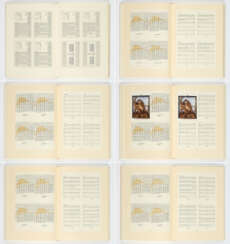

Hanne Darboven was a German conceptual artist known for her large-scale installations, drawings, and writings that explore the intersections of mathematics, language, and time.
Darboven studied at the Hochschule für Bildende Künste in Hamburg. In the 1960s, she became associated with the Conceptual Art movement, creating works that often involved systems of numerical and textual notation.
In the 1970s, Darboven began to produce her signature installations, which combined writing, drawing, and found objects to create immersive environments that explored complex systems of meaning and structure. One of her most famous works is "Kulturgeschichte 1880-1983", a monumental installation consisting of 1,590 framed sheets of paper, each containing a series of numbers, letters, and symbols that chart the course of modern history.
Throughout her career, Darboven continued to explore the relationship between language, numbers, and time, often drawing inspiration from her own life and experiences. She exhibited her work widely in Europe and the United States, and was the subject of numerous retrospectives and solo exhibitions.
Her legacy as a pioneering conceptual artist continues to be recognized and celebrated by the art world today.
.
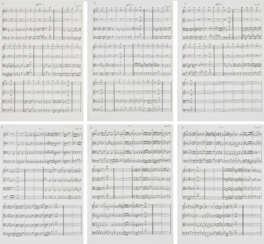

Hanne Darboven was a German conceptual artist known for her large-scale installations, drawings, and writings that explore the intersections of mathematics, language, and time.
Darboven studied at the Hochschule für Bildende Künste in Hamburg. In the 1960s, she became associated with the Conceptual Art movement, creating works that often involved systems of numerical and textual notation.
In the 1970s, Darboven began to produce her signature installations, which combined writing, drawing, and found objects to create immersive environments that explored complex systems of meaning and structure. One of her most famous works is "Kulturgeschichte 1880-1983", a monumental installation consisting of 1,590 framed sheets of paper, each containing a series of numbers, letters, and symbols that chart the course of modern history.
Throughout her career, Darboven continued to explore the relationship between language, numbers, and time, often drawing inspiration from her own life and experiences. She exhibited her work widely in Europe and the United States, and was the subject of numerous retrospectives and solo exhibitions.
Her legacy as a pioneering conceptual artist continues to be recognized and celebrated by the art world today.
.


Hanne Darboven was a German conceptual artist known for her large-scale installations, drawings, and writings that explore the intersections of mathematics, language, and time.
Darboven studied at the Hochschule für Bildende Künste in Hamburg. In the 1960s, she became associated with the Conceptual Art movement, creating works that often involved systems of numerical and textual notation.
In the 1970s, Darboven began to produce her signature installations, which combined writing, drawing, and found objects to create immersive environments that explored complex systems of meaning and structure. One of her most famous works is "Kulturgeschichte 1880-1983", a monumental installation consisting of 1,590 framed sheets of paper, each containing a series of numbers, letters, and symbols that chart the course of modern history.
Throughout her career, Darboven continued to explore the relationship between language, numbers, and time, often drawing inspiration from her own life and experiences. She exhibited her work widely in Europe and the United States, and was the subject of numerous retrospectives and solo exhibitions.
Her legacy as a pioneering conceptual artist continues to be recognized and celebrated by the art world today.
.
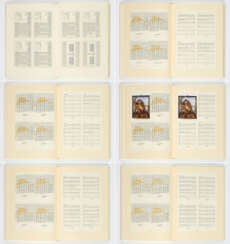

Hanne Darboven was a German conceptual artist known for her large-scale installations, drawings, and writings that explore the intersections of mathematics, language, and time.
Darboven studied at the Hochschule für Bildende Künste in Hamburg. In the 1960s, she became associated with the Conceptual Art movement, creating works that often involved systems of numerical and textual notation.
In the 1970s, Darboven began to produce her signature installations, which combined writing, drawing, and found objects to create immersive environments that explored complex systems of meaning and structure. One of her most famous works is "Kulturgeschichte 1880-1983", a monumental installation consisting of 1,590 framed sheets of paper, each containing a series of numbers, letters, and symbols that chart the course of modern history.
Throughout her career, Darboven continued to explore the relationship between language, numbers, and time, often drawing inspiration from her own life and experiences. She exhibited her work widely in Europe and the United States, and was the subject of numerous retrospectives and solo exhibitions.
Her legacy as a pioneering conceptual artist continues to be recognized and celebrated by the art world today.
.


Hanne Darboven was a German conceptual artist known for her large-scale installations, drawings, and writings that explore the intersections of mathematics, language, and time.
Darboven studied at the Hochschule für Bildende Künste in Hamburg. In the 1960s, she became associated with the Conceptual Art movement, creating works that often involved systems of numerical and textual notation.
In the 1970s, Darboven began to produce her signature installations, which combined writing, drawing, and found objects to create immersive environments that explored complex systems of meaning and structure. One of her most famous works is "Kulturgeschichte 1880-1983", a monumental installation consisting of 1,590 framed sheets of paper, each containing a series of numbers, letters, and symbols that chart the course of modern history.
Throughout her career, Darboven continued to explore the relationship between language, numbers, and time, often drawing inspiration from her own life and experiences. She exhibited her work widely in Europe and the United States, and was the subject of numerous retrospectives and solo exhibitions.
Her legacy as a pioneering conceptual artist continues to be recognized and celebrated by the art world today.
.


Hanne Darboven was a German conceptual artist known for her large-scale installations, drawings, and writings that explore the intersections of mathematics, language, and time.
Darboven studied at the Hochschule für Bildende Künste in Hamburg. In the 1960s, she became associated with the Conceptual Art movement, creating works that often involved systems of numerical and textual notation.
In the 1970s, Darboven began to produce her signature installations, which combined writing, drawing, and found objects to create immersive environments that explored complex systems of meaning and structure. One of her most famous works is "Kulturgeschichte 1880-1983", a monumental installation consisting of 1,590 framed sheets of paper, each containing a series of numbers, letters, and symbols that chart the course of modern history.
Throughout her career, Darboven continued to explore the relationship between language, numbers, and time, often drawing inspiration from her own life and experiences. She exhibited her work widely in Europe and the United States, and was the subject of numerous retrospectives and solo exhibitions.
Her legacy as a pioneering conceptual artist continues to be recognized and celebrated by the art world today.
.


Hanne Darboven was a German conceptual artist known for her large-scale installations, drawings, and writings that explore the intersections of mathematics, language, and time.
Darboven studied at the Hochschule für Bildende Künste in Hamburg. In the 1960s, she became associated with the Conceptual Art movement, creating works that often involved systems of numerical and textual notation.
In the 1970s, Darboven began to produce her signature installations, which combined writing, drawing, and found objects to create immersive environments that explored complex systems of meaning and structure. One of her most famous works is "Kulturgeschichte 1880-1983", a monumental installation consisting of 1,590 framed sheets of paper, each containing a series of numbers, letters, and symbols that chart the course of modern history.
Throughout her career, Darboven continued to explore the relationship between language, numbers, and time, often drawing inspiration from her own life and experiences. She exhibited her work widely in Europe and the United States, and was the subject of numerous retrospectives and solo exhibitions.
Her legacy as a pioneering conceptual artist continues to be recognized and celebrated by the art world today.
.


Hanne Darboven was a German conceptual artist known for her large-scale installations, drawings, and writings that explore the intersections of mathematics, language, and time.
Darboven studied at the Hochschule für Bildende Künste in Hamburg. In the 1960s, she became associated with the Conceptual Art movement, creating works that often involved systems of numerical and textual notation.
In the 1970s, Darboven began to produce her signature installations, which combined writing, drawing, and found objects to create immersive environments that explored complex systems of meaning and structure. One of her most famous works is "Kulturgeschichte 1880-1983", a monumental installation consisting of 1,590 framed sheets of paper, each containing a series of numbers, letters, and symbols that chart the course of modern history.
Throughout her career, Darboven continued to explore the relationship between language, numbers, and time, often drawing inspiration from her own life and experiences. She exhibited her work widely in Europe and the United States, and was the subject of numerous retrospectives and solo exhibitions.
Her legacy as a pioneering conceptual artist continues to be recognized and celebrated by the art world today.
.

Hanne Darboven was a German conceptual artist known for her large-scale installations, drawings, and writings that explore the intersections of mathematics, language, and time.
Darboven studied at the Hochschule für Bildende Künste in Hamburg. In the 1960s, she became associated with the Conceptual Art movement, creating works that often involved systems of numerical and textual notation.
In the 1970s, Darboven began to produce her signature installations, which combined writing, drawing, and found objects to create immersive environments that explored complex systems of meaning and structure. One of her most famous works is "Kulturgeschichte 1880-1983", a monumental installation consisting of 1,590 framed sheets of paper, each containing a series of numbers, letters, and symbols that chart the course of modern history.
Throughout her career, Darboven continued to explore the relationship between language, numbers, and time, often drawing inspiration from her own life and experiences. She exhibited her work widely in Europe and the United States, and was the subject of numerous retrospectives and solo exhibitions.
Her legacy as a pioneering conceptual artist continues to be recognized and celebrated by the art world today.
.
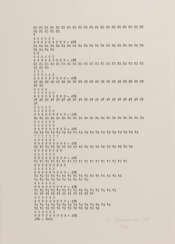

Hanne Darboven was a German conceptual artist known for her large-scale installations, drawings, and writings that explore the intersections of mathematics, language, and time.
Darboven studied at the Hochschule für Bildende Künste in Hamburg. In the 1960s, she became associated with the Conceptual Art movement, creating works that often involved systems of numerical and textual notation.
In the 1970s, Darboven began to produce her signature installations, which combined writing, drawing, and found objects to create immersive environments that explored complex systems of meaning and structure. One of her most famous works is "Kulturgeschichte 1880-1983", a monumental installation consisting of 1,590 framed sheets of paper, each containing a series of numbers, letters, and symbols that chart the course of modern history.
Throughout her career, Darboven continued to explore the relationship between language, numbers, and time, often drawing inspiration from her own life and experiences. She exhibited her work widely in Europe and the United States, and was the subject of numerous retrospectives and solo exhibitions.
Her legacy as a pioneering conceptual artist continues to be recognized and celebrated by the art world today.
.
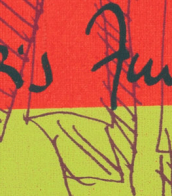


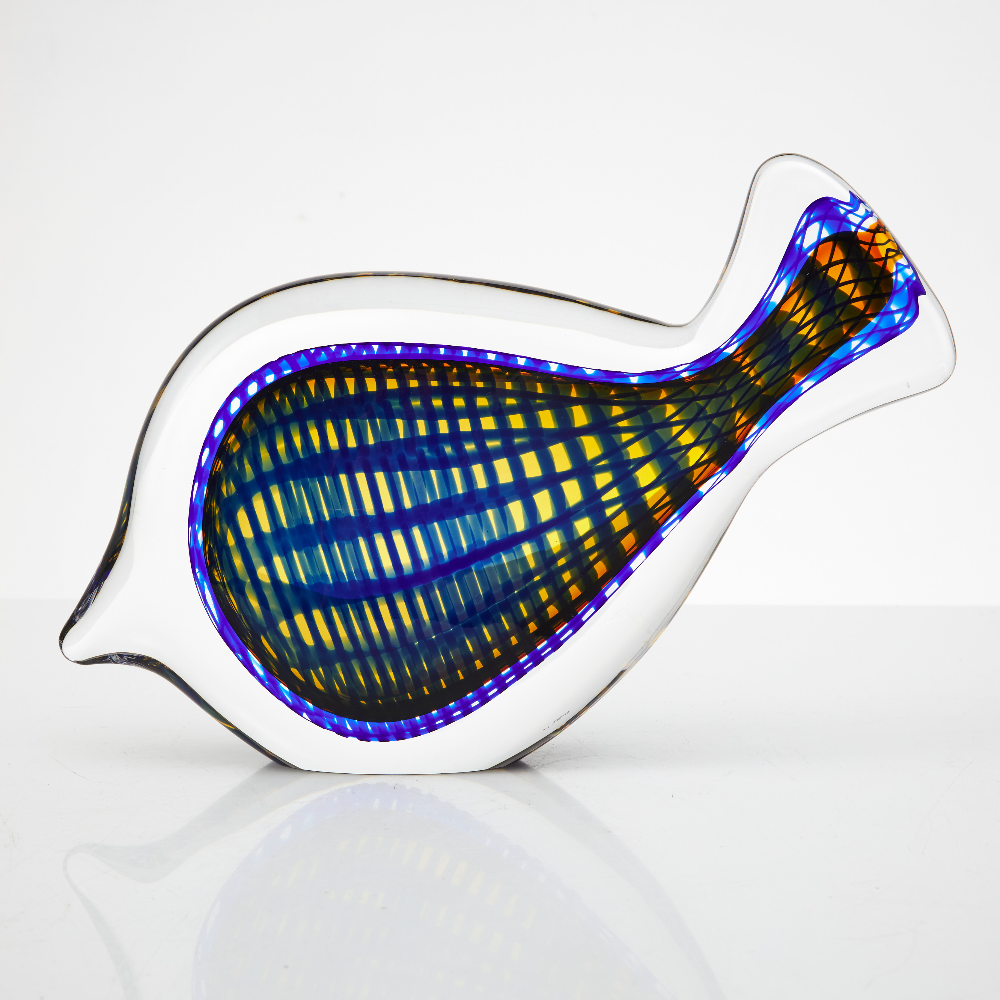
Hanne Dreutler is a German glass artist and designer based in Sweden.
Hanne Dreutler studied at the Graduate School of Art in Basel, Switzerland, after which she moved to Stockholm and studied at the College of Art. From 1966 to 1977, she worked as an independent silversmith in Stockholm and at the glassworks of Moleros and Flugsfors.
In the early 1970s Hanne Dreutler met Arthur Zirnsack (1944) in Kosta Boda, where they worked under the supervision of Vike Lindstrand. Dreutler and Zirnsack married, and in 1977 the couple opened their own glassworks, Studio Ahus, in Ahus in southeastern Sweden, continuing the renowned tradition of Scandinavian glassmaking. After Hanne Dreutler's death, Studio Ahus continues to operate under the management of their son Martin Cirnzak and Lennart Nissmark.

Hanne Darboven was a German conceptual artist known for her large-scale installations, drawings, and writings that explore the intersections of mathematics, language, and time.
Darboven studied at the Hochschule für Bildende Künste in Hamburg. In the 1960s, she became associated with the Conceptual Art movement, creating works that often involved systems of numerical and textual notation.
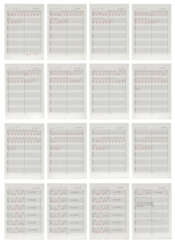
In the 1970s, Darboven began to produce her signature installations, which combined writing, drawing, and found objects to create immersive environments that explored complex systems of meaning and structure. One of her most famous works is "Kulturgeschichte 1880-1983", a monumental installation consisting of 1,590 framed sheets of paper, each containing a series of numbers, letters, and symbols that chart the course of modern history.
Throughout her career, Darboven continued to explore the relationship between language, numbers, and time, often drawing inspiration from her own life and experiences. She exhibited her work widely in Europe and the United States, and was the subject of numerous retrospectives and solo exhibitions.
Her legacy as a pioneering conceptual artist continues to be recognized and celebrated by the art world today.
.

Hanne Darboven was a German conceptual artist known for her large-scale installations, drawings, and writings that explore the intersections of mathematics, language, and time.
Darboven studied at the Hochschule für Bildende Künste in Hamburg. In the 1960s, she became associated with the Conceptual Art movement, creating works that often involved systems of numerical and textual notation.
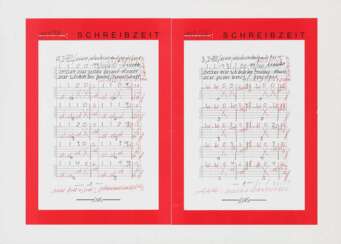
In the 1970s, Darboven began to produce her signature installations, which combined writing, drawing, and found objects to create immersive environments that explored complex systems of meaning and structure. One of her most famous works is "Kulturgeschichte 1880-1983", a monumental installation consisting of 1,590 framed sheets of paper, each containing a series of numbers, letters, and symbols that chart the course of modern history.
Throughout her career, Darboven continued to explore the relationship between language, numbers, and time, often drawing inspiration from her own life and experiences. She exhibited her work widely in Europe and the United States, and was the subject of numerous retrospectives and solo exhibitions.
Her legacy as a pioneering conceptual artist continues to be recognized and celebrated by the art world today.
.



Hanne Darboven was a German conceptual artist known for her large-scale installations, drawings, and writings that explore the intersections of mathematics, language, and time.
Darboven studied at the Hochschule für Bildende Künste in Hamburg. In the 1960s, she became associated with the Conceptual Art movement, creating works that often involved systems of numerical and textual notation.
In the 1970s, Darboven began to produce her signature installations, which combined writing, drawing, and found objects to create immersive environments that explored complex systems of meaning and structure. One of her most famous works is "Kulturgeschichte 1880-1983", a monumental installation consisting of 1,590 framed sheets of paper, each containing a series of numbers, letters, and symbols that chart the course of modern history.
Throughout her career, Darboven continued to explore the relationship between language, numbers, and time, often drawing inspiration from her own life and experiences. She exhibited her work widely in Europe and the United States, and was the subject of numerous retrospectives and solo exhibitions.
Her legacy as a pioneering conceptual artist continues to be recognized and celebrated by the art world today.
.


Hanne Darboven was a German conceptual artist known for her large-scale installations, drawings, and writings that explore the intersections of mathematics, language, and time.
Darboven studied at the Hochschule für Bildende Künste in Hamburg. In the 1960s, she became associated with the Conceptual Art movement, creating works that often involved systems of numerical and textual notation.
In the 1970s, Darboven began to produce her signature installations, which combined writing, drawing, and found objects to create immersive environments that explored complex systems of meaning and structure. One of her most famous works is "Kulturgeschichte 1880-1983", a monumental installation consisting of 1,590 framed sheets of paper, each containing a series of numbers, letters, and symbols that chart the course of modern history.
Throughout her career, Darboven continued to explore the relationship between language, numbers, and time, often drawing inspiration from her own life and experiences. She exhibited her work widely in Europe and the United States, and was the subject of numerous retrospectives and solo exhibitions.
Her legacy as a pioneering conceptual artist continues to be recognized and celebrated by the art world today.
.
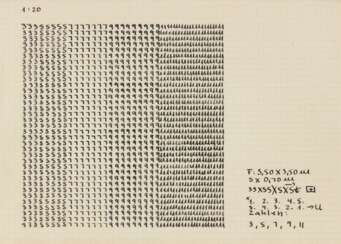

Hanne Darboven was a German conceptual artist known for her large-scale installations, drawings, and writings that explore the intersections of mathematics, language, and time.
Darboven studied at the Hochschule für Bildende Künste in Hamburg. In the 1960s, she became associated with the Conceptual Art movement, creating works that often involved systems of numerical and textual notation.
In the 1970s, Darboven began to produce her signature installations, which combined writing, drawing, and found objects to create immersive environments that explored complex systems of meaning and structure. One of her most famous works is "Kulturgeschichte 1880-1983", a monumental installation consisting of 1,590 framed sheets of paper, each containing a series of numbers, letters, and symbols that chart the course of modern history.
Throughout her career, Darboven continued to explore the relationship between language, numbers, and time, often drawing inspiration from her own life and experiences. She exhibited her work widely in Europe and the United States, and was the subject of numerous retrospectives and solo exhibitions.
Her legacy as a pioneering conceptual artist continues to be recognized and celebrated by the art world today.
.


Hanne Darboven was a German conceptual artist known for her large-scale installations, drawings, and writings that explore the intersections of mathematics, language, and time.
Darboven studied at the Hochschule für Bildende Künste in Hamburg. In the 1960s, she became associated with the Conceptual Art movement, creating works that often involved systems of numerical and textual notation.
In the 1970s, Darboven began to produce her signature installations, which combined writing, drawing, and found objects to create immersive environments that explored complex systems of meaning and structure. One of her most famous works is "Kulturgeschichte 1880-1983", a monumental installation consisting of 1,590 framed sheets of paper, each containing a series of numbers, letters, and symbols that chart the course of modern history.
Throughout her career, Darboven continued to explore the relationship between language, numbers, and time, often drawing inspiration from her own life and experiences. She exhibited her work widely in Europe and the United States, and was the subject of numerous retrospectives and solo exhibitions.
Her legacy as a pioneering conceptual artist continues to be recognized and celebrated by the art world today.
.


Hanne Darboven was a German conceptual artist known for her large-scale installations, drawings, and writings that explore the intersections of mathematics, language, and time.
Darboven studied at the Hochschule für Bildende Künste in Hamburg. In the 1960s, she became associated with the Conceptual Art movement, creating works that often involved systems of numerical and textual notation.
In the 1970s, Darboven began to produce her signature installations, which combined writing, drawing, and found objects to create immersive environments that explored complex systems of meaning and structure. One of her most famous works is "Kulturgeschichte 1880-1983", a monumental installation consisting of 1,590 framed sheets of paper, each containing a series of numbers, letters, and symbols that chart the course of modern history.
Throughout her career, Darboven continued to explore the relationship between language, numbers, and time, often drawing inspiration from her own life and experiences. She exhibited her work widely in Europe and the United States, and was the subject of numerous retrospectives and solo exhibitions.
Her legacy as a pioneering conceptual artist continues to be recognized and celebrated by the art world today.
.
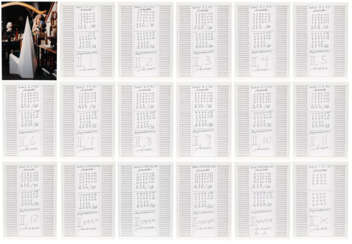

Hanne Darboven was a German conceptual artist known for her large-scale installations, drawings, and writings that explore the intersections of mathematics, language, and time.
Darboven studied at the Hochschule für Bildende Künste in Hamburg. In the 1960s, she became associated with the Conceptual Art movement, creating works that often involved systems of numerical and textual notation.
In the 1970s, Darboven began to produce her signature installations, which combined writing, drawing, and found objects to create immersive environments that explored complex systems of meaning and structure. One of her most famous works is "Kulturgeschichte 1880-1983", a monumental installation consisting of 1,590 framed sheets of paper, each containing a series of numbers, letters, and symbols that chart the course of modern history.
Throughout her career, Darboven continued to explore the relationship between language, numbers, and time, often drawing inspiration from her own life and experiences. She exhibited her work widely in Europe and the United States, and was the subject of numerous retrospectives and solo exhibitions.
Her legacy as a pioneering conceptual artist continues to be recognized and celebrated by the art world today.
.


Hanne Darboven was a German conceptual artist known for her large-scale installations, drawings, and writings that explore the intersections of mathematics, language, and time.
Darboven studied at the Hochschule für Bildende Künste in Hamburg. In the 1960s, she became associated with the Conceptual Art movement, creating works that often involved systems of numerical and textual notation.
In the 1970s, Darboven began to produce her signature installations, which combined writing, drawing, and found objects to create immersive environments that explored complex systems of meaning and structure. One of her most famous works is "Kulturgeschichte 1880-1983", a monumental installation consisting of 1,590 framed sheets of paper, each containing a series of numbers, letters, and symbols that chart the course of modern history.
Throughout her career, Darboven continued to explore the relationship between language, numbers, and time, often drawing inspiration from her own life and experiences. She exhibited her work widely in Europe and the United States, and was the subject of numerous retrospectives and solo exhibitions.
Her legacy as a pioneering conceptual artist continues to be recognized and celebrated by the art world today.
.


Hanne Darboven was a German conceptual artist known for her large-scale installations, drawings, and writings that explore the intersections of mathematics, language, and time.
Darboven studied at the Hochschule für Bildende Künste in Hamburg. In the 1960s, she became associated with the Conceptual Art movement, creating works that often involved systems of numerical and textual notation.
In the 1970s, Darboven began to produce her signature installations, which combined writing, drawing, and found objects to create immersive environments that explored complex systems of meaning and structure. One of her most famous works is "Kulturgeschichte 1880-1983", a monumental installation consisting of 1,590 framed sheets of paper, each containing a series of numbers, letters, and symbols that chart the course of modern history.
Throughout her career, Darboven continued to explore the relationship between language, numbers, and time, often drawing inspiration from her own life and experiences. She exhibited her work widely in Europe and the United States, and was the subject of numerous retrospectives and solo exhibitions.
Her legacy as a pioneering conceptual artist continues to be recognized and celebrated by the art world today.
.