

678

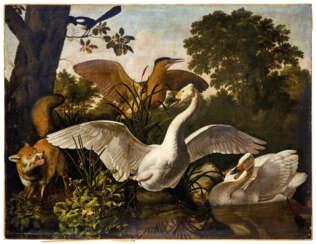

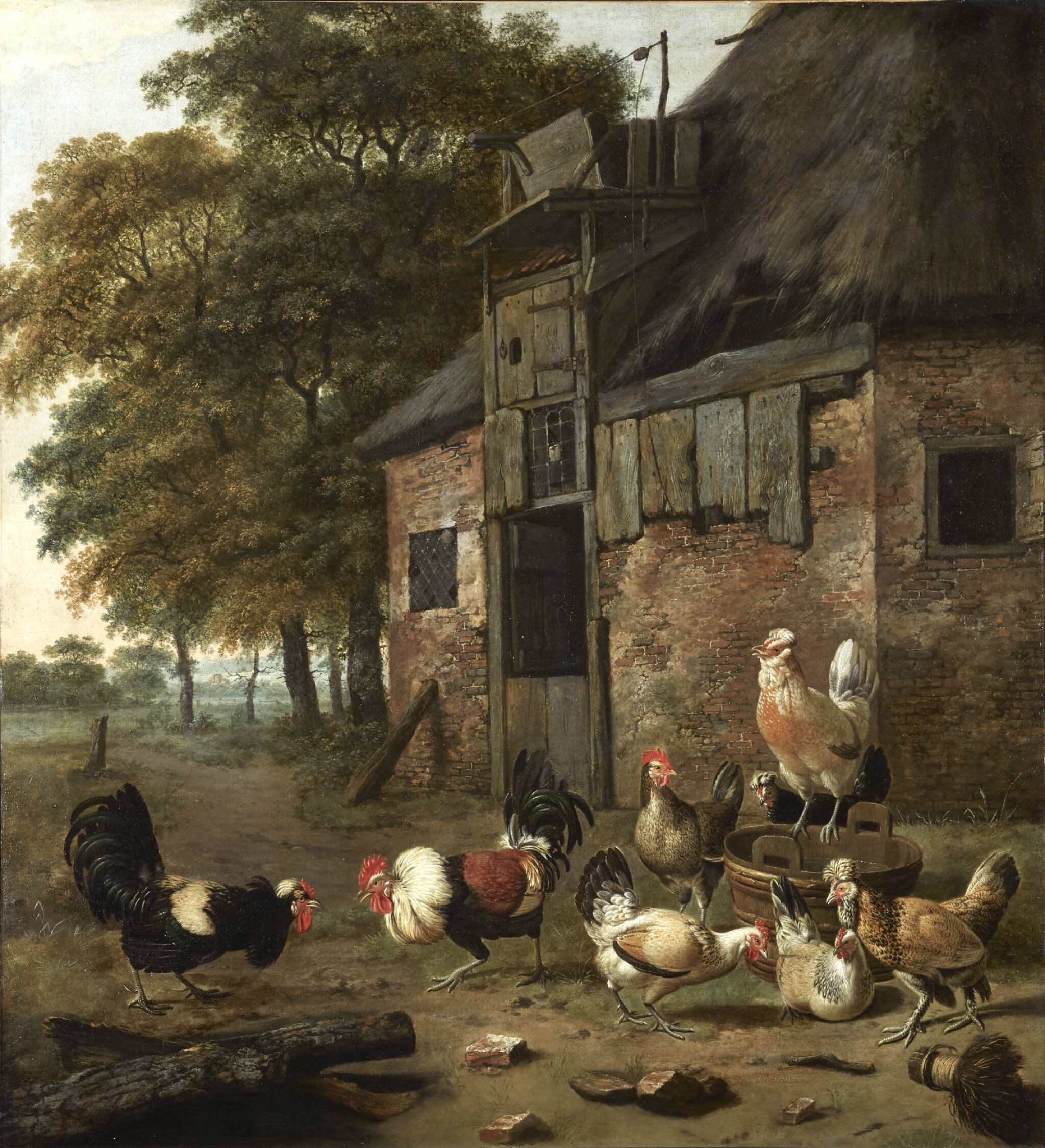
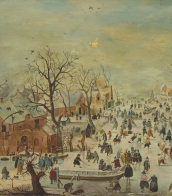
Dirck Wijntrack was a Dutch Golden Age painter.


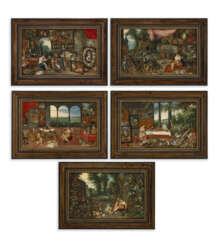

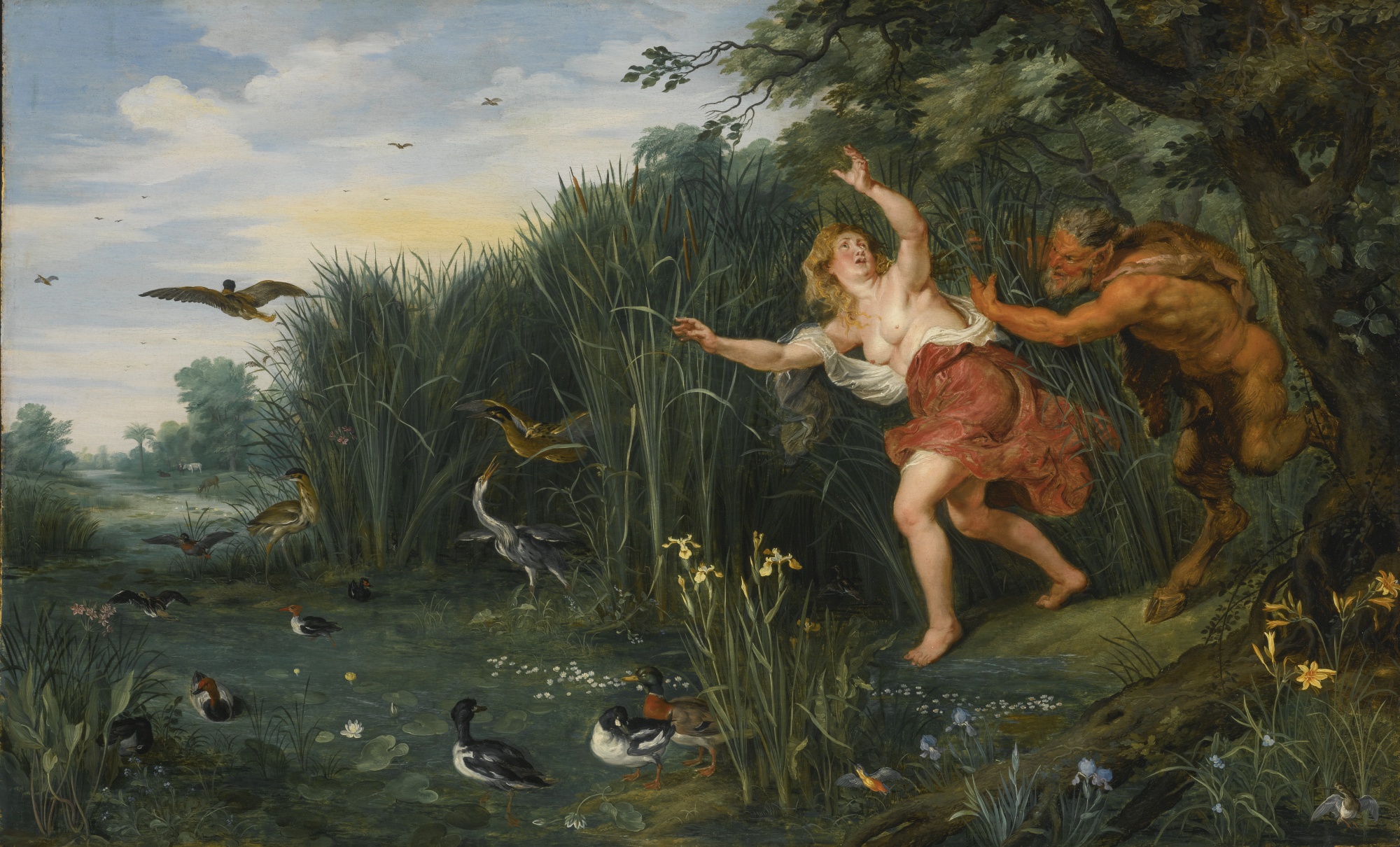
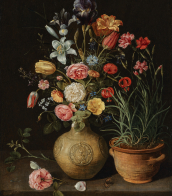
Jan Bruegel the Younger was a Flemish Baroque painter. He was the son of Jan Brueghel the Elder, and grandson of Pieter Bruegel the Elder, both prominent painters who contributed respectively to the development of Renaissance and Baroque painting in the Habsburg Netherlands. Taking over his father's workshop at an early age, he painted the same subjects as his father in a style which was similar to that of his father. He regularly collaborated with leading Flemish painters of his time.


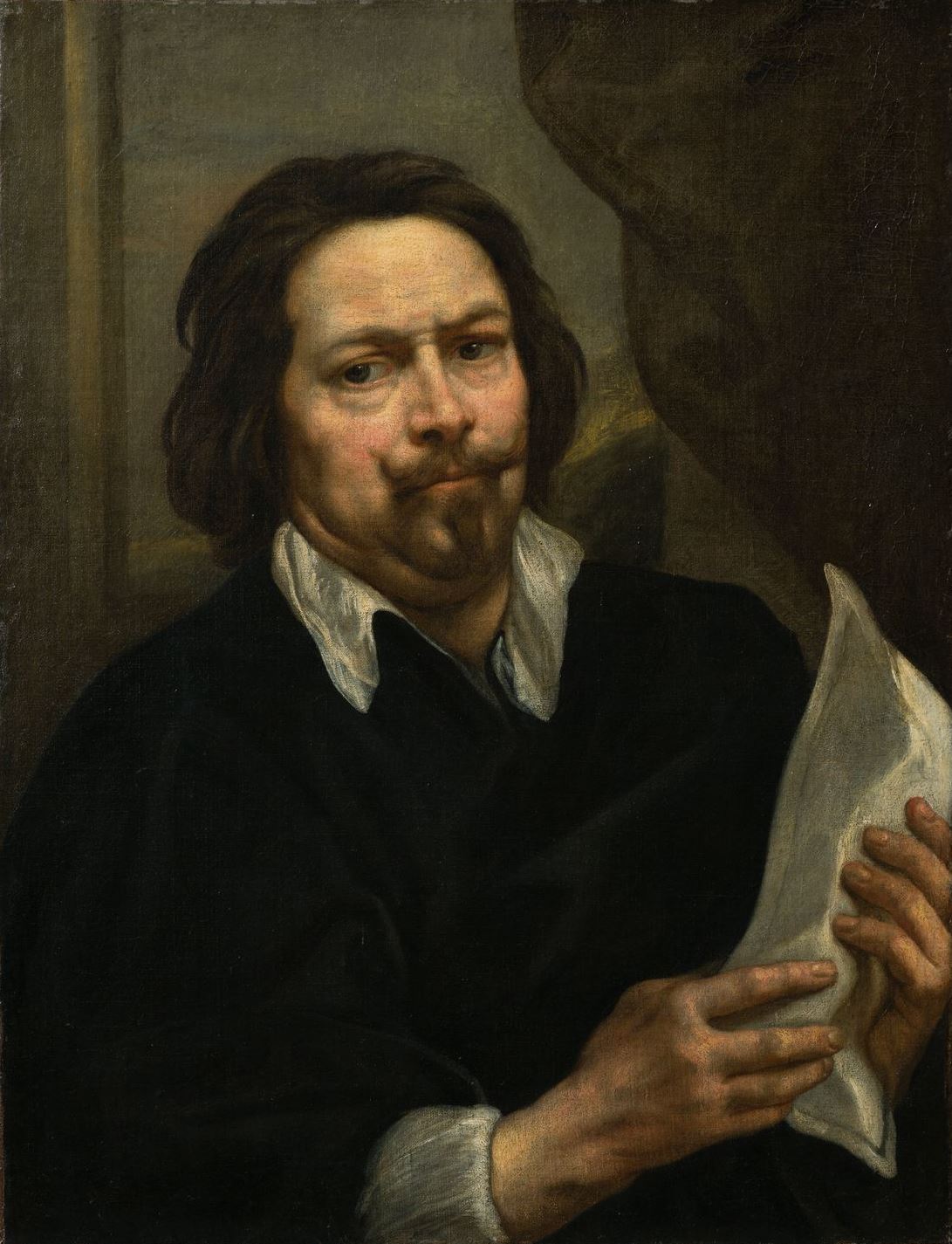
Jacob Jordaens was a Flemish painter, draughtsman and tapestry designer known for his history paintings, genre scenes and portraits. After Peter Paul Rubens and Anthony van Dyck, he was the leading Flemish Baroque painter of his day. Unlike those contemporaries he never travelled abroad to study Italian painting, and his career is marked by an indifference to their intellectual and courtly aspirations. In fact, except for a few short trips to locations elsewhere in the Low Countries, he remained in Antwerp his entire life. As well as being a successful painter, he was a prominent designer of tapestries.
Like Rubens, Jordaens painted altarpieces, mythological, and allegorical scenes, and after 1640 — the year Rubens died — he was the most important painter in Antwerp for large-scale commissions and the status of his patrons increased in general. However, he is best known today for his numerous large genre scenes based on proverbs in the manner of his contemporary Jan Brueghel the Elder, depicting The King Drinks and As the Old Sing, So Pipe the Young. Jordaens' main artistic influences, besides Rubens and the Brueghel family, were northern Italian painters such as Jacopo Bassano, Paolo Veronese, and Caravaggio.
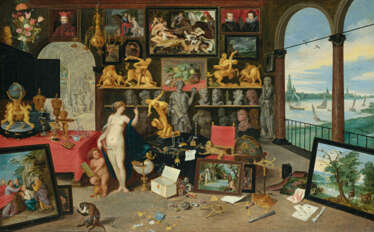

Jan Bruegel the Younger was a Flemish Baroque painter. He was the son of Jan Brueghel the Elder, and grandson of Pieter Bruegel the Elder, both prominent painters who contributed respectively to the development of Renaissance and Baroque painting in the Habsburg Netherlands. Taking over his father's workshop at an early age, he painted the same subjects as his father in a style which was similar to that of his father. He regularly collaborated with leading Flemish painters of his time.
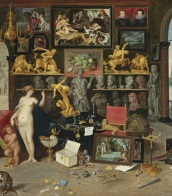


Jacob Jordaens was a Flemish painter, draughtsman and tapestry designer known for his history paintings, genre scenes and portraits. After Peter Paul Rubens and Anthony van Dyck, he was the leading Flemish Baroque painter of his day. Unlike those contemporaries he never travelled abroad to study Italian painting, and his career is marked by an indifference to their intellectual and courtly aspirations. In fact, except for a few short trips to locations elsewhere in the Low Countries, he remained in Antwerp his entire life. As well as being a successful painter, he was a prominent designer of tapestries.
Like Rubens, Jordaens painted altarpieces, mythological, and allegorical scenes, and after 1640 — the year Rubens died — he was the most important painter in Antwerp for large-scale commissions and the status of his patrons increased in general. However, he is best known today for his numerous large genre scenes based on proverbs in the manner of his contemporary Jan Brueghel the Elder, depicting The King Drinks and As the Old Sing, So Pipe the Young. Jordaens' main artistic influences, besides Rubens and the Brueghel family, were northern Italian painters such as Jacopo Bassano, Paolo Veronese, and Caravaggio.
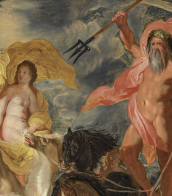
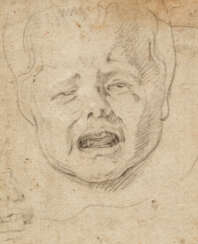

Jacob Jordaens was a Flemish painter, draughtsman and tapestry designer known for his history paintings, genre scenes and portraits. After Peter Paul Rubens and Anthony van Dyck, he was the leading Flemish Baroque painter of his day. Unlike those contemporaries he never travelled abroad to study Italian painting, and his career is marked by an indifference to their intellectual and courtly aspirations. In fact, except for a few short trips to locations elsewhere in the Low Countries, he remained in Antwerp his entire life. As well as being a successful painter, he was a prominent designer of tapestries.
Like Rubens, Jordaens painted altarpieces, mythological, and allegorical scenes, and after 1640 — the year Rubens died — he was the most important painter in Antwerp for large-scale commissions and the status of his patrons increased in general. However, he is best known today for his numerous large genre scenes based on proverbs in the manner of his contemporary Jan Brueghel the Elder, depicting The King Drinks and As the Old Sing, So Pipe the Young. Jordaens' main artistic influences, besides Rubens and the Brueghel family, were northern Italian painters such as Jacopo Bassano, Paolo Veronese, and Caravaggio.



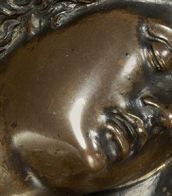


Jan Bruegel the Younger was a Flemish Baroque painter. He was the son of Jan Brueghel the Elder, and grandson of Pieter Bruegel the Elder, both prominent painters who contributed respectively to the development of Renaissance and Baroque painting in the Habsburg Netherlands. Taking over his father's workshop at an early age, he painted the same subjects as his father in a style which was similar to that of his father. He regularly collaborated with leading Flemish painters of his time.
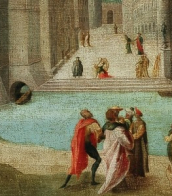
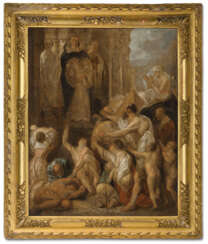

Jacob Jordaens was a Flemish painter, draughtsman and tapestry designer known for his history paintings, genre scenes and portraits. After Peter Paul Rubens and Anthony van Dyck, he was the leading Flemish Baroque painter of his day. Unlike those contemporaries he never travelled abroad to study Italian painting, and his career is marked by an indifference to their intellectual and courtly aspirations. In fact, except for a few short trips to locations elsewhere in the Low Countries, he remained in Antwerp his entire life. As well as being a successful painter, he was a prominent designer of tapestries.
Like Rubens, Jordaens painted altarpieces, mythological, and allegorical scenes, and after 1640 — the year Rubens died — he was the most important painter in Antwerp for large-scale commissions and the status of his patrons increased in general. However, he is best known today for his numerous large genre scenes based on proverbs in the manner of his contemporary Jan Brueghel the Elder, depicting The King Drinks and As the Old Sing, So Pipe the Young. Jordaens' main artistic influences, besides Rubens and the Brueghel family, were northern Italian painters such as Jacopo Bassano, Paolo Veronese, and Caravaggio.
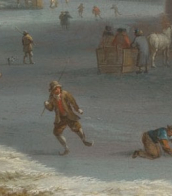


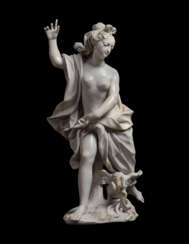

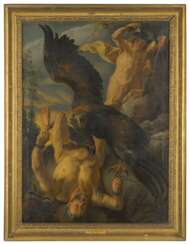

Jacob Jordaens was a Flemish painter, draughtsman and tapestry designer known for his history paintings, genre scenes and portraits. After Peter Paul Rubens and Anthony van Dyck, he was the leading Flemish Baroque painter of his day. Unlike those contemporaries he never travelled abroad to study Italian painting, and his career is marked by an indifference to their intellectual and courtly aspirations. In fact, except for a few short trips to locations elsewhere in the Low Countries, he remained in Antwerp his entire life. As well as being a successful painter, he was a prominent designer of tapestries.
Like Rubens, Jordaens painted altarpieces, mythological, and allegorical scenes, and after 1640 — the year Rubens died — he was the most important painter in Antwerp for large-scale commissions and the status of his patrons increased in general. However, he is best known today for his numerous large genre scenes based on proverbs in the manner of his contemporary Jan Brueghel the Elder, depicting The King Drinks and As the Old Sing, So Pipe the Young. Jordaens' main artistic influences, besides Rubens and the Brueghel family, were northern Italian painters such as Jacopo Bassano, Paolo Veronese, and Caravaggio.
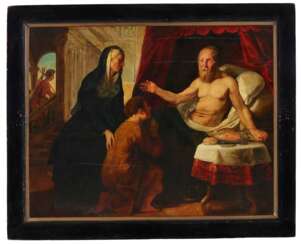

Jacob Jordaens was a Flemish painter, draughtsman and tapestry designer known for his history paintings, genre scenes and portraits. After Peter Paul Rubens and Anthony van Dyck, he was the leading Flemish Baroque painter of his day. Unlike those contemporaries he never travelled abroad to study Italian painting, and his career is marked by an indifference to their intellectual and courtly aspirations. In fact, except for a few short trips to locations elsewhere in the Low Countries, he remained in Antwerp his entire life. As well as being a successful painter, he was a prominent designer of tapestries.
Like Rubens, Jordaens painted altarpieces, mythological, and allegorical scenes, and after 1640 — the year Rubens died — he was the most important painter in Antwerp for large-scale commissions and the status of his patrons increased in general. However, he is best known today for his numerous large genre scenes based on proverbs in the manner of his contemporary Jan Brueghel the Elder, depicting The King Drinks and As the Old Sing, So Pipe the Young. Jordaens' main artistic influences, besides Rubens and the Brueghel family, were northern Italian painters such as Jacopo Bassano, Paolo Veronese, and Caravaggio.

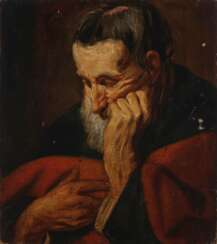

Jacob Jordaens was a Flemish painter, draughtsman and tapestry designer known for his history paintings, genre scenes and portraits. After Peter Paul Rubens and Anthony van Dyck, he was the leading Flemish Baroque painter of his day. Unlike those contemporaries he never travelled abroad to study Italian painting, and his career is marked by an indifference to their intellectual and courtly aspirations. In fact, except for a few short trips to locations elsewhere in the Low Countries, he remained in Antwerp his entire life. As well as being a successful painter, he was a prominent designer of tapestries.
Like Rubens, Jordaens painted altarpieces, mythological, and allegorical scenes, and after 1640 — the year Rubens died — he was the most important painter in Antwerp for large-scale commissions and the status of his patrons increased in general. However, he is best known today for his numerous large genre scenes based on proverbs in the manner of his contemporary Jan Brueghel the Elder, depicting The King Drinks and As the Old Sing, So Pipe the Young. Jordaens' main artistic influences, besides Rubens and the Brueghel family, were northern Italian painters such as Jacopo Bassano, Paolo Veronese, and Caravaggio.
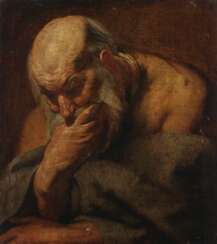

Jacob Jordaens was a Flemish painter, draughtsman and tapestry designer known for his history paintings, genre scenes and portraits. After Peter Paul Rubens and Anthony van Dyck, he was the leading Flemish Baroque painter of his day. Unlike those contemporaries he never travelled abroad to study Italian painting, and his career is marked by an indifference to their intellectual and courtly aspirations. In fact, except for a few short trips to locations elsewhere in the Low Countries, he remained in Antwerp his entire life. As well as being a successful painter, he was a prominent designer of tapestries.
Like Rubens, Jordaens painted altarpieces, mythological, and allegorical scenes, and after 1640 — the year Rubens died — he was the most important painter in Antwerp for large-scale commissions and the status of his patrons increased in general. However, he is best known today for his numerous large genre scenes based on proverbs in the manner of his contemporary Jan Brueghel the Elder, depicting The King Drinks and As the Old Sing, So Pipe the Young. Jordaens' main artistic influences, besides Rubens and the Brueghel family, were northern Italian painters such as Jacopo Bassano, Paolo Veronese, and Caravaggio.
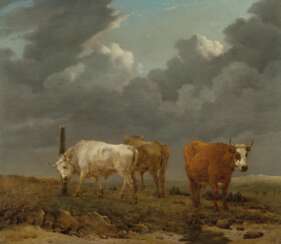

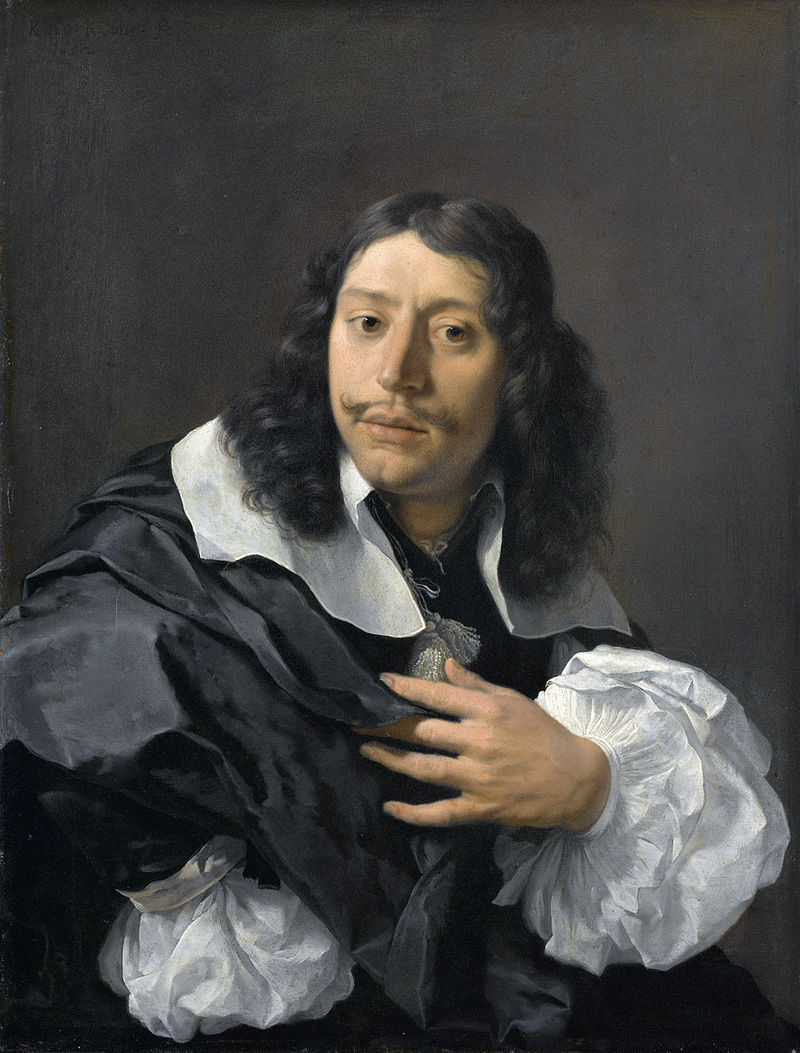
Karel Dujardin was a Dutch painter and printmaker of the Golden Age of Dutch painting.
He studied with Klaas Berchem and Paulus Potter, traveled to Italy, and lived in Lyon. In 1656 he participated in the founding of the Pictura Society in The Hague.
Dujardin painted mostly Italian landscapes, genre scenes, including scenes from rural life, portraits of elegant people and historical paintings.
Many of Dujardin's works are in the Louvre, the Hermitage (St. Petersburg), as well as in Amsterdam, The Hague, Kassel, and Berlin.

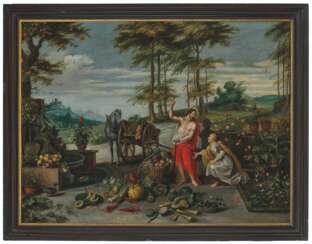

Jan Bruegel the Younger was a Flemish Baroque painter. He was the son of Jan Brueghel the Elder, and grandson of Pieter Bruegel the Elder, both prominent painters who contributed respectively to the development of Renaissance and Baroque painting in the Habsburg Netherlands. Taking over his father's workshop at an early age, he painted the same subjects as his father in a style which was similar to that of his father. He regularly collaborated with leading Flemish painters of his time.


Jacob Jordaens was a Flemish painter, draughtsman and tapestry designer known for his history paintings, genre scenes and portraits. After Peter Paul Rubens and Anthony van Dyck, he was the leading Flemish Baroque painter of his day. Unlike those contemporaries he never travelled abroad to study Italian painting, and his career is marked by an indifference to their intellectual and courtly aspirations. In fact, except for a few short trips to locations elsewhere in the Low Countries, he remained in Antwerp his entire life. As well as being a successful painter, he was a prominent designer of tapestries.
Like Rubens, Jordaens painted altarpieces, mythological, and allegorical scenes, and after 1640 — the year Rubens died — he was the most important painter in Antwerp for large-scale commissions and the status of his patrons increased in general. However, he is best known today for his numerous large genre scenes based on proverbs in the manner of his contemporary Jan Brueghel the Elder, depicting The King Drinks and As the Old Sing, So Pipe the Young. Jordaens' main artistic influences, besides Rubens and the Brueghel family, were northern Italian painters such as Jacopo Bassano, Paolo Veronese, and Caravaggio.

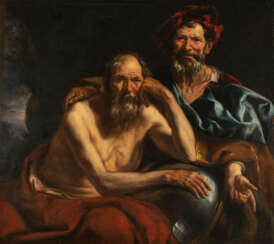

Jacob Jordaens was a Flemish painter, draughtsman and tapestry designer known for his history paintings, genre scenes and portraits. After Peter Paul Rubens and Anthony van Dyck, he was the leading Flemish Baroque painter of his day. Unlike those contemporaries he never travelled abroad to study Italian painting, and his career is marked by an indifference to their intellectual and courtly aspirations. In fact, except for a few short trips to locations elsewhere in the Low Countries, he remained in Antwerp his entire life. As well as being a successful painter, he was a prominent designer of tapestries.
Like Rubens, Jordaens painted altarpieces, mythological, and allegorical scenes, and after 1640 — the year Rubens died — he was the most important painter in Antwerp for large-scale commissions and the status of his patrons increased in general. However, he is best known today for his numerous large genre scenes based on proverbs in the manner of his contemporary Jan Brueghel the Elder, depicting The King Drinks and As the Old Sing, So Pipe the Young. Jordaens' main artistic influences, besides Rubens and the Brueghel family, were northern Italian painters such as Jacopo Bassano, Paolo Veronese, and Caravaggio.
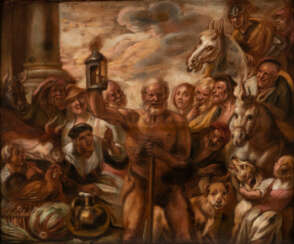

Jacob Jordaens was a Flemish painter, draughtsman and tapestry designer known for his history paintings, genre scenes and portraits. After Peter Paul Rubens and Anthony van Dyck, he was the leading Flemish Baroque painter of his day. Unlike those contemporaries he never travelled abroad to study Italian painting, and his career is marked by an indifference to their intellectual and courtly aspirations. In fact, except for a few short trips to locations elsewhere in the Low Countries, he remained in Antwerp his entire life. As well as being a successful painter, he was a prominent designer of tapestries.
Like Rubens, Jordaens painted altarpieces, mythological, and allegorical scenes, and after 1640 — the year Rubens died — he was the most important painter in Antwerp for large-scale commissions and the status of his patrons increased in general. However, he is best known today for his numerous large genre scenes based on proverbs in the manner of his contemporary Jan Brueghel the Elder, depicting The King Drinks and As the Old Sing, So Pipe the Young. Jordaens' main artistic influences, besides Rubens and the Brueghel family, were northern Italian painters such as Jacopo Bassano, Paolo Veronese, and Caravaggio.
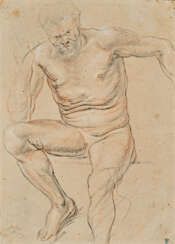

Jacob Jordaens was a Flemish painter, draughtsman and tapestry designer known for his history paintings, genre scenes and portraits. After Peter Paul Rubens and Anthony van Dyck, he was the leading Flemish Baroque painter of his day. Unlike those contemporaries he never travelled abroad to study Italian painting, and his career is marked by an indifference to their intellectual and courtly aspirations. In fact, except for a few short trips to locations elsewhere in the Low Countries, he remained in Antwerp his entire life. As well as being a successful painter, he was a prominent designer of tapestries.
Like Rubens, Jordaens painted altarpieces, mythological, and allegorical scenes, and after 1640 — the year Rubens died — he was the most important painter in Antwerp for large-scale commissions and the status of his patrons increased in general. However, he is best known today for his numerous large genre scenes based on proverbs in the manner of his contemporary Jan Brueghel the Elder, depicting The King Drinks and As the Old Sing, So Pipe the Young. Jordaens' main artistic influences, besides Rubens and the Brueghel family, were northern Italian painters such as Jacopo Bassano, Paolo Veronese, and Caravaggio.
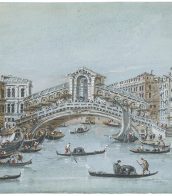

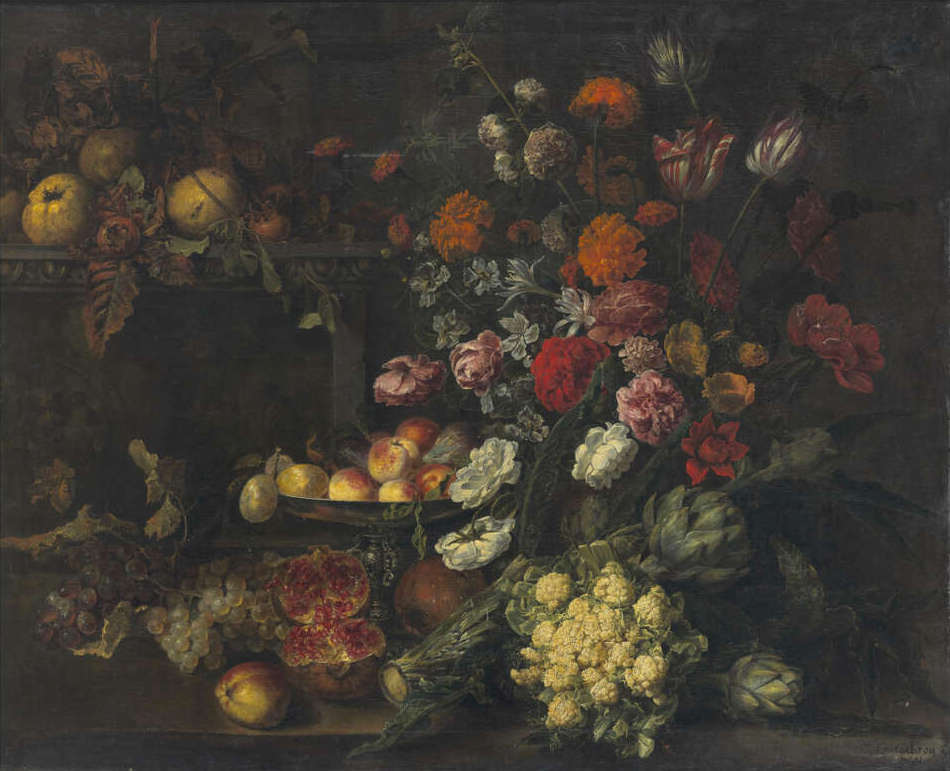
Guiliam Gabron, or Willem Gabron, was a Flemish Baroque still life painter, who worked in a wide range of genres including fruit pieces, vanitas still lifes, flower still lifes, game pieces and breakfast pieces. Gabron was also a gifted animalier and often included living animals in his still life scenes. He initially worked in a monochrome style but developed a more colourful palette after a long stay in Italy.
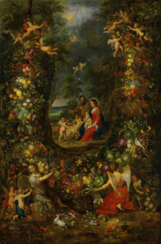

Jan Bruegel the Younger was a Flemish Baroque painter. He was the son of Jan Brueghel the Elder, and grandson of Pieter Bruegel the Elder, both prominent painters who contributed respectively to the development of Renaissance and Baroque painting in the Habsburg Netherlands. Taking over his father's workshop at an early age, he painted the same subjects as his father in a style which was similar to that of his father. He regularly collaborated with leading Flemish painters of his time.
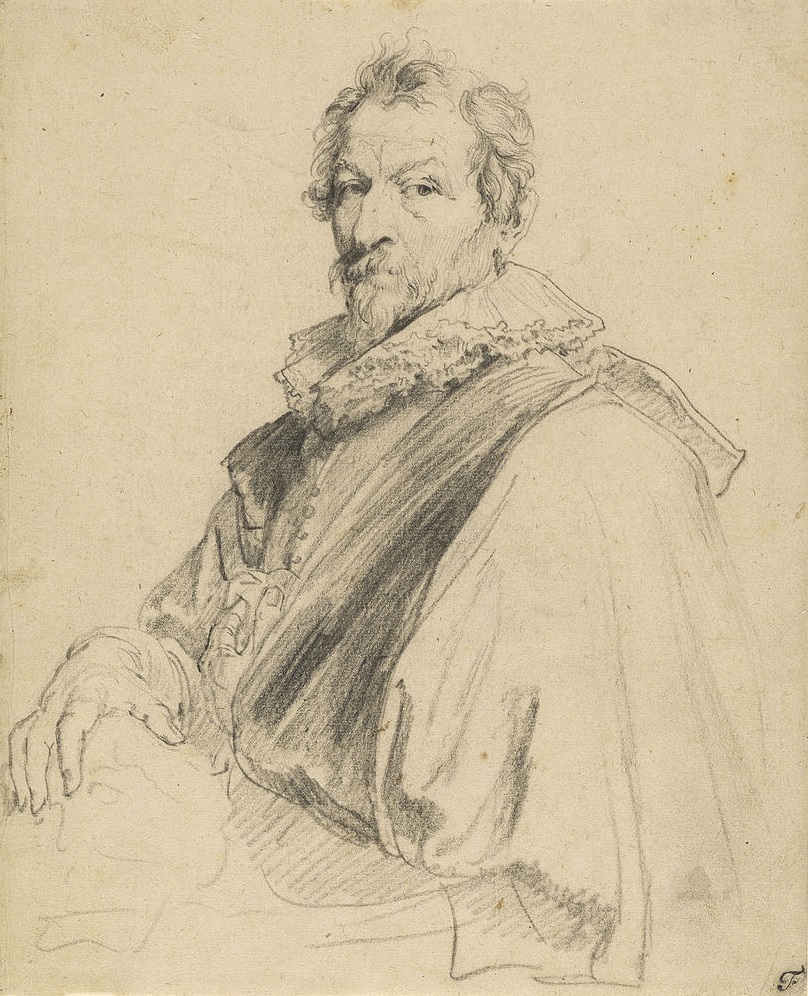
Hendrik van Balen the Elder was a Flemish Baroque painter and stained glass artist, member of the Guild of Saint Luke in Antwerp.
Hendrik van Balen specialized in small cabinet paintings, often painted on copperplate. The artist's work was inspired by mythological and allegorical as well as religious subjects. The artist played an important role in the renewal of Flemish painting at the beginning of the 17th century and was one of Antoni van Dyck's teachers.

Jan Bruegel the Younger was a Flemish Baroque painter. He was the son of Jan Brueghel the Elder, and grandson of Pieter Bruegel the Elder, both prominent painters who contributed respectively to the development of Renaissance and Baroque painting in the Habsburg Netherlands. Taking over his father's workshop at an early age, he painted the same subjects as his father in a style which was similar to that of his father. He regularly collaborated with leading Flemish painters of his time.
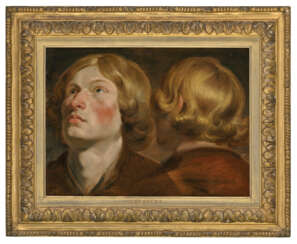

Jacob Jordaens was a Flemish painter, draughtsman and tapestry designer known for his history paintings, genre scenes and portraits. After Peter Paul Rubens and Anthony van Dyck, he was the leading Flemish Baroque painter of his day. Unlike those contemporaries he never travelled abroad to study Italian painting, and his career is marked by an indifference to their intellectual and courtly aspirations. In fact, except for a few short trips to locations elsewhere in the Low Countries, he remained in Antwerp his entire life. As well as being a successful painter, he was a prominent designer of tapestries.
Like Rubens, Jordaens painted altarpieces, mythological, and allegorical scenes, and after 1640 — the year Rubens died — he was the most important painter in Antwerp for large-scale commissions and the status of his patrons increased in general. However, he is best known today for his numerous large genre scenes based on proverbs in the manner of his contemporary Jan Brueghel the Elder, depicting The King Drinks and As the Old Sing, So Pipe the Young. Jordaens' main artistic influences, besides Rubens and the Brueghel family, were northern Italian painters such as Jacopo Bassano, Paolo Veronese, and Caravaggio.