

auguste herbin
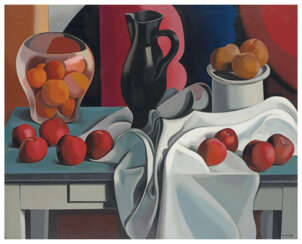

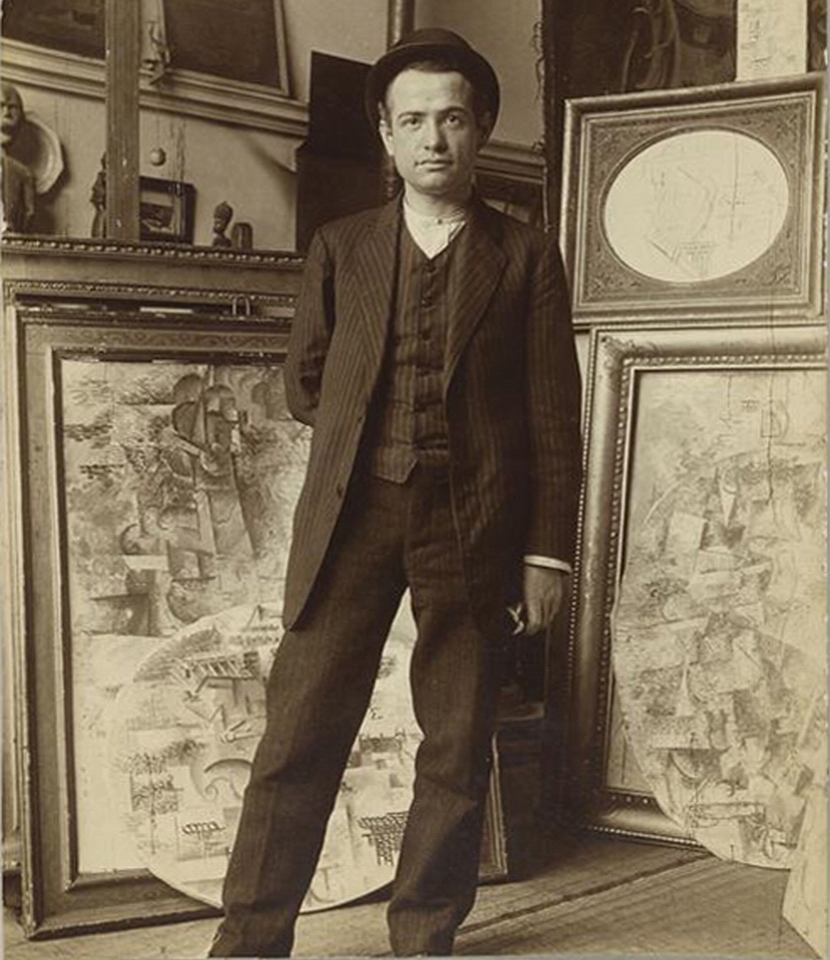
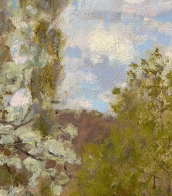
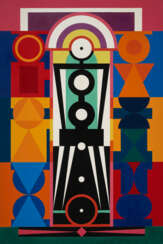
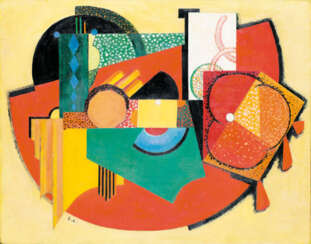
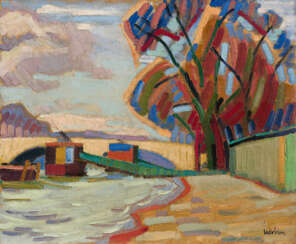
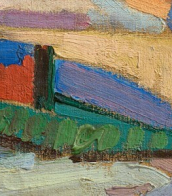
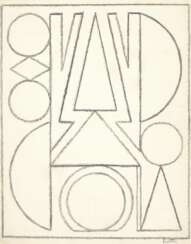
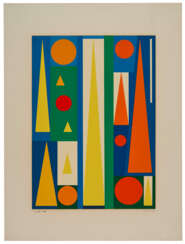
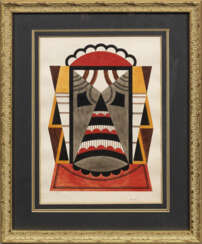
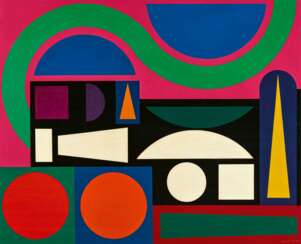
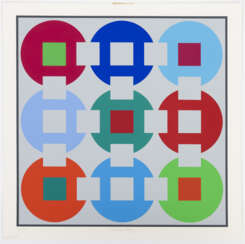
Auguste Herbin was a French painter, celebrated for his contributions to modern art, particularly within the realms of Cubism and abstract painting. Born on April 29, 1882, in Quiévy, Nord, France, Herbin's artistic journey took a significant turn after he moved to Paris in 1903. Initially influenced by Impressionism and Post-Impressionism, his style evolved significantly after 1909 when he became acquainted with Cubism, a movement that significantly influenced his work thereafter. By 1917, Herbin was fully immersed in creating abstract compositions, pioneering a unique blend of geometric abstraction that became his signature style. His abstract work, characterized by simple geometric shapes and vivid, unmodulated colors, adhered to a personal theory of art he detailed in his 1949 book, "L'Art non-figuratif, non-objectif".
Herbin's influence extended beyond his paintings; he was a co-founder of the groups Abstraction-Création and Salon des Réalités Nouvelles, advocating for non-figurative abstract art. Despite facing a significant challenge in 1953, when he became paralyzed on the right side and had to adapt by painting with his left hand, Herbin continued to create art until his passing on January 31, 1960, in Paris. His unfinished work, themed around the word "Fin," marks the poignant end of his prolific career.
Today, Herbin's works are housed in prestigious public collections worldwide, including the Museum de Fundatie in Zwolle, The Netherlands; Kröller-Müller Museum in Otterlo, The Netherlands; National Galleries of Scotland; Matisse Museum in Le Cateau-Cambrésis, France; and the KUNSTEN Museum of Modern Art Aalborg in Denmark, among others. These institutions celebrate Herbin's legacy, showcasing his innovative approach to abstract art that continues to inspire artists and collectors alike.
For enthusiasts and collectors interested in modern art and the evolution of abstract painting, Auguste Herbin's works offer a rich exploration of geometric abstraction and its theoretical underpinnings. Sign up for updates on new product sales and auction events related to Auguste Herbin, and delve deeper into the vibrant world of one of France's pioneering abstract artists.
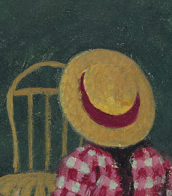
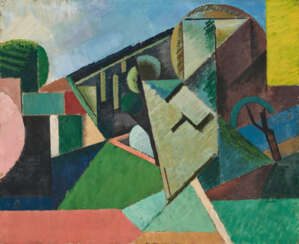

Auguste Herbin was a French painter, celebrated for his contributions to modern art, particularly within the realms of Cubism and abstract painting. Born on April 29, 1882, in Quiévy, Nord, France, Herbin's artistic journey took a significant turn after he moved to Paris in 1903. Initially influenced by Impressionism and Post-Impressionism, his style evolved significantly after 1909 when he became acquainted with Cubism, a movement that significantly influenced his work thereafter. By 1917, Herbin was fully immersed in creating abstract compositions, pioneering a unique blend of geometric abstraction that became his signature style. His abstract work, characterized by simple geometric shapes and vivid, unmodulated colors, adhered to a personal theory of art he detailed in his 1949 book, "L'Art non-figuratif, non-objectif".
Herbin's influence extended beyond his paintings; he was a co-founder of the groups Abstraction-Création and Salon des Réalités Nouvelles, advocating for non-figurative abstract art. Despite facing a significant challenge in 1953, when he became paralyzed on the right side and had to adapt by painting with his left hand, Herbin continued to create art until his passing on January 31, 1960, in Paris. His unfinished work, themed around the word "Fin," marks the poignant end of his prolific career.
Today, Herbin's works are housed in prestigious public collections worldwide, including the Museum de Fundatie in Zwolle, The Netherlands; Kröller-Müller Museum in Otterlo, The Netherlands; National Galleries of Scotland; Matisse Museum in Le Cateau-Cambrésis, France; and the KUNSTEN Museum of Modern Art Aalborg in Denmark, among others. These institutions celebrate Herbin's legacy, showcasing his innovative approach to abstract art that continues to inspire artists and collectors alike.
For enthusiasts and collectors interested in modern art and the evolution of abstract painting, Auguste Herbin's works offer a rich exploration of geometric abstraction and its theoretical underpinnings. Sign up for updates on new product sales and auction events related to Auguste Herbin, and delve deeper into the vibrant world of one of France's pioneering abstract artists.

Auguste Herbin was a French painter, celebrated for his contributions to modern art, particularly within the realms of Cubism and abstract painting. Born on April 29, 1882, in Quiévy, Nord, France, Herbin's artistic journey took a significant turn after he moved to Paris in 1903. Initially influenced by Impressionism and Post-Impressionism, his style evolved significantly after 1909 when he became acquainted with Cubism, a movement that significantly influenced his work thereafter. By 1917, Herbin was fully immersed in creating abstract compositions, pioneering a unique blend of geometric abstraction that became his signature style. His abstract work, characterized by simple geometric shapes and vivid, unmodulated colors, adhered to a personal theory of art he detailed in his 1949 book, "L'Art non-figuratif, non-objectif".
Herbin's influence extended beyond his paintings; he was a co-founder of the groups Abstraction-Création and Salon des Réalités Nouvelles, advocating for non-figurative abstract art. Despite facing a significant challenge in 1953, when he became paralyzed on the right side and had to adapt by painting with his left hand, Herbin continued to create art until his passing on January 31, 1960, in Paris. His unfinished work, themed around the word "Fin," marks the poignant end of his prolific career.
Today, Herbin's works are housed in prestigious public collections worldwide, including the Museum de Fundatie in Zwolle, The Netherlands; Kröller-Müller Museum in Otterlo, The Netherlands; National Galleries of Scotland; Matisse Museum in Le Cateau-Cambrésis, France; and the KUNSTEN Museum of Modern Art Aalborg in Denmark, among others. These institutions celebrate Herbin's legacy, showcasing his innovative approach to abstract art that continues to inspire artists and collectors alike.
For enthusiasts and collectors interested in modern art and the evolution of abstract painting, Auguste Herbin's works offer a rich exploration of geometric abstraction and its theoretical underpinnings. Sign up for updates on new product sales and auction events related to Auguste Herbin, and delve deeper into the vibrant world of one of France's pioneering abstract artists.

Auguste Herbin was a French painter, celebrated for his contributions to modern art, particularly within the realms of Cubism and abstract painting. Born on April 29, 1882, in Quiévy, Nord, France, Herbin's artistic journey took a significant turn after he moved to Paris in 1903. Initially influenced by Impressionism and Post-Impressionism, his style evolved significantly after 1909 when he became acquainted with Cubism, a movement that significantly influenced his work thereafter. By 1917, Herbin was fully immersed in creating abstract compositions, pioneering a unique blend of geometric abstraction that became his signature style. His abstract work, characterized by simple geometric shapes and vivid, unmodulated colors, adhered to a personal theory of art he detailed in his 1949 book, "L'Art non-figuratif, non-objectif".
Herbin's influence extended beyond his paintings; he was a co-founder of the groups Abstraction-Création and Salon des Réalités Nouvelles, advocating for non-figurative abstract art. Despite facing a significant challenge in 1953, when he became paralyzed on the right side and had to adapt by painting with his left hand, Herbin continued to create art until his passing on January 31, 1960, in Paris. His unfinished work, themed around the word "Fin," marks the poignant end of his prolific career.
Today, Herbin's works are housed in prestigious public collections worldwide, including the Museum de Fundatie in Zwolle, The Netherlands; Kröller-Müller Museum in Otterlo, The Netherlands; National Galleries of Scotland; Matisse Museum in Le Cateau-Cambrésis, France; and the KUNSTEN Museum of Modern Art Aalborg in Denmark, among others. These institutions celebrate Herbin's legacy, showcasing his innovative approach to abstract art that continues to inspire artists and collectors alike.
For enthusiasts and collectors interested in modern art and the evolution of abstract painting, Auguste Herbin's works offer a rich exploration of geometric abstraction and its theoretical underpinnings. Sign up for updates on new product sales and auction events related to Auguste Herbin, and delve deeper into the vibrant world of one of France's pioneering abstract artists.
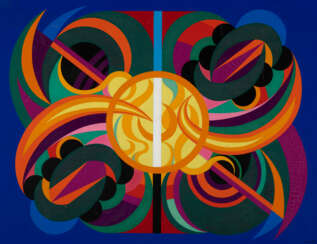

Auguste Herbin was a French painter, celebrated for his contributions to modern art, particularly within the realms of Cubism and abstract painting. Born on April 29, 1882, in Quiévy, Nord, France, Herbin's artistic journey took a significant turn after he moved to Paris in 1903. Initially influenced by Impressionism and Post-Impressionism, his style evolved significantly after 1909 when he became acquainted with Cubism, a movement that significantly influenced his work thereafter. By 1917, Herbin was fully immersed in creating abstract compositions, pioneering a unique blend of geometric abstraction that became his signature style. His abstract work, characterized by simple geometric shapes and vivid, unmodulated colors, adhered to a personal theory of art he detailed in his 1949 book, "L'Art non-figuratif, non-objectif".
Herbin's influence extended beyond his paintings; he was a co-founder of the groups Abstraction-Création and Salon des Réalités Nouvelles, advocating for non-figurative abstract art. Despite facing a significant challenge in 1953, when he became paralyzed on the right side and had to adapt by painting with his left hand, Herbin continued to create art until his passing on January 31, 1960, in Paris. His unfinished work, themed around the word "Fin," marks the poignant end of his prolific career.
Today, Herbin's works are housed in prestigious public collections worldwide, including the Museum de Fundatie in Zwolle, The Netherlands; Kröller-Müller Museum in Otterlo, The Netherlands; National Galleries of Scotland; Matisse Museum in Le Cateau-Cambrésis, France; and the KUNSTEN Museum of Modern Art Aalborg in Denmark, among others. These institutions celebrate Herbin's legacy, showcasing his innovative approach to abstract art that continues to inspire artists and collectors alike.
For enthusiasts and collectors interested in modern art and the evolution of abstract painting, Auguste Herbin's works offer a rich exploration of geometric abstraction and its theoretical underpinnings. Sign up for updates on new product sales and auction events related to Auguste Herbin, and delve deeper into the vibrant world of one of France's pioneering abstract artists.
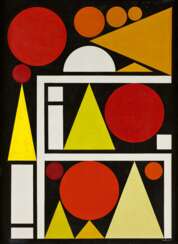

Auguste Herbin was a French painter, celebrated for his contributions to modern art, particularly within the realms of Cubism and abstract painting. Born on April 29, 1882, in Quiévy, Nord, France, Herbin's artistic journey took a significant turn after he moved to Paris in 1903. Initially influenced by Impressionism and Post-Impressionism, his style evolved significantly after 1909 when he became acquainted with Cubism, a movement that significantly influenced his work thereafter. By 1917, Herbin was fully immersed in creating abstract compositions, pioneering a unique blend of geometric abstraction that became his signature style. His abstract work, characterized by simple geometric shapes and vivid, unmodulated colors, adhered to a personal theory of art he detailed in his 1949 book, "L'Art non-figuratif, non-objectif".
Herbin's influence extended beyond his paintings; he was a co-founder of the groups Abstraction-Création and Salon des Réalités Nouvelles, advocating for non-figurative abstract art. Despite facing a significant challenge in 1953, when he became paralyzed on the right side and had to adapt by painting with his left hand, Herbin continued to create art until his passing on January 31, 1960, in Paris. His unfinished work, themed around the word "Fin," marks the poignant end of his prolific career.
Today, Herbin's works are housed in prestigious public collections worldwide, including the Museum de Fundatie in Zwolle, The Netherlands; Kröller-Müller Museum in Otterlo, The Netherlands; National Galleries of Scotland; Matisse Museum in Le Cateau-Cambrésis, France; and the KUNSTEN Museum of Modern Art Aalborg in Denmark, among others. These institutions celebrate Herbin's legacy, showcasing his innovative approach to abstract art that continues to inspire artists and collectors alike.
For enthusiasts and collectors interested in modern art and the evolution of abstract painting, Auguste Herbin's works offer a rich exploration of geometric abstraction and its theoretical underpinnings. Sign up for updates on new product sales and auction events related to Auguste Herbin, and delve deeper into the vibrant world of one of France's pioneering abstract artists.
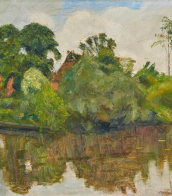
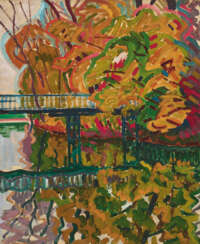

Auguste Herbin was a French painter, celebrated for his contributions to modern art, particularly within the realms of Cubism and abstract painting. Born on April 29, 1882, in Quiévy, Nord, France, Herbin's artistic journey took a significant turn after he moved to Paris in 1903. Initially influenced by Impressionism and Post-Impressionism, his style evolved significantly after 1909 when he became acquainted with Cubism, a movement that significantly influenced his work thereafter. By 1917, Herbin was fully immersed in creating abstract compositions, pioneering a unique blend of geometric abstraction that became his signature style. His abstract work, characterized by simple geometric shapes and vivid, unmodulated colors, adhered to a personal theory of art he detailed in his 1949 book, "L'Art non-figuratif, non-objectif".
Herbin's influence extended beyond his paintings; he was a co-founder of the groups Abstraction-Création and Salon des Réalités Nouvelles, advocating for non-figurative abstract art. Despite facing a significant challenge in 1953, when he became paralyzed on the right side and had to adapt by painting with his left hand, Herbin continued to create art until his passing on January 31, 1960, in Paris. His unfinished work, themed around the word "Fin," marks the poignant end of his prolific career.
Today, Herbin's works are housed in prestigious public collections worldwide, including the Museum de Fundatie in Zwolle, The Netherlands; Kröller-Müller Museum in Otterlo, The Netherlands; National Galleries of Scotland; Matisse Museum in Le Cateau-Cambrésis, France; and the KUNSTEN Museum of Modern Art Aalborg in Denmark, among others. These institutions celebrate Herbin's legacy, showcasing his innovative approach to abstract art that continues to inspire artists and collectors alike.
For enthusiasts and collectors interested in modern art and the evolution of abstract painting, Auguste Herbin's works offer a rich exploration of geometric abstraction and its theoretical underpinnings. Sign up for updates on new product sales and auction events related to Auguste Herbin, and delve deeper into the vibrant world of one of France's pioneering abstract artists.
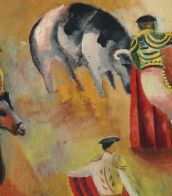
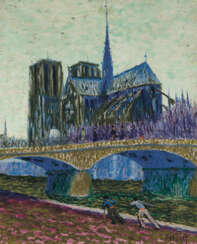

Auguste Herbin was a French painter, celebrated for his contributions to modern art, particularly within the realms of Cubism and abstract painting. Born on April 29, 1882, in Quiévy, Nord, France, Herbin's artistic journey took a significant turn after he moved to Paris in 1903. Initially influenced by Impressionism and Post-Impressionism, his style evolved significantly after 1909 when he became acquainted with Cubism, a movement that significantly influenced his work thereafter. By 1917, Herbin was fully immersed in creating abstract compositions, pioneering a unique blend of geometric abstraction that became his signature style. His abstract work, characterized by simple geometric shapes and vivid, unmodulated colors, adhered to a personal theory of art he detailed in his 1949 book, "L'Art non-figuratif, non-objectif".
Herbin's influence extended beyond his paintings; he was a co-founder of the groups Abstraction-Création and Salon des Réalités Nouvelles, advocating for non-figurative abstract art. Despite facing a significant challenge in 1953, when he became paralyzed on the right side and had to adapt by painting with his left hand, Herbin continued to create art until his passing on January 31, 1960, in Paris. His unfinished work, themed around the word "Fin," marks the poignant end of his prolific career.
Today, Herbin's works are housed in prestigious public collections worldwide, including the Museum de Fundatie in Zwolle, The Netherlands; Kröller-Müller Museum in Otterlo, The Netherlands; National Galleries of Scotland; Matisse Museum in Le Cateau-Cambrésis, France; and the KUNSTEN Museum of Modern Art Aalborg in Denmark, among others. These institutions celebrate Herbin's legacy, showcasing his innovative approach to abstract art that continues to inspire artists and collectors alike.
For enthusiasts and collectors interested in modern art and the evolution of abstract painting, Auguste Herbin's works offer a rich exploration of geometric abstraction and its theoretical underpinnings. Sign up for updates on new product sales and auction events related to Auguste Herbin, and delve deeper into the vibrant world of one of France's pioneering abstract artists.


Auguste Herbin was a French painter, celebrated for his contributions to modern art, particularly within the realms of Cubism and abstract painting. Born on April 29, 1882, in Quiévy, Nord, France, Herbin's artistic journey took a significant turn after he moved to Paris in 1903. Initially influenced by Impressionism and Post-Impressionism, his style evolved significantly after 1909 when he became acquainted with Cubism, a movement that significantly influenced his work thereafter. By 1917, Herbin was fully immersed in creating abstract compositions, pioneering a unique blend of geometric abstraction that became his signature style. His abstract work, characterized by simple geometric shapes and vivid, unmodulated colors, adhered to a personal theory of art he detailed in his 1949 book, "L'Art non-figuratif, non-objectif".
Herbin's influence extended beyond his paintings; he was a co-founder of the groups Abstraction-Création and Salon des Réalités Nouvelles, advocating for non-figurative abstract art. Despite facing a significant challenge in 1953, when he became paralyzed on the right side and had to adapt by painting with his left hand, Herbin continued to create art until his passing on January 31, 1960, in Paris. His unfinished work, themed around the word "Fin," marks the poignant end of his prolific career.
Today, Herbin's works are housed in prestigious public collections worldwide, including the Museum de Fundatie in Zwolle, The Netherlands; Kröller-Müller Museum in Otterlo, The Netherlands; National Galleries of Scotland; Matisse Museum in Le Cateau-Cambrésis, France; and the KUNSTEN Museum of Modern Art Aalborg in Denmark, among others. These institutions celebrate Herbin's legacy, showcasing his innovative approach to abstract art that continues to inspire artists and collectors alike.
For enthusiasts and collectors interested in modern art and the evolution of abstract painting, Auguste Herbin's works offer a rich exploration of geometric abstraction and its theoretical underpinnings. Sign up for updates on new product sales and auction events related to Auguste Herbin, and delve deeper into the vibrant world of one of France's pioneering abstract artists.

Auguste Herbin was a French painter, celebrated for his contributions to modern art, particularly within the realms of Cubism and abstract painting. Born on April 29, 1882, in Quiévy, Nord, France, Herbin's artistic journey took a significant turn after he moved to Paris in 1903. Initially influenced by Impressionism and Post-Impressionism, his style evolved significantly after 1909 when he became acquainted with Cubism, a movement that significantly influenced his work thereafter. By 1917, Herbin was fully immersed in creating abstract compositions, pioneering a unique blend of geometric abstraction that became his signature style. His abstract work, characterized by simple geometric shapes and vivid, unmodulated colors, adhered to a personal theory of art he detailed in his 1949 book, "L'Art non-figuratif, non-objectif".
Herbin's influence extended beyond his paintings; he was a co-founder of the groups Abstraction-Création and Salon des Réalités Nouvelles, advocating for non-figurative abstract art. Despite facing a significant challenge in 1953, when he became paralyzed on the right side and had to adapt by painting with his left hand, Herbin continued to create art until his passing on January 31, 1960, in Paris. His unfinished work, themed around the word "Fin," marks the poignant end of his prolific career.
Today, Herbin's works are housed in prestigious public collections worldwide, including the Museum de Fundatie in Zwolle, The Netherlands; Kröller-Müller Museum in Otterlo, The Netherlands; National Galleries of Scotland; Matisse Museum in Le Cateau-Cambrésis, France; and the KUNSTEN Museum of Modern Art Aalborg in Denmark, among others. These institutions celebrate Herbin's legacy, showcasing his innovative approach to abstract art that continues to inspire artists and collectors alike.
For enthusiasts and collectors interested in modern art and the evolution of abstract painting, Auguste Herbin's works offer a rich exploration of geometric abstraction and its theoretical underpinnings. Sign up for updates on new product sales and auction events related to Auguste Herbin, and delve deeper into the vibrant world of one of France's pioneering abstract artists.

Auguste Herbin was a French painter, celebrated for his contributions to modern art, particularly within the realms of Cubism and abstract painting. Born on April 29, 1882, in Quiévy, Nord, France, Herbin's artistic journey took a significant turn after he moved to Paris in 1903. Initially influenced by Impressionism and Post-Impressionism, his style evolved significantly after 1909 when he became acquainted with Cubism, a movement that significantly influenced his work thereafter. By 1917, Herbin was fully immersed in creating abstract compositions, pioneering a unique blend of geometric abstraction that became his signature style. His abstract work, characterized by simple geometric shapes and vivid, unmodulated colors, adhered to a personal theory of art he detailed in his 1949 book, "L'Art non-figuratif, non-objectif".
Herbin's influence extended beyond his paintings; he was a co-founder of the groups Abstraction-Création and Salon des Réalités Nouvelles, advocating for non-figurative abstract art. Despite facing a significant challenge in 1953, when he became paralyzed on the right side and had to adapt by painting with his left hand, Herbin continued to create art until his passing on January 31, 1960, in Paris. His unfinished work, themed around the word "Fin," marks the poignant end of his prolific career.
Today, Herbin's works are housed in prestigious public collections worldwide, including the Museum de Fundatie in Zwolle, The Netherlands; Kröller-Müller Museum in Otterlo, The Netherlands; National Galleries of Scotland; Matisse Museum in Le Cateau-Cambrésis, France; and the KUNSTEN Museum of Modern Art Aalborg in Denmark, among others. These institutions celebrate Herbin's legacy, showcasing his innovative approach to abstract art that continues to inspire artists and collectors alike.
For enthusiasts and collectors interested in modern art and the evolution of abstract painting, Auguste Herbin's works offer a rich exploration of geometric abstraction and its theoretical underpinnings. Sign up for updates on new product sales and auction events related to Auguste Herbin, and delve deeper into the vibrant world of one of France's pioneering abstract artists.
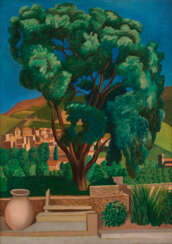

Auguste Herbin was a French painter, celebrated for his contributions to modern art, particularly within the realms of Cubism and abstract painting. Born on April 29, 1882, in Quiévy, Nord, France, Herbin's artistic journey took a significant turn after he moved to Paris in 1903. Initially influenced by Impressionism and Post-Impressionism, his style evolved significantly after 1909 when he became acquainted with Cubism, a movement that significantly influenced his work thereafter. By 1917, Herbin was fully immersed in creating abstract compositions, pioneering a unique blend of geometric abstraction that became his signature style. His abstract work, characterized by simple geometric shapes and vivid, unmodulated colors, adhered to a personal theory of art he detailed in his 1949 book, "L'Art non-figuratif, non-objectif".
Herbin's influence extended beyond his paintings; he was a co-founder of the groups Abstraction-Création and Salon des Réalités Nouvelles, advocating for non-figurative abstract art. Despite facing a significant challenge in 1953, when he became paralyzed on the right side and had to adapt by painting with his left hand, Herbin continued to create art until his passing on January 31, 1960, in Paris. His unfinished work, themed around the word "Fin," marks the poignant end of his prolific career.
Today, Herbin's works are housed in prestigious public collections worldwide, including the Museum de Fundatie in Zwolle, The Netherlands; Kröller-Müller Museum in Otterlo, The Netherlands; National Galleries of Scotland; Matisse Museum in Le Cateau-Cambrésis, France; and the KUNSTEN Museum of Modern Art Aalborg in Denmark, among others. These institutions celebrate Herbin's legacy, showcasing his innovative approach to abstract art that continues to inspire artists and collectors alike.
For enthusiasts and collectors interested in modern art and the evolution of abstract painting, Auguste Herbin's works offer a rich exploration of geometric abstraction and its theoretical underpinnings. Sign up for updates on new product sales and auction events related to Auguste Herbin, and delve deeper into the vibrant world of one of France's pioneering abstract artists.
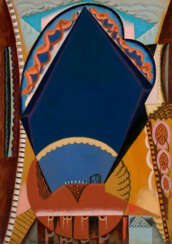

Auguste Herbin was a French painter, celebrated for his contributions to modern art, particularly within the realms of Cubism and abstract painting. Born on April 29, 1882, in Quiévy, Nord, France, Herbin's artistic journey took a significant turn after he moved to Paris in 1903. Initially influenced by Impressionism and Post-Impressionism, his style evolved significantly after 1909 when he became acquainted with Cubism, a movement that significantly influenced his work thereafter. By 1917, Herbin was fully immersed in creating abstract compositions, pioneering a unique blend of geometric abstraction that became his signature style. His abstract work, characterized by simple geometric shapes and vivid, unmodulated colors, adhered to a personal theory of art he detailed in his 1949 book, "L'Art non-figuratif, non-objectif".
Herbin's influence extended beyond his paintings; he was a co-founder of the groups Abstraction-Création and Salon des Réalités Nouvelles, advocating for non-figurative abstract art. Despite facing a significant challenge in 1953, when he became paralyzed on the right side and had to adapt by painting with his left hand, Herbin continued to create art until his passing on January 31, 1960, in Paris. His unfinished work, themed around the word "Fin," marks the poignant end of his prolific career.
Today, Herbin's works are housed in prestigious public collections worldwide, including the Museum de Fundatie in Zwolle, The Netherlands; Kröller-Müller Museum in Otterlo, The Netherlands; National Galleries of Scotland; Matisse Museum in Le Cateau-Cambrésis, France; and the KUNSTEN Museum of Modern Art Aalborg in Denmark, among others. These institutions celebrate Herbin's legacy, showcasing his innovative approach to abstract art that continues to inspire artists and collectors alike.
For enthusiasts and collectors interested in modern art and the evolution of abstract painting, Auguste Herbin's works offer a rich exploration of geometric abstraction and its theoretical underpinnings. Sign up for updates on new product sales and auction events related to Auguste Herbin, and delve deeper into the vibrant world of one of France's pioneering abstract artists.
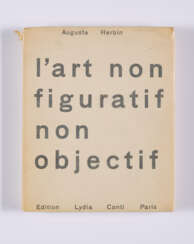

Auguste Herbin was a French painter, celebrated for his contributions to modern art, particularly within the realms of Cubism and abstract painting. Born on April 29, 1882, in Quiévy, Nord, France, Herbin's artistic journey took a significant turn after he moved to Paris in 1903. Initially influenced by Impressionism and Post-Impressionism, his style evolved significantly after 1909 when he became acquainted with Cubism, a movement that significantly influenced his work thereafter. By 1917, Herbin was fully immersed in creating abstract compositions, pioneering a unique blend of geometric abstraction that became his signature style. His abstract work, characterized by simple geometric shapes and vivid, unmodulated colors, adhered to a personal theory of art he detailed in his 1949 book, "L'Art non-figuratif, non-objectif".
Herbin's influence extended beyond his paintings; he was a co-founder of the groups Abstraction-Création and Salon des Réalités Nouvelles, advocating for non-figurative abstract art. Despite facing a significant challenge in 1953, when he became paralyzed on the right side and had to adapt by painting with his left hand, Herbin continued to create art until his passing on January 31, 1960, in Paris. His unfinished work, themed around the word "Fin," marks the poignant end of his prolific career.
Today, Herbin's works are housed in prestigious public collections worldwide, including the Museum de Fundatie in Zwolle, The Netherlands; Kröller-Müller Museum in Otterlo, The Netherlands; National Galleries of Scotland; Matisse Museum in Le Cateau-Cambrésis, France; and the KUNSTEN Museum of Modern Art Aalborg in Denmark, among others. These institutions celebrate Herbin's legacy, showcasing his innovative approach to abstract art that continues to inspire artists and collectors alike.
For enthusiasts and collectors interested in modern art and the evolution of abstract painting, Auguste Herbin's works offer a rich exploration of geometric abstraction and its theoretical underpinnings. Sign up for updates on new product sales and auction events related to Auguste Herbin, and delve deeper into the vibrant world of one of France's pioneering abstract artists.

Auguste Herbin was a French painter, celebrated for his contributions to modern art, particularly within the realms of Cubism and abstract painting. Born on April 29, 1882, in Quiévy, Nord, France, Herbin's artistic journey took a significant turn after he moved to Paris in 1903. Initially influenced by Impressionism and Post-Impressionism, his style evolved significantly after 1909 when he became acquainted with Cubism, a movement that significantly influenced his work thereafter. By 1917, Herbin was fully immersed in creating abstract compositions, pioneering a unique blend of geometric abstraction that became his signature style. His abstract work, characterized by simple geometric shapes and vivid, unmodulated colors, adhered to a personal theory of art he detailed in his 1949 book, "L'Art non-figuratif, non-objectif".
Herbin's influence extended beyond his paintings; he was a co-founder of the groups Abstraction-Création and Salon des Réalités Nouvelles, advocating for non-figurative abstract art. Despite facing a significant challenge in 1953, when he became paralyzed on the right side and had to adapt by painting with his left hand, Herbin continued to create art until his passing on January 31, 1960, in Paris. His unfinished work, themed around the word "Fin," marks the poignant end of his prolific career.
Today, Herbin's works are housed in prestigious public collections worldwide, including the Museum de Fundatie in Zwolle, The Netherlands; Kröller-Müller Museum in Otterlo, The Netherlands; National Galleries of Scotland; Matisse Museum in Le Cateau-Cambrésis, France; and the KUNSTEN Museum of Modern Art Aalborg in Denmark, among others. These institutions celebrate Herbin's legacy, showcasing his innovative approach to abstract art that continues to inspire artists and collectors alike.
For enthusiasts and collectors interested in modern art and the evolution of abstract painting, Auguste Herbin's works offer a rich exploration of geometric abstraction and its theoretical underpinnings. Sign up for updates on new product sales and auction events related to Auguste Herbin, and delve deeper into the vibrant world of one of France's pioneering abstract artists.

Auguste Herbin was a French painter, celebrated for his contributions to modern art, particularly within the realms of Cubism and abstract painting. Born on April 29, 1882, in Quiévy, Nord, France, Herbin's artistic journey took a significant turn after he moved to Paris in 1903. Initially influenced by Impressionism and Post-Impressionism, his style evolved significantly after 1909 when he became acquainted with Cubism, a movement that significantly influenced his work thereafter. By 1917, Herbin was fully immersed in creating abstract compositions, pioneering a unique blend of geometric abstraction that became his signature style. His abstract work, characterized by simple geometric shapes and vivid, unmodulated colors, adhered to a personal theory of art he detailed in his 1949 book, "L'Art non-figuratif, non-objectif".
Herbin's influence extended beyond his paintings; he was a co-founder of the groups Abstraction-Création and Salon des Réalités Nouvelles, advocating for non-figurative abstract art. Despite facing a significant challenge in 1953, when he became paralyzed on the right side and had to adapt by painting with his left hand, Herbin continued to create art until his passing on January 31, 1960, in Paris. His unfinished work, themed around the word "Fin," marks the poignant end of his prolific career.
Today, Herbin's works are housed in prestigious public collections worldwide, including the Museum de Fundatie in Zwolle, The Netherlands; Kröller-Müller Museum in Otterlo, The Netherlands; National Galleries of Scotland; Matisse Museum in Le Cateau-Cambrésis, France; and the KUNSTEN Museum of Modern Art Aalborg in Denmark, among others. These institutions celebrate Herbin's legacy, showcasing his innovative approach to abstract art that continues to inspire artists and collectors alike.
For enthusiasts and collectors interested in modern art and the evolution of abstract painting, Auguste Herbin's works offer a rich exploration of geometric abstraction and its theoretical underpinnings. Sign up for updates on new product sales and auction events related to Auguste Herbin, and delve deeper into the vibrant world of one of France's pioneering abstract artists.


Auguste Herbin was a French painter, celebrated for his contributions to modern art, particularly within the realms of Cubism and abstract painting. Born on April 29, 1882, in Quiévy, Nord, France, Herbin's artistic journey took a significant turn after he moved to Paris in 1903. Initially influenced by Impressionism and Post-Impressionism, his style evolved significantly after 1909 when he became acquainted with Cubism, a movement that significantly influenced his work thereafter. By 1917, Herbin was fully immersed in creating abstract compositions, pioneering a unique blend of geometric abstraction that became his signature style. His abstract work, characterized by simple geometric shapes and vivid, unmodulated colors, adhered to a personal theory of art he detailed in his 1949 book, "L'Art non-figuratif, non-objectif".
Herbin's influence extended beyond his paintings; he was a co-founder of the groups Abstraction-Création and Salon des Réalités Nouvelles, advocating for non-figurative abstract art. Despite facing a significant challenge in 1953, when he became paralyzed on the right side and had to adapt by painting with his left hand, Herbin continued to create art until his passing on January 31, 1960, in Paris. His unfinished work, themed around the word "Fin," marks the poignant end of his prolific career.
Today, Herbin's works are housed in prestigious public collections worldwide, including the Museum de Fundatie in Zwolle, The Netherlands; Kröller-Müller Museum in Otterlo, The Netherlands; National Galleries of Scotland; Matisse Museum in Le Cateau-Cambrésis, France; and the KUNSTEN Museum of Modern Art Aalborg in Denmark, among others. These institutions celebrate Herbin's legacy, showcasing his innovative approach to abstract art that continues to inspire artists and collectors alike.
For enthusiasts and collectors interested in modern art and the evolution of abstract painting, Auguste Herbin's works offer a rich exploration of geometric abstraction and its theoretical underpinnings. Sign up for updates on new product sales and auction events related to Auguste Herbin, and delve deeper into the vibrant world of one of France's pioneering abstract artists.


Auguste Herbin was a French painter, celebrated for his contributions to modern art, particularly within the realms of Cubism and abstract painting. Born on April 29, 1882, in Quiévy, Nord, France, Herbin's artistic journey took a significant turn after he moved to Paris in 1903. Initially influenced by Impressionism and Post-Impressionism, his style evolved significantly after 1909 when he became acquainted with Cubism, a movement that significantly influenced his work thereafter. By 1917, Herbin was fully immersed in creating abstract compositions, pioneering a unique blend of geometric abstraction that became his signature style. His abstract work, characterized by simple geometric shapes and vivid, unmodulated colors, adhered to a personal theory of art he detailed in his 1949 book, "L'Art non-figuratif, non-objectif".
Herbin's influence extended beyond his paintings; he was a co-founder of the groups Abstraction-Création and Salon des Réalités Nouvelles, advocating for non-figurative abstract art. Despite facing a significant challenge in 1953, when he became paralyzed on the right side and had to adapt by painting with his left hand, Herbin continued to create art until his passing on January 31, 1960, in Paris. His unfinished work, themed around the word "Fin," marks the poignant end of his prolific career.
Today, Herbin's works are housed in prestigious public collections worldwide, including the Museum de Fundatie in Zwolle, The Netherlands; Kröller-Müller Museum in Otterlo, The Netherlands; National Galleries of Scotland; Matisse Museum in Le Cateau-Cambrésis, France; and the KUNSTEN Museum of Modern Art Aalborg in Denmark, among others. These institutions celebrate Herbin's legacy, showcasing his innovative approach to abstract art that continues to inspire artists and collectors alike.
For enthusiasts and collectors interested in modern art and the evolution of abstract painting, Auguste Herbin's works offer a rich exploration of geometric abstraction and its theoretical underpinnings. Sign up for updates on new product sales and auction events related to Auguste Herbin, and delve deeper into the vibrant world of one of France's pioneering abstract artists.

Auguste Herbin was a French painter, celebrated for his contributions to modern art, particularly within the realms of Cubism and abstract painting. Born on April 29, 1882, in Quiévy, Nord, France, Herbin's artistic journey took a significant turn after he moved to Paris in 1903. Initially influenced by Impressionism and Post-Impressionism, his style evolved significantly after 1909 when he became acquainted with Cubism, a movement that significantly influenced his work thereafter. By 1917, Herbin was fully immersed in creating abstract compositions, pioneering a unique blend of geometric abstraction that became his signature style. His abstract work, characterized by simple geometric shapes and vivid, unmodulated colors, adhered to a personal theory of art he detailed in his 1949 book, "L'Art non-figuratif, non-objectif".
Herbin's influence extended beyond his paintings; he was a co-founder of the groups Abstraction-Création and Salon des Réalités Nouvelles, advocating for non-figurative abstract art. Despite facing a significant challenge in 1953, when he became paralyzed on the right side and had to adapt by painting with his left hand, Herbin continued to create art until his passing on January 31, 1960, in Paris. His unfinished work, themed around the word "Fin," marks the poignant end of his prolific career.
Today, Herbin's works are housed in prestigious public collections worldwide, including the Museum de Fundatie in Zwolle, The Netherlands; Kröller-Müller Museum in Otterlo, The Netherlands; National Galleries of Scotland; Matisse Museum in Le Cateau-Cambrésis, France; and the KUNSTEN Museum of Modern Art Aalborg in Denmark, among others. These institutions celebrate Herbin's legacy, showcasing his innovative approach to abstract art that continues to inspire artists and collectors alike.
For enthusiasts and collectors interested in modern art and the evolution of abstract painting, Auguste Herbin's works offer a rich exploration of geometric abstraction and its theoretical underpinnings. Sign up for updates on new product sales and auction events related to Auguste Herbin, and delve deeper into the vibrant world of one of France's pioneering abstract artists.

Auguste Herbin was a French painter, celebrated for his contributions to modern art, particularly within the realms of Cubism and abstract painting. Born on April 29, 1882, in Quiévy, Nord, France, Herbin's artistic journey took a significant turn after he moved to Paris in 1903. Initially influenced by Impressionism and Post-Impressionism, his style evolved significantly after 1909 when he became acquainted with Cubism, a movement that significantly influenced his work thereafter. By 1917, Herbin was fully immersed in creating abstract compositions, pioneering a unique blend of geometric abstraction that became his signature style. His abstract work, characterized by simple geometric shapes and vivid, unmodulated colors, adhered to a personal theory of art he detailed in his 1949 book, "L'Art non-figuratif, non-objectif".
Herbin's influence extended beyond his paintings; he was a co-founder of the groups Abstraction-Création and Salon des Réalités Nouvelles, advocating for non-figurative abstract art. Despite facing a significant challenge in 1953, when he became paralyzed on the right side and had to adapt by painting with his left hand, Herbin continued to create art until his passing on January 31, 1960, in Paris. His unfinished work, themed around the word "Fin," marks the poignant end of his prolific career.
Today, Herbin's works are housed in prestigious public collections worldwide, including the Museum de Fundatie in Zwolle, The Netherlands; Kröller-Müller Museum in Otterlo, The Netherlands; National Galleries of Scotland; Matisse Museum in Le Cateau-Cambrésis, France; and the KUNSTEN Museum of Modern Art Aalborg in Denmark, among others. These institutions celebrate Herbin's legacy, showcasing his innovative approach to abstract art that continues to inspire artists and collectors alike.
For enthusiasts and collectors interested in modern art and the evolution of abstract painting, Auguste Herbin's works offer a rich exploration of geometric abstraction and its theoretical underpinnings. Sign up for updates on new product sales and auction events related to Auguste Herbin, and delve deeper into the vibrant world of one of France's pioneering abstract artists.

Auguste Herbin was a French painter, celebrated for his contributions to modern art, particularly within the realms of Cubism and abstract painting. Born on April 29, 1882, in Quiévy, Nord, France, Herbin's artistic journey took a significant turn after he moved to Paris in 1903. Initially influenced by Impressionism and Post-Impressionism, his style evolved significantly after 1909 when he became acquainted with Cubism, a movement that significantly influenced his work thereafter. By 1917, Herbin was fully immersed in creating abstract compositions, pioneering a unique blend of geometric abstraction that became his signature style. His abstract work, characterized by simple geometric shapes and vivid, unmodulated colors, adhered to a personal theory of art he detailed in his 1949 book, "L'Art non-figuratif, non-objectif".
Herbin's influence extended beyond his paintings; he was a co-founder of the groups Abstraction-Création and Salon des Réalités Nouvelles, advocating for non-figurative abstract art. Despite facing a significant challenge in 1953, when he became paralyzed on the right side and had to adapt by painting with his left hand, Herbin continued to create art until his passing on January 31, 1960, in Paris. His unfinished work, themed around the word "Fin," marks the poignant end of his prolific career.
Today, Herbin's works are housed in prestigious public collections worldwide, including the Museum de Fundatie in Zwolle, The Netherlands; Kröller-Müller Museum in Otterlo, The Netherlands; National Galleries of Scotland; Matisse Museum in Le Cateau-Cambrésis, France; and the KUNSTEN Museum of Modern Art Aalborg in Denmark, among others. These institutions celebrate Herbin's legacy, showcasing his innovative approach to abstract art that continues to inspire artists and collectors alike.
For enthusiasts and collectors interested in modern art and the evolution of abstract painting, Auguste Herbin's works offer a rich exploration of geometric abstraction and its theoretical underpinnings. Sign up for updates on new product sales and auction events related to Auguste Herbin, and delve deeper into the vibrant world of one of France's pioneering abstract artists.

Auguste Herbin was a French painter, celebrated for his contributions to modern art, particularly within the realms of Cubism and abstract painting. Born on April 29, 1882, in Quiévy, Nord, France, Herbin's artistic journey took a significant turn after he moved to Paris in 1903. Initially influenced by Impressionism and Post-Impressionism, his style evolved significantly after 1909 when he became acquainted with Cubism, a movement that significantly influenced his work thereafter. By 1917, Herbin was fully immersed in creating abstract compositions, pioneering a unique blend of geometric abstraction that became his signature style. His abstract work, characterized by simple geometric shapes and vivid, unmodulated colors, adhered to a personal theory of art he detailed in his 1949 book, "L'Art non-figuratif, non-objectif".
Herbin's influence extended beyond his paintings; he was a co-founder of the groups Abstraction-Création and Salon des Réalités Nouvelles, advocating for non-figurative abstract art. Despite facing a significant challenge in 1953, when he became paralyzed on the right side and had to adapt by painting with his left hand, Herbin continued to create art until his passing on January 31, 1960, in Paris. His unfinished work, themed around the word "Fin," marks the poignant end of his prolific career.
Today, Herbin's works are housed in prestigious public collections worldwide, including the Museum de Fundatie in Zwolle, The Netherlands; Kröller-Müller Museum in Otterlo, The Netherlands; National Galleries of Scotland; Matisse Museum in Le Cateau-Cambrésis, France; and the KUNSTEN Museum of Modern Art Aalborg in Denmark, among others. These institutions celebrate Herbin's legacy, showcasing his innovative approach to abstract art that continues to inspire artists and collectors alike.
For enthusiasts and collectors interested in modern art and the evolution of abstract painting, Auguste Herbin's works offer a rich exploration of geometric abstraction and its theoretical underpinnings. Sign up for updates on new product sales and auction events related to Auguste Herbin, and delve deeper into the vibrant world of one of France's pioneering abstract artists.

Auguste Herbin was a French painter, celebrated for his contributions to modern art, particularly within the realms of Cubism and abstract painting. Born on April 29, 1882, in Quiévy, Nord, France, Herbin's artistic journey took a significant turn after he moved to Paris in 1903. Initially influenced by Impressionism and Post-Impressionism, his style evolved significantly after 1909 when he became acquainted with Cubism, a movement that significantly influenced his work thereafter. By 1917, Herbin was fully immersed in creating abstract compositions, pioneering a unique blend of geometric abstraction that became his signature style. His abstract work, characterized by simple geometric shapes and vivid, unmodulated colors, adhered to a personal theory of art he detailed in his 1949 book, "L'Art non-figuratif, non-objectif".
Herbin's influence extended beyond his paintings; he was a co-founder of the groups Abstraction-Création and Salon des Réalités Nouvelles, advocating for non-figurative abstract art. Despite facing a significant challenge in 1953, when he became paralyzed on the right side and had to adapt by painting with his left hand, Herbin continued to create art until his passing on January 31, 1960, in Paris. His unfinished work, themed around the word "Fin," marks the poignant end of his prolific career.
Today, Herbin's works are housed in prestigious public collections worldwide, including the Museum de Fundatie in Zwolle, The Netherlands; Kröller-Müller Museum in Otterlo, The Netherlands; National Galleries of Scotland; Matisse Museum in Le Cateau-Cambrésis, France; and the KUNSTEN Museum of Modern Art Aalborg in Denmark, among others. These institutions celebrate Herbin's legacy, showcasing his innovative approach to abstract art that continues to inspire artists and collectors alike.
For enthusiasts and collectors interested in modern art and the evolution of abstract painting, Auguste Herbin's works offer a rich exploration of geometric abstraction and its theoretical underpinnings. Sign up for updates on new product sales and auction events related to Auguste Herbin, and delve deeper into the vibrant world of one of France's pioneering abstract artists.
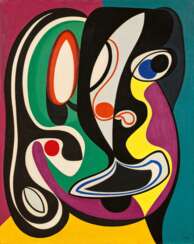

Auguste Herbin was a French painter, celebrated for his contributions to modern art, particularly within the realms of Cubism and abstract painting. Born on April 29, 1882, in Quiévy, Nord, France, Herbin's artistic journey took a significant turn after he moved to Paris in 1903. Initially influenced by Impressionism and Post-Impressionism, his style evolved significantly after 1909 when he became acquainted with Cubism, a movement that significantly influenced his work thereafter. By 1917, Herbin was fully immersed in creating abstract compositions, pioneering a unique blend of geometric abstraction that became his signature style. His abstract work, characterized by simple geometric shapes and vivid, unmodulated colors, adhered to a personal theory of art he detailed in his 1949 book, "L'Art non-figuratif, non-objectif".
Herbin's influence extended beyond his paintings; he was a co-founder of the groups Abstraction-Création and Salon des Réalités Nouvelles, advocating for non-figurative abstract art. Despite facing a significant challenge in 1953, when he became paralyzed on the right side and had to adapt by painting with his left hand, Herbin continued to create art until his passing on January 31, 1960, in Paris. His unfinished work, themed around the word "Fin," marks the poignant end of his prolific career.
Today, Herbin's works are housed in prestigious public collections worldwide, including the Museum de Fundatie in Zwolle, The Netherlands; Kröller-Müller Museum in Otterlo, The Netherlands; National Galleries of Scotland; Matisse Museum in Le Cateau-Cambrésis, France; and the KUNSTEN Museum of Modern Art Aalborg in Denmark, among others. These institutions celebrate Herbin's legacy, showcasing his innovative approach to abstract art that continues to inspire artists and collectors alike.
For enthusiasts and collectors interested in modern art and the evolution of abstract painting, Auguste Herbin's works offer a rich exploration of geometric abstraction and its theoretical underpinnings. Sign up for updates on new product sales and auction events related to Auguste Herbin, and delve deeper into the vibrant world of one of France's pioneering abstract artists.
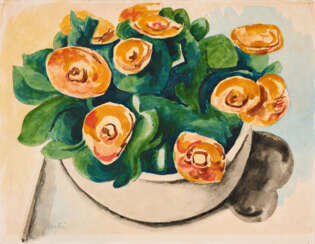

Auguste Herbin was a French painter, celebrated for his contributions to modern art, particularly within the realms of Cubism and abstract painting. Born on April 29, 1882, in Quiévy, Nord, France, Herbin's artistic journey took a significant turn after he moved to Paris in 1903. Initially influenced by Impressionism and Post-Impressionism, his style evolved significantly after 1909 when he became acquainted with Cubism, a movement that significantly influenced his work thereafter. By 1917, Herbin was fully immersed in creating abstract compositions, pioneering a unique blend of geometric abstraction that became his signature style. His abstract work, characterized by simple geometric shapes and vivid, unmodulated colors, adhered to a personal theory of art he detailed in his 1949 book, "L'Art non-figuratif, non-objectif".
Herbin's influence extended beyond his paintings; he was a co-founder of the groups Abstraction-Création and Salon des Réalités Nouvelles, advocating for non-figurative abstract art. Despite facing a significant challenge in 1953, when he became paralyzed on the right side and had to adapt by painting with his left hand, Herbin continued to create art until his passing on January 31, 1960, in Paris. His unfinished work, themed around the word "Fin," marks the poignant end of his prolific career.
Today, Herbin's works are housed in prestigious public collections worldwide, including the Museum de Fundatie in Zwolle, The Netherlands; Kröller-Müller Museum in Otterlo, The Netherlands; National Galleries of Scotland; Matisse Museum in Le Cateau-Cambrésis, France; and the KUNSTEN Museum of Modern Art Aalborg in Denmark, among others. These institutions celebrate Herbin's legacy, showcasing his innovative approach to abstract art that continues to inspire artists and collectors alike.
For enthusiasts and collectors interested in modern art and the evolution of abstract painting, Auguste Herbin's works offer a rich exploration of geometric abstraction and its theoretical underpinnings. Sign up for updates on new product sales and auction events related to Auguste Herbin, and delve deeper into the vibrant world of one of France's pioneering abstract artists.


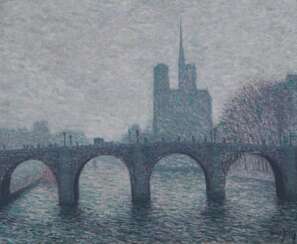

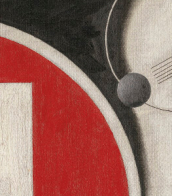
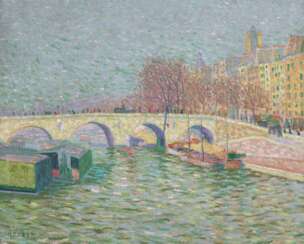

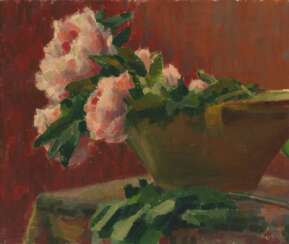


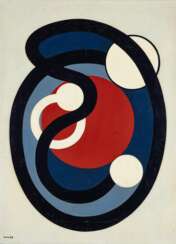

Auguste Herbin was a French painter, celebrated for his contributions to modern art, particularly within the realms of Cubism and abstract painting. Born on April 29, 1882, in Quiévy, Nord, France, Herbin's artistic journey took a significant turn after he moved to Paris in 1903. Initially influenced by Impressionism and Post-Impressionism, his style evolved significantly after 1909 when he became acquainted with Cubism, a movement that significantly influenced his work thereafter. By 1917, Herbin was fully immersed in creating abstract compositions, pioneering a unique blend of geometric abstraction that became his signature style. His abstract work, characterized by simple geometric shapes and vivid, unmodulated colors, adhered to a personal theory of art he detailed in his 1949 book, "L'Art non-figuratif, non-objectif".
Herbin's influence extended beyond his paintings; he was a co-founder of the groups Abstraction-Création and Salon des Réalités Nouvelles, advocating for non-figurative abstract art. Despite facing a significant challenge in 1953, when he became paralyzed on the right side and had to adapt by painting with his left hand, Herbin continued to create art until his passing on January 31, 1960, in Paris. His unfinished work, themed around the word "Fin," marks the poignant end of his prolific career.
Today, Herbin's works are housed in prestigious public collections worldwide, including the Museum de Fundatie in Zwolle, The Netherlands; Kröller-Müller Museum in Otterlo, The Netherlands; National Galleries of Scotland; Matisse Museum in Le Cateau-Cambrésis, France; and the KUNSTEN Museum of Modern Art Aalborg in Denmark, among others. These institutions celebrate Herbin's legacy, showcasing his innovative approach to abstract art that continues to inspire artists and collectors alike.
For enthusiasts and collectors interested in modern art and the evolution of abstract painting, Auguste Herbin's works offer a rich exploration of geometric abstraction and its theoretical underpinnings. Sign up for updates on new product sales and auction events related to Auguste Herbin, and delve deeper into the vibrant world of one of France's pioneering abstract artists.
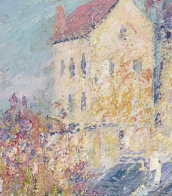
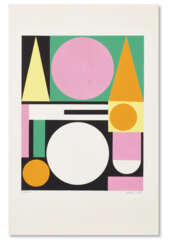

Auguste Herbin was a French painter, celebrated for his contributions to modern art, particularly within the realms of Cubism and abstract painting. Born on April 29, 1882, in Quiévy, Nord, France, Herbin's artistic journey took a significant turn after he moved to Paris in 1903. Initially influenced by Impressionism and Post-Impressionism, his style evolved significantly after 1909 when he became acquainted with Cubism, a movement that significantly influenced his work thereafter. By 1917, Herbin was fully immersed in creating abstract compositions, pioneering a unique blend of geometric abstraction that became his signature style. His abstract work, characterized by simple geometric shapes and vivid, unmodulated colors, adhered to a personal theory of art he detailed in his 1949 book, "L'Art non-figuratif, non-objectif".
Herbin's influence extended beyond his paintings; he was a co-founder of the groups Abstraction-Création and Salon des Réalités Nouvelles, advocating for non-figurative abstract art. Despite facing a significant challenge in 1953, when he became paralyzed on the right side and had to adapt by painting with his left hand, Herbin continued to create art until his passing on January 31, 1960, in Paris. His unfinished work, themed around the word "Fin," marks the poignant end of his prolific career.
Today, Herbin's works are housed in prestigious public collections worldwide, including the Museum de Fundatie in Zwolle, The Netherlands; Kröller-Müller Museum in Otterlo, The Netherlands; National Galleries of Scotland; Matisse Museum in Le Cateau-Cambrésis, France; and the KUNSTEN Museum of Modern Art Aalborg in Denmark, among others. These institutions celebrate Herbin's legacy, showcasing his innovative approach to abstract art that continues to inspire artists and collectors alike.
For enthusiasts and collectors interested in modern art and the evolution of abstract painting, Auguste Herbin's works offer a rich exploration of geometric abstraction and its theoretical underpinnings. Sign up for updates on new product sales and auction events related to Auguste Herbin, and delve deeper into the vibrant world of one of France's pioneering abstract artists.
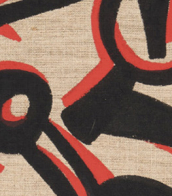


Auguste Herbin was a French painter, celebrated for his contributions to modern art, particularly within the realms of Cubism and abstract painting. Born on April 29, 1882, in Quiévy, Nord, France, Herbin's artistic journey took a significant turn after he moved to Paris in 1903. Initially influenced by Impressionism and Post-Impressionism, his style evolved significantly after 1909 when he became acquainted with Cubism, a movement that significantly influenced his work thereafter. By 1917, Herbin was fully immersed in creating abstract compositions, pioneering a unique blend of geometric abstraction that became his signature style. His abstract work, characterized by simple geometric shapes and vivid, unmodulated colors, adhered to a personal theory of art he detailed in his 1949 book, "L'Art non-figuratif, non-objectif".
Herbin's influence extended beyond his paintings; he was a co-founder of the groups Abstraction-Création and Salon des Réalités Nouvelles, advocating for non-figurative abstract art. Despite facing a significant challenge in 1953, when he became paralyzed on the right side and had to adapt by painting with his left hand, Herbin continued to create art until his passing on January 31, 1960, in Paris. His unfinished work, themed around the word "Fin," marks the poignant end of his prolific career.
Today, Herbin's works are housed in prestigious public collections worldwide, including the Museum de Fundatie in Zwolle, The Netherlands; Kröller-Müller Museum in Otterlo, The Netherlands; National Galleries of Scotland; Matisse Museum in Le Cateau-Cambrésis, France; and the KUNSTEN Museum of Modern Art Aalborg in Denmark, among others. These institutions celebrate Herbin's legacy, showcasing his innovative approach to abstract art that continues to inspire artists and collectors alike.
For enthusiasts and collectors interested in modern art and the evolution of abstract painting, Auguste Herbin's works offer a rich exploration of geometric abstraction and its theoretical underpinnings. Sign up for updates on new product sales and auction events related to Auguste Herbin, and delve deeper into the vibrant world of one of France's pioneering abstract artists.






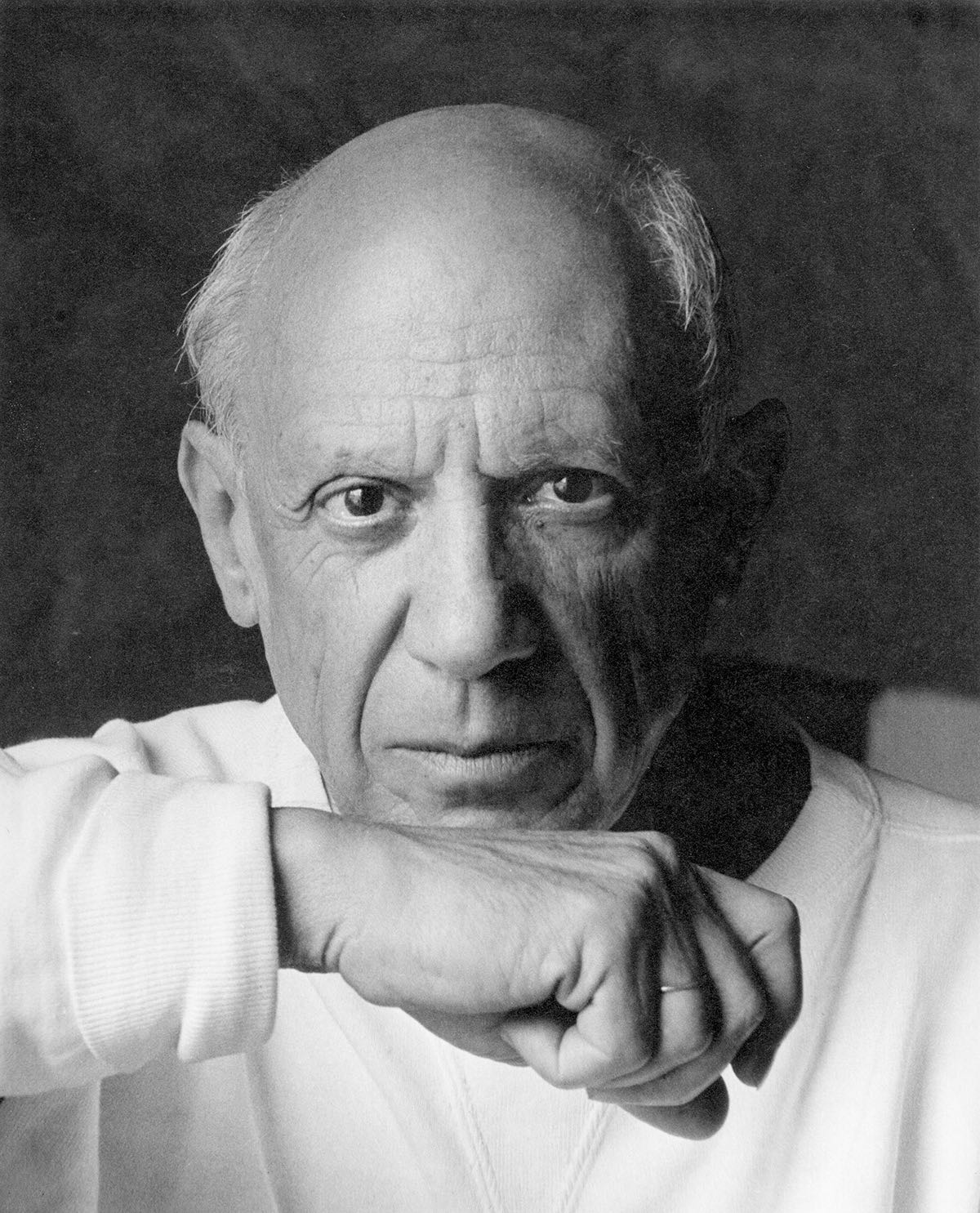
Pablo Ruiz Picasso, a Spanish artist renowned for his revolutionary contributions to the 20th-century art scene, is a figure that resonates profoundly with collectors and art experts. His unique blend of talents in painting, sculpture, printmaking, and ceramic art, infused with his time in France, positioned him as a pivotal character in modern art history.
Picasso's artistic journey was marked by distinct periods, each showcasing his evolving style and genius. His early years were characterized by the Blue Period (1901-1904), followed by the Rose Period (1904-1906), and then the African-influenced Period (1907-1909). Picasso's name is synonymous with Cubism, a movement he co-founded, which significantly altered artistic perspectives and methods. Works like "Les Demoiselles d'Avignon" (1907) and "Guernica" (1937) are emblematic of his cubist legacy, the latter being a poignant anti-war statement that remains influential.
His later years saw a return to more traditional styles, with neoclassical and surrealist influences becoming evident. Works from these phases reflect a deep engagement with mythological themes, as seen in "Faun with Stars" (1955), symbolizing his late-life romance with Jacqueline Roque, his second wife.
Picasso's prolific output and innovative spirit made him a legend in his own time, a status that only grew after his death. His works, housed in major museums and private collections worldwide, continue to captivate and inspire.
As a collector or expert in art and antiques, staying informed about Picasso's works, their auction events, and sales is essential. To stay updated on the latest developments and opportunities related to Pablo Picasso, sign up for our specialized updates. Rest assured, this subscription will focus solely on new product sales and auction events pertaining to Picasso's art, ensuring that you receive only the most relevant and valuable information.
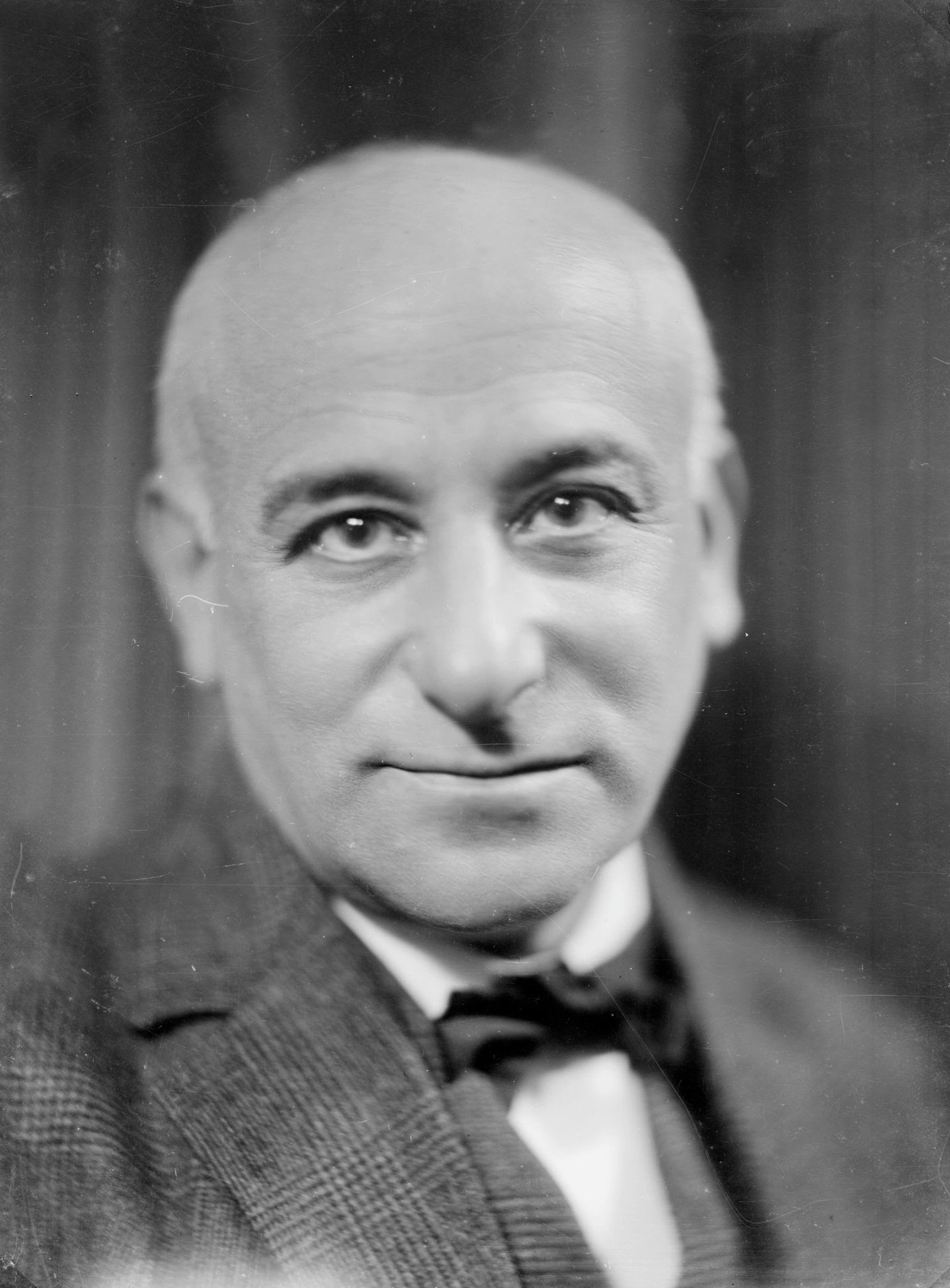
Max Jacob was a French poet, painter, writer, and critic.
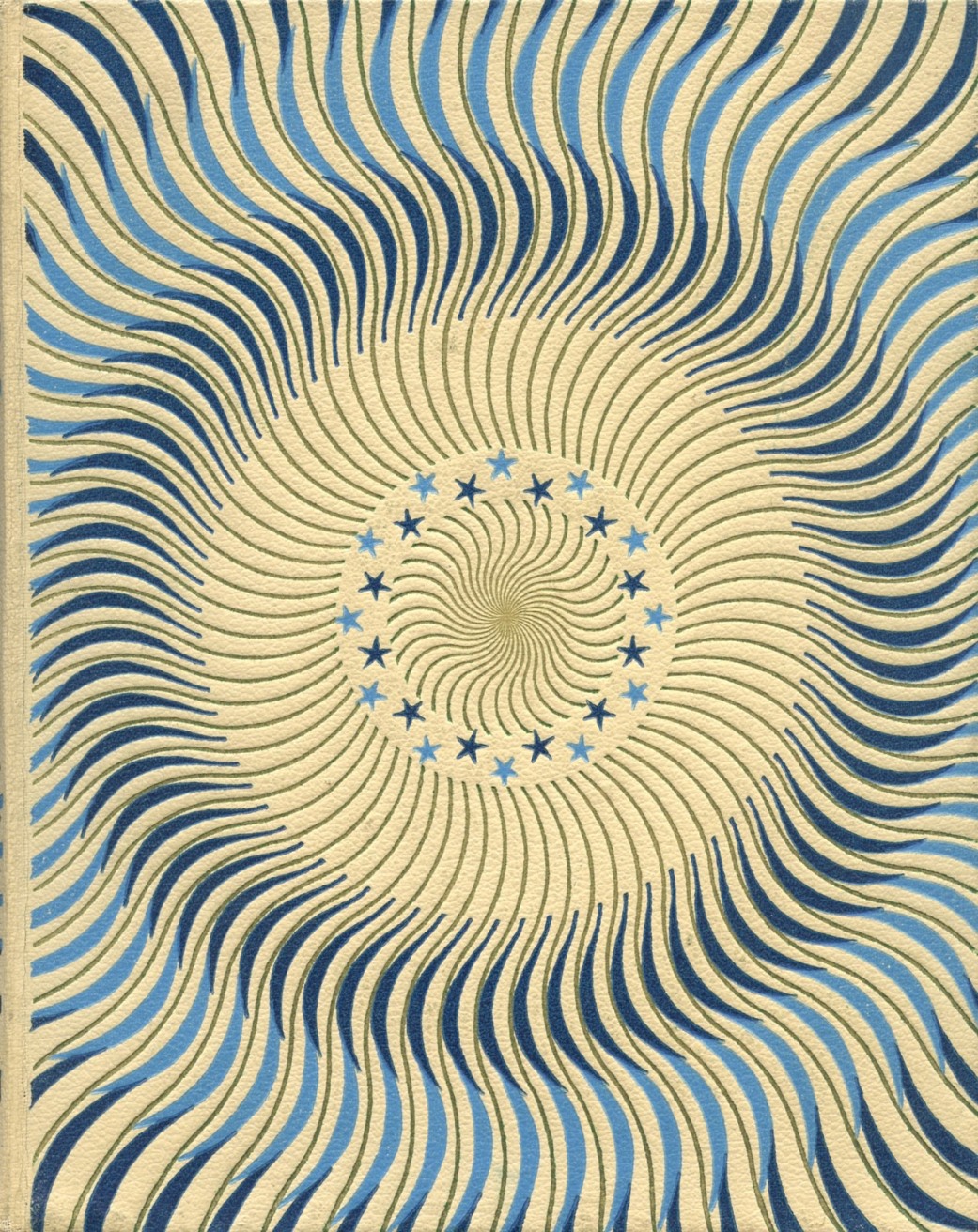
Paul Bonet, birth name Paul Joseph Ghislain Bonet, is a French bookbinder and bookbinding designer, Knight of the Legion of Honor.
Trained to make fashionable wooden mannequins, Paul Bonet worked in the fashion industry for several years and did not turn to bookbinding until 1920. His bright, colorful designs and prolific work made him famous. His first bindings were exhibited in 1925 at the Gallière Museum, then at the French Book Arts Exhibition, the Salon d'Automne and the Salon des Artistes Décoratifs, and his talent was recognized.
His decoration was particularly innovative. One of the great masters of French bookbinding, Paul Bonet became famous in the 1930s and 1940s for one of his signature patterns, "sunbeams." These patterns consist of many small lines with gold trim, carefully planned and giving the optical illusion of spatial depth.




.jpg)
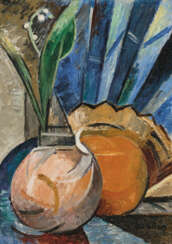
Albert Gleizes was a pioneering French artist, theoretician, and philosopher, renowned for his contributions to Cubism and his influence on the School of Paris. Born in Paris in 1881, Gleizes' artistic journey began in his late teens, inspired by Impressionism and later evolving through Post-Impressionist and Symbolist phases. His early work, such as "La Seine à Asnières" exhibited in 1902, showcases his initial foray into painting. Gleizes' commitment to developing art free from commercial constraints led him to co-found the Abbaye de Créteil, a self-supporting artist community, although it was short-lived due to financial difficulties.
Gleizes' exploration of Cubism began around 1910, in collaboration with artists like Jean Metzinger, with whom he wrote "Du Cubisme," the first major treatise on the movement. This period marked a significant shift in his style towards the geometric simplification of forms, a hallmark of Cubism. His works from this era, including "Portrait de Jacques Nayral" and "Landschaft bei Paris," exemplify his innovative approach to capturing the essence of subjects through cubist principles. Gleizes was also a member of the Section d'Or group, further establishing his role in the Cubist movement.
In addition to his painting, Gleizes was deeply involved in writing and promoting Cubism, influencing the acceptance and understanding of modern art globally, including his significant impact in New York. His later works, such as "Pour Contemplation," reflect a spiritual and theological depth, moving towards a synthesis of the physical and metaphysical. Gleizes' art is celebrated for its revolutionary approach to form and color, contributing significantly to the development of modern art. His works are held in prestigious collections worldwide, including the Tate Modern and the Musée des Beaux-Arts in Lyon.
For those intrigued by the revolutionary spirit and profound impact of Albert Gleizes on modern art, signing up for updates on new product sales and auction events related to his work offers a unique opportunity to connect with the legacy of this Cubist master. This subscription is an invaluable resource for collectors and experts in art and antiques, promising exclusive insights into the world of Albert Gleizes.
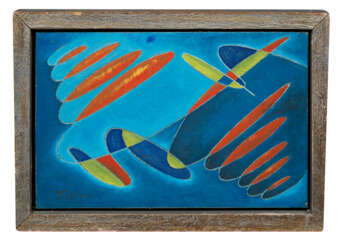

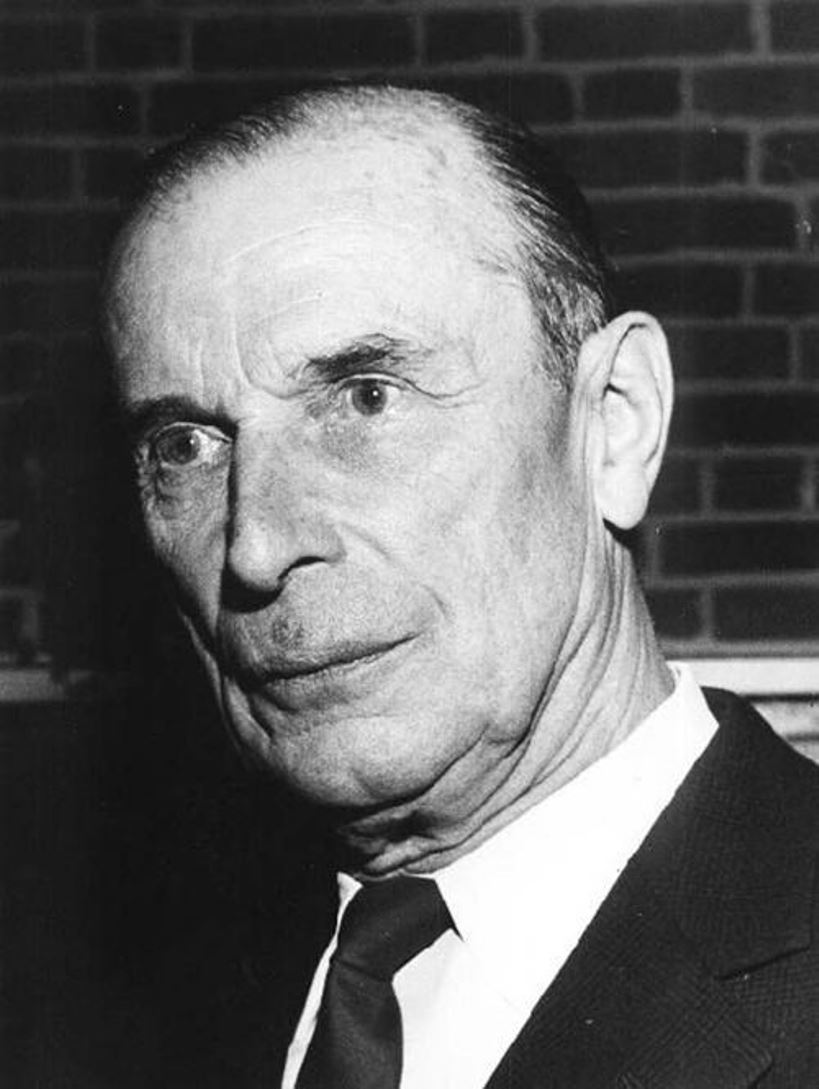
Theodor Werner was a German painter.
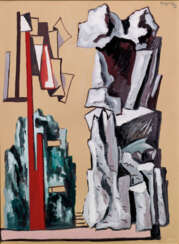

Auguste Herbin was a French painter, celebrated for his contributions to modern art, particularly within the realms of Cubism and abstract painting. Born on April 29, 1882, in Quiévy, Nord, France, Herbin's artistic journey took a significant turn after he moved to Paris in 1903. Initially influenced by Impressionism and Post-Impressionism, his style evolved significantly after 1909 when he became acquainted with Cubism, a movement that significantly influenced his work thereafter. By 1917, Herbin was fully immersed in creating abstract compositions, pioneering a unique blend of geometric abstraction that became his signature style. His abstract work, characterized by simple geometric shapes and vivid, unmodulated colors, adhered to a personal theory of art he detailed in his 1949 book, "L'Art non-figuratif, non-objectif".
Herbin's influence extended beyond his paintings; he was a co-founder of the groups Abstraction-Création and Salon des Réalités Nouvelles, advocating for non-figurative abstract art. Despite facing a significant challenge in 1953, when he became paralyzed on the right side and had to adapt by painting with his left hand, Herbin continued to create art until his passing on January 31, 1960, in Paris. His unfinished work, themed around the word "Fin," marks the poignant end of his prolific career.
Today, Herbin's works are housed in prestigious public collections worldwide, including the Museum de Fundatie in Zwolle, The Netherlands; Kröller-Müller Museum in Otterlo, The Netherlands; National Galleries of Scotland; Matisse Museum in Le Cateau-Cambrésis, France; and the KUNSTEN Museum of Modern Art Aalborg in Denmark, among others. These institutions celebrate Herbin's legacy, showcasing his innovative approach to abstract art that continues to inspire artists and collectors alike.
For enthusiasts and collectors interested in modern art and the evolution of abstract painting, Auguste Herbin's works offer a rich exploration of geometric abstraction and its theoretical underpinnings. Sign up for updates on new product sales and auction events related to Auguste Herbin, and delve deeper into the vibrant world of one of France's pioneering abstract artists.