brescia

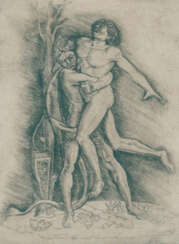
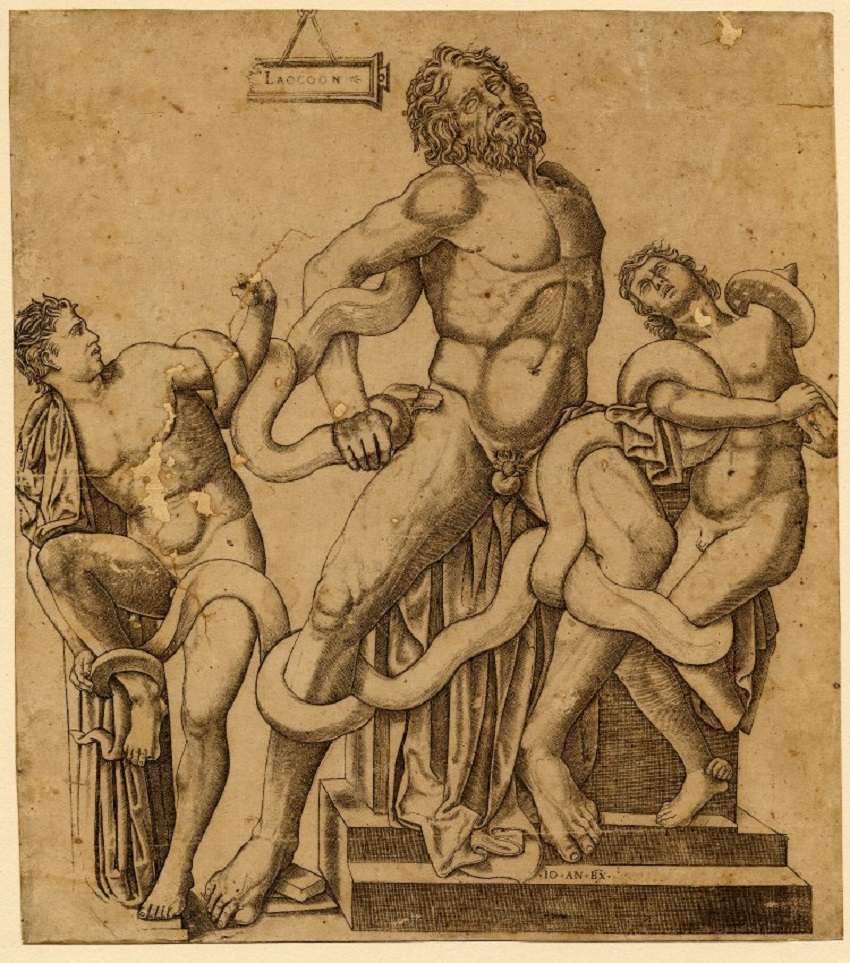
Giovanni Antonio da Brescia was an Italian Renaissance engraver who produced around 150 engravings, including those previously attributed to Zoan Andrea. He began his career under Andrea Mantegna in Mantua before settling in Rome and had an influence on Marcantonio Raimondi. His engravings mainly feature figures and use the burin and drypoint techniques. Giovanni Antonio's last known works were translations of painted works around 1519-1520, and some estimate his last production to be in 1525.


Giorgio Duranti was an Italian painter and cleric of the Baroque period, mainly active in Brescia. An entry in Dandolo's study of the late Venetian Republic states a 1755 as year of death, and that many of his works were in the Royal Gallery of Turin, which was the nucleus of the Sabauda Gallery.

Giorgio Duranti was an Italian painter and cleric of the Baroque period, mainly active in Brescia. An entry in Dandolo's study of the late Venetian Republic states a 1755 as year of death, and that many of his works were in the Royal Gallery of Turin, which was the nucleus of the Sabauda Gallery.


Giorgio Duranti was an Italian painter and cleric of the Baroque period, mainly active in Brescia. An entry in Dandolo's study of the late Venetian Republic states a 1755 as year of death, and that many of his works were in the Royal Gallery of Turin, which was the nucleus of the Sabauda Gallery.


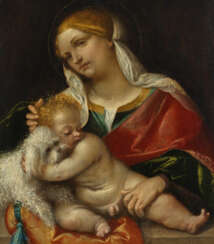
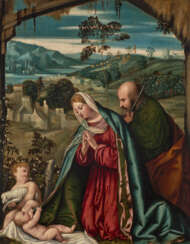
Giovanni Girolamo Savoldo was an Italian High Renaissance painter active mostly in Venice, although he also worked in other cities in northern Italy. He is noted for his subtle use of color and chiaroscuro, and for the sober realism of his works, which are mostly religious subjects, with a few portraits. His portraits are given interest by their accessories or settings; "some even look like extracts from larger narratives".
About 40 paintings by Savoldo are known in all, six of them portraits; only a handful of drawings by him are known. He was highly regarded in his own lifetime; several repetitions of works were commissioned from him, and copies of his work made by others. He slipped from general awareness, however, and many of his works were assigned to more famous artists, especially Giorgione, by the art trade. Awareness of his oeuvre revived in the 19th century, though the dating of many paintings remains controversial among specialists.


Zoran Anton Mušič is a Slovenian painter and graphic artist who has worked in Italy and France.
Zoran studied painting in Maribor and Zagreb, then went to Madrid and Toledo for a year, where he studied and copied works by Goya and El Greco. At the end of 1944, he became a prisoner of the Nazi concentration camp Dachau, where he spent several months. He survived and even made about two hundred drawings on paper in the camp. After his liberation, Mušić moved to Venice and later to Paris.
Zoran Mušić was the only artist of Slovenian origin who managed to establish himself in the elite cultural circles of Italy and France, especially in Paris in the second half of the 20th century, where he lived most of his later life. He painted landscapes, still lifes, portraits and self-portraits, as well as horror scenes from the Dachau concentration camp and Vedute Venice. In 1970-1971, the artist created a pictorial reminiscence cycle "We are not the last", dedicated to concentration camp prisoners and became the most famous of his works.
The figures in Mušić's paintings appear out of empty space and seem unfinished. The colors of his self-portraits are the harsh colors of the desert, eliminating the superfluous and reducing to a minimum. These paintings are evidence of the artist's search for answers to the basic questions of human existence.


Emilio Tadini is an Italian artist, writer and poet, playwright, translator and journalist.
After graduating from the Faculty of Literature at the Catholic University of the Sacred Heart in Milan, Tadini published essays, novels, poems. At the same time, he also dabbles in painting. Tadini was also president of the Brera Academy of Fine Arts from 1997 to 2000.


Marino Marini was an Italian sculptor and educator.


Marino Marini was an Italian sculptor and educator.


Marino Marini was an Italian sculptor and educator.