calcul















































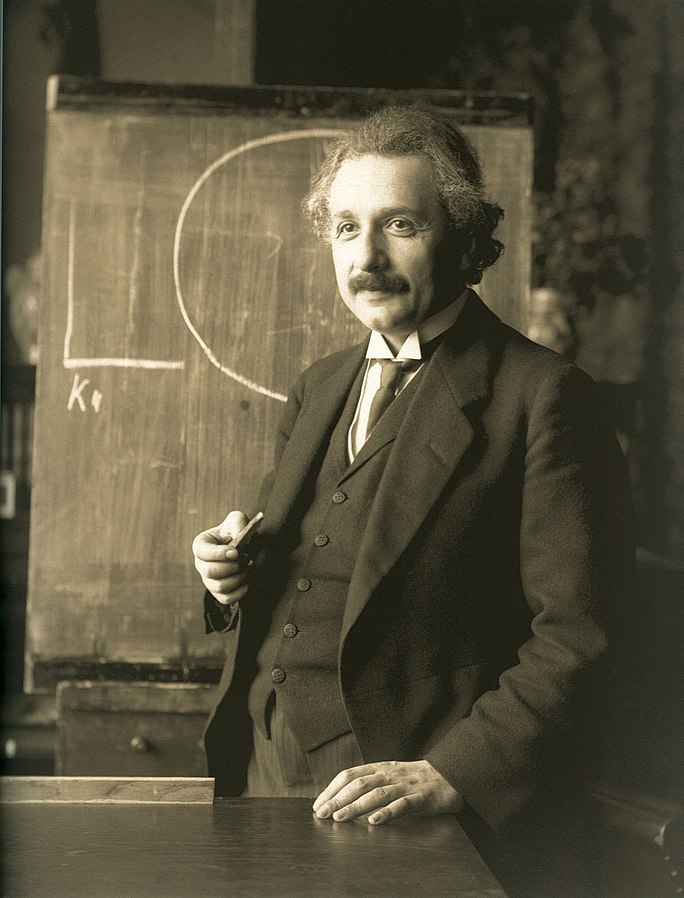
Albert Einstein was a German-born theoretical physicist, widely acknowledged to be one of the greatest and most influential physicists of all time. Einstein is best known for developing the theory of relativity, but he also made important contributions to the development of the theory of quantum mechanics. Relativity and quantum mechanics are together the two pillars of modern physics. His mass–energy equivalence formula E = mc2, which arises from relativity theory, has been dubbed "the world's most famous equation". His work is also known for its influence on the philosophy of science. He received the 1921 Nobel Prize in Physics "for his services to theoretical physics, and especially for his discovery of the law of the photoelectric effect", a pivotal step in the development of quantum theory. His intellectual achievements and originality resulted in "Einstein" becoming synonymous with "genius".

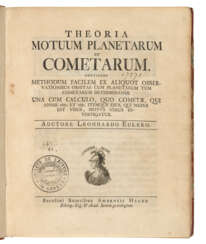

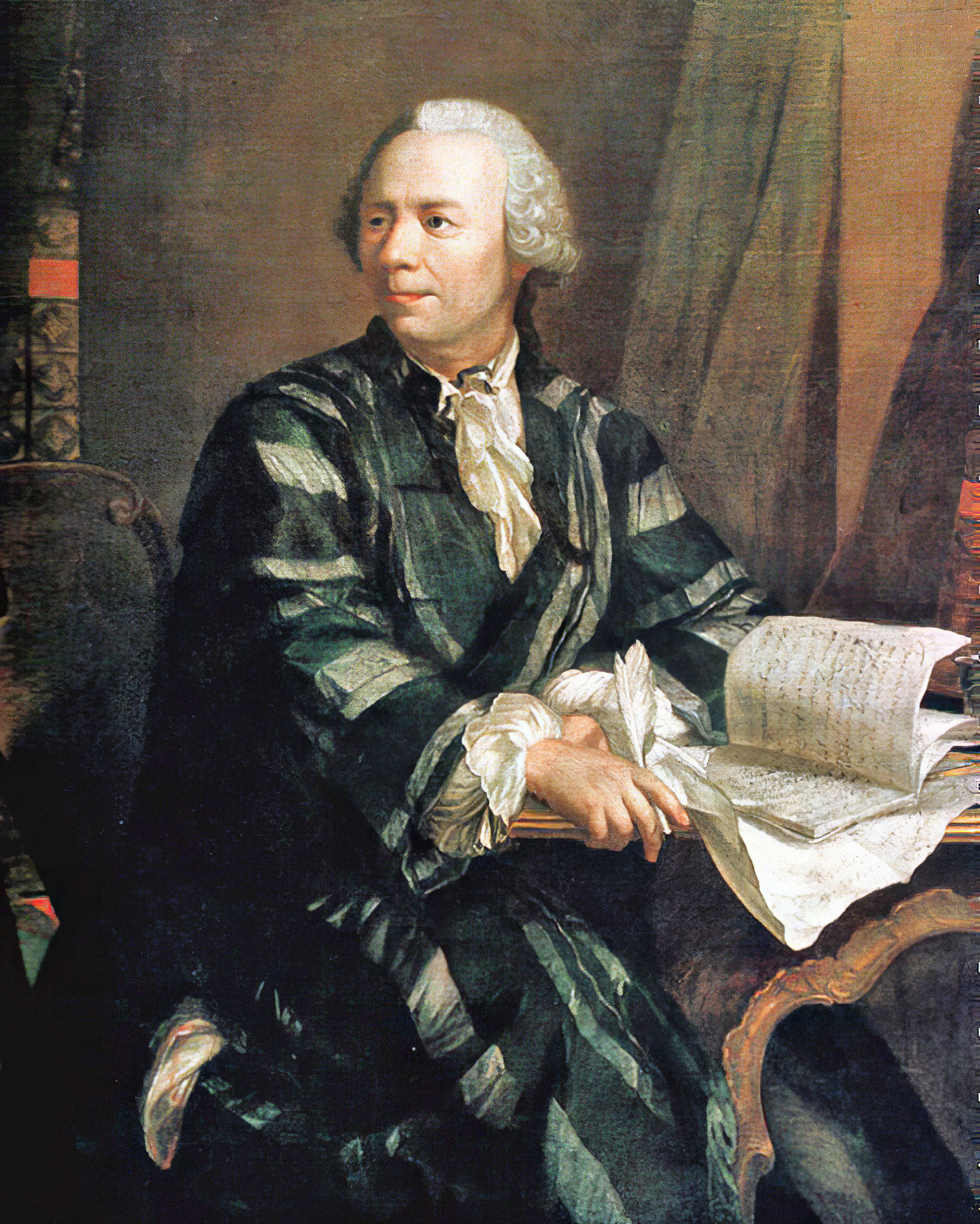
Leonhard Euler was the greatest mathematician of the 18th century and history in general.
Euler brilliantly graduated from the University of Basel and entered the St. Petersburg Academy of Sciences, then began to work at the Berlin Academy, and later to lead it. In 1766, the scientist received an invitation from the Russian Empress Catherine II and again came to St. Petersburg to continue his scientific work.
Here he published about 470 works in a wide variety of fields. One of them is a large-scale work "Mechanics" - an in-depth study of this science, including celestial mechanics. Euler by that time was practically blind, but continued to be actively engaged in science, in the records he was helped by his son Johann Albrecht and stenographers. Leonhard Euler made many fundamental discoveries that brought great benefit to mankind.
His massive contribution to the development of mathematics, mechanics, physics and astronomy cannot be overestimated, and his knowledge in the most diverse branches of science is admirable. During his lifetime, he published more than 850 works that contain in-depth studies of botany, chemistry, medicine, ancient languages, and music. Euler held membership in many academies of science around the world.

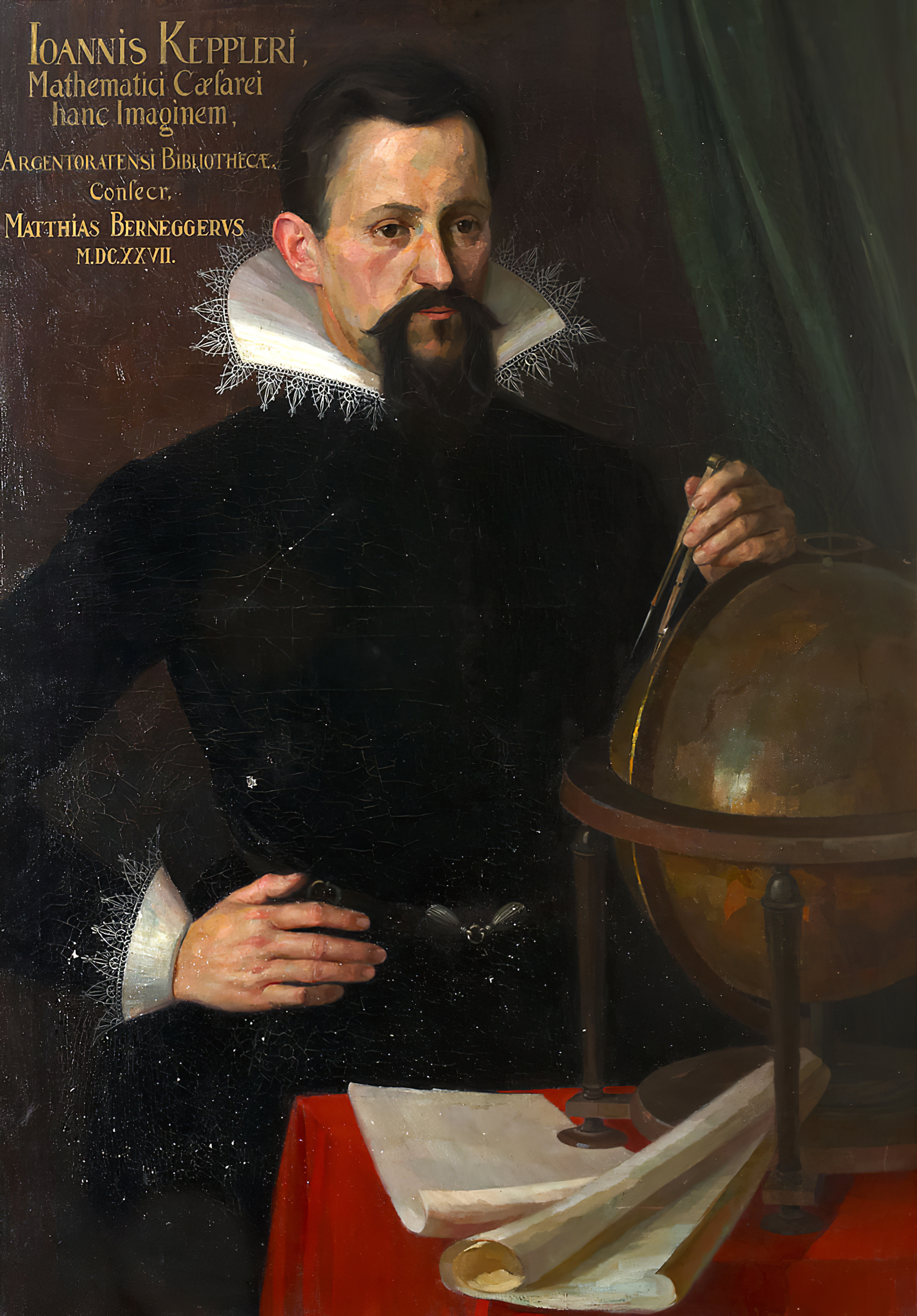
Johannes Kepler was a German mathematician and astronomer who discovered that the Earth and planets move around the Sun in elliptical orbits.
Kepler created the three fundamental laws of planetary motion. He also did seminal work in optics and geometry, calculated the most accurate astronomical tables, and made many inventions and discoveries in physics on which further scientific discoveries by advanced scientists were based.