car























![[DESCARTES, René (1596-1650)]](/assets/image/picture_2500811/a67fb/9ee6c1d6009ac0da55c5104d2c2f17ad1667984400jpg__fix_374_244.jpeg)
![[DESCARTES, René (1596-1650)]](https://veryimportantlot.com/assets/image/picture_2500811/a67fb/9ee6c1d6009ac0da55c5104d2c2f17ad1667984400jpg__fix_374_244.jpeg)
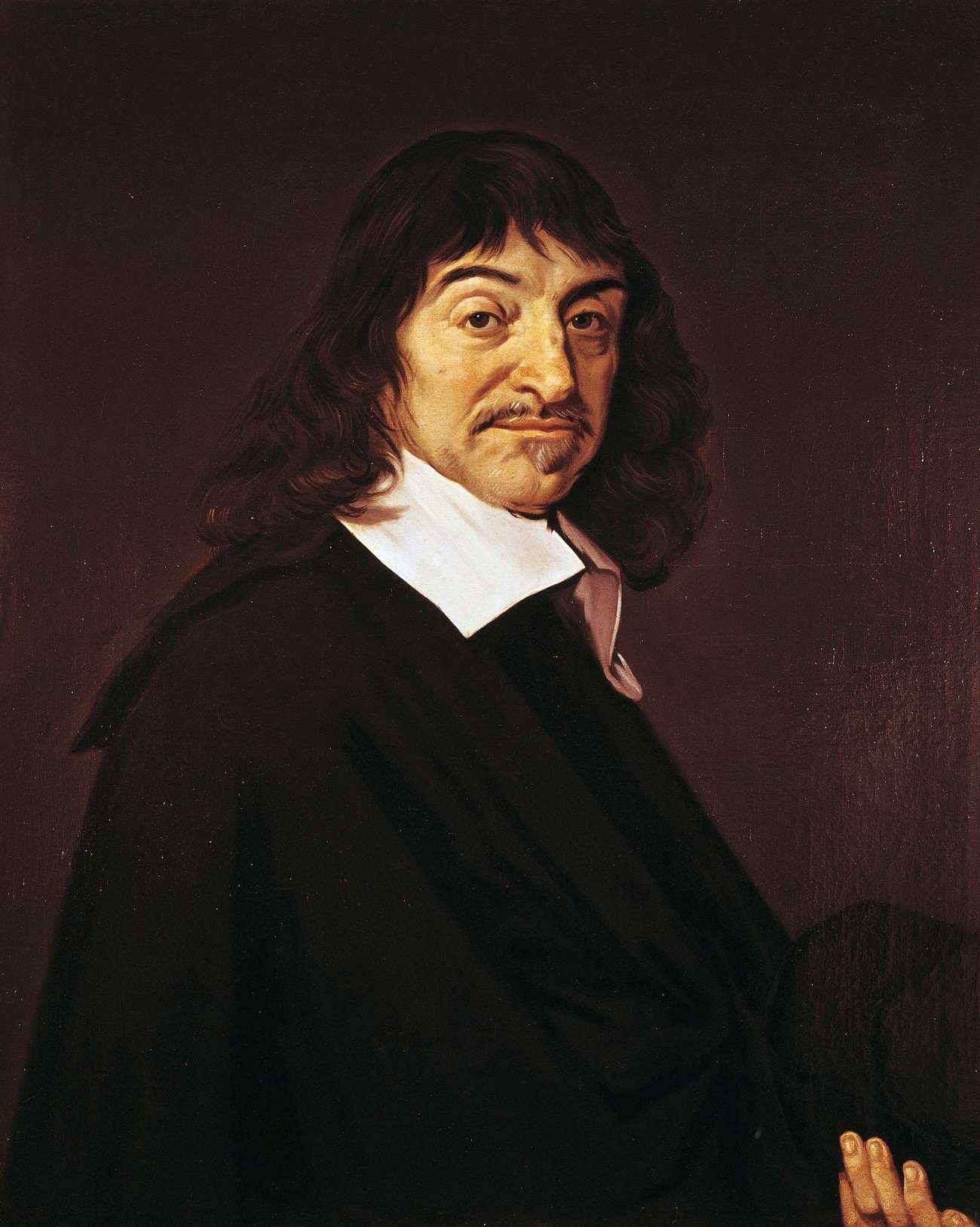
René Descartes was a French philosopher, mathematician, and natural scientist who is considered the founder of modern philosophy.
Descartes was a very versatile scientist: besides numerous philosophical reflections, he wrote works on optics, meteorology and geometry. Contemporaries noted his extensive knowledge in many sciences. Descartes owns the famous saying "I think, therefore I exist" (best known in the Latin formulation "Cogito, ergo sum", although it was originally written in French: "Je pense, donc je suis").
He developed a metaphysical dualism that radically distinguished between mind, whose essence is thought, and matter, whose essence is extension in three dimensions. Descartes' metaphysics is rationalistic, based on the postulation of innate ideas of mind, matter, and God, but his physics and physiology, based on sense experience, are mechanistic and empirical.
Unlike his scientific predecessors, who felt a holy awe at the incomprehensibility of the divine essence of the universe, Descartes admired the ability of the human mind to understand the cosmos and to generate happiness itself, and rejected the view that human beings were inherently unhappy and sinful. He believed that it was inappropriate to pray to God to change the state of things and the world; it was much more productive to change oneself.


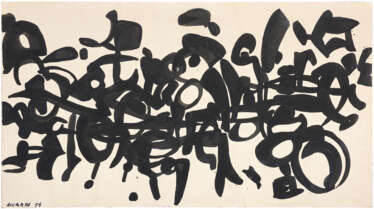

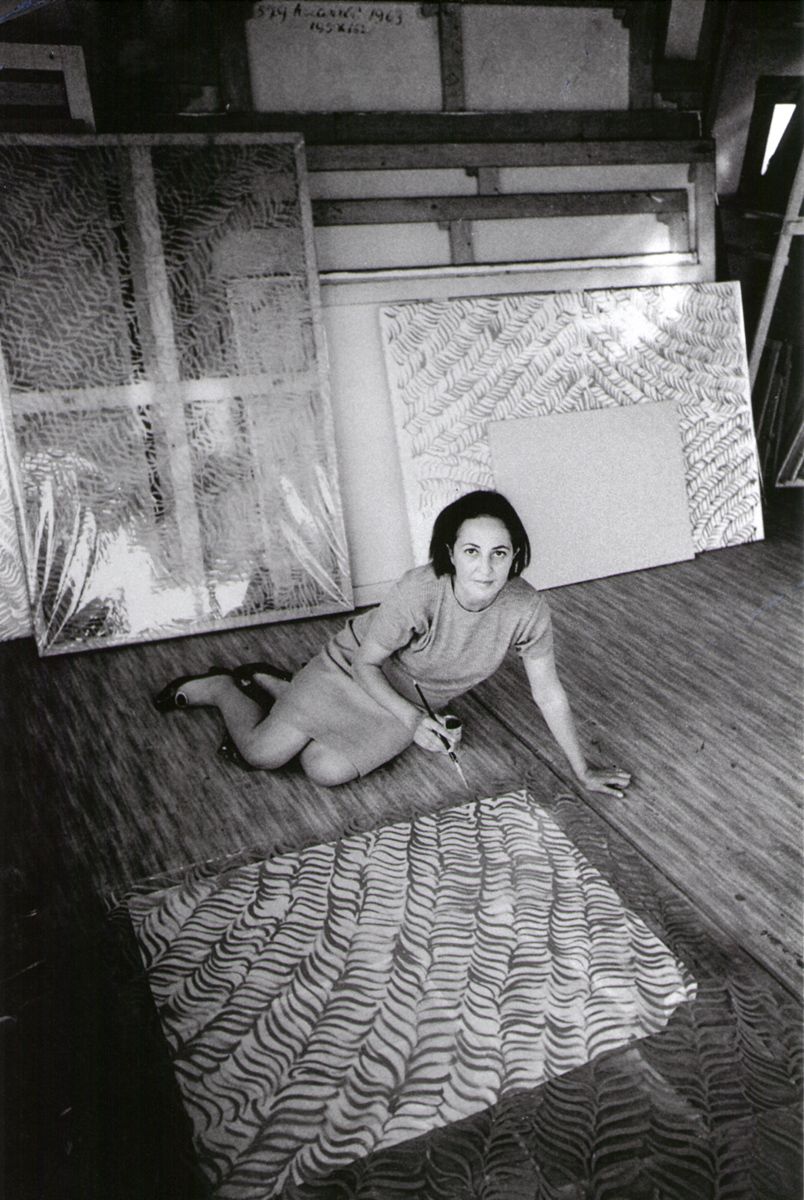
Carla Accardi was an Italian abstractionist painter associated with the Arte Informel and Arte Povera movements and a founding member of the art groups Forma (1947) and Continuità (1961). She studied painting at the Academy of Fine Arts in Palermo and Florence.
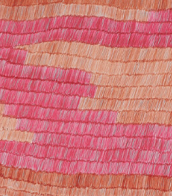
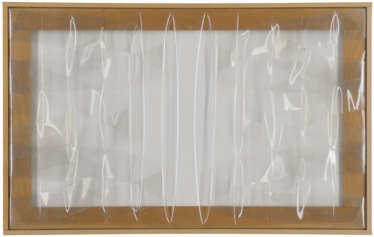
Carla Accardi was known for her innovative use of materials and her exploration of geometric shapes and vivid colours. One of her notable contributions was the introduction of the "tela intrecciata" (interwoven canvas) technique, in which she used strips of coloured canvas to create textured and layered compositions.
Accardi's work often exhibited a sense of rhythm and movement, a dynamic arrangement of forms and lines. Her compositions are characterised by a sense of balance and harmony and often incorporate elements of repetition and symmetry.
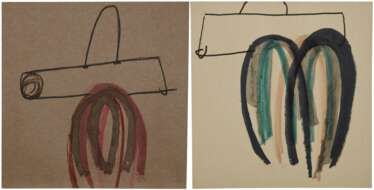

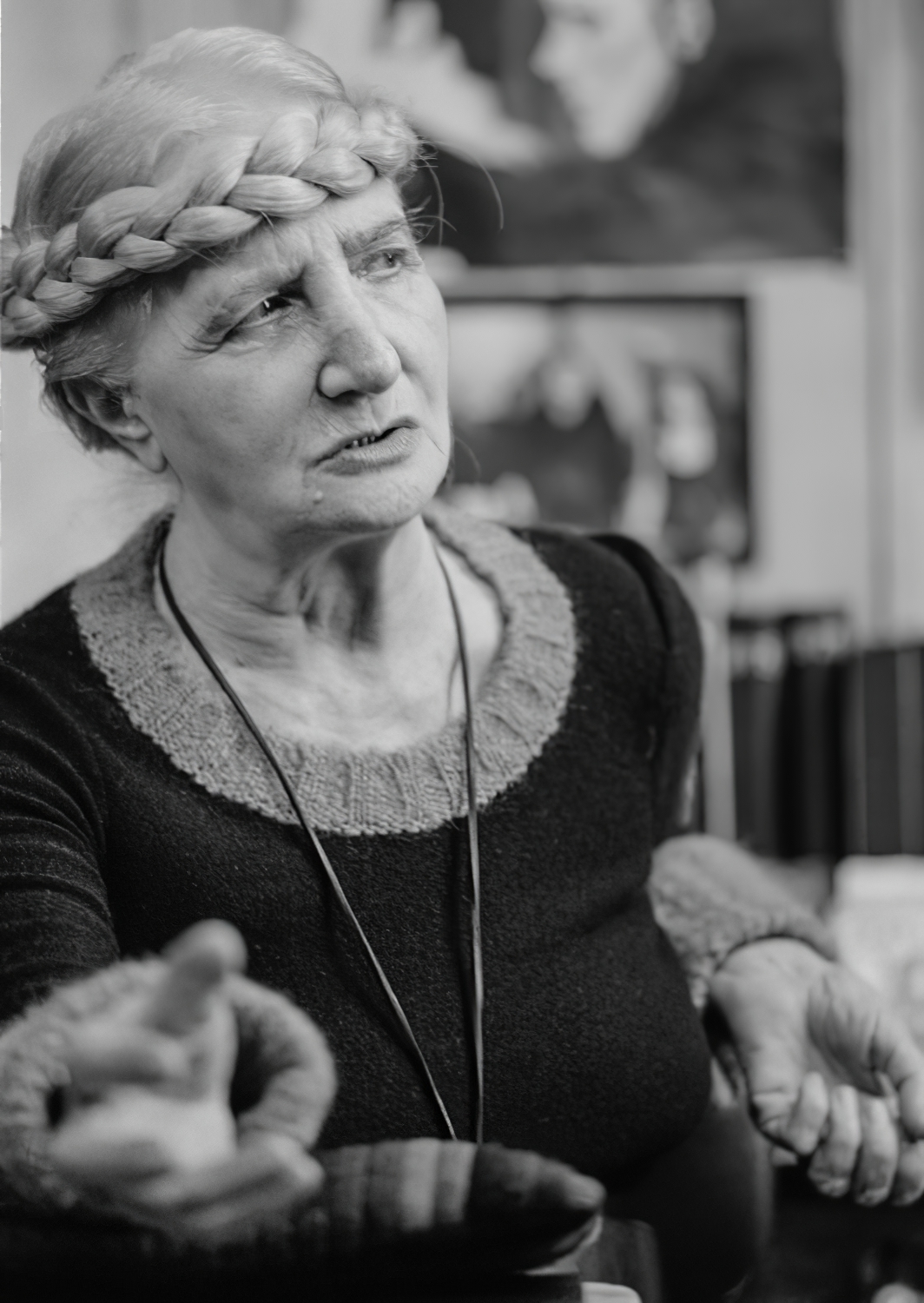
Carol Rama, actually Olga Carolina Rama, was an Italian self-taught artist. Her paintings embrace erotic and sexual identity with particular references to female sensuality. Mussolini's fascist regime deemed her work obscene and they were stigmatised as pornography.
By the early 1950s, Karol Rama was painting irregular geometric compositions of rhythmic rhombuses and squares, often connected by long spider-like lines or forming a directed field of implied movement.
Gradually she began to abolish the geometric conventions of concrete art. And after more than thirty years of inventing poisonous abstractions, Rama returned to figuration.
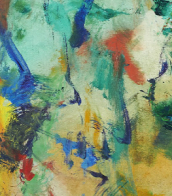
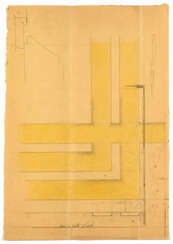

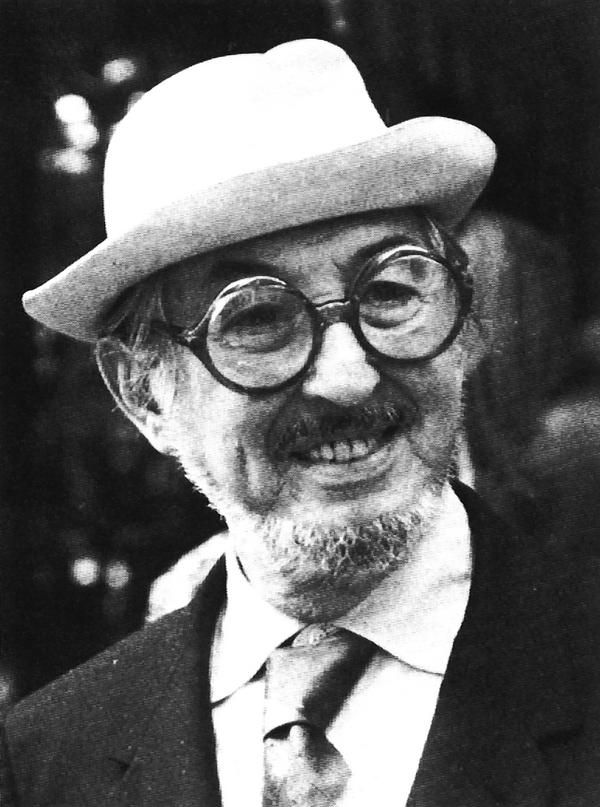
Carlo Scarpa was an Italian architect, influenced by the materials, landscape and the history of Venetian culture, and by Japan. Scarpa translated his interests in history, regionalism, invention, and the techniques of the artist and craftsman into ingenious glass and furniture design.
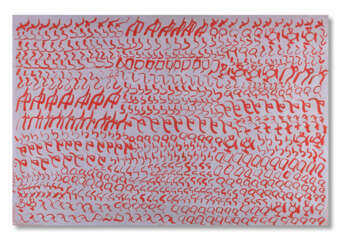

Carla Accardi was an Italian abstractionist painter associated with the Arte Informel and Arte Povera movements and a founding member of the art groups Forma (1947) and Continuità (1961). She studied painting at the Academy of Fine Arts in Palermo and Florence.
Carla Accardi was known for her innovative use of materials and her exploration of geometric shapes and vivid colours. One of her notable contributions was the introduction of the "tela intrecciata" (interwoven canvas) technique, in which she used strips of coloured canvas to create textured and layered compositions.
Accardi's work often exhibited a sense of rhythm and movement, a dynamic arrangement of forms and lines. Her compositions are characterised by a sense of balance and harmony and often incorporate elements of repetition and symmetry.


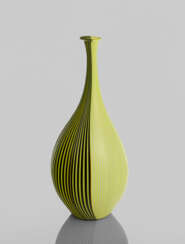

Carlo Scarpa was an Italian architect, influenced by the materials, landscape and the history of Venetian culture, and by Japan. Scarpa translated his interests in history, regionalism, invention, and the techniques of the artist and craftsman into ingenious glass and furniture design.


Carla Accardi was an Italian abstractionist painter associated with the Arte Informel and Arte Povera movements and a founding member of the art groups Forma (1947) and Continuità (1961). She studied painting at the Academy of Fine Arts in Palermo and Florence.
Carla Accardi was known for her innovative use of materials and her exploration of geometric shapes and vivid colours. One of her notable contributions was the introduction of the "tela intrecciata" (interwoven canvas) technique, in which she used strips of coloured canvas to create textured and layered compositions.
Accardi's work often exhibited a sense of rhythm and movement, a dynamic arrangement of forms and lines. Her compositions are characterised by a sense of balance and harmony and often incorporate elements of repetition and symmetry.