equestrian













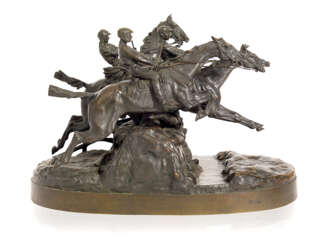




















Franz Roubaud (Russian: Франц Алексеевич Рубо) was a Russian painter, known for his panoramic paintings and battle scenes. Born in Odessa in 1856, Roubaud studied at the Imperial Academy of Arts in St. Petersburg and furthered his education in Munich. His works are celebrated for their meticulous detail and dynamic composition.
One of his most famous works is the "Siege of Sevastopol," a monumental panorama depicting a key event from the Crimean War. This masterpiece is housed in the Panorama Museum in Sevastopol and stands as a testament to Roubaud's ability to convey historical grandeur and emotional intensity.
Roubaud's contributions to Russian art extend beyond his canvases, as he was also a respected professor at the Academy of Arts in St. Petersburg. His legacy continues to influence modern Russian painters, and his works are sought after by collectors and art enthusiasts worldwide.
Stay updated on new product sales and auction events related to Franz Roubaud (Rubo) by signing up for our newsletter. Don’t miss the chance to own a piece of history!
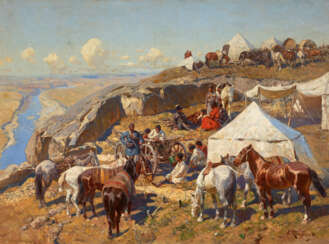

Franz Roubaud (Russian: Франц Алексеевич Рубо) was a Russian painter, known for his panoramic paintings and battle scenes. Born in Odessa in 1856, Roubaud studied at the Imperial Academy of Arts in St. Petersburg and furthered his education in Munich. His works are celebrated for their meticulous detail and dynamic composition.
One of his most famous works is the "Siege of Sevastopol," a monumental panorama depicting a key event from the Crimean War. This masterpiece is housed in the Panorama Museum in Sevastopol and stands as a testament to Roubaud's ability to convey historical grandeur and emotional intensity.
Roubaud's contributions to Russian art extend beyond his canvases, as he was also a respected professor at the Academy of Arts in St. Petersburg. His legacy continues to influence modern Russian painters, and his works are sought after by collectors and art enthusiasts worldwide.
Stay updated on new product sales and auction events related to Franz Roubaud (Rubo) by signing up for our newsletter. Don’t miss the chance to own a piece of history!
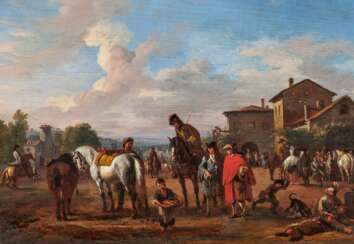

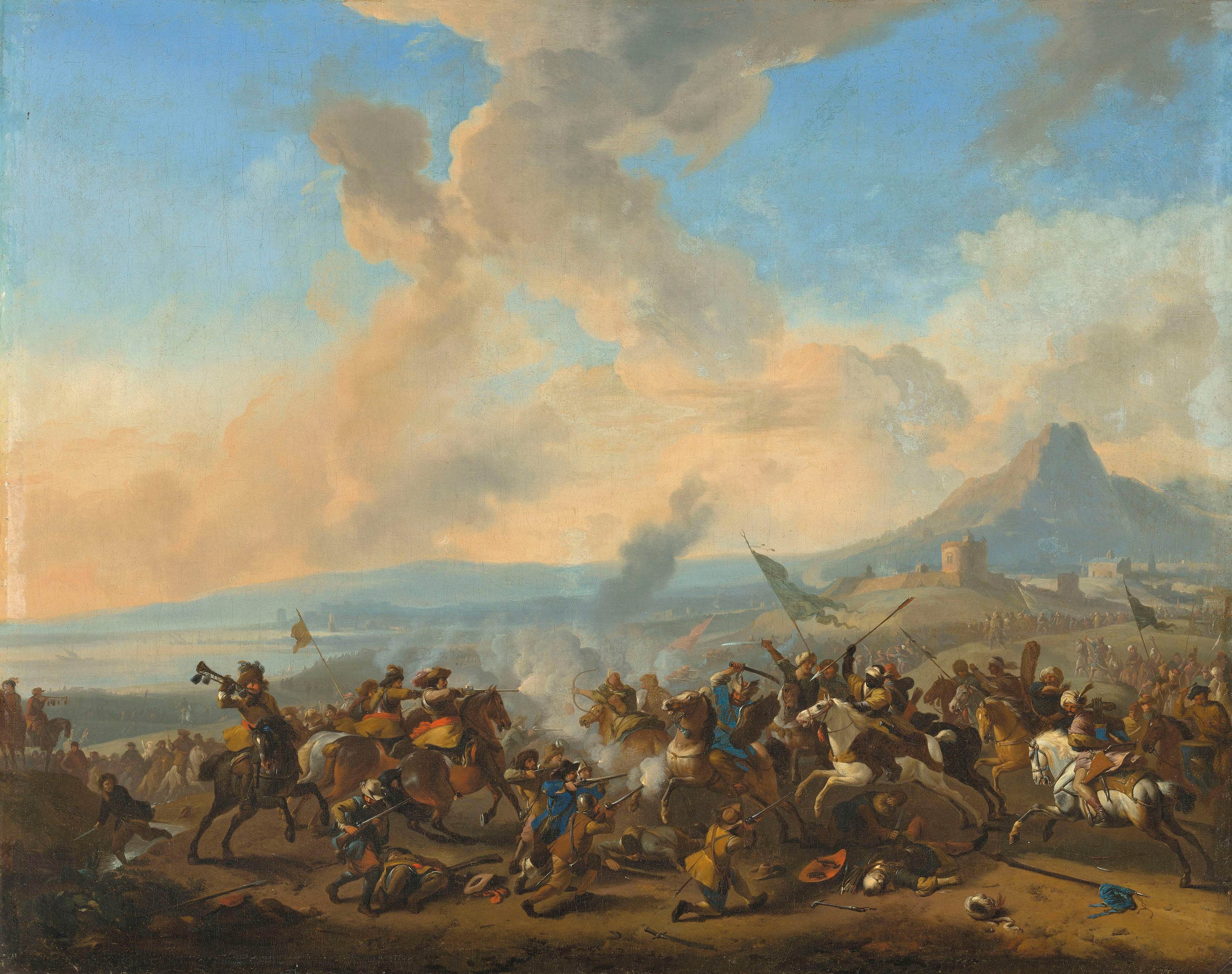
Jan van Huchtenburgh was a Dutch painter of the Dutch Golden Age who specialised in battle scenes and landscapes.
Jan van Huchtenburgh was known for his ability to create dramatic and dynamic battle scenes, often depicting historical events of the 17th and 18th centuries. His work is noted for its precision and attention to detail, as well as his use of light and shadow to create a sense of depth and drama.
In addition to battle scenes, Huchtenburg was also a skilled landscape painter. He often depicted scenes of the Dutch countryside with rolling hills, winding rivers and expansive skies.



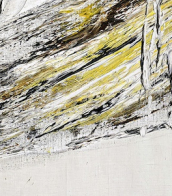


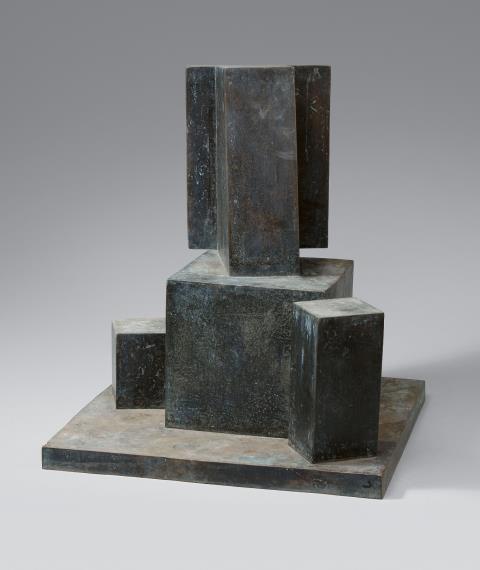
Anton Hiller was a Bavarian sculptor and painter. He grew up in a Catholic farming family in Sigmaringendorf, Hohenzollern. Hiller then studied sculpture at the Academy of Fine Arts Munich under Hermann Hahn (1868–1945), graduating in 1923 and worked later as a freelance sculptor in Munich from 1923, executing commissions for the Bavarian State Gallery and the Municipal Gallery.
From 1946 to 1961, Hiller served as a professor of sculpture at the Academy of Fine Arts Munich, becoming one of the leading representatives of the Munich School of Sculpture in the third quarter of the 20th century. Hiller was a member of the German Artists' Association from 1952 to 1960.


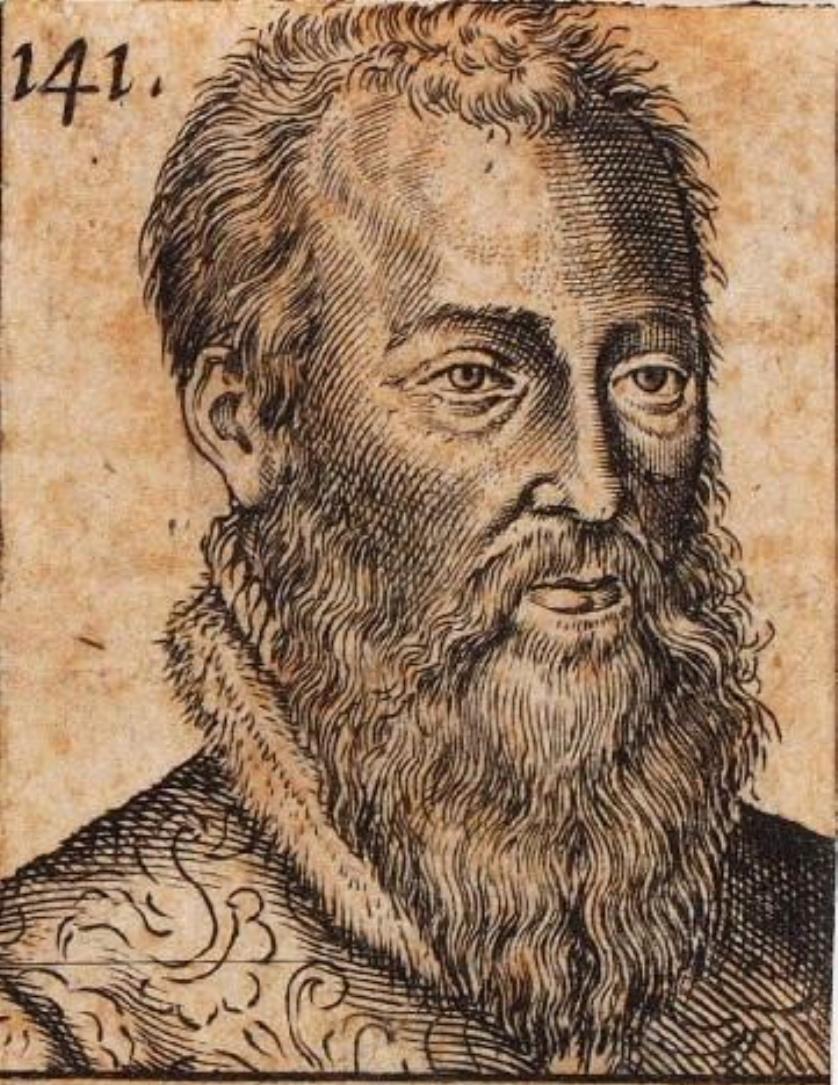
François Clouet was a major French Renaissance portrait painter.
François was the son of the painter Jean Clouet (1485-1540), from whom he learned painting. He became the favorite court portraitist of Kings Francis I, Henry II, Francis II and Charles IX.
François Clouet became famous for his mastery, accurately conveying the characters of people and meticulously painting their costumes.